

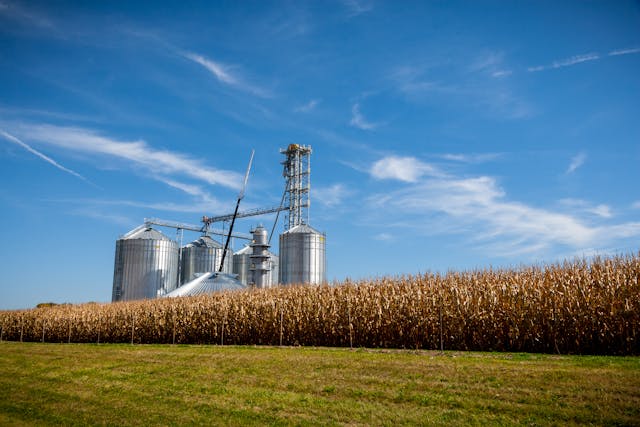

The main fuels you get from biomass are bioethanol, biodiesel, renewable diesel, biogas, biomethane, and solid biomass fuels like wood pellets and wood chips, or even just good old-fashioned charcoal. You can also whip up syngas and bio-oil from biomass by applying some pretty advanced chemical processes. In modern energy set-ups, these fuels are used in all sorts of ways – transport, power generation, heating, and some industrial processes.
Biomass has the edge because it sits in that useful middle ground between old fossil fuels and new low-carbon systems. It’s not like solar and wind, which provide energy straight away. With biomass, you can store energy in solid, liquid, or gaseous form – that makes it a lot more useful in certain sectors like aviation, shipping, freight, and industrial heat.
So What Is Biomass ?
From an energy perspective, biomass is just any renewable organic material that comes from plants or animals. Common sources of biomass include wood and other forestry waste, crop waste, manure, food scraps, sewage sludge, algae, old cooking oil, and even some special energy crops. The key thing about biomass is that it’s bio stuff that can either be burned straight away or turned into other fuels.
We use biomass for energy because it can help turn waste into usable fuel, provide reliable heat and power, and supply transport fuels that just slot right into existing engines and infrastructure. And that flexibility is a big reason bioenergy is still a player in modern energy planning – even if solar, wind, batteries and heat pumps are getting really popular.
The Fuels You Can Get From Biomass
The fuels from biomass are a bit tricky to pin down because they all fall into a few broad groups – liquid fuels, gaseous fuels, and solid fuels. Now, some people just looking for a quick answer might be expecting a simple list, but the reality is a lot more interesting than just “biofuels for cars”. Biomass-derived fuels now cover the whole gamut, from transport to heating, electricity and industrial uses.
Bioethanol
Bioethanol is probably the most well-known of the bunch. It’s usually made by fermenting sugar or starch from crops like sugarcane and corn – but there are also some pretty fancy ways to make it from cellulosic feedstocks from agricultural waste and other non-food plant material. Bioethanol is mostly blended into gasoline and is widely used in road transport.
Biodiesel
Biodiesel is made from vegetable oil, animal fat, and even used cooking oil, usually by some kind of chemical process called transesterification. It’s usually blended with diesel and used in diesel engines. In practice, biodiesel is one of the main biomass-based fuels used in trucks, buses, fleets, and off-road equipment.
Renewable Diesel
Renewable diesel is also obtained from biomass, but it is not the same thing as biodiesel. It is usually produced through hydrotreating oils and fats, and because it is chemically very similar to petroleum diesel, it can often be used as a drop-in fuel. That makes it attractive in markets looking for lower-carbon liquid fuels without major engine changes.
Biogas
Biogas is produced when microorganisms break down organic matter in the absence of oxygen, a process called anaerobic digestion. Feedstocks include manure, food waste, sewage sludge, agricultural residues, and landfill waste. Biogas is mainly a mix of methane and carbon dioxide and can be used for heat, electricity, or upgrading into a cleaner gas fuel.
Biomethane
Biomethane, sometimes called renewable natural gas in some markets, is upgraded biogas with most of the carbon dioxide and impurities removed. Because its methane content is much higher, it can often be injected into gas grids or used as a vehicle fuel. Biomethane is gaining attention because it can fit into existing gas infrastructure more easily than some other low-carbon alternatives.
Solid Biomass Fuels
Biomass also produces solid fuels, including wood pellets, wood chips, briquettes, and charcoal. These fuels are used for residential heating, district heating, industrial boilers, combined heat and power plants, and some electricity generation. Modern solid bioenergy remains important globally, especially where industries need high-temperature heat or where pellet-based heating systems already exist.
Syngas and Bio-oil
More advanced biomass conversion can produce syngas and bio-oil. Syngas is a fuel gas made through gasification, while bio-oil is a liquid product made through pyrolysis. These are not as familiar to general readers as ethanol or biodiesel, but they are important in advanced bioenergy discussions because they can serve as intermediates for fuels, chemicals, heat, and power.
Related: Beyond Electrolysis: Bringing Biomass into India’s Hydrogen Future
Main Fuels Obtained From Biomass
| Fuel | Main Feedstock | Main Production Route | Main Use |
| Bioethanol | Sugarcane, corn, other sugars and starches | Fermentation | Gasoline blending, transport |
| Biodiesel | Vegetable oils, animal fats, used cooking oil | Transesterification | Diesel blending, transport |
| Renewable diesel | Oils, fats, waste lipids | Hydrotreating | Drop-in diesel replacement |
| Biogas | Food waste, manure, sludge, landfill gas | Anaerobic digestion | Heat, electricity, upgrading |
| Biomethane | Upgraded biogas | Gas cleaning and upgrading | Gas grid, transport, heating |
| Wood pellets / chips / briquettes | Wood, forestry residues, crop residues | Drying, densification, processing | Heating, power, industry |
| Syngas | Biomass residues, wood, waste biomass | Gasification | Power, heat, chemical/fuel intermediate |
| Bio-oil | Lignocellulosic biomass | Pyrolysis | Heat, upgrading, industrial uses |
These are the main categories of fuel that readers should know about when asking which types of fuel are made from biomass. Now – the really important detail is that biomass is not limited to just one sort of fuel at all. It can be converted into solid, liquid, and gaseous fuels, which is what makes it such a useful asset in the modern energy mix.
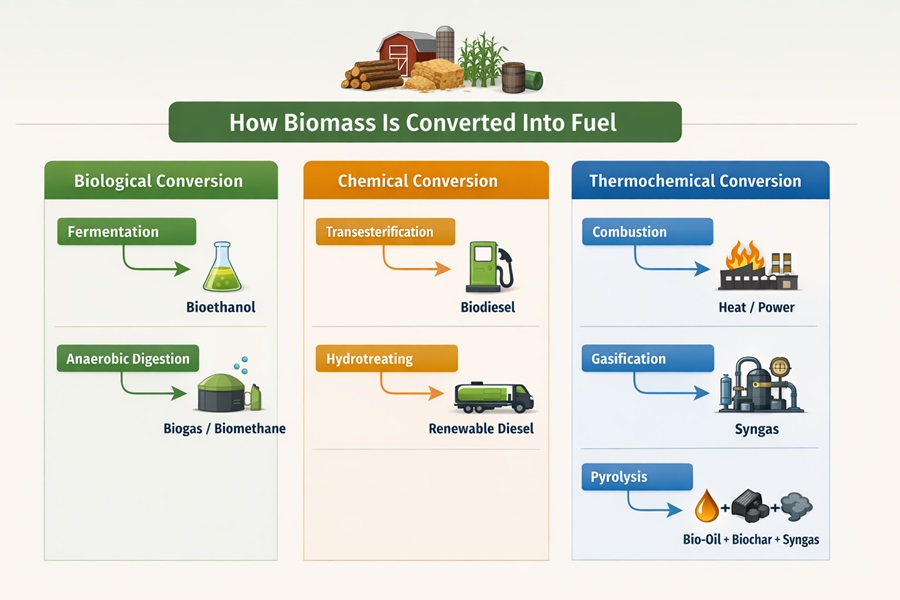
Converting Biomass into Fuel
Biomass gets converted into fuel through different kinds of processes – biological, chemical, and thermochemical – and each one works best with different types of fuelstock depending on its properties. In practice, which process to use depends on a bunch of factors like how wet the stuff is, what’s in it carbohydrate-wise, how much fat it contains, how much lignin is in it, how much ash it’s got in it, how contaminated it is, and what you actually want to do with the fuel. That’s why biomass conversion isn’t just one straightforward process – it’s a whole family of ’em, each one designed to deal with different kinds of organic materials.
Biological Conversion
Biological conversion relies on microorganisms and enzymes to break down biodegradable material into fuel that’s actually usable. One of the big routes in is fermentation, where you use special yeasts or bacteria to turn sugars into bioethanol under controlled conditions – typically with feedstocks that are high in simple sugars or starch, like sugarcane, corn or processed crop material. More advanced systems can also use stuff like wood chips, but that usually needs a bit of prep work to break it down into something the microbes can use.
Another major biological route is anaerobic digestion, and this one produces biogas from wet organic stuff like manure, sewage waste, food scraps and agricultural waste. This process happens without oxygen and involves a whole series of microbial steps: hydrolysis, acidogenesis, acetogenesis & methanogenesis (try saying that one fast five times). What you get out of the end is a mix of mainly methane and carbon dioxide with some hydrogen sulfide, water vapour and other compounds thrown in. If you clean up the gas and get the methane concentration up to a higher standard, you end up with biomethane – which is basically the same as natural gas or can even be used as a transport fuel.
You may interested in this : Corn Husk 101: How U.S. Farmers Can Turn Waste Into Profit
Chemical Conversion
Chemical conversion changes oils derived from biomass or some of the intermediate products into useable fuels through targeted reactions. A good example is transesterification, the main process used to make biodiesel. Here, the triglycerides from vegetable oils, animal fats or used cooking oil react with some alcohol, like methanol, in the presence of a catalyst to form fatty acid methyl esters and glycerol – and it’s those methyl esters that we usually call biodiesel.
A more advanced process is hydrotreating, which is used to make renewable diesel and other related fuels. In this case, you take biomass-derived oils and fats and treat them with hydrogen at high temperature and pressure to remove oxygen and rework the hydrocarbon structure into something that’s more like regular diesel. This is actually important because renewable diesel generally plays nice with existing fuel infrastructure & engines – which is a big plus.
Thermochemical Conversion
Thermochemical conversion uses heat – and often pressure and limited amounts of oxygen – to break down biomass into energy rich fuels and useful by-products. The easiest approach is combustion, where biomass is burned in the presence of oxygen and this produces heat, steam and electricity. Combustion is pretty standard for solid biomass such as wood pellets and chips as well as agricultural residues – especially in boilers and the newer combined heat and power systems.
A bit more advanced are gasification and pyrolysis. In gasification biomass is heated up to a high temperature with limited oxygen or steam and this produces syngas, a gas that’s mostly made up of carbon monoxide, hydrogen, carbon dioxide and a bit of methane – though not always in equal measure. Syngas can then be burned for heat and power or further processed into fuels and chemicals. In pyrolysis biomass is heated in the relative absence of oxygen, which causes it to break down into bio-oil, syngas and biochar. Just which products get made depends on the temperature, heating rate, the design of the reactor and the characteristics of the biomass that’s being used.
Why Feedstock Type Matters
That flexibility – with conversion systems being able to handle different types of biomass – is one of the biggest technical advantages that biomass has, but it also means that the quality of the biomass being used is really, really important. Wet, low energy density biomass like animal manure or food scraps is generally better suited to anaerobic digestion – because drying it to use in thermochemical conversion would be a waste of resources. On the other hand, dry lignocellulosic biomass like wood, forestry waste and crop stalks is best suited to combustion – or to making pellets, or to gasification or pyrolysis. Feedstocks high in lipids are better suited to biodiesel or renewable diesel production, while feedstocks rich in sugars and starches are better used in ethanol production.
In many cases the type of biomass being used determines the fuel pathway that’s used because the conversion system needs to match the chemistry, moisture level and structure of the material. That’s why the most efficient biomass systems are the ones that line up the right feedstock with the right conversion technology – rather than trying to force all biomass through the same process.
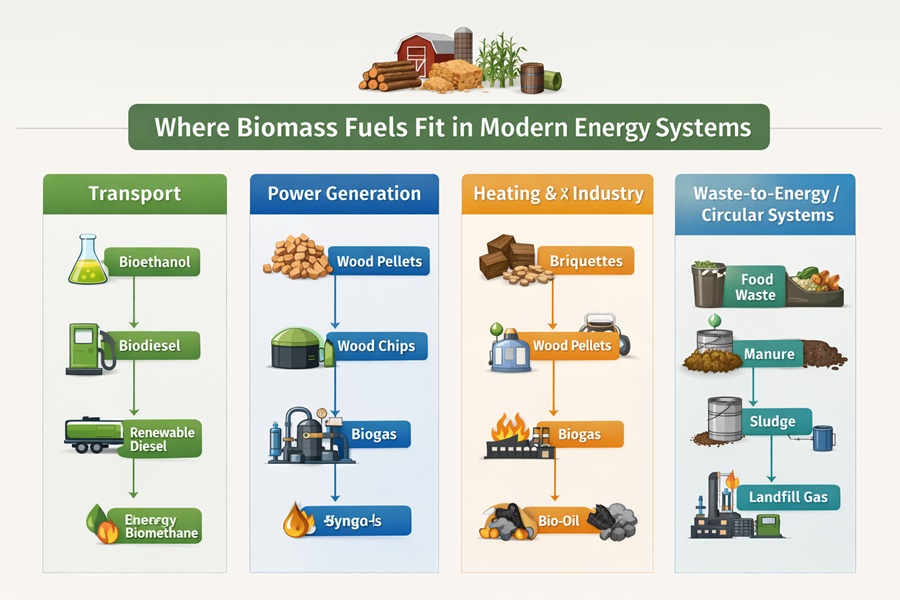
Where Biomass Fuels Have a Place in Modern Energy Systems
In transport, we already see biofuels being used in real-world fuel systems. They’re blended into petrol in the form of bioethanol, while biodiesel and renewable diesel get used in diesel markets. Some regions are also starting to get on board with biomethane as a way to replace fossil natural gas for heavy-duty vehicles. Recent outlooks from the IEA continue to see renewable fuels as a key part of transport decarbonisation efforts, especially in places where battery electric vehicles are taking a bit longer to catch on.
In power and heat, biomass has a rather different role to play. It’s not about trying to grow fast like solar panels – instead, it’s about using stored fuel, combustion-based heat and being able to dispatch when needed. IRENA’s figures show that global bioenergy power capacity hit 151 GW by 2024, demonstrating that biomass is still a significant part of the renewable power mix – even if it’s not necessarily the dominant one.
Industry is another area where biomass is set to play a bigger role – the IEA thinks use in industry is going to rise substantially this decade, especially in sectors such as the pulp and paper, food and tobacco, and non-metallic minerals industries. That matters because getting heat to decarbonise is one of the tougher problems to tackle, and biomass can help fill the gap in places where direct electrification or hydrogen is not yet the most straightforward option.
What Are the Benefits of Using Fuels Made From Biomass?
One clear advantage is that it can help diversify your fuel mix. Biomass fuels can cut down on dependence on coal, oil, and natural gas by providing locally sourced or waste-derived alternatives, thereby improving energy security for countries that have to import a lot of their fossil fuels.
Another benefit is that biomass can help with system flexibility – it can be stored as fuel and used when you need it, which makes it handy for things like heat, backup generation, industrial fuel and transport fuel blending. That’s one reason why biomass is still part of many long-term energy transition plans, even if its growth rate is a bit different from solar and wind.
Using biomass can also help support waste management and circular economy goals. Organic waste that would otherwise decompose and release methane can be captured and converted into useful fuel – this is particularly relevant for things like manure, food waste, sewage sludge, and landfill gas.
What Are the Challenges and Limitations of Biomass Fuels?
The key thing to get across about biomass is that it’s not automatically a sustainable option. The climate value of biomass depends on a whole bunch of factors – including the type of feedstock used, the land-use impacts, the production process, how the fuel gets transported, any methane leakage that might occur and whether the biomass comes from waste, residues, managed forests or crops grown specifically for the purpose. As the IPCC has pointed out, lifecycle emissions from bioenergy vary widely and can be pretty hard to get a handle on.
Air pollution is another problem with biomass. Burning it can produce particulates and other air pollutants, especially if the systems being used are not very efficient. So, biomass can’t just be assumed to be “clean” in every situation – how the technology, the fuel quality and the combustion conditions are all a big deal.
There are also land and feedstock constraints. Some biomass pathways can compete with food production, water use, biodiversity protection, or forest management goals if poorly designed. Waste-based pathways usually raise fewer of these concerns than crop-based pathways, which is why many experts see residues, wastes, and tightly governed feedstocks as the stronger long-term options.
Are Biomass Fuels Always Sustainable?
No. Biomass fuels are not always sustainable.
A fuel is not low-impact just because it comes from plants or waste. What matters is the full system. You have to ask where the material comes from, how it is turned into fuel, how far it travels, what it releases, and whether it grows back or would have caused emissions anyway.
The main issue is lifecycle emissions. Biomass releases carbon when it is burned or made into fuel. Fossil fuels do too. The key difference is that biomass carbon comes from recently living material, not old carbon stored underground.
In the best cases, biomass can have lower net emissions. That can happen when plants regrow, waste methane is avoided, and supply-chain emissions stay low. In weaker systems, those gains can fall fast. Land-use change, heavy fertilizer use, forest damage, long transport routes, and methane leaks can all reduce the climate benefit.
That is why experts look at the whole lifecycle, not just labels like renewable or carbon-neutral. A full lifecycle view checks the entire chain. It looks at growing or collecting the material, fertilizer use, harvest, drying, transport, processing, fuel making, burning, and land-use effects.
This wider view shows that biomass results can vary a lot. One project may cut emissions in a useful way. Another may bring only small gains or create new problems.
The type of feedstock matters a lot. Waste-based biomass often has the strongest case. That is because the material already exists and may release emissions if no one manages it well. Food waste, manure, sewage sludge, and landfill gas are common examples. Turning these into fuel can reduce waste and, in some cases, stop methane from escaping.
Crop-based biomass is more complex. It can raise concerns about land use, water use, fertilizer demand, and indirect land-use change. Forest biomass can be even more sensitive. Using true residues is very different from cutting more trees just to make fuel.
Timing matters too. Biomass is often called carbon-neutral because plants take in carbon dioxide as they grow. But that phrase can hide an important point. Burning biomass releases carbon right away. Taking that carbon back out of the air can take years or even decades.
So the real question is not whether biomass is biological. The real question is whether the system lowers net emissions in a useful time frame without causing major harm somewhere else.
Climate is only one part of sustainability. Air quality, land use, biodiversity, water demand, and resource use also matter. A biomass system may look acceptable in carbon terms and still perform badly if it creates particle pollution, harms ecosystems, or uses fuel in an inefficient way.
The best biomass systems use better feedstocks, efficient technology, strong emissions control, and careful land management. The weakest systems depend on the word biomass as if that alone proves environmental value.
The practical answer is simple. Biomass fuels can help support lower-carbon energy systems, but only when the conditions are right. They work best when they use wastes or residues, avoid major land-use harm, keep supply-chain emissions low, and show clear lifecycle benefits. They work worst when people assume biomass is automatically clean without checking the real science behind the fuel and the system.
You may like to read this: How to Dispose of Cooking Oil
Biomass Fuels vs Fossil Fuels
The main difference between the two is that fossil fuels come from ancient carbon that’s been buried underground for millions of years while biomass is made up of organic material that’s been alive in the not too distant past. Both release CO2 when they’re burned, but when it comes to carbon accounting, biomass often gets treated differently because the plants it comes from sucked in a lot of carbon during their growth. The thing is, it doesn’t mean that all biomass options are equal as far as the climate goes.
When you look at the system as a whole, biomass has one big advantage over many other forms of renewable energy – it produces fuel that you can actually store and transport and use in systems that run on combustion. Fossil fuels are still generally more energy-dense and have more established supply chains, but biomass gives us a way to cut back on fossil fuel use in sectors where it’s hard to switch to electricity quickly.
Biomass Fuels vs Other Renewable Energy Options
Biomass is different from solar and wind because its a fuel that you use, as opposed to a flow of electricity. Solar and wind power are often cheaper and cleaner when it comes to generating power directly, but they don’t solve every need we have for liquid fuel alternatives, gas substitutes or high-temperature heat. Biomass helps to fill some of those gaps.
Now, that doesn’t mean biomass is automatically ‘better’ than other renewables – its more like it fills a different niche. In a modern energy system, biomass tends to be most valuable in situations where storing fuel is important, where you’ve got a waste stream that can be turned into useful energy and where you still need to run older engines, boilers or gas infrastructure with lower-carbon fuels.
Which Biomass Fuels Are Most Important Globally Today?
Right now, the most important types of biomass fuel are bioethanol, biodiesel, renewable diesel, biogas, biomethane and modern solid biofuels. Bioethanol and biodiesel remain key players in the transport sector while renewable diesel is growing because its a bit more like the old petroleum diesel in how it’s used. Biogas and biomethane are starting to get more important where you’ve got waste-based energy systems and need to substitute out for natural gas. Modern solid biofuels are also still a significant player in heating, industry and some power generation.
The IEA has recently shown that the demand for biofuels is growing in a pretty uneven way across the world too. The US remains the largest producer and consumer of biofuels to 2030 according to their outlook, but other countries like Brazil, Europe, Indonesia and India are seeing especially strong growth. That matters because it shows that biomass fuels are not some niche thing on the side – they are actually a key part of the way we think about energy now and the way we’re developing our energy markets.
Examples of Biomass Energy Systems
Drax Power Station – Ditching Coal for Biomass
Drax stands out as one of the most well-known examples of turning biomass into power on a massive scale. What was once a coal-fired power station has since been converted to run on compressed wood pellets, putting it at the very heart of the UK’s drive to generate renewable electricity.
What this means in real life
This is all about making biomass work as a system that can power the entire grid, taking the same approach to generation that was once used for fossil fuels.
The benefits and what it’s worth to the economy
- Rather than scrapping the old plant, you end up prolonging its life so it’s not a waste of resources.
- You’re also helping to meet the UK’s renewable energy targets and reduce reliance on coal.
- The global supply chain gets a boost – that’s jobs for people along the way, from producing pellets to transporting them to the power plants that run on them.
- Biomass power can also make the grid more stable when wind and solar power aren’t available, helping to keep the lights on.
Trade-offs and the downsides
- The carbon savings ultimately depend on some pretty important factors – like how the forests are managed, where those pellets come from, and just how much pollution is caused by transporting them.
- The long supply chain is a worry because it can end up soaking up a lot more energy than it actually produces.
- There’s still a pretty big debate going on about whether big biomass plants are actually better for the climate than other types of renewable tech.
Stockholm Biogas Plant – Turning Waste into FUEL
In Stockholm, they’ve built a pretty impressive biogas system that takes food waste and sewage sludge and turns it into biomethane, which then powers public buses and helps heat some of the city’s homes.
What it shows in real life
This is all about creating a circular economy, where waste gets turned into energy and actually helps the city out, rather than causing problems like pollution in a landfill.
The benefits and what it’s worth
- Now instead of just dumping waste, Stockholm is getting rid of it and capturing the methane that would have otherwise been stuck in the atmosphere.
- This means the city now has a source of local, low-carbon fuel for its buses, which is a big deal.
- This sort of system is great for keeping waste out of landfills and making a real dent in the city’s emissions.
- It’s also a way to get started on reducing emissions from public transport without having to switch to full-on electric vehicles right away.
The not-so-good stuff
- The amount of biomethane you can make is limited by how much waste the city has to work with, so it’s hard to scale up.
- You have to put a lot of upfront cash into getting the whole system up and running, which is a pretty big ask.
- There’s also a risk that leaks during processing or transport can undo some of the good you’re doing for the climate.
POET Biorefining – Bioethanol on a Really Big Scale
POET is one of the biggest bioethanol producers in the US, taking corn to make ethanol which gets blended into petrol and sold across the country. They’re also getting into cellulosic ethanol, which uses agricultural leftovers instead of crops.
What it shows in real life
This is all about making biomass an integral part of the mainstream fuel system, working at the same scale as the big oil companies.
The benefits and what it’s worth
- It helps support the local economy by creating demand for farm products and so on.
- You’re also replacing imported petrol with homegrown fuel.
- It creates a really big industrial operation, from farming through to refining to getting the fuel out to the drivers.
- It’s a way to get some of the emissions out of the transport system without having to rip the whole system up and replace it with something new.
Trade-offs and the downsides
- There’s still a lot of debate about whether making ethanol from corn is actually a good idea, because of how it uses up land and draws on water resources.
- Even when everything’s running smoothly, the lifecycle emissions of bioethanol can still be a problem.
- And on top of that, some people wonder whether the land used for bioethanol crops would be better used for growing food instead.
Frequently Asked Questions
What are the main fuels you can get out of biomass?
The main fuels that get sourced from biomass are bioethanol, biodiesel, renewable diesel, biogas, biomethane, wood pellets, wood chips, briquettes, charcoal, syngas, and bio-oil. Those are some of the key players in this space.
Is biogas a biomass fuel?
Yeah it is. Biogas is considered a biomass fuel because it’s made from organic materials like food waste, animal manure, sewage sludge, and stuff that’s just rotting in landfills. It gets produced through a process called anaerobic digestion.
Is biodiesel made from biomass?
Indeed it is. Biodiesel is produced from things like veggie oils, animal fats, and old used cooking oil.
What’s the difference between biomass and biofuel?
Think of it like this – biomass is the raw organic material itself. Biofuel is the fuel that gets made from that material. So, wood waste is biomass, but ethanol or biodiesel made from plants is biofuel.
Are biomass fuels renewable?
Theyre generally considered renewable, but in reality, their environmental impact depends on how the stuff gets sourced, how the land gets used, and all the emissions that happen during the whole lifecycle process.
Which biomass fuel can you put in a vehicle?
Most commonly used in vehicles are bioethanol, biodiesel, renewable diesel, and biomethane.
Can biomass replace fossil fuels entirely?
Not really on its own. Biomass can replace some of the need for fossil fuels in transport, heating, power, and industry, but its got a lot of limitations – mainly in terms of feedstock and land use and all that jazz. So, in the end, its best used as part of a broader clean energy mix.
Conclusion
So, what fuels do we get from biomass in modern energy systems? In broad terms, its bioethanol, biodiesel, renewable diesel, biogas, biomethane, and then solid biomass fuels like pellets, chips, and briquettes. And then there are the more advanced systems that make use of syngas and bio-oil as well.
The main takeaway here is that biomass isnt just one fuel or one story. Its strength is its versatility. Biomass can produce liquid, gaseous, and solid fuels that fit into just about any sector – transport, heat, power, industry – but the long-term value really depends on getting the sourcing right, getting the conversion efficient, and keeping a tight eye on lifecycle emissions. That’s what you really need to focus on if you want to get a clear picture of biomass in modern energy systems.