
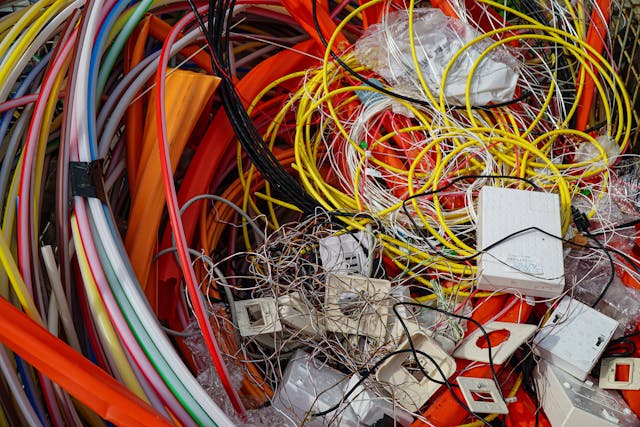

E-waste is what’s left when electronics fall out of use: phones, laptops, chargers, appliances, and office gear. Anything with a plug or battery that gets discarded, breaks, or is replaced early.
In 2022, the world generated about 62 billion kg of e-waste, yet only ~22.3% was formally gathered and recycled. The gap keeps growing because upgrades happen fast, while end-of-life systems stay fuzzy and underbuilt.
Short lifecycles, limited repair, and designs that resist fixing keep pushing devices out sooner than necessary
Scale of the Problem
A regional view makes the problem feel more concrete and more uneven. Asia generates around 30 million tonnes of e-waste, roughly half the global total, largely because device ownership and replacement are rising across huge populations. Europe performs better on documented collection and recycling, at about 42.8% in 2022, which shows that formal policy and infrastructure can shift outcomes.
The gap is not about “awareness” alone. It is logistics, enforcement, incentives, and what happens when the easiest channel is informal. When the cost of compliance feels higher than the cost of dumping, dumping wins.
This unevenness shows up inside supply chains, too. A factory can be strict about production controls but casual about what happens to retired electronics. One day, it is a neat line of equipment, the next, it is a pile of boards and cables headed somewhere unknown.
I have even heard teams talk about replacing controllers around Acasi bottle filling machines as if the old units are harmless scrap, when they are exactly the kind of mixed-material items that leak into informal streams.
That is how the system fractures. The purchase decision is structured and documented. The disposal decision is often improvised. The waste follows the softer part of the process.
Environmental and Health Impacts
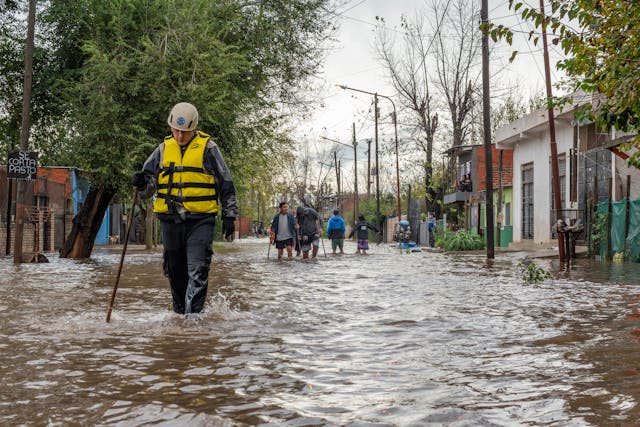
Electronic pollution acts like a leak. In landfills or junk dumps, parts and chemicals can seep into the soil and water, especially when sites are not controlled or get flooded.
When gadgets are burned or broken down, roughly, smoke and dust carry harmful chemical mixes into areas.
The World Health Organization says lead is often released when e-waste is recycled, stored, or dumped in ways like open burning. This is especially bad for kids and pregnant women.
The risk isn’t for workers handling e-waste. It also affects households near processing areas, food chains, and air quality, which stays bad.
There’s a pattern here. Informal handling happens because it’s cheap, not because people like taking risks.
But efficiency without safeguards turns into exposure. The WHO describes e-waste as one of the fastest-growing streams of solid waste and highlights that unsafe recycling can release a large range of chemicals, with developing bodies facing higher relative exposure.
Ecosystems take the hit in quieter ways: contaminated sediments, disrupted soil microbiology, and toxins entering aquatic systems. Not a single dramatic event. More like a drip that never stops.
Causes of the E-Waste Explosion
Rapid innovation is real, and so is planned friction. Many products are built thinner, sealed tighter, and repaired less easily. Parts are proprietary, documentation is limited, and software support ends faster than the hardware wears out.
The Global E-waste Monitor describes how limited repair options and shorter product life cycles contribute to the widening gap between e-waste generation and documented recycling.
In practice, this means people discard devices that could have stayed useful if the design had been kinder to repair. It is not only consumer behavior. It is the design of choices around the consumer.
Emerging-market growth adds another layer. More households and businesses are acquiring electronics, which is a net positive for access and productivity, but the collection and recycling infrastructure often lags behind.
Policy is catching up in places, though unevenly. India’s E-Waste (Management) Rules, 2022 came into force in April 2023 and are framed as an improved EPR regime, with registration and compliance routed through the CPCB portal.
That matters because e-waste management improves when responsibility becomes measurable, and measurable responsibility becomes enforceable.
Sustainable Combat Strategies
Here are some strategies to combat growing e-waste:
Reduce and Reuse (Buy Less, Use Longer)
The cleanest ton of e-waste is the one that never exists. I know that sounds like something a teacher would say. It really is a simple truth. If we make our devices last longer, we do not need to dig up many new materials, and we do not have as much waste to get rid of later on.
The way to do this is pretty straightforward: we buy things that can be fixed, we keep our devices for a time, and when they start to get old, we try to fix them instead of throwing them away and getting new ones.
The Global E-waste Monitor says that one of the reasons we have so much e-waste is that things do not last very long, and we cannot fix them easily. So if we do the opposite, that should help: make things longer, make them easier to fix, and do not make people buy new things all the time.
This is where things, like design and the right to repair, really start to matter. They are not things that a few people talk about; they are actually a way to stop waste from happening in the first place.
Recycle Properly (EPR and Functional Collection)
Recycling is not one action. It is a chain. Collection, sorting, dismantling, material recovery, and safe handling of hazardous fractions. When any link is weak, the chain defaults to informal shortcuts. That is why Extended Producer Responsibility matters.
The OECD frames EPR as shifting responsibility across the product lifecycle to producers, generating funding for collection and recycling, and improving transparency about waste flows.
The Global E-waste Monitor notes many countries embed EPR and collection targets into regulation, because targets create pressure to build the machinery of compliance.
In India, the CPCB portal operationalizes EPR obligations through registration and reporting, turning policy into a working system.
Policy and Technology (Traceability and Safer Transitions)
Policy cannot be only aspirational. It has to be inspectable. Digital traceability, audits, and verifiable reporting reduce the space where e-waste “disappears.”
The Global E-waste Monitor stresses that legislated targets help monitor progress and stimulate collection and recycling, which is basically a call for accountability that survives beyond press releases.
But sustainability also means not ignoring livelihoods. Informal workers often have the networks that make collection efficient. Transition strategies should include training, safer processing, and formal pathways that do not crush incomes.
The WHO’s focus on vulnerable groups and unsafe processing is a reminder that protecting health is not optional in the design of new systems.
Individual and Business Actions
For consumers, the best move is to stop treating drawers as storage landfills. Use certified recyclers, manufacturer take-back programs, and credible refurbishers.
The WHO warns that inappropriate recycling and dumping create serious health and environmental threats, which makes the choice of disposal channel more than a personal preference.
For businesses, action should be procedural, not occasional. Track assets, plan refresh cycles with refurbishment options, build reverse logistics into procurement, and audit downstream handling.
If operating under India’s framework, align internal processes to the E-Waste (Management) Rules, 2022, and CPCB EPR workflows, because compliance is part of risk management now, not a side task.
The Way Forward!
E-waste is exploding because the system rewards replacement and underprices disposal. The Global E-waste Monitor shows e-waste generation rising much faster than documented recycling, and that is the central warning. Sustainable combat is not only “recycle more.”
It is to reduce first, design for repair, enforce EPR, and build collection channels that do not leak into unsafe processing. If you want a simple start, do an e-waste audit this week: count devices in drawers, map how your office disposes retired equipment, and choose formal routes consistently.
For references and practical direction, use the Global E-waste Monitor portal, the WHO e-waste fact sheet, and for India-specific compliance, the CPCB EPR portal under the 2022 Rules.
If you want, I can also (a) tighten this further to ~950 words exactly, or (b) rewrite it for a specific audience (policy readers, consumers, or manufacturing businesses) while keeping the 80+ word paragraph rule.