

For a long time, building homes in cities was very predictable. Speed mattered most, along with squeezing in maximum square footage and making everything look nice. Basements were finished simply, ground floors stayed low to the street, and proper drainage rarely got serious attention.
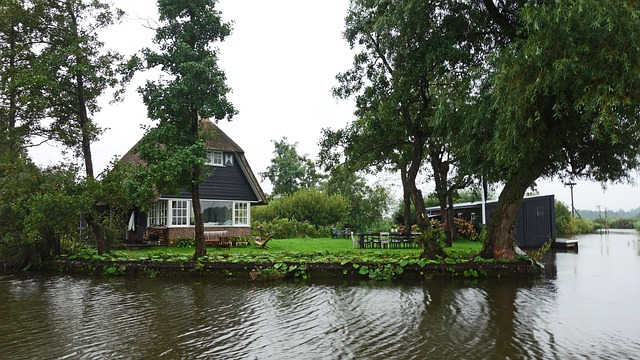
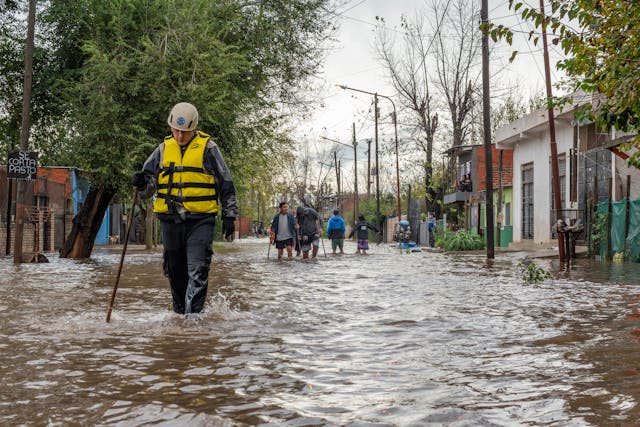
But things are changing. Urban flooding now comes from overwhelmed drains and heavy rain on pavement, not just rising rivers. Builders and homeowners in places like Miami, Houston, Beijing, and Berlin are having to adapt.
The damage adds up fast: more than $9 billion a year in the United States. And unlike coastal floods, these can appear in minutes, flooding streets and basements before anyone has time to react. Even properties well outside mapped flood zones are getting hit repeatedly. That’s why the way we conceive, design, and construct homes is quietly changing.
The Basement Is No Longer a Living Space
Perhaps the most obvious shift is how basements are now viewed. For decades, they were marketed as valuable extra space—perfect for movie rooms, guests, or hobbies.
That mindset is fading fast in urban building. These days, many new homes treat the basement strictly as utility space, or builders skip it altogether. Mechanical systems go up on platforms, floors use polished concrete, and walls stay unfinished so they can dry easily after any water event.
Older properties with finished below-grade areas have it harder. Retrofitting them usually requires serious waterproofing and structural upgrades to make them resilient.
For homeowners dealing with persistent seepage and hydrostatic pressure, a trusted solution comes from Matthews Wall Anchor & Waterproofing, a company that specializes in stabilizing foundation walls and keeping groundwater where it belongs—outside the home.
Elevated Mechanicals and “Wet-Proof” Interiors
Ground floors in city homes are getting a practical redesign. Builders are elevating furnaces, water heaters, electrical panels, and HVAC systems on platforms or moving them upstairs. In New York City and New Orleans, new homes commonly feature waist-high outlets and cement-based wall boards for the lower sections.
They’re also replacing traditional flooring with more resilient materials:
- Porcelain tile;
- Polished concrete;
- Sealed rubber.
This “wet-proof” design doesn’t try to prevent flooding altogether. It works on the assumption that water may get inside at some point. So the priority shifts to making recovery simple, cheap, and non-destructive.
Several cutting-edge projects are now using “blue roofs” — systems that hold rainwater temporarily on the roof and release it slowly to protect the city’s sewer network. Many are also installing check valves in sewer lines to block backflow, a frequent cause of basement flooding in cities.
The Rise of Spongy Infrastructure on Private Lots
The biggest transformation right now isn’t happening inside the walls of the home, but on the land around it. The reason urban flooding keeps getting more severe is simple: the cities are covered with surfaces that water can’t penetrate — things like asphalt driveways, concrete patios, and those hard-packed clay lawns.
That’s why cities like Philadelphia, Portland, and Washington, D.C., have updated their building codes. They now require new homes to include stormwater retention on each lot.
In real terms, this means:
- Using permeable pavers for driveways so water can seep downward.
- Creating rain gardens with deep-rooted native plants that drink up excess water.
- Installing underground infiltration trenches that copy how nature originally handled rainfall.
On top of that, builders are disconnecting downspouts from the public sewer system — which often backs up first during storms — and redirecting that roof water into rain barrels, cisterns, or dry wells. One impressive case is a new affordable housing development in Minneapolis.
By using a smart mix of bioswales and permeable pavement, the project was able to handle a full 100-year storm event completely on site, with zero additional runoff going into the city’s strained combined sewer system.
All of this adds up to more than just protecting one property. These steps also reduce the flooding pressure for neighboring homes and the whole block.
Changing Codes and Insurance Realities
Building codes have been slow to change, but they’re making steady progress.
After Hurricane Harvey hit in 2017, Houston tightened its rules and now requires higher elevations for new homes, even outside mapped flood zones. Denver has a different requirement — developers must show exactly how rainfall will flow on their property and keep all excess water on site. New York City’s Local Law 196 of 2019 takes it further by mandating flood-resistant materials and elevated systems in many new and substantially renovated buildings.
On the insurance side, things are shifting noticeably. The NFIP is adjusting its maps to account for “residual risk” from city drainage systems. As a result, many homeowners who never expected to need it are now required to buy flood insurance.
Private insurers are taking it a step further. They now offer premium discounts for homes that include features like backwater valves, battery backup sump pumps, and dry flood-proofed lower levels. In some cases, they simply refuse to insure properties without these upgrades.
That kind of financial pressure is turning out to be one of the strongest reasons for homeowners to do retrofits.
Conclusion
We’re seeing a new kind of urban home take shape—one that’s honest about water, built to adapt, and far more resilient to our changing climate.
The idea that a nicely finished basement will always stay dry is behind us now. Instead, builders are using materials that can get wet and recover in risky spots, adding drainage channels right into concrete floors, and installing simple alert systems for when pumps fail.
Some are even raising homes slightly so water can pass underneath without causing major damage—a practical twist on coastal stilt houses, now working in inland cities too.
Urban flooding won’t be fixed by one clever gadget or new rule. It needs a mix: greener streets, better sewers, smarter planning, and better homes. Builders and homeowners who get this aren’t just saving on repairs—they’re setting a new standard. Floods may come. But the worst damage doesn’t have to.