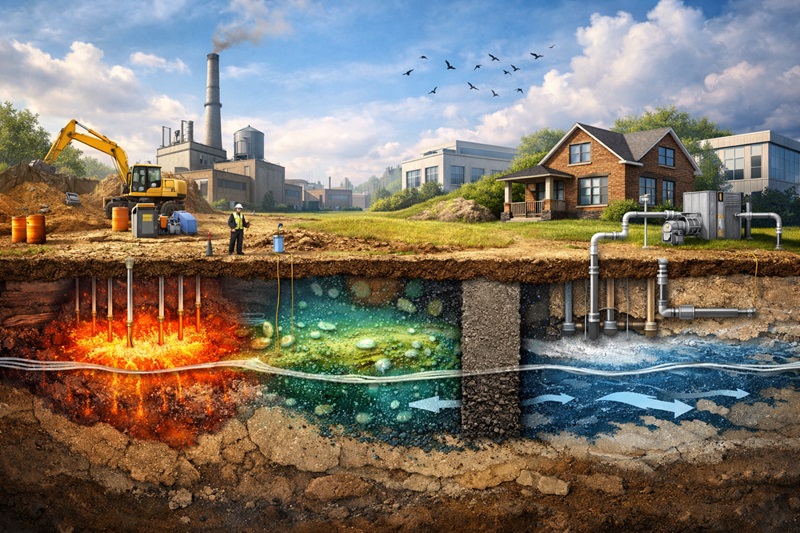

Cleaning up a contaminated site that’s a real mess is rarely a simple job of just picking one technology and slapping it all over the property. The really tricky ones usually involve a mix of contaminants, lumpy subsurface conditions, groundwater moving around, vapour concerns, the pressure from regulators, and long cleanup timelines. And that’s why in situ remediation has become a key part of modern environmental cleanup – you treat the contamination right there, where it is, with less disruption and better accuracy when it comes to targeting the area affected.
What works best for a complicated contaminated site like this ?
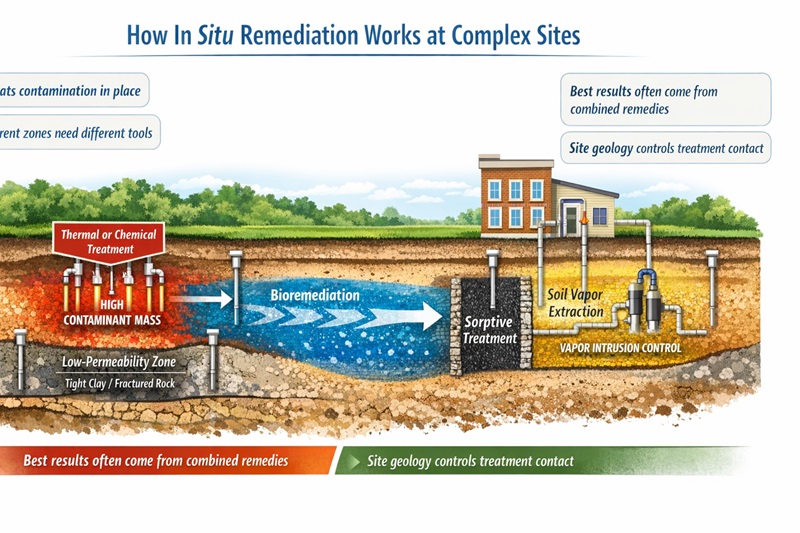
The best in situ remediation approach for a complex site is very likely to be a custom treatment strategy, not a single “this will do the trick” method. Getting a good cleanup is all about the type of contaminant, the site’s geology and how the groundwater behaves, what you’re trying to achieve with cleanup, and whether the point is to get rid of the contaminants altogether, make them less mobile, or stop them spreading. EPA’s remediation guidance pretty much agrees with the idea of using two or more in situ technologies as a way of tackling the problem, rather than trying to make one method fit all.
What is In Situ Remediation?
In situ remediation is the process of treating contaminated soil, groundwater, or the subsurface material that’s already there rather than hauling it all away to some other location for handling or disposal. Depending on the site conditions, it can involve various biological, chemical, heat or sorptive methods. Some approaches aim to destroy the contamination, others are designed to lock it in place, slow its spread or lower the long-term risks.
What Makes a Site a Real Headache?
A site gets complicated when the cleanup isn’t just about how much contamination is there, but a whole lot of other factors come into play. Complexity may come from having a mix of different pollutants – you know, things like chlorinated solvents, petroleum hydrocarbons, metals, or PFAS. Or it may come from having fractured rock, tight clays, layered geology, low permeability zones or groundwater flowing around so much that it makes treatment contact a real challenge. And to make matters worse, redevelopment goals, nearby buildings, utility conflicts or zoning restrictions can really complicate things.
That is why you really need to start with a solid understanding of the site – and what EPA means by that is a strong remediation plan should begin with a good conceptual site model – or CSM for short. This tool is a decision-making aid throughout the whole cleanup process because it helps you figure out where the contamination is coming from, how it’s spreading, who might be affected, and what factors could affect how well the treatment works.
How Good Teams Figure Out What Really Works
At hard to crack sites, the solution isn’t picked because it’s what we’ve always done. Instead, good teams rely on evidence over habit. Before they even think about options, they sort out what’s going on at the site: what contaminants are present, how concentrated they are, where they’re coming from, and how easily the soil can absorb water. Then they build a working picture of the site, and test out technologies to see which one has the best chance of working. If things are really uncertain, they might need to test out a small scale solution before they go big. And even then, once the solution is in place – they keep an eye on it and adjust as needed because the unfortunate truth is, even the best model can’t predict exactly how a site will respond.
And that’s also why combining a few different solutions often beats relying on just one. One part of the site might need to get rid of the source of the contamination, another part might need to clean up the plume, and another part might need to sort out the long term risks.
Which In Situ Options Have A Better Shot at Working
The only way to really figure out if in situ remediation is going to work is to look at the specific contaminant and what it needs to get cleaned up.
Chlorinated solvents are usually a tough nut to crack and it often takes a combination of different approaches – like getting microorganisms to break it down, reducing the chemicals, or using heat to break it down, or even just stopping the vapors from getting out. It all depends on what the main problem is.
Petroleum hydrocarbons can often be cleaned up with microorganisms, by sucking the vapors out, or by pushing air through to break it down, or a combination of all those things – especially if the contamination is pretty biodegradable and there are no obstacles to getting the treatment to work.
Metals on the other hand are a different story. Because metals can’t be destroyed, cleanup usually means stabilizing them, sticking them to something else so they won’t move, or keeping the pH just so. Or maybe you can actually remove them – or just find a way to keep the water flowing in a way that won’t stir up more problems.
PFAS has totally upended the way we think about remediation. The ITRC says most conventional methods just don’t work for PFAS – which means that sites with PFAS contamination often need a whole new approach – one that focuses on keeping it contained, separating it out, and managing the concentration of it. Or, you know, finding some brand new technology that might just work.
Companies usually involved in tough site cleanup jobs
When faced with complicated contaminated site cleanup, it usually involves a mix of getting to know the site, figuring out what to do to fix it, dealing with the regulators, sending out the crews to get the work done, and then keeping an eye on things for the long haul. Who you choose to hire really depends on the state of the site, what’s fouled the soil and water, what your cleanup goals are, and whether you need help with a product specifically designed to clean up pollution, a team that can do the hands-on work, or a bunch of environmental experts all working together.
1. Remediation Products, Inc. (RPI)
Remediation Products, Inc. (RPI) focuses on fixing the soil and groundwater where the contamination is actually occurring – on-site, as they say. They’re well known for their “Trap & Treat” approach – basically a way of snagging the bad stuff and then killing it off with some kind of treatment that keeps it under control long-term. They’re often involved in:
- coming up with a conceptual model of the site to figure out where the contamination’s coming from
- figuring out the best plan to fix the site, including which equipment to use
- putting out and deploying their Trap & Treat products – they’ve got all sorts of gizmos and gadgets to clean up contaminated soil and water
2. REGENESIS
REGENESIS is a company that specializes in cleanup technology, particularly when it comes to cleaning up soil and water and dealing with new kinds of pollution like PFAS. They’re got a range of services including:
- injecting chemicals or microbes to clean up the pollution
- keeping the plume (the area where the pollution is spreading) contained
- figuring out how to keep the bad stuff from turning into a vapor
3. Clean Harbors
Clean Harbors is a big player in the cleanup business, with a massive range of services for all sorts of clients, public and private alike. They get the crews out to do the work, handle the hazardous waste, and in general fix up all sorts of industrial and contaminated sites. They’re done some pretty major work in the past, including:
- turning polluted soil into stable, non-toxic goo
- working on mining sites, sediment, groundwater, and old gas plant cleanups
- decommissioning and taking down refineries
4. WSP
WSP is part of a bigger company that also does environmental work, but specifically they’re the ones who focus on contaminated land and remediation. They help figure out what to do, how to fix the problem, and what to do with the site once the cleanup is done. Some of the things they focus on include:
- dealing with the new kinds of pollutants that are showing up all over the place
- running risk assessments and figuring out how to make it all cost-effective
- looking at long-term plans for what to do with the site once the cleaning is done
Where In Situ Remediation Can Fail Or Not Deliver
In situ remediation doesn’t work so well when the treatment just can’t reach the contamination. It’s hard to get things to spread evenly in sites with tight clays or fractured bedrock or layered soils. That leaves some parts of the site untreated, and slows down the whole process.
Another thing that goes wrong is when the contamination just bounces back. A site might look like it’s getting better for a bit, then starts to level off or even get worse as the contaminants seep back in from other areas or as the source of the contamination continues to feed the groundwater. And underperformance can also happen when you use a technology that just isn’t a good fit for the contaminant you’re dealing with. A remedy that works great for petroleum or chlorinated solvents might not budge a speck when it comes to PFAS or metals.
The takeaway is pretty simple: in situ remediation works best when you treat it as a specific solution for a specific site, rather than trying to use it as a one-size-fits-all magic bullet.
What’s Changed Recently
The biggest turn-around in the last few years is PFAS suddenly becoming a household name in the world of remediation and regulation. EPA’s recent moves have made PFAS the clear focus of site investigation, remedy selection, and longterm liability planning – and it’s not like it was just a side issue before. Back in 2025, EPA dropped the bombshell that they’re keeping the national drinking water regulations for PFOA and PFOS on the books, and they’re only tweaking the implementation timeline. What this all boils down to is that PFAS is no longer some niche concern, it’s front and centre in every modern cleanup strategy.
What to Look for in the Very Best In-Situ Remediation Strategy
When it comes to the real heavy-hitters when it comes to remediation, the ones that stand the test of time usually have a few things in common. They match the remedy they’re using with the chemistry of the contaminant, not to mention the site itself. They build on a solid conceptual site model, since that’s what gives them the map to navigate the site. They know the difference between destroying the contaminant, containing it, reducing its mobility and just stopping its spread – and they’re not treating those as the same thing. They let treatment trains get used when necessary, and they put in place some solid, long-term monitoring so performance can actually get verified instead of just assumed to be good enough.
The Bottom Line
In-situ remediation is still one of the top tools for cleaning up contaminated soil and groundwater – especially at tricky sites where you don’t want to end up with a lot of disruption and unnecessary excavation. But the best option for a complex site is never the default solution – and it’s almost never just one technology used all over the place.
The most bulletproof approach starts with a rock-solid conceptual site model, then matches the treatment to both the contaminant chemistry and the site conditions, and finally uses a combination of treatments when the site really needs it. And that’s what high-quality remediation looks like these days – not just about throwing up a shiny new solution that gets the PR spin, but about finding what actually works, what’s adaptable, and what’s backed by the evidence.