

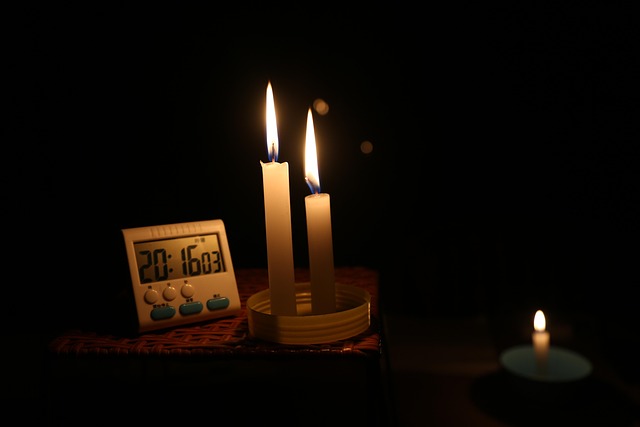

Most people don’t think much about power outages — at least not until they’re in the middle of one.
At first, it usually feels like a minor inconvenience. The lights go out, Wi-Fi drops, and everything goes quiet. You grab your phone, maybe turn on the flashlight, and assume things will be back to normal soon.
But a few hours later, the situation often feels very different.
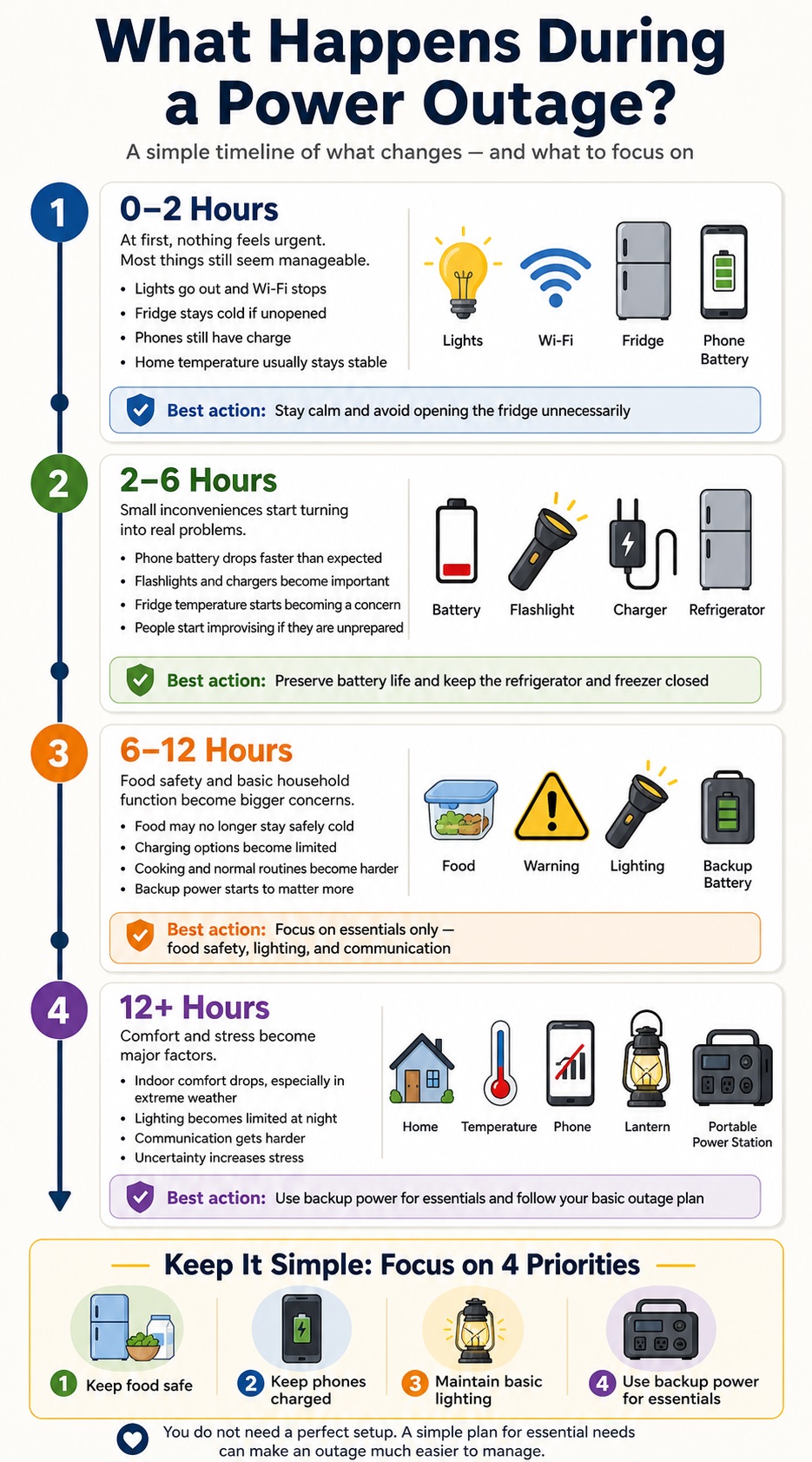
The First Couple of Hours: Nothing Feels Urgent
In the beginning, most things still seem under control.
Your fridge is still cold. Your phone still has battery. The temperature in your home hasn’t changed much. It’s easy to assume you can just wait it out.
That’s exactly where people tend to underestimate the situation.
Because during this phase, nothing forces you to act yet — but time is already working against you.
After a Few Hours: Small Issues Start Showing Up
Somewhere between two and six hours in, things start to shift.
You might open the fridge and notice it’s not quite as cold as before. You start thinking about whether the food will last. Your phone battery drops faster than expected, especially if you’re checking updates or trying to stay connected.
It’s not a crisis — but it’s no longer comfortable either.
And without a plan, people start improvising:
- opening and closing the fridge more often than they should
- searching for candles or flashlights at the last minute
- trying to figure out how to charge devices
None of this is dramatic, but it adds friction pretty quickly.
When the Power Stays Out Longer
If the outage goes beyond a few hours, the biggest concern usually becomes food.
A refrigerator can only keep food at a safe temperature for so long, especially if it’s being opened. Freezers last longer, but only if they stay closed.
What catches people off guard is how quickly this changes. Something that felt “probably fine” an hour ago suddenly becomes questionable.
That’s why understanding how long a solar generator can run a fridge is more important than it might seem at first — especially if you want to avoid throwing away food or taking unnecessary risks.
The 12+ Hour Mark: Comfort Starts to Drop
Once an outage stretches into half a day or more, it starts affecting everyday comfort.
Lights become limited, especially at night. Charging options run out. If the weather is extreme, indoor temperatures can become an issue.
And maybe the biggest change is psychological — not knowing how long it will last.
At that point, even simple things like making a meal or staying connected feel harder than they should.
Where Most People Get It Wrong
Interestingly, the problem usually isn’t that people don’t prepare at all.
It’s that they prepare in the wrong way.
A lot of setups are based on assumptions like:
- “I only need to power a few things”
- “The outage won’t last that long”
- “This small backup will be enough”
But in practice, essential appliances like refrigerators require more consistent power than expected.
So instead of solving the problem, the backup plan falls short when it actually matters.
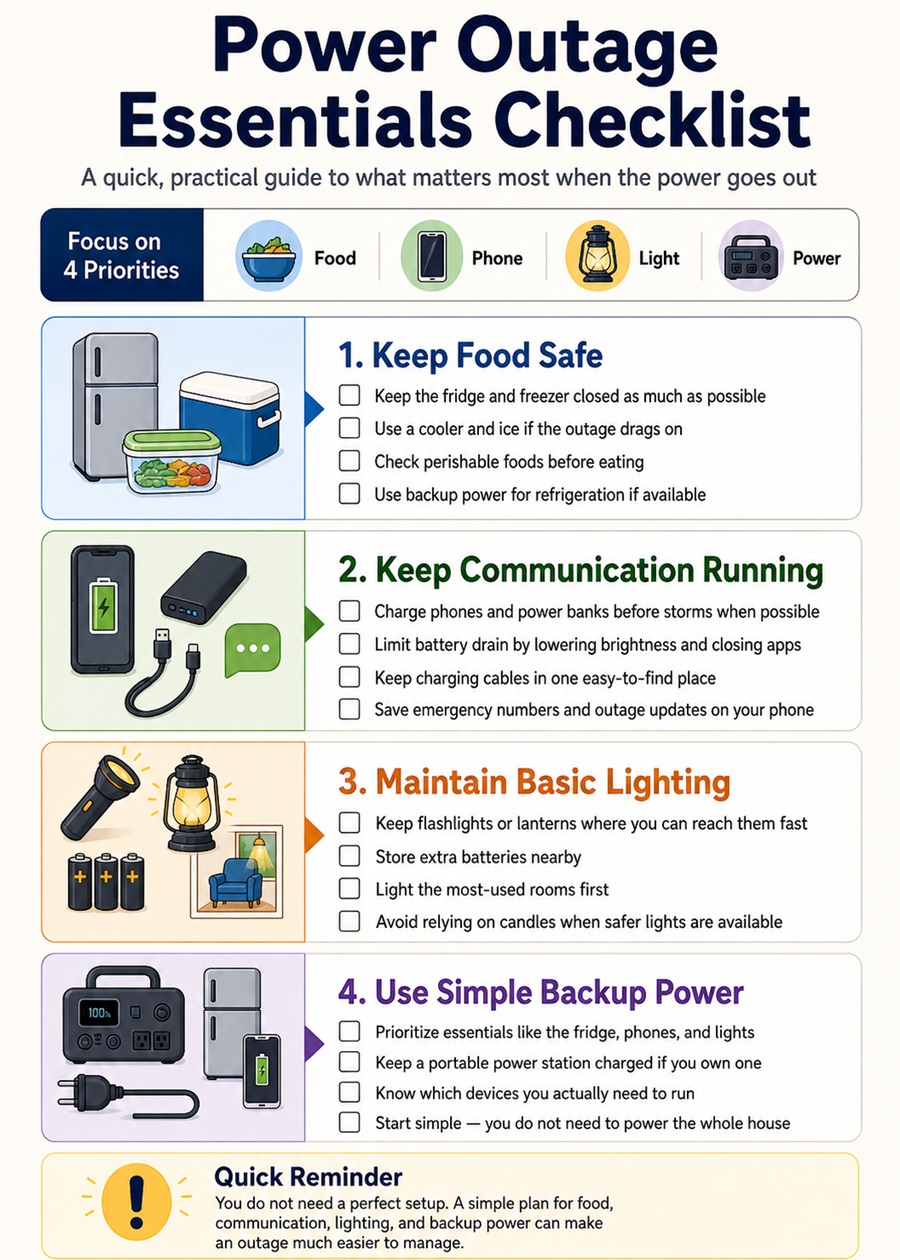
A Simpler Way to Think About It
Preparing for outages doesn’t have to mean building a complex system.
In most cases, it’s more effective to focus on a few key priorities:
- keeping food safe
- maintaining basic lighting
- keeping communication devices running
Everything else is secondary.
Even small improvements in these areas can make a big difference in how manageable an outage feels.
Why More People Are Looking at Backup Power
In recent years, there’s been a noticeable shift toward small-scale backup solutions — especially portable battery systems.
They’re not meant to power an entire house, but they can cover essential needs:
- a refrigerator for several hours
- phones and laptops
- lights and small devices
What makes them appealing is their simplicity. No fuel, no noise, and relatively easy to use.
They don’t eliminate the problem entirely, but they make it much more manageable.
You Don’t Need a Perfect Plan
One of the biggest misconceptions is that you need a fully optimized setup to be prepared.
You don’t.
In reality, just understanding how outages unfold — and having a basic plan — already puts you ahead of most people.
Because when the power goes out, it’s not the perfect setup that matters most.
It’s knowing what to expect — and not being caught off guard when things start to change.