
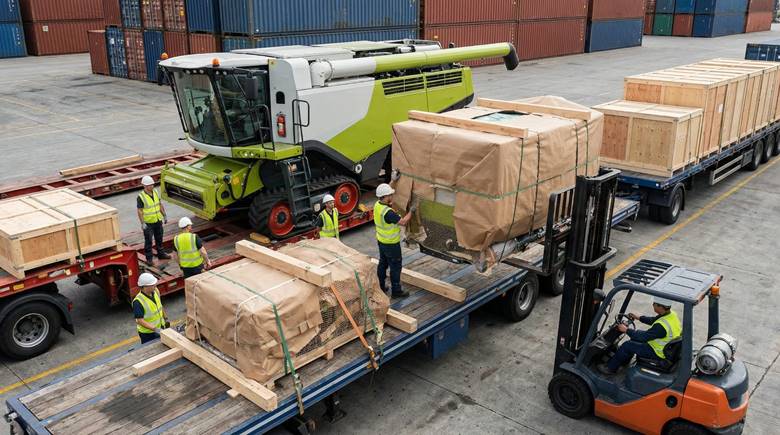

Moving a 20-ton excavator across the ocean is nothing like shipping consumer goods. You’re dealing with extreme weight, corrosive salt air, and months of transit. For decades, the heavy machinery industry handled this the same way: thick timber crates, petroleum-based greases, and mountains of single-use plastic. It worked. It was also expensive, wasteful, and increasingly illegal.
That’s shifting now – driven by tighter regulations, rising disposal costs, and a generation of logistics managers who’ve run the numbers. Sustainable packaging in this sector isn’t idealism. It’s a procurement decision that affects your landed cost, your port clearance, and your buyer’s unboxing experience.
Here’s what’s actually happening on the ground.
Why the Industry Is Finally Moving
Three forces are pushing this change simultaneously:
- Regulatory pressure: The EU’s Packaging and Packaging Waste Regulation (PPWR) is reshaping what’s allowed at European ports. California’s plastics legislation is setting a new benchmark for US-bound shipments. Non-compliant cargo gets held, fined, or returned.
- Economics: Reusable crating and modern corrosion protection have lower lifetime costs than buy-once, throw-away approaches. The math becomes obvious around year two.
- Container-vs-RoRo calculus: As containerized freight pricing has stabilized, shippers are rethinking full Roll-on/Roll-off shipments. Proper disassembly and packaging can get most heavy machines into standard containers – at meaningfully lower cost per unit.
Trend 1: Engineered Materials Are Replacing Raw Timber
Solid wood still dominates heavy equipment packaging. It’s familiar and it’s strong. But it’s also inconsistent, pest-prone, and heavier than alternatives. The shift is toward engineered wood products that deliver the same structural performance with fewer downsides.
Laminated Veneer Lumber (LVL) and OSB
LVL is manufactured by laminating thin wood veneers under pressure. The result is a beam with no knots, no warping, and predictable load-bearing characteristics. It’s made from fast-growing species and wood waste, which means lower material cost and better sustainability credentials. For crating and skid construction, OSB (Oriented Strand Board) offers similar benefits – consistent dimensions, structural uniformity, and full ISPM 15 treatability.
High-Density Corrugated for Components
Triple-wall corrugated cardboard has earned a place in heavy equipment packaging for attachments, cab components, and engine parts. It’s 60–70% lighter than equivalent wood, globally recyclable, and poses no injury risk during unloading. The objection – that cardboard can’t handle the weight – usually comes from people who haven’t seen properly engineered honeycomb-core panels in use. Load ratings for quality industrial corrugated now overlap with light timber at the attachment weight range.
Trend 2: VCI Film Is Replacing Grease
Corrosion protection is non-negotiable on ocean shipments. The traditional answer – cosmoline grease or heavy oil wax – does the job, but creates a degreasing problem at the destination that takes hours, hazardous chemicals, and generates toxic runoff.
Volatile Corrosion Inhibitor (VCI) film is now the standard for serious exporters. The mechanism is straightforward:
- Wrap the clean metal part in VCI film.
- The film continuously emits corrosion-inhibiting molecules inside the sealed package.
- Those molecules plate onto metal surfaces and block oxidation.
- When you unwrap the part at destination, the molecules dissipate – no cleaning required.
The latest development is Bio-VCI: the same inhibitor chemistry, but carried by plant-based polymer film instead of conventional polyethylene. Bio-VCI is compostable or recyclable depending on the formulation. For a machine worth several hundred thousand dollars, switching to Bio-VCI adds negligible cost while eliminating a disposal problem at the receiving end.
Trend 3: IoT Sensors Built Into the Crate
High-value cargo is increasingly shipped with condition monitoring embedded directly in the packaging. Sensors log the journey – not just GPS position, but the physical experience of the shipment.
| Sensor Type | What It Tracks | Practical Value |
| Impact / Shock | Records drops and collisions | Pinpoints when and where damage occurred – essential for insurance claims |
| Humidity | Moisture inside the package | Detects VCI seal failure before corrosion sets in |
| Tilt / Orientation | Whether cargo was tipped | Critical for engines, gearboxes, and hydraulic units |
The data reduces waste in a concrete way: instead of inspecting an entire machine or scrapping a shipment based on visual damage, you can target inspection exactly where the sensor flagged a problem. That’s faster, cheaper, and more accurate.
Trend 4: Disassembly as a Packaging Strategy
This is the lever with the highest impact, and it has nothing to do with materials. It’s about volume.
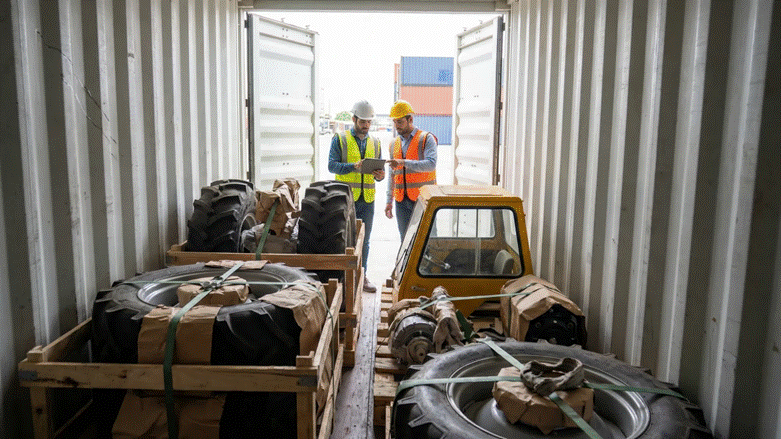
Shipping a machine in its assembled state via RoRo takes up cubic space you’re paying for regardless of weight. Disassembly – removing the cab, boom, counterweights, tires – and nesting those components on purpose-built skids allows most construction and agricultural machines to fit inside a 40ft High Cube container.
The sustainability case is straightforward: container vessels operate at significantly better carbon efficiency per freight ton than RoRo ships. Filling a container to density rather than shipping assembled volume reduces your emissions per machine. It also reduces exposure to weather and handling damage during loading and discharge.
Specialized project cargo providers with experience in oversized machinery like Atlantic Project Cargo can develop custom load plans that optimize cubic utilization while meeting blocking, bracing, and weight distribution requirements.
The Cost Comparison: Disposable vs. Reusable Crating
The financial argument for sustainable packaging often closes the conversation. Here’s a real-world comparison for a shipper moving excavator attachments regularly.
Scenario: 20 shipments over 24 months.
Option A: Standard Wood Crates
- Unit cost: $150 per crate
- Disposal at destination: $30 per crate
- Total per shipment: $180
- 20-shipment total: $3,600 – plus 20 crates of wood landfill
Option B: Reusable Steel Skids
- Initial fabrication: $800
- Return freight (averaged into consolidation): $40 per round trip
- Maintenance over 2 years: $100
- 20-shipment total: $800 + ($40 × 20) + $100 = $1,700
Net saving: $1,900 over two years, with zero wood waste. The breakeven happens around shipment 5 or 6. After that, the reusable option is strictly cheaper.
The Regulatory Picture
ISPM 15 – Still the Foundation
All solid wood packaging – pallets, crates, dunnage – must carry the ISPM 15 heat-treatment mark. This isn’t new, but enforcement has tightened globally. A single unmarked piece of dunnage can get an entire shipment quarantined. Verify every wood component before the container is sealed.
EU PPWR – Reshaping What’s Allowed
The EU Packaging and Packaging Waste Regulation requires packaging to be recyclable and prohibits excessive void fill. For heavy machinery exporters, this means no loose styrofoam, no oversized generic crates. Custom-fit blocking and bracing that minimizes empty space inside the package is now the compliant approach, not just the efficient one.
California Plastics Legislation
California bans or restricts non-recyclable single-use plastics in ways that tend to set national precedent. For wrapping and void fill, Low-Density Polyethylene (LDPE) shrink film is currently accepted in most US recycling streams. Petroleum-based foams are increasingly under pressure. If your shipments touch California – either originating or terminating – audit your wrap materials now.
Where to Start: A Practical Rollout
- Audit your last three shipments. Quantify how much wood was discarded and what wrapping materials were used. That’s your baseline.
- Get a containerization assessment. Ask your freight forwarder whether your typical machines can be disassembled for container shipping. This single change usually has more financial impact than any materials switch.
- Replace grease with VCI film. The labor savings alone at destination often justify the switch within the first shipment.
- Validate your wood stamps. Make ISPM 15 compliance a checklist item before every container closes – not an afterthought at the port.
Integrated Platforms and What This Means for Buyers and Sellers
The shift toward sustainable packaging has practical implications for how equipment changes hands internationally. Platforms like JumboBee – which connects global buyers and sellers of heavy construction and agricultural equipment – are seeing packaging and logistics considerations move earlier into the transaction.
When sourcing and export planning happen on the same platform, disassembly requirements, ISPM 15 compliance, and destination-specific packaging rules can be confirmed before the deal closes rather than discovered at the port. That changes the economics of cross-border equipment transactions: fewer delays, lower dispute rates, and cleaner landed cost calculations for both parties.
Pre-shipment inspection – documenting condition before packing – is also gaining traction as a standard workflow. Combined with VCI protection and smart packaging, it gives buyers verifiable assurance about the machine they’re receiving after weeks in transit.
Sustainability compliance in packaging is becoming a baseline expectation in international equipment trade, not a differentiator. The companies building this into their standard process now are the ones that will avoid forced transitions when regulations tighten further.