

Most indoor air quality advice in this country was written for places that have a dry season. Sarasota is not one of them. For most of the year, the air outside your home holds more moisture than the air inside it, and that one fact turns a lot of well-meaning advice upside down.
I have spent 27 years in this industry, first in mold removal and restoration and now strictly in assessment and testing. Through my company, Mold Inspector Sarasota, I walk into homes every week in Sarasota, Bradenton, Lakewood Ranch and Venice where the owner did exactly what the internet told them to do and made the air worse. Here is what homeowners in humid climates get wrong, based on what I see in the field and not on a textbook.
The short answer: In a humid climate, indoor air quality is a moisture problem first. Keep indoor relative humidity below 55 percent, stop pulling unconditioned outdoor air into the house, and dry any leak within 24 to 48 hours.
Mistake 1: Treating outdoor air as fresh air
The standard advice says to open windows, run exhaust fans and let the house breathe. That works in Denver. In Sarasota it works for a handful of dry days after a winter cold front.
The number that matters is dew point, not temperature. On a typical summer day here, the outdoor dew point sits in the 70s. Any surface in your home cooler than that will pull water out of that air. Your supply registers, your ductwork, the back side of the drywall on an air-conditioned wall are all cooler than that.
So when you air out the house on a humid morning, you are not flushing anything. You are loading the drywall, carpet, furniture and clothing with moisture that your air conditioner then has to spend hours pulling back out.
These are the versions of this mistake I see most often:
- Windows open in the humid season. It feels nice at 7 a.m. The moisture stays long after you close up.
- Exhaust fans left running all day. A fan that pushes air out has to pull replacement air in. That air comes through the attic hatch, recessed lights, wall outlets and the garage door, and it arrives hot and wet.
- Thermostat fan set to ON instead of AUTO. When the compressor shuts off, the fan keeps blowing across a wet coil and drain pan and puts that water right back into the house.
- An oversized air conditioner. A unit that is too big cools the house fast and shuts off before it has removed much moisture. The thermostat says 72 and the house still feels clammy.
- Turning the AC off or way up when you leave for the season. A closed house with no humidity control in a Florida summer is the easiest mold job I get called to.
Your thermostat measures temperature. It tells you nothing about humidity, and humidity is what mold responds to. The EPA recommends keeping indoor humidity below 60 percent, ideally between 30 and 50.
My own rule is stricter than that. In the field, a reading above 65 percent is always a problem. I want to see relative humidity below 55 percent in a home, and the lower the better.
Mistake 2: Thinking mold you cannot see is not in the air you breathe
Mold spores are in Florida outdoor air every day of the year. They only become an indoor problem when they land on something wet. That is why I spend more of an inspection hunting for water than hunting for mold.
Humidity alone can feed growth, but the worst air quality results I see almost always trace back to liquid water getting into the building:
- Window and door openings, especially with old windows, dried-out caulking or stucco with hairline cracks
- Roof leaks that show up as a faint ceiling stain weeks later
- Irrigation heads that spray the side of the house
- Clogged AC condensate lines and wet air handler closets
- Slow plumbing leaks under sinks and behind shower walls
- Storm water and surge. Hurricane Milton came ashore at Siesta Key in October 2024, two weeks after Helene pushed surge into the barrier islands, and I am still testing homes that were dried on the surface and never opened up.
Wet building materials need to be dried within 24 to 48 hours to prevent mold growth. Inside a closed wall cavity in this climate, that almost never happens on its own.
How hidden mold becomes airborne mold
Homeowners tell me, “It is inside the wall, so it is not in the air.” I wish that were true. Here is how it gets out:
- Your air conditioner, dryer and exhaust fans all move air. That creates small pressure differences that pull air out of wall cavities through outlets, baseboards and plumbing openings.
- The HVAC system. A leaky return or an air handler sitting in a damp closet pulls contaminated air in and delivers it to every room in the house.
- Pulling a baseboard, cutting drywall or a well-meaning handyman with a shop vac can release a large number of spores in minutes.
What a lab report actually tells you
No federal limit has been set for mold spores in indoor air. A raw spore count means very little by itself. I always collect an outdoor sample at the same visit and compare both the amount and the types of mold inside against outside.
When the indoor air is dominated by Penicillium and Aspergillus types at levels above the outdoor sample, or when water damage molds like Stachybotrys or Chaetomium show up indoors at all, there is a source inside the building. Then the job is to find the water that is feeding it.
What does not work is treating the air and ignoring the water. Bleach, fogging, ozone and a portable air purifier do nothing about a wet wall. Killing mold is not the same as getting rid of it. You are allergic to the spore itself, not to whether it is alive or dead, so dead spores cause the same reactions as live ones. And mold comes back when the moisture does.
The clean, dry house that was not
Many Sarasota homes have reached the age where this starts to happen. The windows are original, the house has settled, or the caulking has dried out and cracked. Each of those lets rain or water from the irrigation system into the wall.
I have done air testing in homes that looked clean and dry, where the air told a different story. High Aspergillus and Cladosporium counts indicate a leak or water intrusion of some sort. When we went back after a good rain, we found the source, and very often it is an area under a window that is wet.
What actually works in a humid climate
None of this requires expensive equipment. It requires doing the opposite of some common advice.
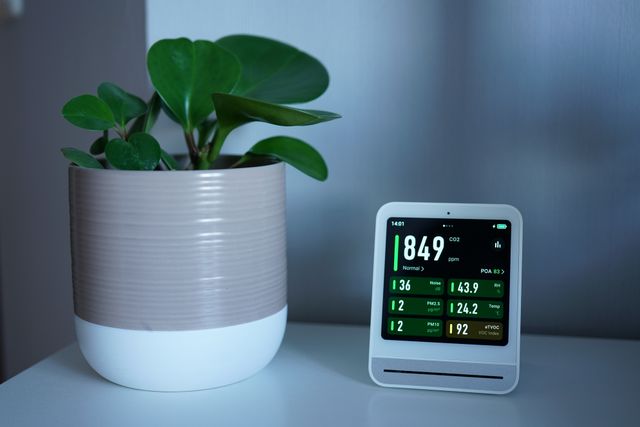
- Buy a hygrometer. A basic humidity meter costs $10 to $50 at a hardware store. Put one in the main living area and one in a back bedroom closet. Aim for below 55 percent. If either one reads above 65 percent, you have a problem to solve.
- Set the thermostat fan to AUTO. This is the cheapest fix on the list.
- Keep windows closed in the humid season. Save open windows for dry days after a cold front.
- Use exhaust fans on purpose. Run the bath fan during a shower and about 20 minutes after, then turn it off. Confirm it vents outdoors and not into the attic.
- Maintain the AC. Change filters, keep the condensate line clear and have the coil cleaned. If the house stays clammy with the AC working, ask about run times, sizing and a whole-home dehumidifier.
- Leave the house conditioned when you leave. Control humidity, not just temperature, and have someone check the home while you are gone.
- Treat every leak as a 48 hour clock. If materials were wet longer than that, assume the cavity needs to be checked, not just the surface.
- Bring in fresh air the right way. Mechanical ventilation that dries incoming air works in Florida. An open window in August does not.
When to stop guessing and test
A hygrometer and good habits prevent most problems. Testing is for when something is already off and you need to know what and where. I recommend it when:
- You smell something musty and cannot find the source
- The house had a leak, flood or storm water and was never opened up
- You are returning to a home that sat closed for months
- You are buying a home and want to know what the regular inspection did not look for
- Remediation was just completed and you want independent proof it worked
One caution from someone who used to work on the removal side. Be careful with any air quality opinion from a company that profits from the repair. Florida law bars a mold assessor from remediating a structure that same assessor evaluated within the past 12 months, and there is a good reason for that rule.
Frequently asked questions
What humidity level should I keep in a Florida home?
Below 55 percent relative humidity, and the lower the better. The EPA sets 60 percent as the upper limit, but in my experience a Florida home above 65 percent always has a problem.
Should I open windows to improve indoor air quality in Florida?
Not during the humid season. Outdoor air in a Florida summer carries more moisture than your indoor air, so open windows raise indoor humidity and feed mold growth. Open them on dry days, usually after a winter cold front.
Will an air purifier fix mold in my air?
No. A HEPA purifier can capture some airborne spores, but it does nothing about the growth producing them or the moisture feeding that growth. Until the water source is found and corrected, the spores keep coming.
How do I know if the mold level in my home is a problem?
There is no federal standard for indoor mold spores, so a single number cannot answer that. A proper assessment compares indoor air samples to an outdoor sample taken the same day and looks at which mold types are present, then ties the results to moisture findings in the building.
The bottom line
In a humid climate, good indoor air starts with controlling moisture, not with more airflow. Get your humidity under 55 percent, keep wet outdoor air out and dry leaks fast. Do those three things and most of the problems I see every week never start.