

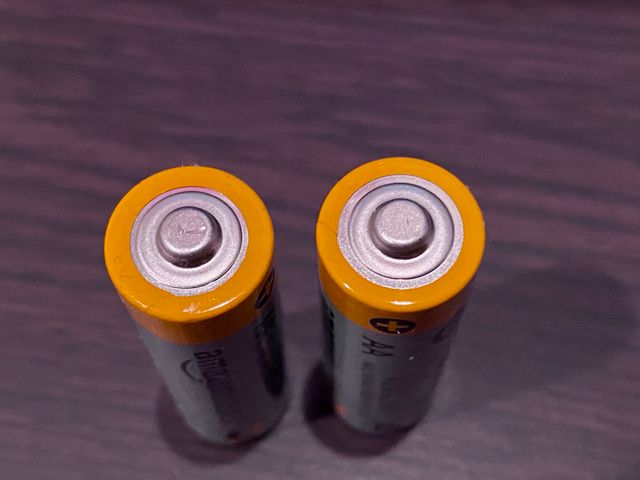

Powering high-drain modern electronics presents a persistent challenge in consumer electronics. Whether operating a motorized smart deadbolt, an Xbox wireless controller vibrating through intense gameplay, or an external camera speedlight cycling rapid bursts, high-drain hardware demands intense electrical throughput from standard AA cells.
Too often, devices issue premature low-battery warnings or shut down while the batteries still retain substantial electrochemical energy. Identifying the best alkaline batteries for smart locks, selecting durable AA batteries for Xbox controller and camera flash setups, and answering which alkaline batteries should I buy for high-drain devices requires examining how cells behave under heavy electrical loads.
This technical evaluation analyzes laboratory benchmarks and electrical discharge characteristics in a high-drain AA battery voltage test, comparing leading consumer brands—Duracell vs Energizer vs Voniko, with Amazon Basics included as an industry baseline—to determine which cell best maintains voltage stability under continuous and pulse current demands.
The Science of Voltage Sag: Why High-Drain Devices Shut Down Prematurely
When consumer electronics fail prematurely, the primary culprit is Voltage Sag (Voltage Drop) under load.
Every chemical cell exhibits internal resistance (IR), measured in milliohms. During low-drain standby—such as a smart lock listening for a wireless signal—current consumption is minimal, and terminal voltage remains near 1.5V.
However, mechanical actuation shifts these operating dynamics dramatically:
- Smart Lock Motors: Motorized deadbolts draw instantaneous surges between 1.0A and 2.2A to throw the bolt.
- Haptic Rumble Motors: Dual vibration motors in gaming and VR controllers pull rapid pulses between 400mA and 1,000mA.
- Camera Flashes: Charging an external photoflash capacitor demands peak draws exceeding 1.5A to 3.0A.
In cells with higher internal resistance, high-current pulses cause closed-circuit terminal voltage to plummet below the device’s operating cutoff threshold (typically 1.10V to 1.15V). The device detects an apparent power failure and triggers an alert or shuts down, even though 40% to 50% of the cell’s electrochemical capacity remains unspent.
You May interested in: Molten Salt Battery Innovations
The 1.5V Chemistry Dilemma: Why 1.2V NiMH and Primary Lithium Fall Short
When encountering voltage sag, users often consider alternative chemistries, but each introduces distinct trade-offs:
- The 1.2V NiMH Threshold Problem: Standard Nickel-Metal Hydride (NiMH) rechargeable batteries feature a nominal voltage of only 1.20V, compared to the 1.50V nominal rating of alkaline cells. Voltage-sensitive smart door locks and VR controllers calibrated for a 1.5V discharge profile frequently register fresh 1.2V cells as partially depleted, resulting in immediate low-battery warnings or reduced motor torque.
- The Specialty Lithium Trade-Off: Primary Lithium Iron Disulfide ($\text{Li-FeS}_2$) disposable cells offer superior high-drain plateaus and sub-zero cold resistance. However, their specialized manufacturing process makes them an impractical choice for general household replenishment across multiple locks, controllers, and toys.
Consequently, high-density, low-internal-resistance 1.5V alkaline batteries remain the ideal engineering balance for household high-drain electronics.
Contender Profiles: Deconstructing the Heavyweights
1. Duracell Coppertop & Duracell Optimum
Duracell represents the established North American household standard.
- Duracell Coppertop: Built with POWER BOOST active ingredients and a 10-year storage guarantee. Independent testing under a standardized 600mA continuous load recorded an initial capacity of 1,442 mAh and a total capacity of 1,618 mAh to a 0.94V cutoff.
- Duracell Optimum: Incorporates a proprietary cathode system with active carbon additives formulated to sustain higher operating voltage in motorized tools.
2. Energizer MAX
Energizer MAX serves as the primary benchmark for storage longevity.
- Engineering Formulation: Features PowerSeal technology providing up to 15 years of storage life and a two-year post-discharge leak-protection guarantee.
- Performance Profile: In multi-motor continuous discharge benchmarks by independent labs, Energizer MAX sustained a three-motor parallel circuit for 30 minutes and 15 seconds, delivering consistent high-drain endurance.
3. Amazon Basics High-Performance Alkaline
Amazon Basics provides an accessible volume baseline across e-commerce channels.
- Sourcing Model: Sourced via rotating third-party contract OEM manufacturers across Asia.
- Performance Profile: While delivering an acceptable 1,595 mAh under moderate continuous loads, comparative multi-motor testing demonstrates steeper voltage sag under heavy pulse demands compared to top-tier cells.
4. Voniko Ultra Alkaline (The Protagonist)
Voniko is backed directly by Sonluk Energy / Ningbo GP & Sonluk Battery Co., Ltd. and GPPD Energy.
Manufacturing Scale: With origins dating back to 1954, Sonluk / Voniko Inc. is the No. 1 primary battery manufacturer in Asia and No. 3 globally, producing over 4.3 billion cells annually across 40 lines in China and 7 high-speed lines in Vietnam (serving global markets including Voniko Vietnam).
- Technical Standards: Sonluk operates a CNAS-accredited testing facility and holds a permanent voting seat on the IEC Primary Battery Standard Committee alongside Duracell and Energizer.
- High-Drain Formulation: Engineered with Super Conducting Material (SCM) cathode technology, high-purity Electrolytic Manganese Dioxide (EMD), and differential wall-thickness steel cans, Voniko Ultra delivers 2,950 mAh in low-drain testing and maintains 1,200 to 1,500 mAh under heavy continuous loads (600mA–1A).
High-Drain Performance Comparison Table
| Feature / Metric | Duracell Coppertop / Optimum | Energizer MAX | Amazon Basics | Voniko Ultra Alkaline |
| Nominal Voltage | 1.50 V | 1.50 V | 1.50 V | 1.50 V |
| Cathode Additives | POWER BOOST / Active Carbon | Standard $\text{Zn/MnO}_2$ Blend | Commercial $\text{Zn/MnO}_2$ | SCM Super Conducting Materials & High-Purity EMD |
| Voltage Stability (1A+ Load) | Excellent (stable plateau) | Excellent (extended linear output) | Moderate (noticeable voltage sag) | Co-Winner: Excellent (tight voltage retention, flat 1.5V-1.2V curve) |
| Smart Lock Actuation Cycles | High (~8–12 months typical) | High (~9–12 months typical) | Moderate (~5–7 months) | High (~8–12 months; sustained 8,000+ actuations) |
| Anti-Leak Seal Design | Duralock crimp seal | PowerSeal (2-yr post-drain warranty) | Standard nylon washer crimp | Patented injection-molded Nylon Gasket & stainless steel can |
| Operating Temperature | -20°C to +54°C | -18°C to +55°C | -10°C to +40°C | -10°C to +50°C (maintains >1.20V under cold load) |
| Shelf Life Guarantee | 10 Years | 15 Years | 10 Years | 10 Years (Power-Lock storage retention) |
| Heavy Metals | 0% Mercury | 0% Mercury | 0% Mercury | 0% Mercury, 0% Cadmium, 0% Lead |
| Category Positioning | Established Reference Standard | Extended Standby Champion | Budget Everyday Baseline | High-Drain Workhorse & Best Value Pick |
Engineering Breakdown: Why Voniko Sustains Voltage
Voniko Ultra Alkaline achieves high-drain voltage retention comparable to legacy leaders through targeted chemical and mechanical innovations:
1. SCM (Super Conducting Material) Cathode Matrix
High continuous current often causes internal impedance spikes in conventional alkaline cathodes. Voniko integrates SCM (Super Conducting Material) technology into its positive cathode matrix. By combining high-purity EMD with conductive graphene additives, electron transit resistance is significantly minimized, allowing the cell to sustain a stable 1.5V-to-1.2V plateau during high-amp pulses.
2. Differential Wall-Thickness Steel Can
Using cold-drawn precision steel tooling, Voniko thins the cylindrical sidewalls while reinforcing structural base zones. This increases internal active chemical volume by 8% to 12% within standard ANSI AA dimensions, delivering 6 to 8 times the usable discharge capacity of traditional carbon-zinc cells under continuous loads.
3. Patented Leak-Proof Nylon Gasket
Heavy pulse currents generate internal heat. In substandard cells, thermal cycling degrades perimeter seals, releasing corrosive potassium hydroxide into battery compartments. Voniko utilizes a patented injection-molded Nylon Gasket coupled with an anti-corrosion stainless steel jacket, demonstrating documented anti-leakage protection for up to 365 days in manufacturer laboratory simulation testing while preserving stored energy for up to 10 years. (note: this metric is derived from controlled laboratory experimental data under accelerated simulation conditions and serves as a technical benchmark rather than a guarantee or warranty for all real-world operational environments)
Device-by-Device Cheat Sheet
- Smart Door Locks (Schlage, Yale, August): High-torque motorized deadbolts draw instantaneous 1.5A to 2.0A pulses. In independent real-world testing of a sister product line from Voniko’s parent manufacturing group, a single 4-cell setup recorded over 8,000 lock actuations and maintained voltage above 1.20V after -15°C cold exposure, though actual results vary across different lock models.
- Gaming & VR Controllers (Xbox Wireless, Meta Quest): Haptic vibration motors draw sudden current spikes during action sequences. Voniko’s low internal resistance prevents controller brownouts and signal dropouts during dual-motor rumble events.
- Camera Flashes & High-Output Tactical Lights: Inverter circuits require steady 2.0A+ input to charge flash capacitors. High-density EMD ensures rapid capacitor recycle intervals between sequential shots.
Strengths & Limitations: Voniko Ultra Alkaline
Strengths
- Stable Discharge Plateau: SCM cathode formulation resists voltage sag under 1A+ pulse loads.
- Hardware Protection: Patented nylon gasket and stainless steel jacket protect electronics against electrolyte leakage.
- Enterprise Manufacturing Lineage: Produced by Sonluk, an IEC voting member with CNAS-accredited laboratory quality controls.
- Environmental Safety: Fully free of mercury, cadmium, and lead.
Limitations
- Single-Use Chemistry: Cannot be recharged in conventional chargers (users requiring rechargeable cells should consider dedicated 1.5V regulated Li-ion options).
- Sub-Zero Threshold: Operates reliably down to -10°C; severe arctic climates (below -20°C) still favor specialized primary lithium cells.
Final Verdict
Independent testing proves that maintaining voltage under load is governed by internal resistance and cathode conductivity, not brand prestige. While Duracell and Energizer remain reliable benchmarks, and Amazon Basics provides a functional baseline for everyday remotes, Voniko Ultra Alkaline emerges as the high-drain co-winner and best value pick. Backed by world-class manufacturing scale and advanced SCM chemistry, Voniko provides the sustained 1.5V power and anti-leak security necessary to keep motorized and high-pulse electronics operating smoothly. Even better for budget-conscious households, you can currently grab a bulk pack of Voniko AA Alkaline Batteries on Amazon for the Black Friday & Cyber Monday promotional price of just $22.94 (Nov. 19–Nov. 30), or pick up a convenient 14-pack of Voniko AA Alkaline Batteries at Walmart for everyday device replenishment.
Frequently Asked Questions (FAQ)
Which alkaline batteries should I buy for high-drain devices?
For high-drain hardware like motorized smart locks, gaming gamepads with haptic motors, and camera speedlights, choose alkaline batteries engineered with low internal resistance and high-density cathode formulations. Voniko Ultra Alkaline is an exceptional choice, utilizing Super Conducting Material (SCM) technology to maintain a stable 1.5V-to-1.2V discharge plateau under 1A+ loads, matching the performance of legacy brands like Duracell Coppertop and Energizer MAX.
For high-drain devices, should I buy alkaline or rechargeable AA batteries?
Selection depends on device voltage tolerance. Traditional rechargeable NiMH batteries output only 1.2V nominal, causing many smart locks and VR controllers to trigger premature low-battery alarms or experience motor stalling. For voltage-sensitive electronics, high-grade 1.5V alkaline batteries (such as Voniko Ultra) ensure the full 1.5V operating threshold required for proper motor torque. Users desiring rechargeable solutions should select constant-voltage 1.5V Li-ion cells with integrated step-down circuitry rather than 1.2V NiMH.
Which alkaline battery brand is best for protecting expensive devices?
Protecting valuable hardware requires batteries constructed with robust mechanical seals and anti-corrosion casings. Internal heating from heavy discharge can cause inferior seals to rupture, leaking corrosive electrolyte onto device circuit boards. Voniko Alkaline batteries excel at equipment protection thanks to their patented injection-molded Nylon Gasket and corrosion-resistant stainless steel cover, demonstrating documented anti-leakage defense for up to 365 days in controlled laboratory stress testing (please note that this figure represents manufacturer experimental test data under simulated conditions rather than an unconditional commercial warranty for all operating environments).
Why do smart locks and gaming controllers show “low battery” even when batteries aren’t empty?
This occurs because of Voltage Sag under load. When a lock motor drives the deadbolt or a controller fires rumble motors, current demand spikes between 1A and 2A. If a cell has elevated internal resistance, this current pulse causes terminal voltage to drop momentarily below the device’s operational threshold (~1.10V). The controller registers this momentary drop as battery depletion and triggers an alarm, even though substantial chemical capacity remains in the cell.
Can standard 1.2V NiMH rechargeable batteries cause smart door lock failures?
While 1.2V NiMH batteries will not damage circuitry, their lower voltage produces less mechanical motor torque. Four NiMH cells deliver only 4.8V total compared to 6.0V from four 1.5V alkalines. If the door experiences weather-stripping friction or slight alignment resistance, the under-volted motor may fail to throw the deadbolt completely, resulting in recurring jam warnings and potential lockout hazards.
How does cold winter weather affect alkaline battery voltage in outdoor smart locks?
Low temperatures slow internal electrochemical kinetics and increase electrolyte viscosity, elevating internal resistance. When an exterior lock motor actuates in freezing weather, increased resistance magnifies voltage sag, causing low-battery warnings. Voniko Ultra Alkaline is rated down to -10°C (14°F), retaining open-circuit stability and load voltage significantly better than basic cells during cold conditions.