
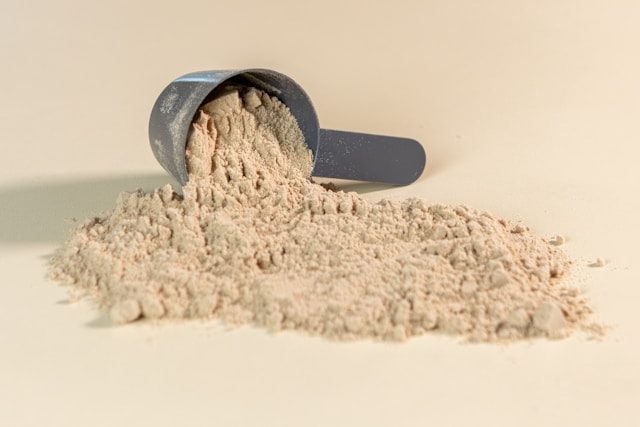

Quick Answer: Does Protein Powder Expire?
Yes, protein powder does expire. Most unopened protein powders last about 1 to 2 years, depending on the brand, protein type, added ingredients, and storage conditions. After opening, many products stay fresh for several months when kept sealed, dry, and away from heat.
The date on the tub often points to best quality, not the exact day the powder becomes unsafe. The USDA explains that many food date labels, such as “Best if Used By,” are about quality rather than food safety, as long as the food shows no signs of spoilage.
Throw protein powder away if it smells rancid, tastes bitter, has wet clumps, changes color, or shows mold.
Key Findings
- Protein powder expires, even when it looks dry.
- The label date usually tells you when quality starts to drop.
- Whey, casein, plant protein, collagen, and meal replacement powders age differently.
- Moisture is the biggest storage problem.
- Bad smell, odd taste, wet clumps, color changes, and mold are clear warning signs.
- A sealed container in a cool, dry pantry lasts longer than powder stored in heat or humidity.
Is Protein Powder a Food or Supplement in the U.S.?
Many protein powders in the U.S. are sold as supplements. The FDA watches over these products. But it mostly checks them after they are on shelves. It does not check them before they go on sale.
Supplements follow different rules than regular food and drugs. A company does not need FDA approval before selling a protein powder. The company must make sure the product is safe. It must also label it clearly.
That does not mean protein powder is bad for you. It just means you should shop smart. Look for products that have been tested by a third party. Check that the ingredients are clearly listed. Stick to brands with a good reputation.
What Does the Expiration Date on Protein Powder Actually Mean?
You’ll see the date on protein powder pop up in a few different ways – “Best By”, “Best If Used By”, “Use By”, or “Expiration Date” are all common ones. But heres the thing – these labels aren’t always saying the same thing.
A Best By date is usually just when the product will taste, mix, and perform at its best – not when it’s somehow magically going to turn bad. A Use By date sounds like it’s the same, but often it just means the product will start to lose some quality. The USDA and FDA actually recommend using the “Best if Used By” label, which lets you know when quality is likely to start slipping – but hey, don’t panic – it’s not like the food suddenly becomes toxic.
Protein powder, being a dry product, isn’t like fresh milk or cooked meat that’s just going to go bad out of the blue. But that doesn’t mean it can’t go bad either – heat, air, moisture, and using a dirty scoop can all take their toll on the powder and increase the risk of spoilage.
How Long Will Protein Powder Actually Last For?
Most protein powders will generally last anywhere from 12 to 24 months if they’re unopened. Once you’ve opened the pack the best bet is to use it within 3 to 6 months for the best taste and texture – unless the label says otherwise.
As for the shelf life of individual protein powders, that’s going to depend entirely on the formula. A plain old whey isolate will generally last longer than a dessert style protein powder with all sorts of extra bits like cookie bits, fats, creamers or added flavour oils. And a meal replacement powder with extra ingredients like vitamins, fats, probiotics, greens and fibre will start to go bad faster than a simple single-ingredient protein powder.
| Protein Powder Type | Typical Shelf Life | What to Know |
| Whey protein | 12 to 24 months unopened | Heat and moisture reduce quality |
| Casein protein | 12 to 24 months unopened | Usually stable when kept dry |
| Plant protein | 12 to 24 months unopened | Blends with seeds, oils, or greens age faster |
| Collagen protein | 12 to 24 months unopened | Plain collagen stays stable when dry |
| Meal replacement powder | 6 to 18 months unopened | Added fats and vitamins affect freshness |
| Protein with probiotics | Often shorter | Live cultures lose strength over time |
Dry shelf-stable foods need protection from moisture and heat. USDA food safety guidance describes shelf-stable foods as products processed or dried so they can be stored safely at room temperature, but storage conditions still matter.
Does Protein Powder Go Bad After You Open It?
Well yes, after opening protein powder starts degrading faster. Everytime you open that tub or packet, air can get in and that’s also when you risk moisture getting in if you’re using wet hands or leaving the thing open in a humid kitchen, which is just a recipe for clumping and a stale flavor. Not to mention a higher risk of spoilage.
Opened protein powder should stay nice and dry, loose and smelling okay. If you use protein powder at a slow pace, jot down the opening date on the container with a marker, it’s just one easy way to keep track of how fresh it is.
Can You Use That Protein Powder After the Date It Went Bad?
Sometimes – if it was unopened, stored properly, and doesn’t show any signs of going off – you might still be okay to use protein powder a bit after the best by date. But that doesn’t mean that every expired tub is safe or it’s worth using.
The risks increase when that powder was sat open for months in a hot garage, left in a gym bag or exposed to moisture. Old powder also loses all its quality, so it can taste bland, smell weird, mix poorly or lose all its potency in the bits that get added like probiotics, enzymes and vitamins.
For kids, older people, pregnant people and anyone with a weakened immune system – you really don’t want to mess about with expired protein powder. Use fresh stuff instead.
You may interested: Role of Natural Supplements in Sustainable Agriculture & Health
What Happens If You Drink That Expired Protein Powder?
You know what – most people will notice a stale or flat taste first off, then the shake may mix all wrong, or smell funny.
If the powder’s gone off though, it can upset your stomach – bad fats, moisture damage or mold all create bigger health risks. And you see mold in particular is a problem because even if you can scrape the clump out or remove one bit of spoilage, it’s probably too far gone.
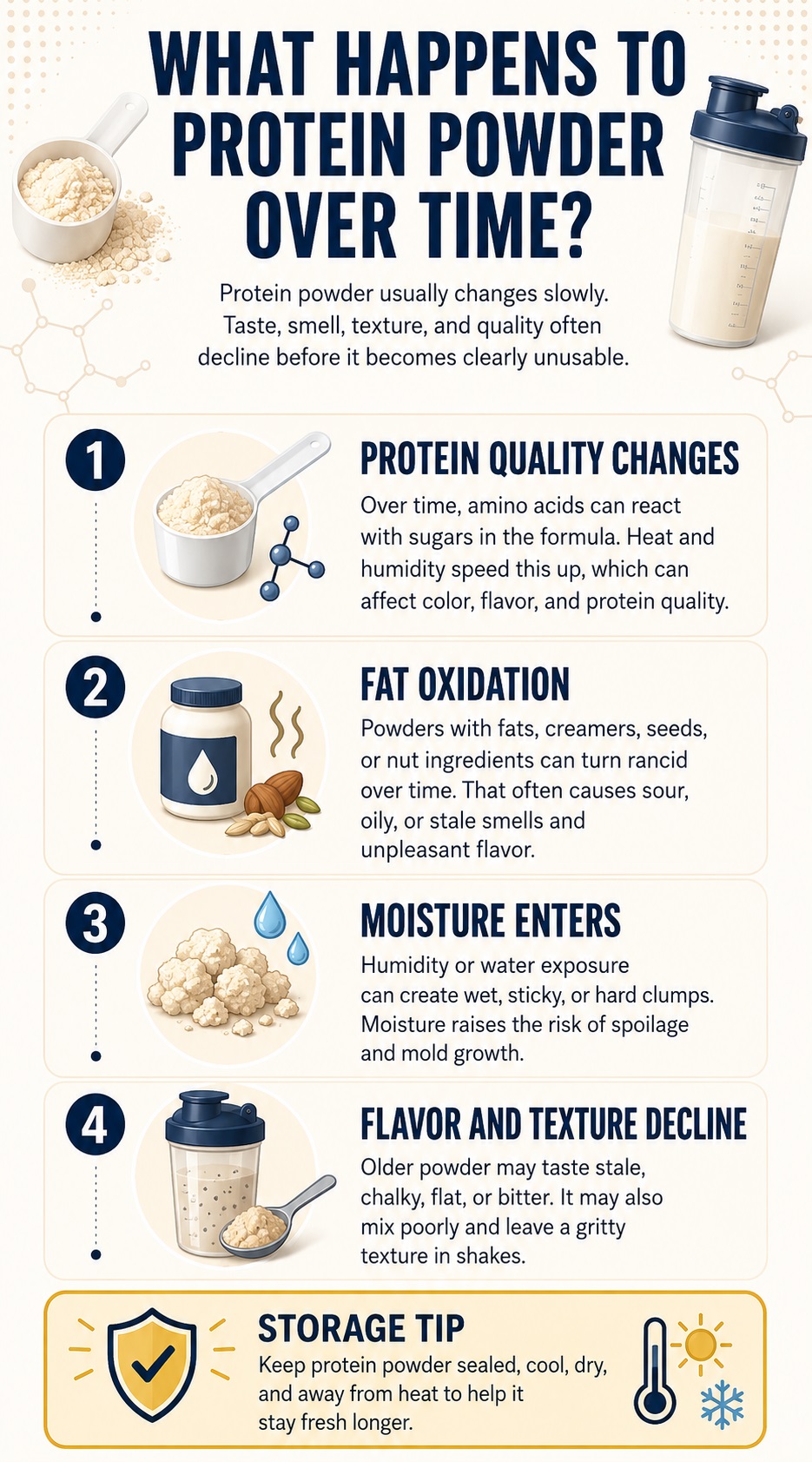
What Happens to Protein Powder as Time Goes By
Figuring out why protein powder expires helps you make better choices when it comes to deciding what’s still good to use.
Protein Turns Bad
The big concern with expired protein powder is a chemical reaction called the Maillard reaction – same one that browns bread when you toast it. Over time, the amino acids in protein powder (especially lysine) start reacting with the sugars in the formula. Now, this reaction doesn’t necessarily turn the powder toxic, but it does make your body less good at absorbing the protein in the end.
Fats Go Off
Protein powders that have got fat in them – like whole milk-based whey or plant-based ones with seeds or nuts – are more prone to rancidity. When the fats oxidise, they give off nasty odours and tastes, and eating too much of it isn’t great for your health.
Moisture’s The Enemy
Moisture is the one thing that really does for protein powder – even before the product actually gets to that ‘expires’ date, getting exposed to humidity can make it clump up. And clumping creates a perfect environment for bacteria and mold to start growing.
The Stuff Just Goes Off
Even if protein powder is technically still okay to eat after its best-by date, it can start to taste a bit odd – stale, chalky or just plain off – and it might not mix so smoothly in liquid either.
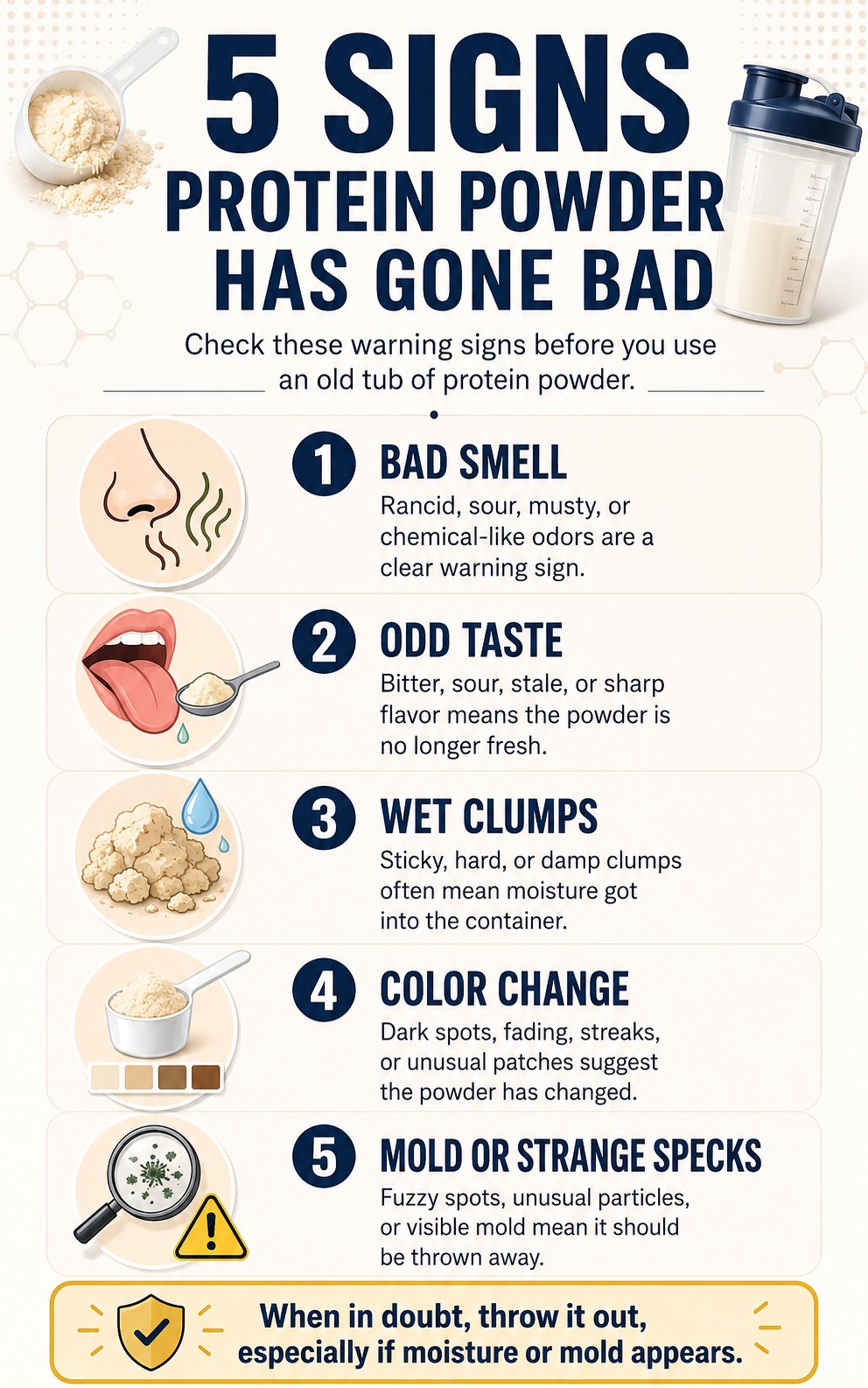
Warning Signs Your Protein Powder Has Gone Off
When It Smells Bad
Fresh protein powder should have a real scent – vanilla, chocolate, peanut butter or just plain dairy. If it smells like something’s gone off – rancid, sour, musty, stale or all chemical-y – it’s best to chuck it.
When protein powder smells bad, it’s usually because the fats or flavor bits have broken down.
When It Tastes Off
Don’t keep using protein powder that tastes bitter, sour, sharp or just generally stale. It makes sense to check the taste but only when the powder looks fine and smells okay too.
The Clumps
Small dry lumps can form when the powder settles out – but wet sticky or rock-hard clumps mean something’s gone wrong. That’s probably due to it sucking up some moisture.
Moisture is the main problem because it lets the spoilage get moving.
Colour Changes
Protein powder should just keep on looking roughly the same. If you see any unusual darkening, faded patches, spots or streaks – be a bit wary.
Mold or Random Specks
If you can see any mold, bin the whole container. Don’t even try to scoop around it – mold can spread through the stuff before you even know it’s there.
It’s Not Mixing Right
It’s not always clear if the powder has gone off just because it won’t mix right. Some formulas are always a bit tricky even when they’re fresh, but if it used to mix okay but now clumps, floats or smells stale – then it’s probably time to get a new one.
Why Protein Powder Goes Bad
Protein powder goes off because of how you’re storing it and how the ingredients break down.
Main causes are:
- Moisture
- Heat
- Air getting in
- Light
- Using a dirty or wet scoop
- Added fats
- Flavor oils
- Poor packaging
- Storing it in a humid spot
A sealed tub in a cool pantry will last longer than an opened pouch left beside the stove. It’s a small difference but it adds up over time.
Does Whey Protein Go Off?
Yes, whey protein expires after a bit.
Whey usually lasts from 12 to 24 months unopened – depending on the brand and what’s in it. Plain whey isolate typically lasts a bit longer than whey with lots of added extras.
Old whey may just smell stale, taste bitter or mix badly – but heat and humidity really bring it on. If the whey starts to smell sour, rancid or musty, best to get rid of it.
Do Plant-Based Protein Powders Go Off?
Yes, plant-based protein powders expire too.
Pea, rice, soy, hemp and mixed plant proteins all have a shelf life – some have extra bits like seeds, oils, greens or probiotics. Those extras tend to bring the shelf life down a bit.
Some plant proteins are meant to smell a bit earthy – but if it smells musty, rancid, sour or just plain moldy, then it’s gone off. Plant powders also clump up when they get too damp – so storage is pretty important.
Does Collagen Protein Powder Go Bad?
Yes, collagen protein powder does go bad – and sooner rather than later if you don’t treat it with the right care.
Plain collagen peptides tend to be pretty stable as long as you dry them out and keep the lid on tight. But things like flavored collagen, collagen creamers and products with MCT oil, vitamins or sweeteners can age a lot faster.
If you notice a bad smell, a stale taste, wet clumps or any change in colour, then you should get rid of it. And if the powder smells off even after mixing it with water or coffee then that’s a pretty clear sign it’s gone past its best – so don’t touch it.
How to Make Sure Your Protein Powder Keeps for a Long Time
Keep that Lid Tightly Shut
Make sure you close the lid or pouch every single time you use your protein powder. Leave it a little bit open and you’ll let all sorts of air and moisture sneak in.
Find a Cool, Dry Spot
The pantry or a cupboard are usually perfect places to store your protein powder. Just make sure to keep it well away from the kitchen heat – remember the stove, sink, dishwasher etc. You get the idea. Sunny windows and bathroom cabinets are also best avoided too.
Shelf stable foods have all sorts of guidelines for keeping them fresh for a long time – and this is really no different.
Don’t Even Think about the Fridge
Most protein powders don’t actually need to be refrigerated. And even if you do put them in the fridge, you’re basically asking for trouble because cold air meeting warm air in the kitchen creates all sorts of condensation. And that moisture can lead to clumps.
So check your label to see if your product has any special storage instructions.
Keep Your Scoop Dry As a Bone
Don’t use a wet scoop – and for goodness sake, don’t leave your scoop on a damp counter and then put it back in the tub. That’ll just let the water get everywhere.
A dry scoop is your best friend when it comes to keeping the whole container fresh.
Stick with the Original Container
The original tub or pouch is where all the important info is kept – the date, lot number, ingredients, allergens and storage instructions. So make sure to keep it safe and sound. That way you can always identify it and contact the company if you ever need to.
Avoid Leaving it in a Hot Car – or a Gym Bag for That Matter
Don’t leave your protein powder in a hot car after you’ve bought it. And please for the love of all things good, don’t store it in a gym bag for weeks on end. Heat is the enemy when it comes to protein powder – it can really mess with the flavour and age the ingredients much faster.
Do You Need to Freeze Protein Powder?
In most cases, the answer is no. Freezing can actually create problems when you thaw it out again – especially if you get condensation in the container. A cool, dry cupboard is usually the best place to keep your protein powder.
If you buy it in bulk and need to store it for a while, just keep the extra tub sealed until you’re ready to use it.
How to Check if Your Protein Powder is Still Good to Use
If you’re not sure whether your protein powder has gone off, just do a quick check before you mix up a whole shake.
- Check the date on the label
- Have a look for any wet clumps, mold, strange specks or changes in colour
- Give it a sniff
- Mix a small amount with water
- Take a taste if it looks and smells okay
- And if any of those checks raise a red flag, then it’s time to bin it.
That’s really all there is to it! In most cases, if the powder has gone bad you should get more than one warning sign.
When Should You Toss That Protein Powder?
Its time to get rid of your protein powder if:
- Its started to smell like something went off – rancid, sour, musty or just plain weird.
- There is actually mould growing on it.
- You see some strange specks or spots in there that you cant explain
- The texture has gone off – its all wet and sticky or turned into some kind of weird clump.
- It has completely lost its colour or gone some sort of weird shade.
- When you take a sip its tastes bitter, sour or just stale.
- Its been sitting open for ages.
- Water has leaked into the tub or pouch.
- Youve been storing it in some hot, humid place.
- You have no idea how old it is.
To be honest, its not really worth trying to rescue tainted protein powder . The money you save by not buying a new tub isnt worth the small risk of getting food poisoning or violently ill from some dodgy supplement.
Your Most Common Storage Mistakes ( and how to avoid them)
Most people store their protein powder in places that may seem like a good idea at the time but then go on to damage its freshness.
Watch out for these common mistakes:
- Just leave the lid on – its not rocket science to keep powder in.
- Try to avoid storing it right next to the stove – its a bit of a hot spot.
- The bathroom can be a weird place to store it – high humidity to say the least.
- Thats not rocket science either – just use a clean dry scoop
- Thats a bit silly to buy a tub thats going to be way too big for you.
- Label that jar – you never know when you might need to know what youve got in there.
- Even if you did leave it in the car – which is still a bit daft – its still not worth keeping in a gym bag.
- Using a damp counter to keep the scoop on – just no.
- Opening loads of tubs at once – that just seems like a recipe for disaster.
What happens when your protein powder goes out of date?
OK, so your protein powder is a bit late to the party but is it still worth using? Well, the truth is even if its still full of protein its probably lost a bit of quality.
The taste might have gone a bit flat, the smell might be a bit off and mixing it up can be a bit of a chore. Added nutrients and things like that might have also gone off in a big way which is a bit of a problem if your relying on it to keep you going through the day.
If you are using it for Meal replacements, Probiotics, greens powder and other add in stuff – then that can be a real problem. So best to just use a fresh tub.
Timing and Dose – things to get right
If you are using protein powder as a part of your workout routine then timing and dosage is pretty important. The International Society of Sports Nutrition reckon that most people need between 20 and 40 grammes of protein to really make a difference. But that can vary depending on how big you are, how old you are and how much exercise you do.
Who needs to be really careful with the old stuff?
Well, there are a few people who should probably steer clear of anything that smells a bit dodgy or has been sitting around for a while.
These include:
- Pregnant women
- Older adults
- Small kids
- People with low immune systems
- Anyone with a food allergy
- People using it as a meal replacement
- People who have had a dodgy stomach in the past
If you have any sort of medical condition or are on a special diet then its really worth asking your doctor or a registered dietitian for advice before giving any of these things a go.
How to Buy Protein Powder Without It Going Bad Before You Manage to Use It All
Think about how often you actually use protein powder before you buy a big tub. A 5-pound tub may seem like a bargain, but if you only take one scoop a week, it’ll likely go to waste. Those large containers often look cheaper per serving but when the powder goes bad, all the savings get cancelled out.
Before buying protein powder, take a minute to look over these details:
- Check the “best by” date
- See how many servings are in the tub
- Note what kind of protein it is
- Look for any added fats or creamers
- Check if it has any probiotics or greens added
- Check the seal on the package
- See if it has any storage instructions and whether there are any third-party testing marks
The FDA has some different rules for regulating dietary supplements compared to regular food and they don’t have to get approval for most labels before they hit the shelves. But they do require manufacturers to follow some basic guidelines for quality, purity and strength.
Frequently Asked Questions
Does protein powder still expire if it’s just sitting there unopened?
Yeah, it still expires. Unopened powder usually lasts a bit longer than opened powder because it’s protected by that seal and doesn’t get contaminated with air or moisture.
How long is protein powder good for after I open it?
Lots of protein powders are at their best between 3-6 months after opening. Some might last longer if you store them properly, but the taste and texture will start to go downhill after that.
Will expired protein powder actually make me ill?
You bet. If the powder has gone bad, it can cause problems if it’s got mould, absorbed moisture or smells funny. Don’t even think about using it if it looks wrong or smells off.
Is clumpy protein powder automatically bad?
Dry clumps are usually alright. But if the clumps get wet, sticky, hard or smell funny, that’s a warning sign. If the powder has gone moist, it’s time to get rid of it.
Does whey protein expire?
Yes it does. Over time whey protein can lose its freshness, taste stale, smell funny or mix up really badly.
Does plant protein powder expire too?
Yeah, it does. Plant protein powder can lose its zip a lot faster than plain whey if it’s got seeds, oils, greens, probiotics or other added ingredients.
Is it safe to use protein powder 1 year after its expiration date?
Using protein powder that’s a whole year past its expiration date is probably not a good idea, especially if it’s been opened. If it was unopened and you’ve stored it properly, then it’s okay to take a sniff, give it the once over and maybe give it another few months. If it still smells or looks off, chuck it.
Where is the best place to store my protein powder?
Just keep it in a nice cool, dry cupboard – away from the heat, sunlight and any moisture. You don’t want to be storing it near any wet scoops either.
Should I be refrigerating my protein powder?
Most of the time it’s not necessary to store your protein powder in the fridge. Fridge can actually cause moisture to get in the container and cause problems. Check the label to see if there are any special instructions.
Final Thoughts
Protein powder does expire, but the date on the label is only one part of the story. Storage matters just as much.
A sealed tub kept in a cool, dry pantry can stay fresh much longer than an opened pouch stored near heat or humidity. Check the smell, texture, color, and taste before using old powder. If it smells rancid, has wet clumps, shows mold, or tastes wrong, throw it away.
Fresh protein powder mixes better, tastes better, and gives you more confidence in what you are drinking.