
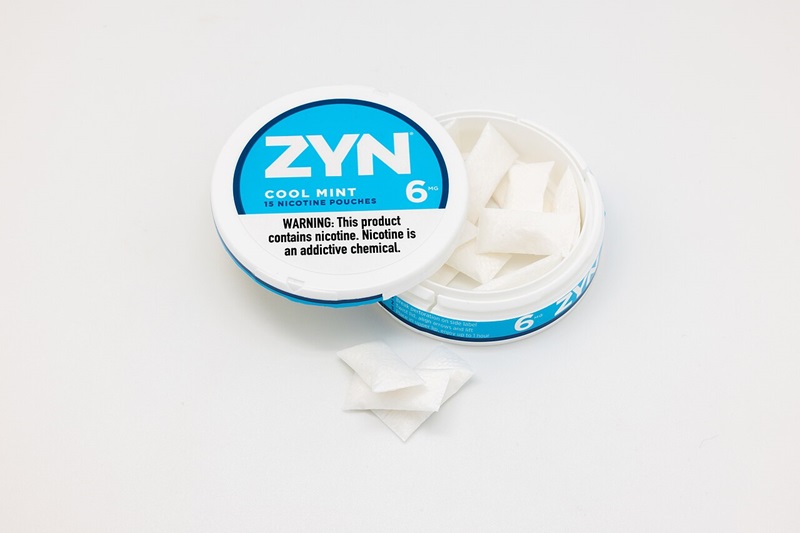

ZYN pouches are not biodegradable under normal real-world disposal conditions — and they should not be treated as compostable waste. The FDA, in its January 2025 marketing authorization, described ZYN products as “small fiber pouches containing nicotine.” That distinction matters: nicotine pouches are manufactured consumer products, not organic scraps. Even though parts of the pouch use plant-derived cellulose, the finished product contains synthetic binders, artificial sweeteners, and nicotine residue that prevent complete breakdown.
The FDA authorized marketing of 20 ZYN nicotine pouch products in January 2025 following an extensive scientific review under the Premarket Tobacco Product Application (PMTA) pathway. This authorization assessed the products’ public health impact — it is not an environmental endorsement, and the FDA made no claims about biodegradability, compostability, or recyclability.
Bottom line: Used ZYN pouches belong in the regular trash. Not in your compost pile, not in recycling, not down the toilet or storm drain.
ZYN is a nicotine product intended for adults only. Nicotine is addictive, and US federal law prohibits the sale of nicotine products to anyone under 21, including tobacco-free pouches like ZYN.
Zyn Facts You Need to Know
- ZYN pouches are not biodegradable or compostable under normal disposal conditions.
- The FDA describes ZYN as “small fiber pouches containing nicotine” — a key distinction from plain paper or organic waste.
- Plant-based fiber in the ingredient list does not make the finished product compostable; synthetic binders prevent full breakdown.
- ZYN’s artificial sweeteners — sucralose and acesulfame K — do not dissolve in soil or water. Acesulfame K has been identified as a persistent compound in environmental water quality research.
- Used ZYN pouches retain nicotine residue, which is toxic to aquatic life, soil microbes, and wildlife even in small amounts.
- Used ZYN pouches go in the regular trash — not compost, not recycling, not the toilet or storm drain.
- Empty ZYN cans may be recyclable in some localities, depending on your local recycling program’s accepted plastics list.
- Swedish Match (now a subsidiary of Philip Morris International) has stated its intention to develop more eco-friendly packaging, but no certified biodegradable ZYN pouch currently exists.
- The FDA’s 2025 PMTA authorization of ZYN was a public health marketing authorization — it says nothing about the product’s environmental impact or biodegradability.
What Are ZYN Pouches?
ZYN pouches are oral nicotine products made by Swedish Match, a company now owned by Philip Morris International. They contain no tobacco leaf, but they do contain nicotine, which is addictive.
A ZYN pouch is small and soft, and many people assume it breaks down like paper or plant fiber. That assumption is incorrect. According to ZYN’s own FAQ, pouches contain nicotine salt (nicotine bitartrate dihydrate), plant-based cellulose fillers, a granulation agent, pH balancers, sweeteners (sucralose and acesulfame K), and flavorings. All ingredients are food-grade — but “food-grade” does not mean “environmentally biodegradable.”
The combination of these ingredients changes the waste picture entirely. Even where cellulose is present, the manufactured pouch includes binding agents that prevent natural breakdown, along with nicotine residue and artificial sweeteners that persist in the environment. ZYN’s own disposal guidance confirms that used pouches are not recyclable because they are contaminated with saliva and contain nicotine.
ZYN Ingredient Breakdown and Biodegradability
| Ingredient | Purpose | Biodegradable? |
| Nicotine salt (nicotine bitartrate dihydrate) | Delivers nicotine without tobacco leaf | Partially — dissolves in water but is toxic to aquatic organisms |
| Plant-based cellulose fibers | Pouch filling and structure | Partially — synthetic binders prevent full breakdown |
| Granulation agent / synthetic binders | Hold pouch shape, control moisture | No |
| Sucralose | Artificial sweetener | No — does not dissolve in soil or water |
| Acesulfame K | Artificial sweetener | No — identified as persistent in water quality studies |
| Flavor oils and additives | Provide taste (mint, citrus, etc.) | Variable — not compostable |
| Outer pouch mesh | Encases contents during use | No — synthetic fiber mesh persists in the environment |
ZYN pouches look and feel similar to a tea bag, which is why many users assume they will degrade naturally. But the plant-based fibers are combined with synthetic binding agents during manufacturing — stopping full breakdown from occurring. The artificial sweeteners make the situation worse: sucralose and acesulfame K do not degrade easily in soil or water, and acesulfame K has been studied as a persistent environmental compound in wastewater research.
Are ZYN Pouches Biodegradable?
No. For a product to be genuinely biodegradable, it must break down through microbial action under defined conditions, within a reasonable timeframe, and without leaving harmful residues.
ZYN pouches fail on multiple counts. No US regulatory body has ever certified ZYN pouches as biodegradable, compostable, or environmentally neutral. Swedish Match has stated a desire to develop more sustainable packaging, but no biodegradable version exists on the market today.
When ZYN pouches are discarded outdoors, they behave similarly to cigarette filters — persisting for months or years before fragmenting into smaller synthetic fibers that contribute to the growing microplastic problem.
Are ZYN Pouches Compostable?
No. Composting is a process designed for organic materials that have been independently tested and certified to break down safely into usable soil — without leaving chemical residues behind.
ZYN pouches contain nicotine residue, artificial sweeteners (including acesulfame K, which persists in environmental studies), and synthetic binders. Introducing these into a compost system — whether at home or through curbside composting — would contaminate the soil output with compounds that do not belong there. No certified composting program accepts nicotine products.
Biodegradable, Compostable and Recyclable Aren’t the Same Thing
These three terms are often used interchangeably, but they describe very different end-of-life paths.
Biodegradable means a material can be broken down by microorganisms under specific conditions. The timeframe, conditions, and whether harmful residues remain all matter — a product can technically biodegrade over decades while causing environmental harm in the process.
Compostable means a material breaks down into safe, nutrient-rich compost within a defined period and under specific conditions (industrial or home). The US Federal Trade Commission requires solid scientific evidence to support a compostable claim — it is a meaningful certification, not a marketing label.
Recyclable means a material can be collected, sorted, and reprocessed into new material — but only where local infrastructure accepts it.
ZYN pouches do not meet the standard for any of these three categories. The empty plastic can may be recyclable in some areas, depending on local program rules.
Why “Plant-Based” Doesn’t Always Mean Biodegradable
The outer wrapper of a ZYN pouch uses cellulose — a plant-based fiber that feels similar to a tea bag. This is why many users assume it will disintegrate like paper or food scraps. It will not.
During manufacturing, the cellulose is processed and combined with synthetic binders that interrupt the natural decomposition pathway. The contents of the pouch add further complexity: artificial sweeteners, preservatives, and nicotine, none of which break down safely in soil or water.
This pattern is common across many consumer products. Using plant-derived ingredients in one component does not make the whole product biodegradable. Independent testing of the complete product — under real-world disposal conditions — is required before any biodegradable claim can be supported.
The Dirty Truth Behind ZYN Pouches End Up In The Wrong Place
How Nicotine Leaches into Soil and Water
Used ZYN pouches still contain nicotine residue after use. When discarded in gardens, parks, or near waterways, that nicotine can leach into soil and water. Nicotine is toxic to soil microorganisms, aquatic life, and wildlife even at low concentrations — a concern documented in environmental toxicology research on cigarette butt runoff, which shares similar nicotine-leaching characteristics.
ZYN Pouches: A Risk to Wildlife and Pets
Small animals — dogs, birds, squirrels — can mistake a ZYN pouch for food. Ingesting a used nicotine pouch presents a real toxicity risk. Cases of pets becoming ill after consuming cigarette butts and nicotine gum have been documented by veterinary poison control organizations, and ZYN pouches carry the same nicotine toxicity concern. Keep used pouches out of reach of children, pets, and wildlife at all times.
The Microplastic Problem
A ZYN pouch discarded outdoors does not simply disappear. Over time, the synthetic mesh fiber degrades into microplastics and microfibers, contaminating soil and waterways. These particles are practically impossible to recover once released into the environment and are an emerging area of environmental concern globally.
The Litter Problem Is Bigger Than You Think
Individual pouches are small, which makes the problem easy to dismiss. But a single daily ZYN user can generate hundreds of used pouches per month. At scale, across a fast-growing user base, this creates a meaningful cumulative waste stream.
A 2024 litter survey conducted in Sweden found that nicotine pouches accounted for approximately 65% of all snus-category waste collected — a striking proportion that reflects both the product’s popularity and the frequency of improper disposal. (Source: Sweden Tidy Foundation / Håll Sverige Rent, 2024 litter composition data.)
What Happens If ZYN Pouches Are Thrown Outside?
A used pouch thrown outdoors becomes litter. It sits on sidewalks, trails, lawns, parking lots, and beaches. Rain and runoff move small waste items toward storm drains and into waterways. As the pouch degrades, it releases nicotine residue and fragments into synthetic microfibers.
The small size makes the problem easy to underestimate — but high-frequency use across a large and growing user population creates a steady, cumulative waste problem that follows the same pattern seen with cigarette filters, bottle caps, and single-use wrappers.
| Disposal Option | Acceptable? | Why |
| Regular trash | Yes | Safest and correct option for used pouches |
| Home compost | No | Nicotine residue, synthetic binders, and artificial sweeteners do not belong in compost |
| Curbside compost | No | Compost programs accept only certified organic materials |
| Recycling bin | No | Used pouches are contaminated and not recyclable |
| Toilet or sink | No | Nicotine is toxic to aquatic ecosystems; pouches are not water-soluble |
| Storm drain | No | Waste enters waterways and harms aquatic life |
| Outdoors | No | Creates litter; nicotine poses risk to wildlife, pets, and children |
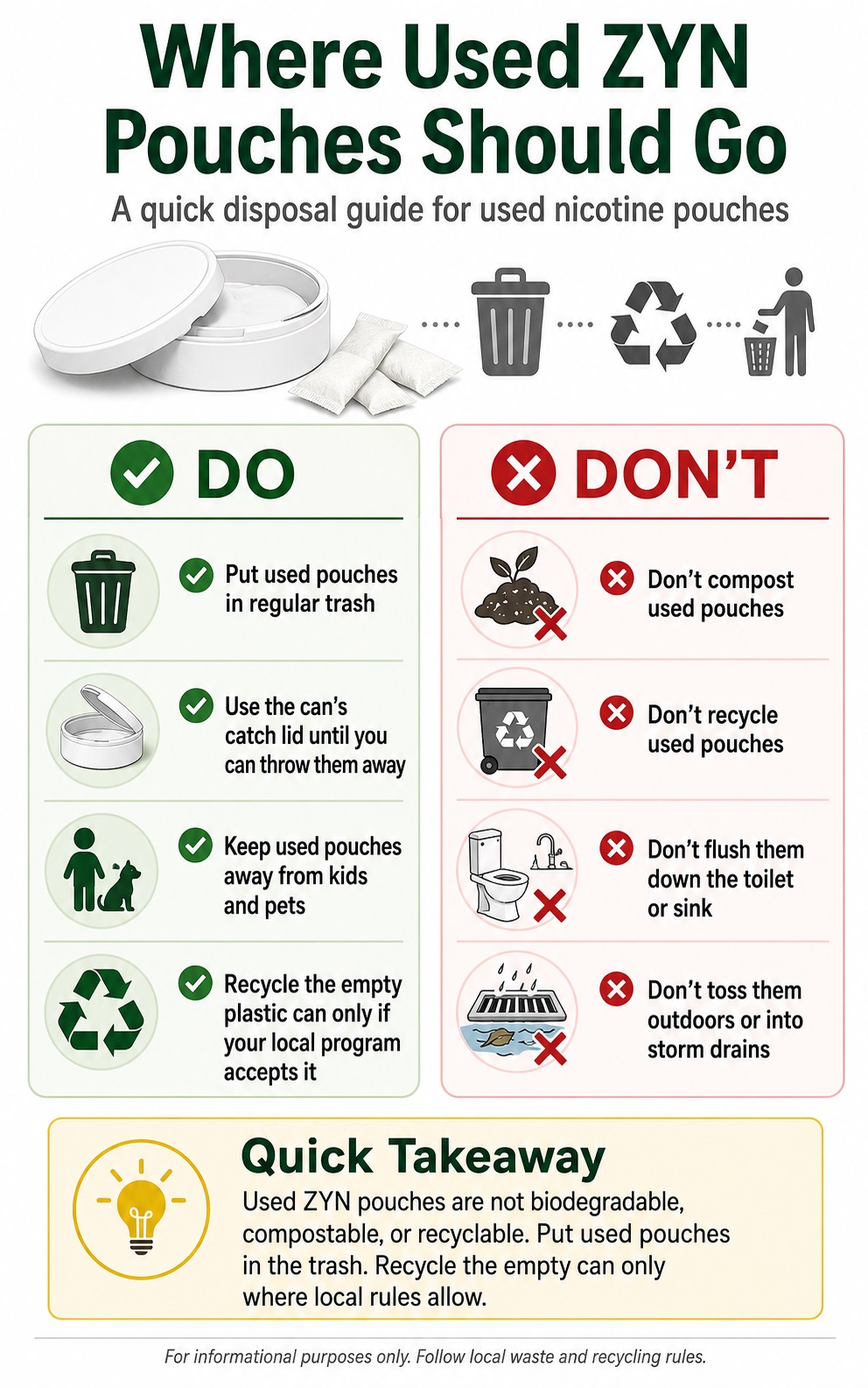
What Not to Do With Used ZYN Pouches
- Do not flush used pouches down the toilet, sink, or any other drain
- Do not compost used pouches — home compost or curbside compost
- Do not place used pouches in the recycling bin
- Do not discard them outdoors — streets, trails, beaches, parks, or parking areas all present risks to wildlife and children
- Do not leave them loose in a car or bag where children or pets could access them
Do not leave used pouches inside an empty can before recycling the can
Can You Recycle ZYN Cans?
The can and the pouch are separate waste items and should be evaluated separately.
Used pouches go in the regular trash without exception. The empty plastic can is a different question — whether it is recyclable depends on the type of plastic and what your local recycling program accepts. Recycling rules vary by city, county, and waste hauler, so the same can may be accepted in one area and rejected in another.
Before placing an empty ZYN can in your recycling bin:
- Remove all used pouches from the can first
- Check the recycling symbol on the bottom of the can
- Confirm your local program accepts that plastic type
- Rinse the can and make sure it is empty
Do not “wish-cycle” — placing items in recycling without confirming they’re accepted can contaminate entire batches of recyclable material.
Are ZYN Cans Biodegradable?
No. ZYN cans are plastic and will not biodegrade under normal conditions. The relevant question is whether your local recycling program accepts that specific type of plastic. If yes, recycle the empty, cleaned can. If not, it goes in the trash.
Are Nicotine Pouches Better for the Environment Than Cigarettes or Vapes?
Relatively speaking, nicotine pouches create a smaller environmental footprint than cigarettes or disposable vapes — but that does not make them environmentally neutral.
| Product | Primary Environmental Concerns |
| Cigarettes | 4.5 trillion butts littered globally per year; cellulose acetate filters persist for months to years; ash; toxic run-off; CO₂ emissions from combustion |
| Vapes | Batteries, cartridges, pods, heavy metals, e-waste; difficult to recycle; carbon footprint from battery production |
| Nicotine pouches | Used pouches, plastic cans, nicotine residue, artificial sweetener pollution, microfiber risk from littered pouches |
ZYN pouches produce no smoke, ash, or battery waste. When disposed of properly, the per-pouch waste volume is smaller than a cigarette butt or vape cartridge. However, they are still single-use waste that poses measurable risks to wildlife, pets, water, and soil when not properly discarded.
Biodegradable Alternatives: What the Industry Is Working On
A small number of brands are exploring pouches made from corn starch, eucalyptus fiber, and other plant materials that can break down more readily. These alternatives are not yet widely available.
Swedish Match has publicly stated it is working toward more eco-friendly ZYN packaging, but no biodegradable ZYN is currently on the market. To produce a genuinely biodegradable nicotine pouch, manufacturers would need to replace the mesh, binders, sweeteners, and fillers — and obtain independent certification to substantiate the claim. Until a certified biodegradable product exists, all nicotine pouches should be treated as non-biodegradable trash.
Latest FDA Update on ZYN Nicotine Pouches
The FDA granted marketing authorization to 20 ZYN nicotine pouch products in January 2025 following an extensive scientific review under the PMTA pathway. This makes ZYN the first nicotine pouch to receive FDA marketing authorization in the United States.
Important clarifications about what this authorization means:
- It is a public health marketing authorization — not a declaration that the products are risk-free
- It is not an environmental endorsement of any kind
- It makes no claims about biodegradability, compostability, or recyclability
- It does not permit disposal anywhere other than regular trash
In June 2025, the FDA published Swedish Match’s Modified Risk Tobacco Product (MRTP) application modules publicly as part of its ongoing scientific review of whether ZYN products can carry modified-risk health claims. This is a separate regulatory process from the 2025 PMTA authorization and has no bearing on the products’ environmental status.
Common Myths About ZYN Waste
Myth: ZYN pouches are like paper, so they will break down naturally. ZYN pouches use processed cellulose fibers combined with synthetic binders — not plain paper. They do not break down like paper waste. When littered outdoors, they can persist for months or years and eventually fragment into synthetic microfibers.
Myth: Tobacco-free means biodegradable or eco-friendly. Tobacco-free means the product contains no tobacco leaf. It says nothing about biodegradability, compostability, recyclability, or environmental safety.
Myth: Small pouches mean litter is not a real problem. A 2024 litter survey in Sweden found that nicotine pouches accounted for approximately 65% of all collected snus-category waste. Small items used at high frequency across a large population add up to a significant cumulative waste problem.
Myth: Natural-sounding ingredients make ZYN safe to compost. Composting systems are designed for certified organic materials. ZYN pouches contain artificial sweeteners and synthetic binders that do not belong in any composting system.
How to Dispose of Used ZYN Pouches Correctly
Used ZYN pouches go in regular household trash. The process is straightforward:
- Place used pouches in the built-in catch lid compartment found on most ZYN cans
- When the catch lid is full, empty the used pouches directly into your kitchen trash
- Keep used pouches away from children, pets, and wildlife at all times
- Check whether your local recycling program accepts the empty plastic can
- Never flush, compost, recycle, or litter used pouches
Proper disposal keeps nicotine out of soil and waterways, reduces microplastic pollution, and removes a toxicity risk for animals and children.
FAQs
Are Zyns biodegradable? No. ZYN pouches will not break down naturally in compost, soil, or water. While some ingredients are plant-based, the synthetic binders and artificial sweeteners prevent complete biodegradation.
Are ZYN pouches compostable? No. ZYN pouches contain nicotine residue, artificial sweeteners, and synthetic binders that do not belong in home or curbside compost systems.
Can you recycle ZYN pouches? No. Used nicotine pouches are not recyclable. They go in regular household trash.
Can you recycle ZYN cans? Possibly. If your local recycling program accepts that specific plastic type, you can recycle the empty, cleaned can. Remove all used pouches first.
Can you flush ZYN pouches? No. Used ZYN pouches should never be flushed down a toilet, sink, or drain. Nicotine is toxic to aquatic organisms and the pouch materials are not water-soluble.
Are nicotine pouches bad for the environment? They create a smaller footprint than cigarettes or disposable vapes when disposed of properly — but they are not environmentally neutral. Improper disposal leads to nicotine contamination of soil and waterways, microplastic pollution, and litter risks for wildlife and children.
Does tobacco-free mean biodegradable? No. Tobacco-free means the product does not contain tobacco leaf. It makes no statement about biodegradability, compostability, or environmental safety.
Are there biodegradable nicotine pouches? A small number of brands are experimenting with plant-based biodegradable pouches using materials like corn starch and eucalyptus fiber, but none are widely available yet. No ZYN pouch is currently biodegradable.
Did the FDA approve ZYN as safe or biodegradable? No on both counts. The FDA issued a PMTA marketing authorization following scientific review of ZYN’s public health impact. It did not declare the product safe in absolute terms, and it made no environmental claims whatsoever.
Conclusion
ZYN pouches are small, but they are still single-use nicotine waste. The answer is straightforward: do not treat ZYN pouches as biodegradable or compostable. Place used pouches in regular household trash, keep them away from children, pets, and wildlife, and recycle empty cans only where local rules permit.
“Tobacco-free” does not mean waste-free. A paper-like pouch does not automatically break down safely. And FDA authorization is a public health marketing decision — not an environmental endorsement. Proper disposal is the responsible and only correct choice.
Sources: FDA Press Release — ZYN Authorization, January 2025 | FDA MRTP Application Page — ZYN | ZYN Official FAQ — Ingredients | Håll Sverige Rent (Keep Sweden Tidy Foundation) — Litter Composition Research | American Lung Association — ZYN Overview