
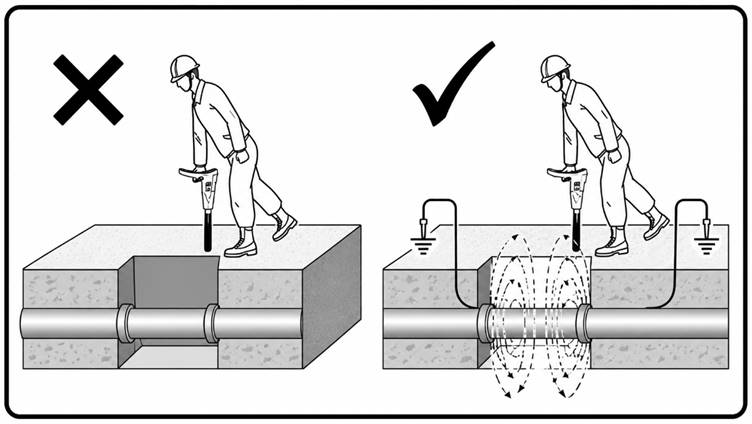

Utility locating is more than just a safety precaution – it’s a way to really minimize the risk of causing damage to the environment. When you know what’s buried underground, you can avoid accidentally hitting gas lines, water mains, sewer pipes, electric cables and telecom connections. And if you do hit these lines, it can lead to fuel leaks, gas emissions, sewage spills, fires and soil damage.
In the States, there are rules in place to prevent this sort of thing from happening. Federal law, state regulations and industry standards all come into play – these include colour-coded marking systems, standards for how accurate that location data needs to be, and OSHA guidelines for how to dig safely.
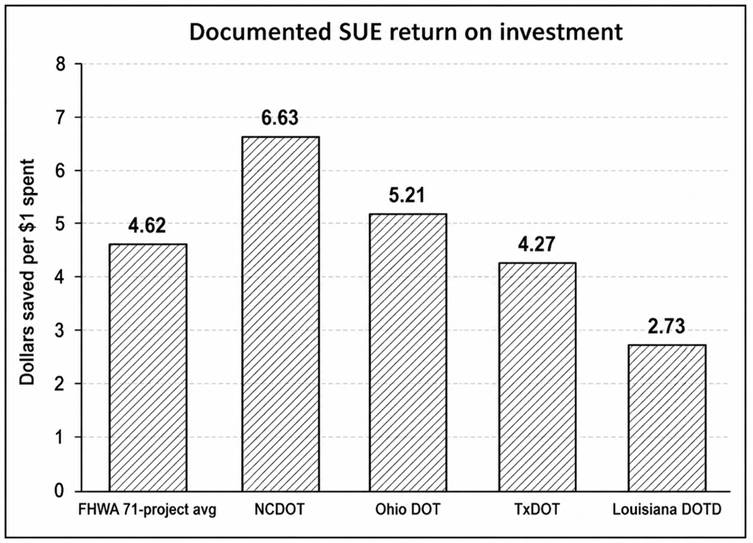
It’s worth making an investment in good location data. According to one study, for every dollar spent on this you can expect to save $4.62. That’s because you’ll avoid having to deal with line hits, delays, rework and costly cleanups.
But there’s more to it than just spending money. The way the process works is everything – and the data shows that when location responses are slow or go missing, it can delay jobs. But if a contractor sticks to the rules, they can cut down on dig-related damages by over 6% – just look at what happened between 2023 and 2024. In some cities, like Chicago, they’ve even managed to slash their annual damages by a whopping 50% – that’s since 2017 – and they achieved that by improving their maps, checking designs, getting the right permits in place and enforcing stronger rules.
The point is simple: location works best when it’s a whole process, not just a one-off ‘mark and forget’. You need to do your research, file those 811 notices, check the responses, mark out the lines in the field, dig a few test holes where necessary, update your plans and then dig carefully, and finally update your records. Anything less and you’re taking unnecessary risks.
The Risks That Come With Hitting Utility Lines
This report is based on a typical US dig project – whether that’s a road, utility, or site work job in a city or suburb. Of course, the costs and results will vary – things like soil type, line material, site boundaries, permits and labour can all affect how it turns out. There’s no one-size-fits-all solution here – you need to use the right tools for the job. Best practice starts with having good records to work with and then checking those records in the field.
And let’s be clear: hitting a utility line is a serious risk. If you manage to hit a fuel line, for example, it can leak into the soil, nearby waterways and groundwater. That can lead to a whole lot of extra work, including digging, pumping, filtering and long-term remediation. Not to mention, fuel vapours can also make it into nearby homes or buildings below ground level.
Gas line hits are a whole different story. Not only do they create fire and air risks, but they can also release methane, cause explosions and start fires that damage soil and plants. It’s a serious concern – and one that the federal government takes seriously, given that digs are one of the top causes of serious pipeline accidents.
And water or sewer line hits matter too – they can cause erosion, muddy runoff and sewage spills. Emergency repairs often end up disturbing more ground than the original dig would have, which is why many public works rules require careful vacuum digging when you’re near utility lines.
Laws and Rules
In the States, digging safety starts with a federal law that sets a minimum requirement – you’ve got to call before you dig, no matter what. There’s a federal agency that keeps an eye on pipeline safety too. And OSHA is on top of it, making sure workers find those utility lines before digging – to avoid any nasty surprises.
For road projects, the federal highway rules have been supporting quality utility locating since way back in 1991. This means costs are covered, especially on funded projects. If you do happen to knock over a pipeline and spill into a waterway, the EPA will likely be involved.
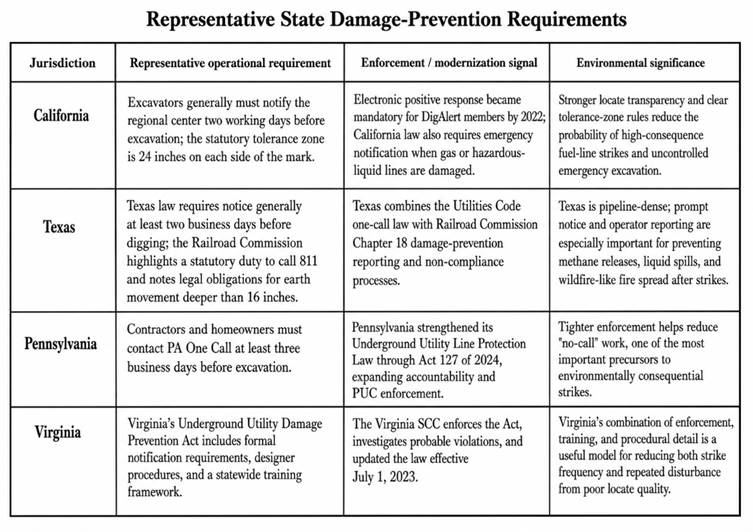
Nowadays, most of the everyday rules come from the state governments. They set the notice periods, the times when you need to locate stuff, marking rules, safe dig zones, and penalties for not following the rules.
The basic rule in the States is pretty simple. Call before you dig. Check those marks to make sure you’ve got them right. Stick to the safe zone and don’t get too trigger-happy. If you do hit something, expose it with care and document the whole thing. If you cause some damage, report it right away.
One thing that’s worth taking note of is that the way the rules are being written is changing. It’s shifting from just having to notify that you’re digging, to actually tracking and managing the results. The data is pretty clear – if you miss or delay a locate, it ramps up the risk and makes people less likely to trust the whole call-before-you-dig system.
Benefits and Cost Savings
When it comes to looking at the best data on this, it’s road and highway projects that give us the most clear picture. And what they show is that when you bring utility locating into the design phase real early on, you start to see some real savings. A federal study found that on average, they saved $4.62 for every dollar they spent. But state results were just as impressive – North Carolina saved $6.63 per dollar, Ohio saved $5.21, Texas saved $4.27, and in Louisiana they saved $2.73 per dollar. That’s a pretty clear indication that doing it early doesn’t cost much, but it can end up saving you a whole lot more – especially on the more complicated jobs.
When you look at the results of different projects, you start to see a pretty clear pattern. Chicago managed to cut down their annual dig damages by a whopping 50% over five years, all through better maps, design checks, permits, and having a solid set of rules in place. One big review of 10 states found that there was a 39% drop in the number of delays caused by bad locates. And the biggest improvements all came from getting better at planning and coordinating things. In Minnesota, they ran a test using GPS to speed up locate times for engineers, and it cut it in half. In Massachusetts, two different companies managed to get their locate rates up to almost 100% on time. And nationally, the data showed a 6% drop in the number of damages caused by digging from 2023 to 2024.
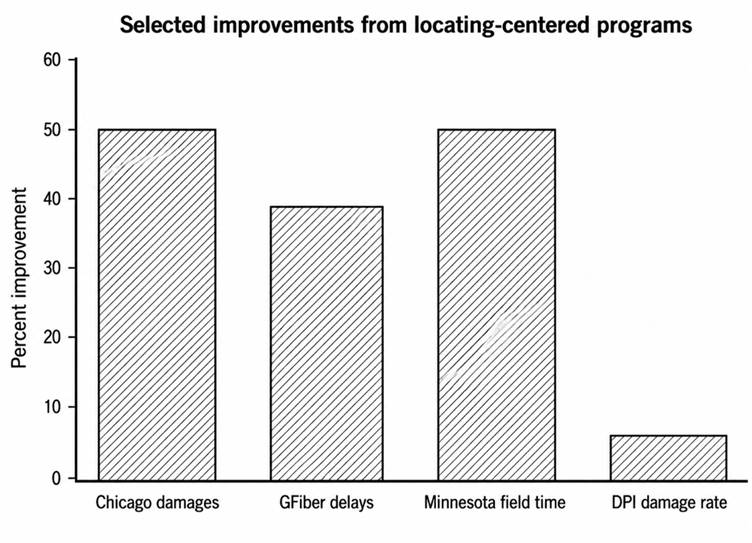
These numbers all come from different programs, so you can’t directly compare them. But they all point to one thing – the more you invest in good locating, the less damage you’re going to see and the more likely you are to get your projects done on time.
In 2022 alone, over 213,000 dig damage incidents were reported in the States. And when they could figure out what caused them, a full 33% of them were the result of dig crews not taking care to stay safe distance from the lines or not confirming the location. So, exposing what you hit inside the safe zone is not just a good idea – it’s a must. Anything less is just asking for trouble.
The difference between doing a good job on the locate and ending up with a major problem is huge. A good locate program is a tiny fraction of the overall project cost, but the cost of one major strike can be way, way more than that. Emergency response, utility repair, cleaning up the spill, protecting the water… it all adds up quick. So preventing a disaster really does save you real money – and helps the environment too.
Putting The Plan Into Action
A good plan doesn’t have to be complicated. But as the risks go up, the quality of your locating has to too.
For Dig Crews
Paint marks on the ground are just a starting point. Before digging, you need to confirm that your locate is spot on. If you don’t have marks or they don’t match, stop what you’re doing and get to the bottom of it. High risk areas mean it’s time to hand dig or vacuum dig before you do any major excavating. Keep a record of any issues that pop up, and if you can, snap a photo and record the GPS location too. And remember, that safe zone around a marked line is not just a suggestion – treat it like a construction site.
For Owners and Designers
The key is to get the language right on your contracts. You need to ask for utility data that’s up to standard. You need to define where you need field locating done. And you need to identify which crossings are high risk and need some extra hand-dig confirmation. And don’t even think about finishing the job without a digital handoff. It’s also super important to get utility coordination on board from the start – not just when something goes wrong.
For Training
Just telling someone to call 811 is not enough. Locators need to have some real skills, and they need those skills from a recognised training program. Dig crews need to know about dig safety, safe zones, vacuum digging limits, and how to deal with gas and liquid strikes – we’re talking drills and practice here. Virginia’s got a great model for this, by the way. They make cross-team training a regular part of the system.
For Quality Checks
You need clear checkpoints to ensure everything is running smoothly. That includes confirmed responses, test holes to check your scan results, photos of any issues that come up, documented clearance before you start boring, and an updated record of what went down when it’s all said and done. Good field data from each project will improve the maps used on the next one.
For Environmental Safety
Environmental controls need to be a part of your plan from day one. Projects need to have spill kits on hand at gas and liquid crossings. They need to have measures in place to prevent erosion near water. They need to have rules for handling soil from vacuum digging. And they need to have a clear plan in place in case something goes wrong at a unknown line. If a spill gets into water or creates a nasty smell, it’s a whole different kind of problem – not just a construction issue.
What State and Local Governments Can Do
States need to start keeping track of how good utility responses are – are they on time and complete? A dig ticket doesn’t mean much if the utility company didn’t do their part.
Public funding and major permits should require quality utility investigations. When you’ve got a complex job on your hands, field locating should be the minimum you do. Hand-dig confirmation should be a given at known conflict points. And it turns out, it’s worth the extra effort.
Public contracts should require that you end up with a digital as-built record. Data exchange standards should be the normal way of doing things. Each field locate should help make the maps better for the next guy.
Rules should apply to everyone – dig crews, utility owners, and locators. Damage prevention falls apart when someone tries to shift the blame. We need to make sure that everyone is playing by the same rules.
When it comes to contracts, the ones that do best are the ones that favour vacuum digging and other non-destructive methods at high risk areas. But these methods still need to be done safely and correctly.
Damage and near-miss reports should follow a standard format. More shared data would improve our understanding of root causes, environmental impacts, and what works best — especially for water, sewer, and telecom work.
What We Still Do Not Know
U.S. cost data by locating method is still limited. Many contracts price labor, equipment, or task orders, not standardized EM vs. GPR vs. potholing units. For HDD crews comparing locator systems, resources on digitrak falcon f5 price can help estimate equipment costs, but project budgets still depend on labor, site access, soil, depth, and verification scope. This report therefore gives indicative cost profiles, not national averages.
The review of state laws is a sample, not a full list. Rules vary by state on response timing, marking rules, safe zones, and enforcement. Teams must check their own state and local rules before work starts.
Technology results depend on the site. Soil type, moisture, depth, wire condition, line density, and record quality all affect outcomes. The safest approach is procedural. Combine methods. Raise the quality level at conflict points. Confirm high-risk areas with careful exposure before full digging begins.