
Choosing between Nike and Adidas comes down to what matters most to you. Nike stands out for race-day performance, basketball culture, and a tighter athletic fit. Adidas does better with everyday comfort, soccer heritage, broader lifestyle appeal, and a stronger public case on sustainability. Both make good shoes and apparel. The better brand is the one that fits your sport, your foot shape, and your budget.
Below is a closer comparison across performance, fit, product range, materials, brand identity, and value.
Nike vs Adidas: Key Differences
The split between these brands starts with what each one is trying to be.
Nike, founded as Blue Ribbon Sports by Phil Knight in 1964, built its identity around performance sport. The swoosh signals speed, competition, and athlete-first design. Much of Nike’s product story centers on shoes and apparel built for training, racing, and elite-level use.
Adidas, with its three stripes and strong roots in football culture, blends sport with streetwear more naturally. It still makes serious performance gear, but it also does a better job crossing into daily wear. On top of that, Adidas has pushed harder in public-facing sustainability efforts, especially around recycled materials and circular product design.
When people compare Nike and Adidas, these are usually the deciding factors:
- Fit: Nike often runs narrower, Adidas usually feels roomier
- Sport focus: Nike is stronger in running and basketball, Adidas stays dominant in soccer
- Cushioning feel: Nike leans springy and race-driven, Adidas often feels softer and steadier
- Sustainability: Both are active here, but Adidas has been easier to credit on this front
- Price: Nike tends to hold premium pricing longer, Adidas discounts more often
The sections below break that down in practical terms.
Performance and Technology
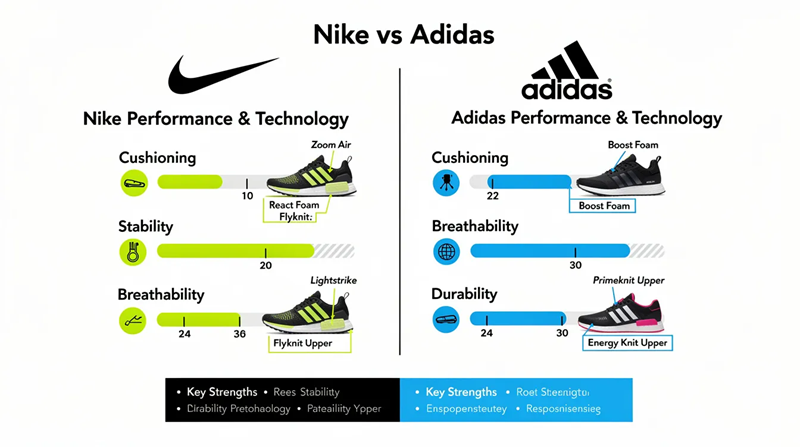
Both brands spend heavily on shoe development, but they are chasing slightly different outcomes. Nike pushes harder on top-end athletic performance, especially in running and basketball. Adidas tends to balance performance with comfort, wearability, and a broader user base.
Nike Performance Technology
Nike changed the footwear market early with Air cushioning, but its modern edge comes from foam and plate systems built for speed. ZoomX, used in shoes like the Vaporfly and Alphafly, is a lightweight foam designed to return more energy underfoot. In practice, that means a more aggressive, spring-loaded ride, especially when it is paired with a carbon plate.
The Vaporfly line is the clearest example of Nike’s race-first mindset. These shoes combine ZoomX foam, rocker geometry, and carbon fiber plates to help runners move more efficiently over long distances. That formula helped reshape the marathon shoe market and set the tone for the super shoe era.
What is ZoomX Foam Technology?
ZoomX is Nike’s premium performance foam. It is made from Pebax, a lightweight material that feels soft under impact but rebounds quickly. That rebound gives runners a bouncy feel that works well in racing and faster workouts.
The point of ZoomX is not just softness. It is the mix of low weight, shock absorption, and quick rebound. That is why Nike uses it in many of its best-known running shoes. In longer races, the effect is clear. The shoe feels less flat late in the run, and that matters when fatigue starts to build.
Nike also ties product performance to its wider ecosystem. Nike Running Club, training apps, connected product experiments like FitAdapt technology, and apparel systems like Dri-FIT extend the brand beyond footwear.
Strengths: Strong race-day energy return, sharp performance identity, deep product support across sports.
Limitations: Many models run snug, some lower-tier shoes feel less durable over time, and prices stay high.
Adidas Performance Technology
Adidas built much of its modern running reputation on Boost. Developed with BASF, Boost uses expanded TPU pellets to create a cushioned, responsive midsole. Compared with firmer setups, Boost feels smoother and more forgiving, which is one reason it became popular beyond running circles.
What is Boost Cushioning?
Boost is Adidas’ best-known midsole foam. It is made by fusing together thousands of tiny thermoplastic polyurethane (TPU) pellets. That structure helps the foam absorb impact while still returning energy as you move.
What people tend to notice first is comfort. Boost has a softer, more padded feel than many race-focused foams. It also holds up well across different temperatures, which helps keep the ride consistent in daily use.
Adidas now uses other systems too, especially in faster shoes. Lightstrike and Lightstrike Pro give the brand a lighter, quicker setup for racing. Shoes in the Adizero line, including the Adios Pro series, are meant to compete with Nike’s fastest options. They usually feel more stable and less aggressive underfoot, which some runners prefer over a full marathon or during hard training blocks.
Outside running, Adidas still has a major edge in soccer. Lines like Predator, Copa, and X reflect decades of focus on touch, comfort, and speed in football boots.
Sustainability also remains a real part of the Adidas product story. The Futurecraft.Loop project pushed the idea of a fully recyclable running shoe, and the company made recycled polyester a core material across product lines.
Strengths: Comfortable cushioning, broader fit, strong soccer credibility, better public-facing sustainability story.
Limitations: Top race shoes feel less explosive than Nike’s fastest models, and some advanced tech stays concentrated in higher-priced products.
Fit and Sizing
Fit changes everything. A great shoe on paper can feel wrong within minutes if the last shape does not match your foot.
Nike Fit Characteristics
Nike shoes often fit snug through the midfoot and toe box. That is not true for every model, but it is common enough that many buyers size up by half, especially in running, training, and basketball shoes.
For athletes who want a locked-in feel, this works well. Nike uses details like Flywire support, structured heel counters, and Flyknit uppers to keep the foot secure during faster or sharper movement. That tighter feel is one reason many people like Nike for court sports and speed work.
Sizing note: Nike uses a full-size difference between US and UK sizing, so a US 10 is usually a UK 9.
Models like the Air Force 1 and Dunk often need some break-in time because of their stiffer leather uppers. For narrow to medium-width feet, Nike usually feels more precise. For wider feet, it can feel restrictive.
Adidas Fit Characteristics
Adidas generally fits more naturally for people who want a bit more room. Across many lines, the upper feels less pinched and the forefoot less tight. That makes Adidas easier to wear for longer stretches, whether you are training, walking, or using the shoe casually all day.
Classic models like Stan Smith, Superstar, Gazelle, and Samba often run true to size or slightly roomy. In running shoes, Adidas also tends to work better for wider feet, especially when paired with softer midsoles like Boost.
Sizing note: Adidas usually uses a half-size difference between US and UK sizing, so a US 10 is often a UK 9.5.
Continental rubber outsoles on many Adidas shoes also help with grip and durability. For anyone who values width, all-day comfort, or a less constricting fit, Adidas often comes out ahead.
Product Range and Specialization
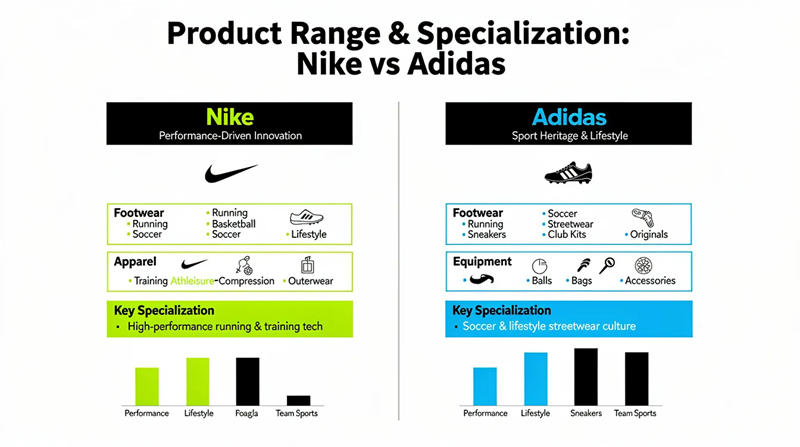
Neither brand tries to win every category in the same way. Each has clear strengths.
Nike Product Strengths
Nike remains strongest in basketball and running. The Air Jordan line is still one of the most powerful product families in sportswear. It sits at the intersection of performance, fashion, and collector culture, which is rare. Nike also carries major signature lines through athletes like LeBron James and Kevin Durant, which keeps its basketball identity strong.
In running, Nike covers the full range:
- Daily trainer: Pegasus for everyday mileage
- Lifestyle: Air Max for casual wear and visible cushioning
- Race day: Vaporfly and Alphafly for speed-focused runners
Nike also holds ground in training through the Metcon line and in skateboarding with Nike SB. Its bigger strength, though, is how it builds status around performance products. Even when a shoe is functional first, Nike often turns it into a cultural product too.
Adidas Product Strengths
Adidas is hardest to beat in soccer. The brand’s history in football is deep, and that shows in its product lines, club partnerships, and global presence. Boots like Predator, Copa, and X still anchor that identity.
- Predator: Built for control and ball feel
- Copa: Focused on comfort and traditional touch
- X series: A lighter speed-driven option
Outside football, Adidas has a stronger heritage lifestyle catalog than most brands. Stan Smith, Superstar, Gazelle, and Samba keep coming back because they are simple, wearable, and familiar without feeling stale.
The Terrex line gives Adidas a serious outdoor lane, and the Adizero family serves runners who want lighter shoes without moving fully into Nike’s more aggressive race feel. Models like the Adidas Evo SL fit that middle ground well, fast enough to feel athletic, comfortable enough to wear beyond race day.
Related: New Balance 9060 Sea Salt
Materials and Sustainability in Nike vs Adidas
Both brands now treat sustainability as part of product development, but the difference is in how visible and consistent that effort feels.
Materials Used
Nike uses synthetic textiles, recycled polyester, engineered knits, and proprietary foams across footwear and apparel. Flyknit has been one of its clearest material wins because it reduces waste by knitting much of the upper as a single piece instead of cutting many separate panels.
Adidas has put more public emphasis on recycled and alternative materials. It built strong recognition through its work with Parley for the Oceans and through materials like Primegreen and Primeblue, which were introduced as recycled-content platforms across apparel and footwear. Boost remains a central material story too, giving the brand a durable cushioning system with wide appeal.
Sustainability in Production
Nike has invested in lower-waste manufacturing, renewable energy targets, and reduced emissions in owned or operated spaces. It has also pushed recycled content into major product lines and used factory efficiency programs to trim waste.
Adidas has been easier for consumers to read on this issue because the messaging has stayed more direct. Its recycled polyester target, circular design projects, and repeated focus on product take-back and reuse have made the brand’s environmental claims feel more central to the business rather than added on later.
Which Brand Is More Sustainable?
If sustainability is one of your main buying filters, Adidas has the stronger public case. It has leaned harder into recycled materials, circular design, and a visible environmental identity. Nike is active here too, and at its scale that matters, but Adidas has done a better job making sustainability feel tied to the product itself, not just the corporate report.
That said, neither brand is simple in this area. Both still operate at massive global scale. For most buyers, the useful takeaway is this: Adidas gives you the easier sustainability choice on the shelf, while Nike has improved but still feels more performance-first than materials-first.
Brand Identity and Marketing
Product quality matters, but brand identity still shapes how people buy and wear these shoes.
Nike Brand Identity
Nike’s message centers on personal ambition, competition, and athletic achievement. “Just Do It” remains one of the most recognized lines in sports marketing because it connects performance with mindset in a way that still feels clear decades later.
Athlete partnerships are a huge part of that identity. Michael Jordan changed what a sports endorsement could be. Since then, Nike has built around stars like LeBron James, Serena Williams, and Tiger Woods, using them not just to sell shoes, but to shape the brand’s meaning.
The swoosh is simple and immediate. It signals sport first. Nike also extends that identity through apps, training communities, and personalized product experiences, which keeps people inside the brand even when they are not shopping.
Adidas Brand Identity
Adidas feels broader and less tied to one kind of athlete. Its message has long mixed sport, music, fashion, and streetwear. It still takes performance seriously, but it often presents sport as part of a wider culture, not just competition.
Football is central to that identity. Club deals, World Cup visibility, and long-term credibility in the sport keep Adidas deeply connected to global soccer culture in a way Nike still does not fully match in many markets.
The three stripes also carry more retro energy. That helps Adidas move between gym wear and everyday style with less friction. Add in its sustainability messaging, including Parley work and circular design efforts, and Adidas ends up speaking to a slightly different buyer, someone who wants function, but also cares how the brand fits into daily life.
Price and Value Considerations
Nike usually asks for more, and often gets it. Its highest-profile products, especially in basketball and elite running, stay close to full retail longer. Part of that is performance credibility. Part of it is brand heat.
Adidas tends to offer better value once discounts enter the picture. The brand runs promotions more often, pushes more product through outlets, and spreads performance tech across a wider set of price points. That often makes Adidas easier to buy for people who want comfort and quality without paying top-tier prices.
Value comparison by category:
- Racing shoes: Both are expensive, Nike often costs slightly more
- Daily trainers: Adidas usually offers better mid-range value
- Lifestyle sneakers: Prices are similar, but Adidas discounts more often
- Basketball shoes: Nike leads the premium end, Adidas competes better in the middle
Another factor is durability and use case. A shoe that performs better for your foot and activity usually gives better value, even if it costs more at checkout. That is why the brand debate only gets you so far. The model matters just as much.
Both brands also face more pressure now from companies like New Balance, Hoka, and Asics, especially in running. That competition has improved the market for buyers because brands have had to sharpen comfort, materials, and product updates more quickly.
Nike vs Adidas Running Shoes
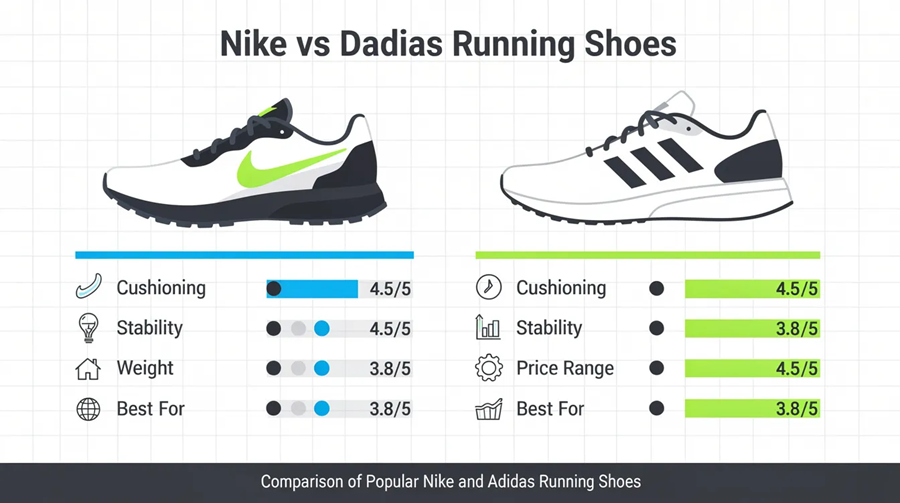
If you are choosing between Nike and Adidas for running, the answer usually comes down to ride feel, fit, and purpose.
Nike running shoes often feel more performance-driven. Models built with ZoomX are light, responsive, and tuned for speed. The Pegasus stays one of Nike’s most dependable daily trainers, while the Vaporfly and Alphafly sit at the sharper end of the market for race-focused runners.
Adidas running shoes usually feel more forgiving underfoot. Boost made the brand popular with runners who wanted comfort over long miles, and the newer Adizero models give Adidas a stronger place in the performance category. The fit also tends to be friendlier for runners who need more width or do not like a tight upper.
Over time, this tends to be the real difference. Nike often feels faster and more locked in. Adidas often feels smoother and easier to live with. Neither is better for everyone. Your foot shape, training habits, and preference for cushioning matter more than the logo on the side.
Trying on both brands still matters. A gait check at a specialty running store can help, but even basic wear testing tells you a lot. If the shoe feels wrong when standing or walking, it usually does not improve once the miles start adding up.
Nike vs Adidas: Which Brand Should You Choose?
Choose Nike if you prioritize:
- Race-day performance and faster-feeling running shoes
- Basketball culture and signature athlete lines
- A snug, locked-in fit for narrow to medium-width feet
- Strong training app and product ecosystem support
- Sport-first design over lifestyle flexibility
Choose Adidas if you value:
- Soccer heritage and football credibility
- Roomier fit and long-wear comfort
- Classic lifestyle shoes that work beyond sport
- A clearer sustainability story
- Better chances of finding discounts and mid-range value
The better brand is not fixed. A runner might choose Nike for race day and Adidas for easy miles. A casual buyer might prefer Adidas for fit and everyday wear, then still pick Nike for gym training. That is normal. Brand loyalty matters less than choosing the right model for the job.
Bottom line: Pick Nike if performance and a tighter athletic feel matter most. Pick Adidas if comfort, width, lifestyle wear, and sustainability rank higher. In either case, the best shoe is the one that fits your foot well, suits the activity, and feels right after real wear, not just a quick try-on.