


When a vet recommends Hill’s Prescription Diet – it’s usually not an easy call. The cost is higher than run of the mill kibble, the names of the formulas can sound like they came straight out of a lab, and many owners are left scratching their heads wondering if they’re really getting their money’s worth or just overpaying for a fancy name. And that’s why this is such a big deal. For some dogs, a special diet is a crucial part of managing their health – it’s not a luxury. For others, it’s an expensive change that doesn’t actually solve the problem. Hill’s markets Prescription Diet as a targeted nutrition solution for specific health issues, and vets will stress that diet recommendations should be tailored to the individual dog, not just based on what works for others.
Quick answer: Is Hill’s Prescription Diet Really Worth It?
For the most part, Hill’s Prescription Diet is a good bet when your dog’s been diagnosed with something that a special diet can really help with, like digestive issues, urinary problems, kidney disease, food sensitivities, or being overweight. But it’s less of a no-brainer when the decision to switch is based on guesswork, vague symptoms or the idea that prescription food automatically makes your dog’s life better – regardless of whether they were already healthy.
When it makes sense and when to pause
| Situation | Hill’s Prescription Diet often makes sense | Ask more questions first |
| Your dog has a confirmed medical issue | Yes | |
| Your vet gave a specific formula and reason | Yes | |
| Your dog needs a diet trial for GI or food-related symptoms | Yes | |
| You are switching because of online advice alone | Yes | |
| The diagnosis is still unclear | Yes | |
| Your dog is healthy and you just want a “better” food | Yes | |
| Your dog refuses the formula or gets worse on it | Yes |
What Hill’s Prescription Diet Actually Is
Hill’s Prescription Diet is not regular dog food. It is a special line made for specific health needs. Some formulas change mineral levels for urinary care. Others are easy to digest for gut health. Some use broken-down proteins for food trials. Others adjust calories for weight control. Hill’s groups these foods by health condition, not general wellness. That is what makes them different.
This matters because not all dogs need the same food. AAHA and WSAVA both say each dog needs its own nutrition plan. The right food depends on the dog’s illness, age, weight, and symptoms. Brand name alone does not decide what is best.
Diet Formula
| Formula | Main Use | What Owners Should Understand |
|---|---|---|
| i/d | Digestive care | Made for dogs that need highly digestible nutrition to support stomach and intestinal issues. |
| Gastrointestinal Biome | Stool quality and GI balance | Used to help manage loose stool and support a healthier gut balance. |
| c/d Multicare | Urinary care | Used for urinary health support and to help lower the risk of certain urinary stones. |
| k/d | Kidney care | Designed to support kidney function and help maintain appetite in dogs with kidney concerns. |
| z/d | Food sensitivities | A hydrolyzed formula used to help manage adverse food reactions and sensitivities. |
| Metabolic | Weight management | Designed for weight loss and long-term weight control. |
| j/d | Mobility support | Made for dogs with joint stiffness and mobility concerns. |
When Hill’s Prescription Diet Is Worth the Money
The best case is when food is part of the treatment. A dog with gut problems, kidney disease, or food allergies may need a diet built for that issue. The value is not just in the ingredients. It is in the food doing a real job. Vets support matching food to the health problem.
This is very true for gut issues. Merck notes many dogs with food-related gut problems improve within days to two weeks after a diet change. That does not mean all gut problems are fixed by special food. But it shows why the right formula can be worth the cost.
There is also a cost point to think about. Many owners only look at the bag price. A better way is to compare the daily cost to the cost of repeat vet visits. If the right food cuts down flare-ups or helps manage a condition, the higher price makes sense.
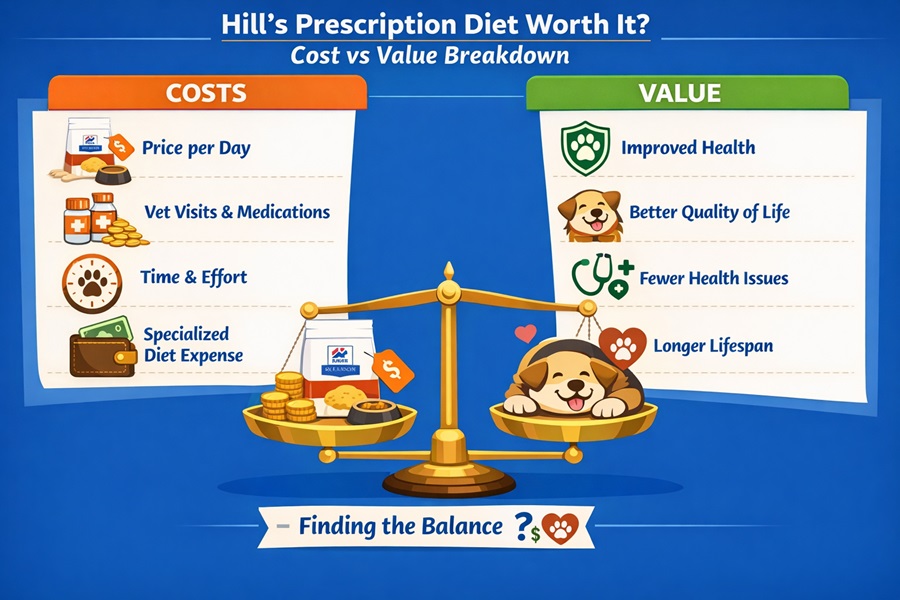
When It May Not Be Worth It
Hill’s Prescription Diet is not always worth it just because a vet clinic sells it. It is a poor choice when the diagnosis is still unclear. It also falls short when the switch has no clear reason. A dog with vomiting, loose stool, or weight loss still needs a full vet check. Even a good diet can miss the real problem.
It may also not be worth it if owners keep buying it out of habit. Some diets are for long-term use. Others are only for a trial or a short phase. If the dog does not improve or the original reason has changed, it is time to review the plan.
What to Know Before You Switch Your Dog’s Food
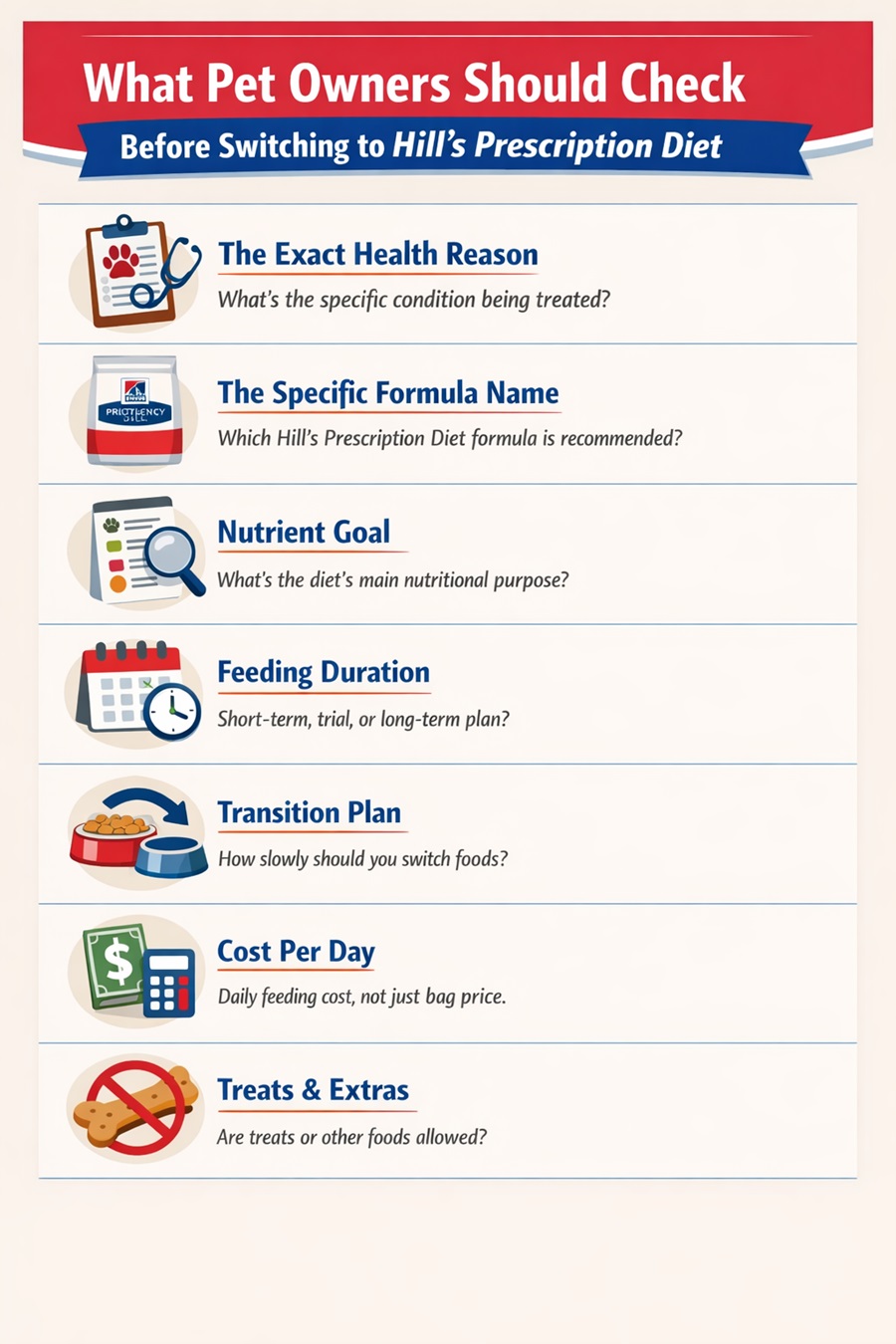
First, know the exact reason for the switch. Do not just say “my dog has a soft stomach.” Find out the real problem your vet wants to fix. Hill’s Prescription Diet has many formulas. Small name differences can mean very different things. If you do not know why you are using a formula, you are starting off on the wrong foot.
Second, know if this is a short-term trial or a long plan. This matters more than most owners think. In gut and food cases, the diet is often part of finding the problem. It is not just a fix. Merck says how a dog responds to a diet can help vets learn what type of gut issue is present. That is why sticking to the diet strictly is so important.
Third, manage the food switch with care. Even a good diet can cause problems if you switch too fast. Dogs with gut issues need a slow change and close watch. You also need to know what else your dog eats. Treats, table scraps, or flavored pills can all get in the way. This is where many feeding plans fail.
Fourth, think about daily cost, not just the bag price. A costly bag can be fair if you feed less and cut other extras. A cheap bag can end up costing more if it does not help your dog get better.
Hill’s Prescription Diet vs regular dog food
| Factor | Hill’s Prescription Diet | Regular dog food |
| Main purpose | Support specific medical conditions | Everyday maintenance feeding |
| Formula design | Condition-specific nutrient targets | General life-stage nutrition |
| Best for | Dogs with diagnosed health needs | Healthy dogs without a therapeutic indication |
| Vet involvement | Usually recommended with veterinary guidance | Usually owner-selected |
| Value question | Depends on whether it matches a real clinical need | Depends on general quality and fit |
The biggest difference is purpose. Regular food is meant to nourish a healthy dog. Prescription food is meant to support a narrower medical goal. That is why this is not really a premium-versus-budget debate. It is a general-feeding-versus-therapeutic-feeding decision.
Possible Side Effects or Adjustment Problems to Watch For
Hill’s Prescription Diet can help dogs with real health needs. But some dogs do not adjust well at first. The problem is not always a true side effect. It can be a rough change, a poor fit, or a feeding issue. So watch your dog closely in the first days and weeks after the switch.
Upset stomach during the switch
A fast switch can upset your dog’s stomach. Your dog may have loose stool, gas, vomiting, or less appetite. This can happen even if the food is a good fit. It matters even more in dogs with gut problems. A rushed switch can hide the difference between a normal change and a real issue.
Refusing the new food
Some dogs do not want the new food at first. That does not always mean the food is bad. But it still matters. The diet only helps if your dog eats it well and often enough. If your dog keeps refusing it, eats far less, or seems unhappy at meals, talk to your vet soon.
Weight loss or weight gain
Weight can change if the feeding amount is wrong. Some foods have fewer calories. Others are made for a different health goal. If you guess the portion size, you may feed too little or too much. That is why the daily amount matters more than the bag price.
Symptoms that do not get better
You should also watch for no clear progress. If the food was meant to help with stomach trouble, urine issues, food allergy signs, or another health problem, you should know what better looks like. If symptoms stay the same, come back fast, or get worse, the plan needs a review. The problem may be the food, the switch, poor diet follow-through, or even the first diagnosis.
Treats, scraps, and extras
Sometimes the food is not the real problem. Treats, table scraps, flavored chews, and toppers can get in the way of a prescription diet. This is a big issue during a food trial or when dealing with skin or stomach problems. Many owners blame the food when the real issue is the extra things the dog still gets.
When to call your vet
Call your vet if your dog refuses the food for more than a short time, keeps vomiting, has ongoing diarrhea, seems very tired, loses weight, or gets worse after the switch. Do not leave a prescription diet on its own if your dog is clearly struggling. It is better to check early than to wait and hope it gets better.
Questions Worth Asking Your Vet Before You Buy
Before you buy, ask your vet these simple questions:
What health problem does this formula target? This ties your choice to a real diagnosis, not just a vague symptom.
How long should my dog stay on it? Some formulas are for long-term use. Others are for a short trial or recovery period.
What signs show it is working? Ask for a clear answer. Look for things like firmer stools, less vomiting, better skin, or steady weight loss.
What should my dog avoid while on it? This includes treats, scraps, and food toppers. These can all blur results during a diet trial.
When do we check in again? Therapeutic diets need to be reviewed based on results. They should not just run on autopilot.
Signs the Switch Is Helping
When the food is a good fit, the signs are clear and practical. Gut issues may show firmer stools and less vomiting. Food-related cases may improve after strict diet compliance. Weight issues may become easier to manage. Merck says food-responsive gut problems often improve within days to two weeks after the right diet change. That gives owners a real window to watch for early progress.
Watch for warning signs too. If your dog will not eat the food, gets worse, loses weight, or shows no improvement, something is wrong. The issue could be the food, the diagnosis, or the plan. Do not keep spending money and hoping for the best.
The Bottom Line
Hill’s Prescription Diet is worth it when it does a real medical job for a dog that needs it. For dogs with a clear diagnosis, a well-matched diet can be a smart part of care. For dogs without a clear diagnosis, it is hard to justify the switch.
The real question is simple. Does your dog have a real reason to be on this formula right now? And do you have a plan to judge if it is working?
FAQ
Is Hill’s Prescription Diet different from regular dog food? Yes. It is made for specific health needs. Regular dog food is made for general daily feeding.
Can healthy dogs eat Hill’s Prescription Diet? A healthy dog usually does not need it. Vets focus on each dog’s specific needs, not a one-size-fits-all upgrade.
How long does a dog stay on Hill’s Prescription Diet? It depends on the condition. Some uses are short-term. Others are part of a long-term plan.
Is Hill’s Prescription Diet worth the higher price? Often yes, when it matches a real diagnosis and helps manage it. Not always, when the switch is based on guesswork.
What if my dog will not eat it? Talk to your vet again. A diet plan only works if your dog eats the food and your household can stick to it.