

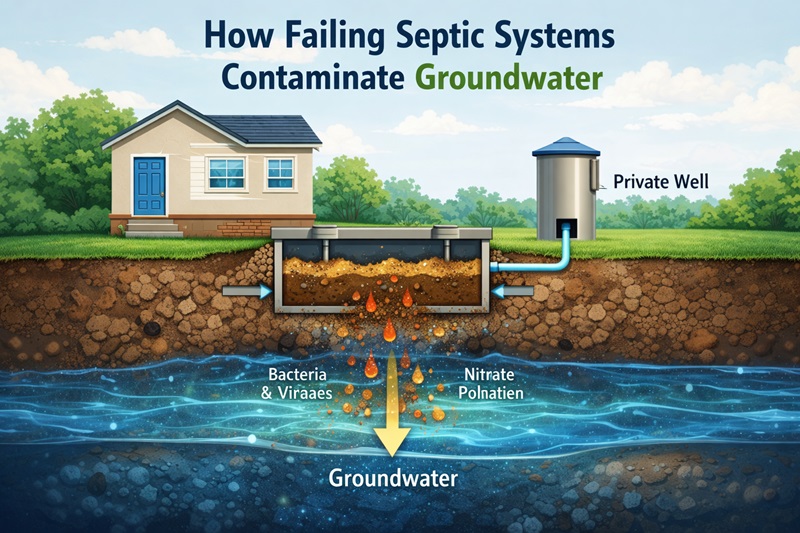

Failing septic systems can get out of control in a hurry, and groundwater can pay the price when wastewater leaks out of the tank before the soil has a chance to properly clear out all the bad stuff that seeps out of our toilets and sinks. Worst case scenario, that means a cocktail of bacteria, viruses and nitrates can be on their way to the aquifers, private wells and nearby waterways, especially in areas with old, overloaded, poorly maintained or flood-prone systems.
Why Failing Septic Systems are Such a Groundwater Problem
Groundwater is our planet’s unsung hero when it comes to water – used by most rural households for drinking, cooking, bathing and irrigation – but we rarely think about it till disaster strikes and we hit a snag with the local water test or plumbing system. Because it’s hidden underground, groundwater contamination can get a head start and go unnoticed till it’s too late.
That’s why septic system failure is such a big deal – even though a system only serves one home, when it starts to leak and not do its job properly, its problems wont stay on that property. Untreated or poorly treated sewage can seep into nearby groundwater and then spread to other wells or flow straight into nearby lakes and streams – with pathogens and nitrates at the top of EPA’s list of documented septic-related groundwater threats.
How a Septic System is Supposed to Keep Groundwater Safe
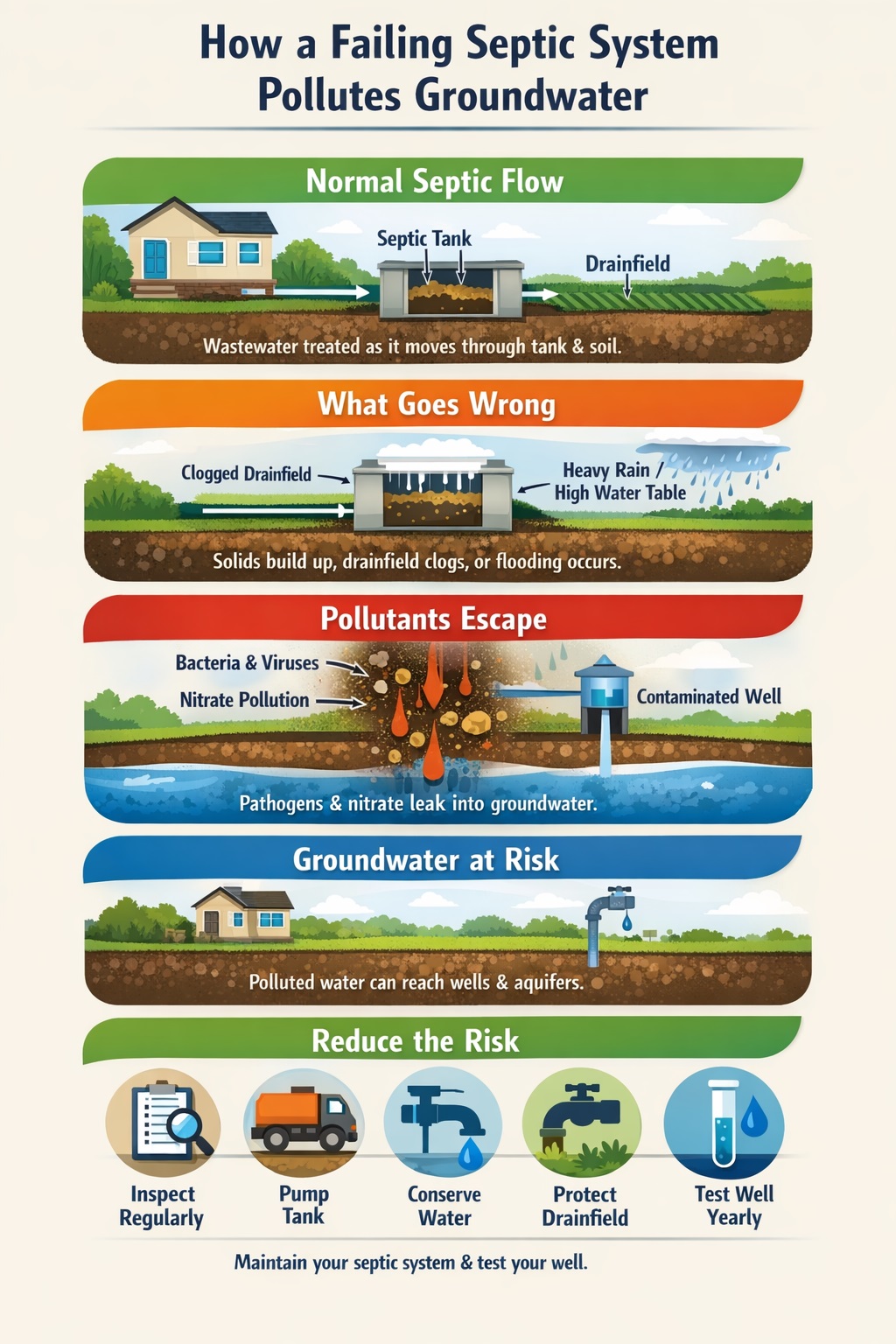
A residential septic system is basically a small home-based waste treatment plant. Anything that goes down the loo, or down the drain ends up in a buried septic tank. Inside that tank, the solids stay at the bottom, oil and grease float to the top, and the remaining water gets partially cleaned up and makes its way into the drainfield.
The real magic happens in the drainfield – it’s where the water goes through a kind of filtration process as it moves through unsaturated soil. That’s where nature does a lot of the work, breaking down pollutants and cleaning the water up before it reaches groundwater. On the flip side, when the system is poorly designed, poorly maintained or gets too much water – that magic stops working.
What Happens When a Septic System Starts to Fail
Septic system failure often starts gradually, and can sometimes seem to be doing its job just fine for years until its finally clear that something is wrong. Sometimes the most common cause is just a lack of maintenance – if you dont clean the tank regularly, solids can clog up the soil and shut the whole system down.
Other common culprits include overpowering the system by using too much water and clogging up the works, or having a system that’s just worn out or broken, or having some other issue like root invasion, or bad soil quality.
How Failing Septic Systems Wreak Havoc on Groundwater
Groundwater contamination happens when wastewater slips through the cracks of proper treatment and somehow manages to reach the aquifer full of pollutants.
Normally, wastewater is slow-moving enough through the soil that microbes and natural filtration get a chance to do their thing & chop up or filter out the pathogens and nutrients. But when the drainfield gets clogged up, is soaked right through, damaged beyond repair, or sitting right on top of the groundwater, that safety net becomes pretty much useless. And with that, wastewater can just keep on moving downward carrying all those nasty contaminants along for the ride.
The worst of the worst pollutants include:
- The usual suspects like bacteria, viruses and parasites.
- Nitrate, courtesy of human waste & wastewater breaking down.
- Other nutrients that can just add to the mess and cause some pretty big water-quality problems.
- And last but not least, a load of organic matter & household waste stuff that just shouldn’t be there
All of this is why a failing septic system can turn into both a household health nightmare and a much bigger environmental issue.
Why Nitrate Is Public Enemy Number One
Nitrate is a major concern because it’s one of the pollutants most likely to just waltz right on through groundwater. Unlike some contaminants that might get trapped or reduced by the soil, nitrate can travel pretty easily & show up in drinking-water wells before you know it.
That’s why nitrogen management has become a much bigger deal in modern septic policy & watershed planning. Even though conventional onsite systems might do a pretty good job of treating pathogens when things are just right, they tend not to remove nitrogen very well. Washington State Department of Health put out a report back in 2025 stating that conventional onsite septic systems are pretty good at getting rid of the pathogens… but leave nitrogen pollution in the water.
Nitrate is a problem because it can make your drinking water unsafe and cause ecological damage down the line.
When Your Private Well Is At Risk – Household Health On The Line
For homes that rely on private wells, septic-related groundwater contamination can put your family’s health in danger.
The contaminated water can look, smell and taste fine, which makes it pretty hard to catch the problem even when it’s there. Depending on what’s in the water, you might end up with some nasty GI illness or have to worry about nitrates in the drinking water causing problems for babies & other vulnerable people.
Which is exactly why regular testing is a must. The CDC says all private well owners should be testing their water at least once a year for total coliform bacteria, nitrates, total dissolved solids & pH, and do some extra testing after flooding, repairs, new construction or any other sudden change in water quality.
Warning Signs That Your Septic System May Be Polluting Groundwater
A failing septic system usually gives off a few warning signs before things get really bad.
Some common signs you might see include:
- Slow drains and regular plumbing backups
- Stinky sewage smells inside your home or outside in the yard
- Wet or spongy patches right over the drainfield
- Unusually green or super-fast-growing grass in one specific area
- Standing water near your septic system components
- Changes in the water quality of your nearby well after a storm or flooding
These signs alone don’t guarantee groundwater contamination – but they do suggest it’s high time to get the system looked at pronto. A detailed septic system evaluation can also reveal whether the surrounding soil continues to absorb wastewater effectively.
Which properties face the highest risk of groundwater contamination
The risk of groundwater contamination isn’t the same for every home, and some are way more vulnerable than others.
Higher-risk situations include:
- Shallow soils that can’t do a good job of treating waste or poor soils that just aren’t up to the task
- Places where the water table goes up and down a lot with the seasons
- Old septic systems that haven’t been upgraded or have been sitting there for too long, or ones that were never big enough to start with
- Homes where the septic system is only a short distance from the private well
- Areas that get flooded regularly or are perpetually wet
- Clusters of homes that all have their own wastewater systems
- Places with waterways that are particularly sensitive to nitrogen and are located near the coast
In cases like these, even a system that seems to be working okay might not be doing as good a job as people think.
Heavy rainfall, flooding and new environmental realities
One of the things that’s become a whole lot clearer in this area is that extreme weather can actually make septic risks worse.
When heavy rainfall comes, and the soil gets saturated, and the water table starts to rise, and the floodwaters come in – all these things can start to break down the separation between wastewater and groundwater. That knocks down the soil’s ability to treat the waste, and it increases the chance that pollutants will start working their way into the aquifer before they get properly filtered.
This has become a pretty big concern, especially in low-lying and coastal areas that get flooded from time to time. You can’t just think of septic maintenance as a household chore anymore – in some regions it’s now part of a broader effort to protect the groundwater and adapt to a changing climate.
Why this issue is getting a lot more attention now
Septic contamination isn’t just an old infrastructure problem that people should have fixed a long time ago. It’s still a live issue that researchers and managers are dealing with.
Back in 2025, the USGS highlight some new studies that showed how much nitrogen from septic waste can last for years and years in the groundwater of Cape Cod. This tells us that once the water gets contaminated, the impacts can last a really long time.
That’s a big shift in how we think about septic systems – from just looking at short-term failures to thinking about water quality over the long haul. And of course, when a septic system gets neglected, it can cause pollution that lasts way longer than the mess you can see in the yard.
How to prevent septic-related groundwater contamination
Preventing contamination in the first place is a whole lot easier than trying to clean up after it happens.
Homeowners can reduce the risk by:
- Making sure to get septic inspections and pumping done on time
- Being sensible about water usage and not doing too much stuff at once
- Keeping vehicles and heavy stuff off the drainfield
- Not putting grease and other things that don’t break down down the drain
- Keeping roots and stormwater away from the septic equipment
- Testing that private well water once a year
- Upgrading old systems when the site conditions need better treatment
In areas where the risk is higher, some advanced treatment units or systems that cut back on nitrogen might be a better bet than the older conventional systems that just aren’t up to the task.
Final Takeaway
The sad truth is that septic systems which have gone bad are letting contaminated water seep into our groundwater every time they can’t handle the job and let waste water slip past the soil that’s supposed to clean it. And as you might expect, this problem is particularly bad in cases where the systems are old, neglected, falling apart, have been swamped, or built in places that don’t have a lot of natural cleaning power.
For ordinary home owners though, the simple answer is get out there and take a gander at your system, make sure you’re doing what you can to keep the drain field from being overwhelmed, get your well water tested, and don’t wait until things get really bad before you act. And for communities, the lesson we should all learn from all this is that septic systems are a pretty important part of our whole water infrastructure system, and we need to treat them like it.
FAQ Section
Can a septic system that has fallen apart really contaminate well water?
Yeah, it can. If the soil in your drain field isn’t up to the job of cleaning the waste water, then pathogens and nitrate can easily seep down into the groundwater and potentially mess up your well water.
What’s in septic system waste that can get into the groundwater?
bacteria, viruses, and nitrate. Nitrate is particularly bad news – it can just travel on through the groundwater with ease.
What are some tell-tale signs that your septic system is heading for disaster?
Watch for slow drains, bad smells, patches of wet grass over the drain field, sewage backups, and – Yep, believe it or not – grass that’s a little too green above where your septic components are.
How often should I get my well water tested if I’ve got a septic system?
CDC suggests a once a year check for total coliform bacteria, nitrates, total dissolved solids, and pH – but after heavy floods, repairs, or a sudden change in water quality you should probably get it checked extra frequently.
Does heavy rain make it more likely that contaminants from septic systems will get into the groundwater?
Yeah. Heavy rain and saturated soil can really do a number on your drain field’s ability to clean the waste water and pretty much guarantee that the bad stuff will get through to the groundwater.
Are older septic systems more likely to pollute the groundwater?
More often than not, yes. These older systems may have parts that are getting old and are no longer up to snuff, or may have been built to outdated standards or in places that don’t have the natural protection that newer systems do.