
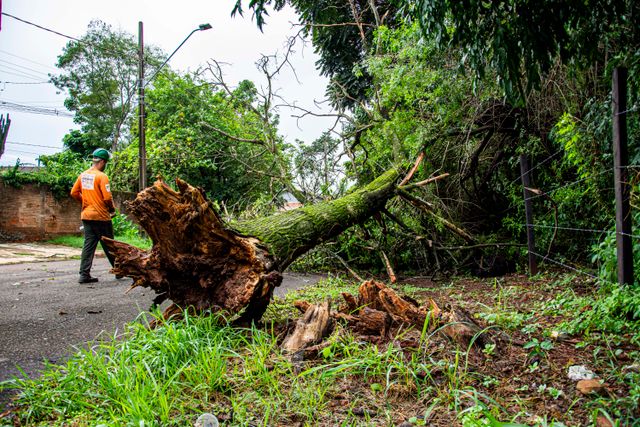

Many trees show signs before they fail. A large limb may break. A trunk may split. A tree may shift in the soil. These signs can be hard to see. A tree may look green and full. Still, rot, root harm, weak limbs, or soil shift may hide from view.
Tree risk assessment means more than finding dead limbs. It asks three simple questions. Could the tree, or part of it, fail? What could it hit? How bad would the harm be?
The International Society of Arboriculture uses a system called TRAQ. It gives trained arborists clear steps to rate tree risk. This helps tree owners make safer choices.
Homeowners do not need to name every defect. You only need to know what looks wrong. You also need to know what to watch. Most of all, you need to know when to call a trained arborist.
Why Tree Failure Is Hard to Predict
Trees often fail for more than one reason. Weak roots, rot, poor limb shape, storm stress, dry soil, disease, old cuts, digging near roots, and soil change can all add up.
A tree may live with one flaw for years. Then heavy rain, strong wind, wet soil, or extra leaf weight can push it too far.
Tree risk can also change. A tree that looked safe last year may not be safe now. Work near the tree can cut roots. A new drive, trench, flood, drought, or storm can change the risk.
This is why tree risk is not a one-time check. Arborists often check trees again over time. The ANSI A300 tree care standard also treats risk checks as repeat work. It does not treat them as one quick look.
How Arborists Check Tree Risk
TRAQ-trained arborists do not just look for flaws. They look at three things at the same time.
First, they ask how likely the tree is to fail. This may mean the whole tree. It may also mean one limb, one stem, or one weak part.
Next, they ask what the tree could hit. A tree over an empty field is one kind of risk. A tree over a car, roof, play area, or bedroom is another.
Last, they ask how bad the harm could be. A small limb over grass may be a low risk. A large dead limb over a busy patio may need fast care.
This is why each tree needs its own check. A tree can have clear flaws and still be low risk. It may stand far from people and property. Another tree may look fine from the ground. But it can still be a concern if it stands over something you cannot afford to lose. Companies like Arborsafe Tree Services handle that side of the work once a problem has been flagged.
Warning Signs to Watch
One sign does not always mean a tree will fail. But each sign means you should look closer. Some signs may also mean you should call a tree care pro.
At the Base and Roots
Watch for mushrooms or hard fungal growth near the trunk or roots. This can be a sign of rot inside the tree.
Look for soil that lifts, cracks, or piles up on one side. This may mean the roots are moving.
Check for roots that are cut, crushed, or bare. This can happen after digging, trench work, or a change in soil level.
Also watch for cracked walks, raised pavement, or cracks near the root area.
On the Trunk
Look for cracks, seams, or splits in the trunk. New cracks need close care. Cracks that grow wider need fast help.
Tap the trunk and listen. A hollow sound may point to a weak or weak area inside.
Watch for a new lean. Also watch for a lean that gets worse. A tree that has leaned for many years may be less urgent.
Look for loose, missing, or peeling bark. Dead wood under the bark can be a warning sign.
In the Canopy
Look for dead limbs near the top of the tree. This matters more if the lower limbs are still green.
Watch for tight V-shaped limb joints. These joints can split more easily than wide U-shaped joints.
Look for large limbs with no live growth. Also watch for limbs that hang at a strange angle.
Watch for sudden leaf drop. Early fall color can also be a sign. So can patchy leaves outside the normal season.
When to Call a Qualified Arborist
Call a trained arborist after a major storm. This is even more important after high wind or wet, heavy soil.
Call after digging, trenching, or building work near the tree roots.
Call if a lean starts or gets worse within weeks or months.
Call if a large limb hangs over a roof, drive, parked car, play area, or busy sitting spot.
Call if a healthy tree starts to thin at the top or lose large parts of its canopy.
Call before you remove a large tree. A pro can help confirm if removal is the right choice.
A TRAQ-trained arborist can check more than looks. They ask how likely the tree is to fail. They ask what it could hit. They also ask how bad the harm could be.
That matters. Two trees can look much the same. But one may be low risk. The other may be high risk because it stands over a home, car, or busy yard.
The Bottom Line
A tree does not need to look sick to be a risk. It does not need to look dead to need care.
Watch for fungus, soil movement, trunk cracks, dead wood, and weak limb joints. Note these signs when they first show up.
Do not wait for a storm to make the choice for you. A qualified arborist can tell you if the problem is minor or needs action.