

City streets get hot fast. Roads, roofs, and walls hold heat. This is called the urban heat island effect.
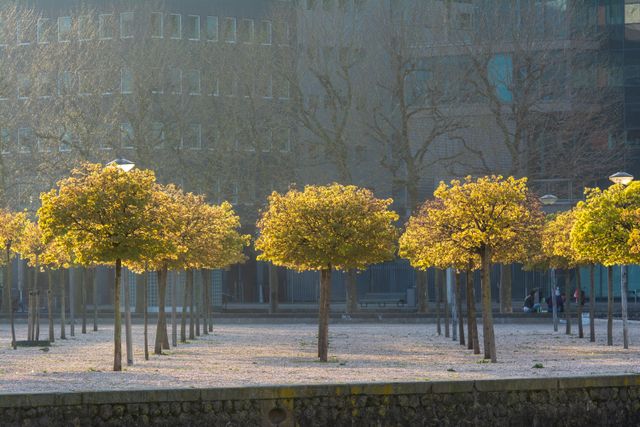
Trees help cool these hot places. Their shade keeps roads and walks cooler. Trees also release water from their leaves. This helps cool the air around them.
Studies show that tree cover can lower city heat by about 0.27°F. That may sound small, but it matters across a whole city. Trees can help reduce much of the extra heat caused by roads and buildings.
Healthy trees need care. They need water, mulch, safe roots, and good pruning. Tree Care Experts can help keep city trees strong. They can also help repair weak green spaces and plan better tree care.
Without healthy trees, city heat can rise by about 0.56°F. This can make streets feel worse in summer. It can also raise the need for air conditioning and use more energy.
Tree care is not just yard work. It is part of a cooler and healthier city. When cities protect trees, people get more shade, cleaner air, and safer streets.
Why City Trees Need More Than Planting
City trees do many jobs. They shade roads, walks, homes, and parks. They help cool the air. They slow rain water before it floods drains. They catch dust and smoke. They also give birds and small wildlife a place to live.
A 2023 global study in Nature found that city tree cover can cut summer air heat by about 0.5°C on average. Areas with more shade can cool even more. Big, old trees give the most help. A small new tree cannot replace a large shade tree.
But city trees live in hard places. Their roots may grow in tight soil. Their trunks may stand near hot roads. Salt, cars, wires, and building work can harm them. Many young trees die early when no one cares for them.
So planting is only the first step. A city may plant 10,000 trees. But if half die in five years, the city has not built a strong tree plan. It has only spent time and money.
Step 1 — Pick the Right Tree for the Right Place
The right tree can live for many years. The wrong tree can fail fast. Before you plant, look at the site first.
Start with the full-grown size. A large shade tree needs about 1,000 cubic feet of soil. This gives roots room to spread. Near power lines, choose a short tree. It should stay under 25 feet when grown.
Next, check heat and cold needs. Use the USDA Plant Zone Map. Pick a tree that fits your zone. In hot city sites, choose one that can also handle at least one warmer zone. This helps the tree cope with more heat over time.
Then check pests and dry soil. Do not plant too many of the same tree. A good field rule is simple: no more than 10% of one species and no more than 20% of one genus. This is a guide, not a law. It helps reduce the risk that one pest or tree disease will kill many trees at once.
Also check the roots. Some trees have strong roots near the ground. These roots can lift walks and crack hard paths after 10 to 15 years. In tight tree pits, choose trees with roots that fit the space.
Native trees can be a good choice. But native does not always mean best for each street. City sites can be hotter, drier, and more cramped than wild sites. Choose trees that can handle the real site, not just the local region.
For help, use a tree tool from the Arbor Day group. You can also ask a local city tree office. Match the tree to soil, sun, space, water, heat, wires, and foot traffic.
A good tree choice saves work later. It also gives the city a better chance to grow large, healthy trees that cool streets for many years.
Step 2 — Plant Correctly From Day One
The most common and most damaging planting mistakes:
| Mistake | Consequence | Fix |
| Burying the root flare | Root stress, crown decline, early death | Plant with flare visible at or above soil level |
| Small planting pit | Restricted roots, drought stress | Minimum 3× the root ball width; use structural soil or tree cells in paved areas |
| Mulch against the trunk | Bark decay, pest entry, root girdling | Wide shallow ring, 3–4 inches deep, 6 inches clear of trunk |
| Wrong depth | Oxygen deprivation | Root flare must be at grade — not an inch below |
Step 3 — Maintain on a Real Schedule
Vague advice (“water regularly”) leads to dead trees. Use this as your baseline:
Year 1–2 (establishment)
- Water deeply once per week in dry periods — slow trickle for 30–45 minutes at the drip line, not at the trunk
- Inspect monthly for stress signs: wilting, leaf scorch, early drop
- Reapply mulch in spring and before winter
Year 3–5
- Structural pruning: establish a single central leader, remove crossing branches, create clear branch spacing — this is the most important long-term investment in a young tree
- Reduce watering frequency as roots establish; increase during drought
Year 10+
- Commission a professional risk assessment from an ISA-certified arborist
- Inspect for internal decay, root damage, and structural faults annually
- Mature trees still need supplemental water during prolonged drought
Seasonal rhythm
- Late winter/early spring: prune while dormant, before bud break
- Spring: replenish mulch, begin establishment watering
- Summer: intensify watering for young trees; watch for pest activity
- Autumn: final deep water before ground freeze; inspect for storm damage
Step 4 — Protect Soil and Roots
Most tree roots grow in the top 12–18 inches of soil. Urban soil is typically compacted, low in organic matter, and starved of oxygen — the single biggest reason city trees underperform.
Practical soil protection:
- Install tree protection fencing before any construction within the drip line
- Never allow vehicle or equipment traffic over root zones
- Add 2–3 inches of composted wood chips annually to the mulch ring
- In dense paved areas, consider permeable paving, structural soil systems (e.g. CU-Structural Soil), or suspended pavement with expanded soil cells to give roots room to grow under sidewalks
Use the USDA Forest Service’s i-Tree tools to estimate your trees’ ecosystem value — avoided stormwater runoff, pollution removal, carbon storage, and energy savings — and build the economic case for protecting them.
Step 5 — Recognize and Respond to Pests and Disease
Pest and disease outbreaks devastate canopies when a single species dominates. Emerald ash borer has killed hundreds of millions of ash trees across North America. Dutch elm disease reshaped entire city streetscapes. Diversity is the primary defense.
5 common urban tree threats — symptoms and action:
| Threat | Key symptoms | Action |
| Emerald ash borer | S-shaped galleries under bark, canopy dieback from top down, D-shaped exit holes | Report to state forestry; consider systemic treatment or removal |
| Dutch elm disease | Yellowing/wilting of single branches, progressing rapidly; brown streaking in wood | Remove affected wood immediately; consult arborist |
| Anthracnose (sycamore, oak) | Brown blotches on leaves, premature defoliation | Usually cosmetic; improve air circulation; rake and dispose of fallen leaves |
| Verticillium wilt | Sudden wilting of one side of canopy; dark streaking in sapwood | No cure; remove affected trees; avoid replanting susceptible species in same soil |
| Scale insects | Sticky residue, yellowing leaves, rough bark encrustations | Horticultural oil spray in early spring; consult arborist for severe infestations |
Report suspected invasive pest outbreaks to your state department of agriculture or the USDA APHIS pest reporting portal.
When to Call a Professional
Some tree work should never be DIY. Call an ISA-certified arborist for:
- Any pruning that requires climbing or a bucket truck
- Trees leaning more than 15° from vertical — especially toward structures
- Large hanging or cracked limbs after storms
- Suspected internal decay (hollow sounds when tapped, fungal conks at the base)
- Root damage from construction or trenching
- Pre-construction tree protection planning
Rough cost ranges (US, 2024): Basic tree inspection $75–$200 · Standard pruning $250–$700 · Full risk assessment $200–$500 · Emergency storm work $300–$1,500+. Many municipalities offer subsidized inspections or free pruning for street trees — check your local urban forestry or parks department.
All professional work should follow ANSI A300 tree care standards, the industry benchmark for pruning, soil management, and risk assessment.
Tree Equity: Directing Care Where It’s Needed Most
Urban canopy is not evenly distributed. Research in US cities consistently shows lower-income neighborhoods have less tree cover, higher surface temperatures, and greater exposure to air pollution. This is both an environmental and a public health gap.
Effective tree equity programs:
- Map canopy against heat and poverty data to prioritize planting locations
- Fund maintenance budgets alongside planting budgets — a planted but unmaintained tree closes the gap less than half as much
- Consult residents before planting; some communities have valid concerns about root damage, blocked sightlines, or maintenance responsibility
- Train and hire locally for tree stewardship roles
Cities can use American Forests’ Tree Equity Score tool to identify priority neighborhoods and track progress.
Key Takeaways
- Healthy mature canopy delivers far more cooling and pollution benefit than newly planted trees — protect existing trees as a first priority
- Match species to site climate, soil volume, and mature size before planting
- Maintenance matters as much as planting: water deeply for 2 years, prune structurally at years 3–5, commission a professional assessment at year 10
- Soil health is the hidden determinant of urban tree success — protect root zones from compaction and construction
- Diversify species to reduce pest and disease vulnerability
- Direct investment toward low-canopy, high-heat neighborhoods where the climate and health benefits are greatest