

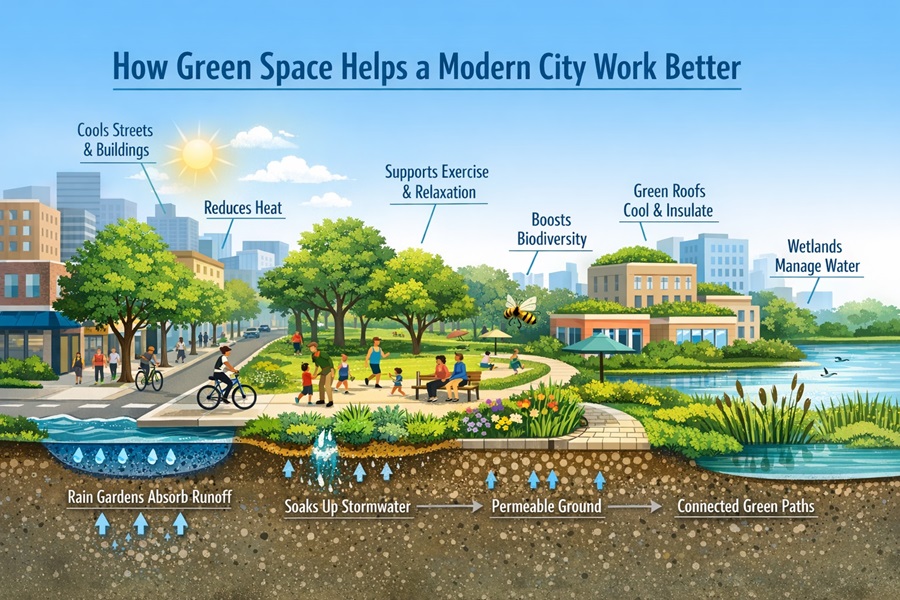
Green space matters more than ever in modern cities because it does far more than make urban areas look better. Well-designed green space can help cool overheated neighborhoods, slow and absorb stormwater, support biodiversity, improve mental and physical health, and make dense districts more livable and resilient. In modern planning, it is no longer just an amenity. It is part of the infrastructure cities rely on to function well under pressure.
Key Takeaways
- Green space helps cities manage heat, water, health, and biodiversity at the same time.
- In modern cities, green space includes parks, street trees, wetlands, greenways, planted public space, and green roofs.
- Quantity matters, but access, shade, quality, and maintenance matter just as much.
- High-performing green space is connected, usable, climate-responsive, and designed for more than one purpose.
- Cities increasingly treat green space as green infrastructure and part of broader climate-resilience planning.
Modern cities are under growing pressure. They are getting denser, hotter, and more exposed to climate-related stress. Hard surfaces such as asphalt, roofing, concrete, and parking areas continue to replace permeable land, while heavier rainfall, hotter summers, biodiversity decline, and public-health strain are making urban systems harder to manage. In that context, green space has become more important than it was in the past because it helps cities respond to several problems at once.
That shift is important. Green space is no longer best understood as leftover land, visual relief, or something cities add when they have room. In strong urban planning, it is treated as part of a city’s operating system: a network of spaces that can shape microclimate, water movement, ecological function, mobility, and daily quality of life.
What Counts as Green Space in a Modern City?
Urban green space includes much more than large parks. It can include:
- tree-lined streets and boulevards
- community gardens
- greenways and linear parks
- planted public squares
- wetlands and restored riverbanks
- urban forests
- green roofs and planted building edges
- small neighborhood open spaces
What links these spaces is not just vegetation. It is function. Urban green space matters when it helps deliver environmental, social, climatic, or ecological value within the city. WHO’s work on urban green space also uses a broad framing that goes beyond traditional parkland and includes accessible, health-relevant green environments across the urban fabric.
That broader definition matters because modern cities rarely have the luxury of solving everything with one large central park. In practice, the most effective cities usually depend on networks: a shaded street here, a rain-absorbing corridor there, a neighborhood park nearby, and larger landscape systems that connect districts across the wider urban area.
Why Green Space Matters More Today Than in the Past
Green space matters more now because urban pressures have intensified. Many cities face a combination of rising temperatures, more dangerous heat exposure, greater runoff from hard surfaces, biodiversity loss, and higher health burdens linked to sedentary lifestyles, stress, and poor environmental quality. Unlike single-purpose infrastructure, green space can address several of those pressures in the same footprint.
That is one reason green space now appears more often inside the language of green infrastructure, blue-green infrastructure, and nature-based solutions. OECD’s recent climate-resilient infrastructure work explicitly places nature-based solutions such as wetland restoration and vegetation-based measures inside broader resilience planning rather than outside it.
In other words, the role of green space has changed because the city’s needs have changed. It is not just that people like greenery more than before. It is that cities now need landscape systems to do real work.
How Much Green Space Does a City Need?
There is no single number that works for every city. Need varies by density, climate, urban form, land values, canopy cover, and how evenly green space is distributed. But the best guidance points in the same direction: cities need enough green space overall, and residents need frequent, practical access to it close to home.
One widely used access benchmark comes from WHO guidance, which notes a rule of thumb that residents should be able to reach a public green space of at least 0.5 to 1 hectare within about 300 metres of home. That matters because a city can have impressive park acreage on paper while still leaving everyday neighborhoods without usable greenery nearby.
UN-Habitat’s urban indicator work uses a related access measure: the share of the population living within 400 metres walking distance of an open public space. That framework reinforces the same idea. Access is not a decorative planning preference. It is a measurable urban-performance issue.
Natural England’s accessible greenspace standards add another useful layer by combining size, distance, and capacity. Its guidance includes nearby access thresholds and a wider capacity benchmark of at least 3 hectares of publicly accessible greenspace per 1,000 people. That is helpful because it shows why cities need a layered network rather than one or two flagship spaces.
A newer framework that has become influential in planning and urban-forestry discussion is the 3-30-300 rule: at least 3 trees visible from home, at least 30% tree canopy in the neighborhood, and no more than 300 metres to the nearest quality green space. It is best used as a practical planning framework rather than a universal law, but it is useful because it links visibility, canopy, and access in a way the public and decision-makers can understand.
The main lesson is that cities should not chase one metric in isolation. Total green area, canopy cover, distance to a park, ecological quality, and neighborhood distribution each measure something different. A city can meet an area target and still fail on shade, access, or equity. The strongest systems combine quantity, proximity, quality, and network design.
The Environmental Benefits of Green Space
Cooling cities and reducing heat stress
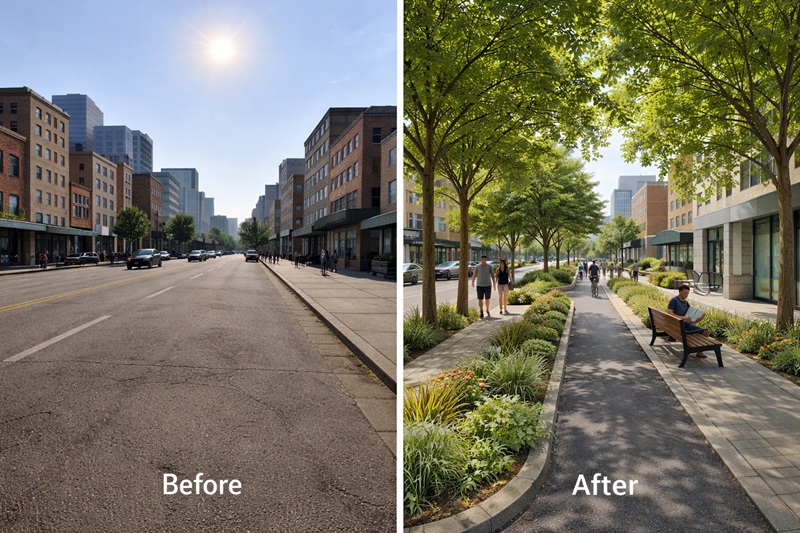
Urban areas often trap and intensify heat because built surfaces absorb, store, and re-radiate solar energy. The EPA notes that trees, vegetation, and green roofs help reduce heat-island effects by shading surfaces, deflecting radiation, and releasing moisture into the air. In practical terms, that means greener streets and districts can feel more thermally tolerable than heavily paved ones, especially during hot weather.
But not all greenery cools equally well. Tree canopy usually does more for street-level shade and human comfort than flat ornamental planting or open lawn alone. Cooling performance depends on placement, canopy density, species choice, soil conditions, irrigation where needed, and whether greenery is connected across the wider urban system. That is why high-performing urban greening is a design issue, not just a planting issue.
Helping cities manage stormwater
Green space also helps cities manage rainfall more effectively. Vegetated landscapes, permeable ground, bioswales, wetlands, and other green-infrastructure features can absorb, slow, and filter runoff, reducing pressure on conventional drainage systems. EPA guidance treats this as one of the central environmental benefits of green infrastructure.
This matters more as rainfall becomes more intense and more urban land becomes sealed. Traditional grey drainage systems remain essential, but they often perform better when paired with landscapes that store, infiltrate, and delay water before it overwhelms pipes and paved surfaces. That is the logic behind sponge-city and blue-green infrastructure approaches now influencing city design in multiple regions.
Supporting biodiversity inside cities
Green space is also one of the main ways cities can support biodiversity rather than erase it. But here again, quality matters more than appearance alone. A monoculture lawn with little habitat complexity usually does much less for urban ecology than a connected network of native planting, wetlands, tree cover, pollinator-friendly vegetation, and restored edges.
Urban biodiversity depends on connectivity, species mix, habitat structure, and long-term management. Cities that protect ecological corridors and connect parks, waterways, verges, and planted streets generally create better conditions for birds, insects, pollinators, and other species than cities that rely on isolated decorative planting.
The Human Benefits of Green Space
Green space matters because it changes everyday urban life, not just environmental indicators. WHO’s evidence reviews link urban green space with benefits for physical activity, mental well-being, social interaction, and broader health outcomes, while also noting that the strength of those benefits depends on design, access, and context.
That nuance matters. A nearby, shaded, safe, usable park or planted street can support walking, exercise, rest, social contact, and psychological relief. A neglected or inaccessible green area may do much less. For residents in dense urban districts, even modest but well-designed green space can make the neighborhood feel calmer, healthier, and more humane.
Public landscapes can also support community life. They give residents places to sit, meet, gather, and move through the city on foot. That may sound soft compared with drainage pipes or transit corridors, but it is still infrastructure in the broader urban sense because it shapes how people use the city day to day.
Why Access and Equity Matter as Much as Area
One of the biggest mistakes in green-space planning is assuming that total area tells the whole story. It does not. A city can have major parks, green belts, or protected landscapes and still leave many lower-income neighborhoods with limited daily access to shade, tree canopy, or safe public space. WHO’s green-space work and UN-Habitat’s access metrics both reinforce the importance of proximity and equitable distribution.
This is not just a fairness issue. It is a climate and public-health issue. Neighborhoods with less canopy and fewer usable green spaces are often more exposed to heat stress and environmental burden. That means urban greening works best when it is targeted where exposure is highest, not only where land is easiest to redesign or where investment is already flowing.
There is also a real risk of green gentrification. New parks, waterfront restoration, and high-profile greening projects can improve neighborhoods while also raising land values and intensifying displacement pressure if housing and anti-displacement policy are ignored. Good planning should not force cities to choose between greener neighborhoods and social stability. It should address both together.
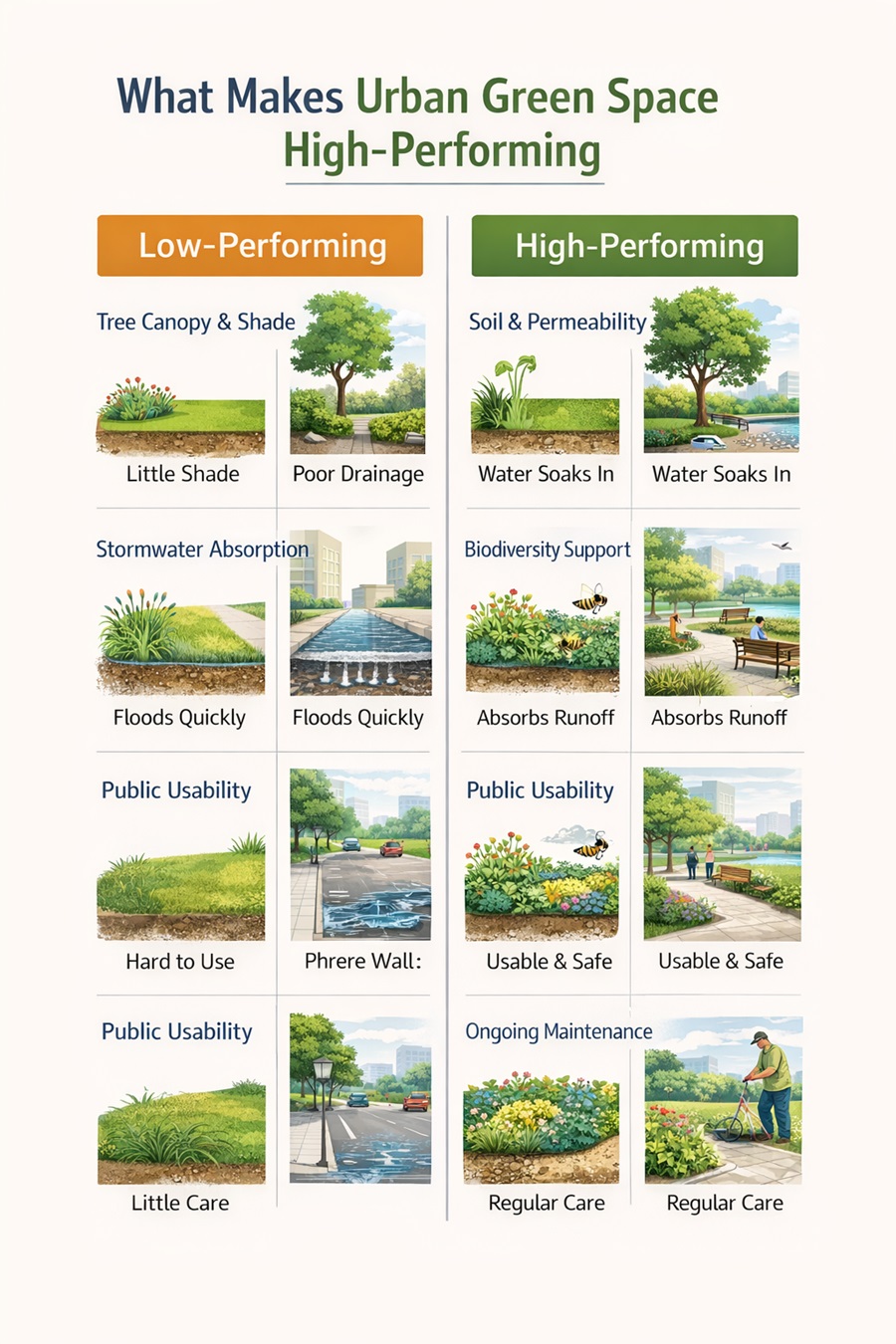
What Makes Green Space High-Performing?
Not all green space performs equally well. High-performing urban green space is not simply green in color. It is green in function.
In practice, that usually means it does several things well at once: it provides shade where people need it, allows water to infiltrate where runoff is a problem, supports habitat where ecological fragmentation is severe, and creates public space people can actually use. It is also connected to a wider system rather than isolated as a leftover parcel.
Several design factors tend to separate strong projects from weak ones:
- Canopy and shade: Tree cover generally matters more for thermal comfort than low planting alone.
- Soil and permeability: Planting cannot perform well if roots are constrained and water cannot infiltrate.
- Connectivity: A network of linked streets, corridors, parks, and water edges usually performs better than isolated sites.
- Ecological quality: Native or habitat-supportive planting generally does more for biodiversity than decorative monocultures.
- Usability and safety: A space has less public value if people cannot comfortably or safely use it.
- Maintenance: Even good design underperforms without long-term care, funding, and management.
This is why urban green space should be treated as a performance system, not a beautification layer.
Limits, Trade-Offs, and Common Failures
A strong article on green space should also be honest about limits. Green space is powerful, but it is not automatic.
First, maintenance matters. Trees, wetlands, planted corridors, and public landscapes need long-term care, budget, and governance. Without that, cities can end up with underperforming or deteriorating spaces that look good in a rendering and weak in reality.
Second, climate fit matters. In hot or water-stressed regions, planting strategies that depend on heavy irrigation may not be sustainable unless species choice, soil design, and water planning are handled carefully. Good green infrastructure is climate-responsive, not copy-pasted.
Third, not every intervention has the same impact. Small decorative patches may do little for heat, runoff, or habitat if they are disconnected from a wider system. Green space performs best when it is placed strategically and linked to streets, drainage, public space, mobility, and land use.
Finally, urban land is contested. In growing cities, green space competes with housing, transport, utilities, and commercial development. That is exactly why it needs to be planned early. When green systems are treated as leftover land, they are usually the first thing to shrink. When they are treated as infrastructure, they are more likely to survive and perform.
Cities Using Green Space as Urban Infrastructure
The clearest sign that green space has changed status is that many cities now plan it as infrastructure rather than ornament.
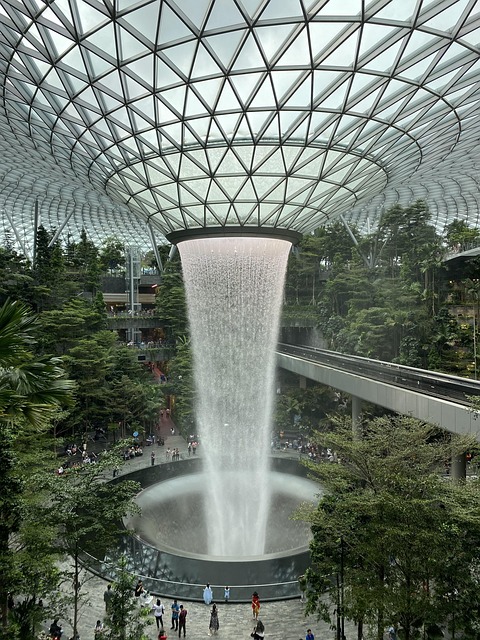
Singapore: green space integrated into dense urban form
Singapore is one of the strongest examples. Its “City in Nature” strategy and related planning work do not treat greenery as something separate from urban development. The emphasis is on connecting green spaces, restoring nature in urban areas, and embedding ecological logic into a dense built environment. That matters because it shows that high density does not automatically require a low-nature model.
The planning lesson from Singapore is not simply “plant more.” It is that green and blue systems can be built into the city’s structure across multiple scales, from parks and connectors to building-integrated greenery and ecological corridors.
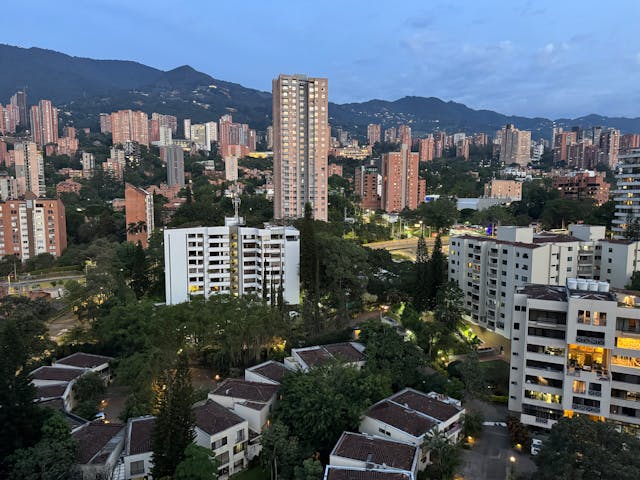
Medellín: retrofitting transport corridors for cooling and livability
Medellín offers a different but equally useful example. Its Green Corridors initiative transformed road verges and waterway edges into connected vegetated corridors, treating greenery as a tool for cooling, public-space improvement, and climate adaptation rather than surface decoration. The project’s significance lies in its retrofit logic: it improved existing urban corridors instead of waiting for entirely new districts to be built.
For planners, the lesson is that streets and mobility corridors are some of the most strategic places to insert landscape infrastructure because they touch large parts of the city, shape daily movement, and strongly influence heat exposure.
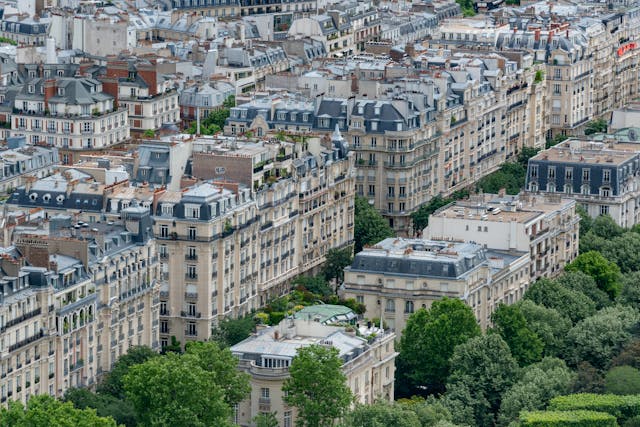
Paris: climate adaptation through urban forests and permeable city design
Paris illustrates how green space can be tied directly to climate adaptation in a dense metropolitan setting. Recent city climate planning connects greening, urban forests, cooler public space, and more permeable ground to the broader effort to adapt the city to rising heat and environmental stress.
The planning lesson here is that urban greening becomes more powerful when it is linked to street redesign, permeability targets, public-space renewal, and heat strategy rather than being treated as a standalone parks agenda.
Together, these examples show that green space works best as a network embedded into the city’s spatial, climatic, and ecological logic.
The Economic Case for Green Space
Green space is often discussed as an environmental or social good, but cities increasingly have economic reasons to invest in it too. OECD’s climate-resilient infrastructure work points to the value of nature-based measures in reducing risk and strengthening resilience, which can lower long-term damage and improve system performance.
At the city level, that can mean several things at once: lower heat burden, reduced runoff pressure, improved public-space quality, stronger neighborhood appeal, and less reliance on single-purpose grey infrastructure alone. Not every benefit is easy to price precisely, but the planning logic is clear. A high-performing green network can deliver multiple forms of value from the same land footprint.
Final Thoughts
Green space matters more than ever in modern cities because urban problems are more intense than they used to be. Cities are hotter, more sealed, more climate-exposed, and more dependent on systems that can do more than one job at once. Green space is one of the few urban tools that can support cooling, water management, biodiversity, public health, and daily livability together.
But the real standard is not simply whether a city has greenery. It is whether that greenery is accessible, equitable, connected, well-designed, and able to perform under real urban conditions. That is what turns green space from decoration into infrastructure.
FAQ
Why is green space important in cities?
Green space is important because it can reduce heat-island effects, help manage stormwater, support biodiversity, improve health and well-being, and make neighborhoods more livable.
What counts as urban green space?
Urban green space includes parks, street trees, urban forests, greenways, wetlands, green roofs, community gardens, and planted public spaces that provide environmental or social value.
How much green space should a city have?
There is no single universal number, but strong guidance emphasizes nearby access, usable quality, and sufficient area across the wider city. Benchmarks such as 300–400 metre walking access and broader capacity standards are commonly used.
Does all green space deliver the same benefits?
No. Its performance depends on factors such as canopy, shade, permeability, habitat quality, connectivity, usability, and maintenance. Decorative greenery may do far less than well-designed, multifunctional green infrastructure.
Why are cities investing more in green space now?
Cities are investing more in green space because it helps address heat, flooding, biodiversity loss, resilience, and public-health pressure in one integrated way, and it increasingly fits within nature-based and climate-resilient infrastructure planning.