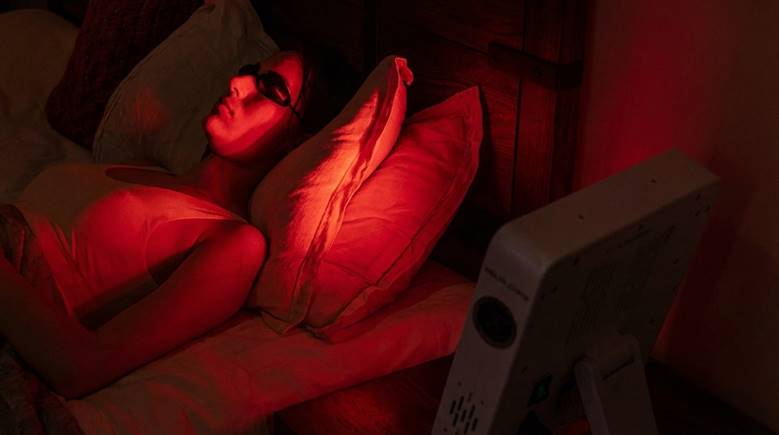

You could say red light therapy gets a bit of a bad rep – its touted benefits are easy to get caught up in, but the facts are equally easy to get lost in. For anyone looking to use one in the evenings, it all comes down to one key thing: does the device naturally avoid blue light, or does it somehow smuggle it in only to turn it off in ‘sleep mode’? That difference is a big deal because blue light is a potent melatonin-slayer and when it comes to red light therapy devices, the dermatology experts are generally a lot more cautious than your average marketing hype.
Red light therapy is often thought of as one single beast, but the truth is – when it comes to evenin’ use – the differences between devices start to matter a lot more. Some are blue-light free by design, others include blue light, but only kick it into ‘sleep mode’ or ‘tranquil’ mode to keep the bedtime lights off. And then there are facial masks which sort of exist in their own little world – they’re built for short, targeted sessions aimed at the skin, rather than a full-on body treatment.
What This Review Covers
This review looks at 12 red light therapy devices which are actually worth considering for evening use. We’re talking about the ones that either don’t let blue light in in the first place, or have an evening mode that gently takes it out of the picture so you can have a restful night. We’re aiming for practicality here: how good is each device at fitting the bill for a buyer who wants to limit their blue light intake at night, but still get some real benefits from their device for skin, recovery and targeted home treatment.
One thing to remember: this is not an endorsement of any device, nor is it a substitute for proper medical advice. Just in case you’ve got a skin condition, light sensitivity, or are thinking of using red light therapy for medical reasons rather than just general wellness. The American Academy of Dermatology just reminds us that at-home red light therapy devices are widely available and may have some benefits for some users – but let’s be clear: results vary, and we still need more research on dosing, long-term use, and how effective these things really are.
How We Chose the Devices to Compare
Our rankings are based on a weighted system that actually reflects how people tend to use these devices at home, especially in the evening.
How safe for sleep and evening use is it? (35%)
The top scorers were devices that either were blue-light free from the start, or had a genuine ‘sleep mode’ that you could count on to take the blue light out of the picture at night.
How transparent is the device specs? (20%)
We looked for products where the wavelengths, irradiance, controls and overall details are clearly spelled out, not just vague claims.
How easy is it to use? (15%)
Things like timer settings, remote controls, app controls, preset logic and auto-shutoff all count because if a device is hard to use, it’s just not going to fit into your evening routine.
How versatile can you use it? (15%)
We also looked at how well each device suited different needs – from facial use and targeted body treatment to recovery and smaller-area sessions.
How confident do you feel buying it? (15%)
The products that scored well were the ones where the claims were clear, the presentation was solid and the whole offer just inspired a bit more confidence.
Specification quality also matters because home-use photobiomodulation devices are not presented consistently across brands. A 2025 pilot study of home-use LED photobiomodulation devices found meaningful variation in wavelengths, output power, and irradiance, which is one reason careful spec review matters in this category.
Quick take
If you just want a super simple solution for evening use, you’d probably be best off with a panel that doesn’t have any blue light in it at all by default. Now that makes Helio Spark, Mito PRO300+, Hooga HG300, and the BlockBlueLight PowerPanel Mini some of the simplest options to get. The other devices like the RLT Total Spectrum Mini, Platinum Biomax PRO Nano, Rouge Tabletop G4, Joovv Mini 3.0, Rojo Refine 900, and Vital Pro 2.0 kind of need to be adjusted to fit the bill for evening use because their sleep benefits depend on which settings, modes, or lower-intensity settings you choose rather than just being ‘ blue light free ‘.
Related: The Future of Light-Based Wellness
At a Glance: 12 Red Light Therapy Devices
| # | Device | Best For | Approach |
| 1 | Helio Spark | Sleep promotion + Deep tissue and joint recovery | 1064nm-dominant, zero blue light |
| 2 | Mito PRO300+ | Multi-wavelength full-body | 4-wavelength dual-switch panel |
| 3 | RLT Total Spectrum Mini | Sleep mode + multi-purpose therapy | 7-wavelength; blue-off sleep preset |
| 4 | Platinum Biomax PRO Nano | App-controlled circadian fade | Sleep mode fades to zero; app + remote + voice |
| 5 | Joovv Mini 3.0 | Circadian Ambient Mode | Low‑intensity evening mode; medically certified, compact panel |
| 6 | Hooga Health HG300 | Entry-level auto-shutoff panel | Simple timer, no sleep mode, no blue light |
| 7 | Rouge Tabletop G4 | Sleep preset + schedulable sessions | 8-wavelength; alarm clock + 30-min timer app |
| 8 | BlockBlueLight PowerPanel Mini | Zero-setup sleep-safe use | Auto-shutoff timer; blue-light-free by design |
| 9 | Rojo Refine 900 | Fade-to-sleep + Sunrise Mode | 30-min fade; Sunrise Mode; memory presets |
| 10 | Vital Red Light Vital Pro | Bedside remote + sleep preset | Handheld remote; 9 wavelengths; blue-off sleep preset |
| 11 | CurrentBody Face Mask | Pre-sleep facial wind-down | 10-min auto-shutoff; eye inserts; wireless |
| 12 | Omnilux Contour Face | One-button pre-bed skin routine | 10-min auto-shutoff; hands-free; one button |
Blue-light-free by design
Helio Spark
Helio Spark is one of the few products that actually fits neatly into the ‘ blue light free ‘ group. They call it out straight up on their official web page – a red and near infrared panel with six different wavelengths including 1064nm and zero blue light as its core design feature. That makes it a super clear choice for anyone looking for a device they can just use in the evening without messing around with different settings.
Mito PRO300+
Mito PRO300+ is just a simple little tabletop panel that offers four wavelengths: 630nm, 660nm, 830nm, and 850nm. It’s not really a sleep product, but it does belong in this category because those wavelengths don’t include blue light. What makes it appealing is that its straightforward design.
Hooga HG300
Hooga HG300 is just a pretty basic red and near infrared panel. It’s got a timer and is probably the easiest one in this group to get started with – so if you just want something no fuss for your bedside or desk you might find that it’s more than enough.
Sleep-mode or Evening-mode Devices
RLT Total Spectrum Mini
RLT Home’s Total Spectrum Mini should not be described as a fully blue-light-free device. The product specifications list 480nm blue light as part of its seven-wavelength setup, with the page also showing a 6% wavelength density for 480nm. That means it fits better in an evening-use roundup as a device with sleep-oriented modes or adjustable settings, rather than as a panel that is blue-light-free by design.
Platinum Biomax PRO Nano
The thing about Platinum’s Nano panel is, it’s more a customizable panel than a blue light free one. As such, it’s got all sorts of features you can play with – dimming, app functions, and sleep settings. For some people, that flexibility is a real plus. For others, it’s just more stuff to set up.
Rouge Tabletop G4
Rouge’s tabletop model is all about being adjustable rather than being blue light free. It’s got sleep presets, scheduling, and app control – all the things you’d want for an evening routine. But what it’s really good at is just making life easy with its routine design.
Joovv Mini 3.0
Joovv’s Mini 3.0 belongs in this group because of its Ambient Mode, which is designed to be a bit gentler on the eyes in the mornings and at night. That’s a more accurate claim than saying it’s blue light free, which is pretty easy to get wrong.
Rojo Refine 900
Rojo’s real strength is its routine logic – a sleep mode that fades light down over time, and a sunrise mode that ramps it back up again in the morning. That’s thoughtful design, but it’s a far cry from a simple blue light free panel.
Vital Pro 2.0
Vital Pro 2.0 needed a bit of a correction of its own. It turns out the product line actually includes blue light in its broader spectrum, so it doesn’t quite fit under a “no blue light” headline like we thought. Instead, it’s just another one of those adjustable evening-use options that lets you pick and choose how you use it.
Face masks for Shorter Nighttime Routines
CurrentBody Skin LED Face Mask: Series 2
CurrentBody’s Series 2 is actually a face-only device, which is a bit different from a full-body panel. So it’s really geared towards people who just want a quick facial routine before bed.
Omnilux Contour Face
Omnilux Contour Face is much the same – a facial device that’s all about simple routines rather than being a full-on body treatment or recovery tool.
What really stands out, and what doesn’t
The strongest products here aren’t the ones with the longest lists of features. No, they’re the ones that actually make it clear what you’re using them for.
If you just want the easiest evening-use setup, then Helio Spark, Mito PRO300+, Hooga HG300, and BlockBlueLight PowerPanel Mini are probably your best bets because they’re all pretty straightforward – no fiddly blue light settings or whatnot.
But if you want a bit more flexibility then the adjustable category is where it’s at. RLT Total Spectrum Mini, Platinum Biomax PRO Nano, Rouge Tabletop G4, Joovv Mini 3.0, Rojo Refine 900, and Vital Pro 2.0 are all good options if you want to be able to pick and choose how you use them – but just remember, these devices are settings-dependent, not inherently blue light free.
The face masks sit apart from both groups. CurrentBody and Omnilux are better judged as short facial-treatment tools than as rivals to tabletop or body panels.
What Buyers Should Simply Ignore
This is a category where the marketing spin can be super misleading. “Clinical-grade”, “deep healing”, and “best for sleep” – phrases that sound super scientific but often mean very little. A 2026 review of those at-home red light therapy ads found that a lot of what consumers are claiming just isn’t backed up by the evidence – which is a good reason to take a closer look at the details: the wavelength they’re using, what they’re actually good for, how they control their outputs, and what kind of hassle you’re going to be put through setting the thing up.
The Bottom Line
The thing is, there’s no clear-cut way to call 12 different devices “blue light free” because a few of them actually aren’t. What makes more sense is this: if you want a low-friction device to use in the evenings, go with one that is designed to be blue light free. If you’re okay with a few more features and are willing to put in some effort setting things up, the ones with adjustable sleep modes give you a bit more flexibility. And if all you’re interested in is looking after your facial skin, then a mask is a whole different ball game – so you can just compare those devices separately.
The better way to look at this market in 2026 is not by how big the marketing spin is, but by whether the product actually does what it says it will.