

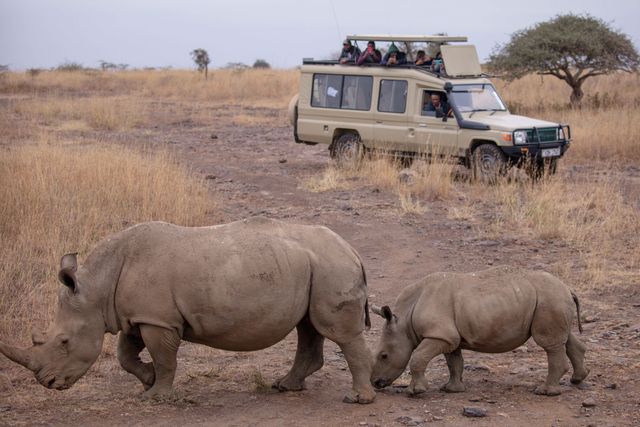

Watching wildlife in its natural habitat can be even more rewarding when your trip helps protect the animals and the places they call home. Around the world, national parks, wildlife sanctuaries, and protected reserves rely partly on responsible tourism to support conservation programs. Entrance fees, guided excursions, and other tourism activities can help fund habitat restoration, wildlife monitoring, and local conservation efforts.
Choosing a conservation-focused destination means considering how tourism supports the surrounding environment and communities. Some protected areas use tourism revenue to fund anti-poaching patrols, while others support research, rehabilitation programs, or community-led conservation initiatives. The following destinations offer opportunities to observe wildlife while learning about the organisations working to protect these species and their habitats.
Seeing Northern White Rhinos at a Wildlife Conservancy in Kenya
Ol Pejeta Conservancy in central Kenya is home to the world’s last two surviving northern white rhinos, Najin and Fatu. These critically endangered animals live in a protected enclosure, where dedicated rangers monitor their health and safety around the clock. A guided visit to the Endangered Species Enclosure offers a rare opportunity to see the rhinos and learn about international efforts to save the subspecies through assisted reproduction. Elsewhere in the conservancy, guided safari drives offer opportunities to spot southern white rhinos, black rhinos, elephants, and other wildlife roaming the grasslands.
Beyond protecting endangered animals, Ol Pejeta operates conservation programs that include wildlife monitoring, anti-poaching patrols, and veterinary support. The conservancy also runs the Sweetwaters Chimpanzee Sanctuary, which cares for rescued chimpanzees that cannot return to the wild. Tourism revenue helps fund these initiatives while contributing to community development programs focused on education, healthcare, and sustainable livelihoods. This connection between wildlife protection and local communities is an important part of Ol Pejeta’s conservation approach.
When planning Kenya eco-luxury conservation safaris, consider itineraries that include established conservancies such as Ol Pejeta, where you can learn firsthand how responsible tourism contributes to wildlife protection. A stay of at least two days allows time for guided safari excursions and conservation activities, including the northern white rhino enclosure, which requires a separate booking. Choosing accommodations and operators with clear conservation commitments can also help direct tourism spending toward wildlife protection and surrounding communities.
Watching Green and Leatherback Turtles Nest in Tortuguero, Costa Rica
Tortuguero National Park, on Costa Rica’s Caribbean coast, is an important nesting ground for green sea turtles and leatherback turtles. During nesting season, guided nighttime excursions offer opportunities to watch female turtles come ashore, dig nests in the sand, and lay their eggs before returning to the ocean. Green turtles typically nest between June and October, while leatherbacks arrive earlier in the year. These encounters are strictly regulated, with trained guides ensuring that human activity doesn’t interfere with the nesting process.
Tortuguero’s turtle conservation efforts have helped turn wildlife tourism into an important part of the local economy. The park works with trained turtle spotters who locate nesting females before guided groups are allowed onto designated beach areas. The Sea Turtle Conservancy also conducts long-term research and monitoring while raising awareness about threats to marine turtles. Its visitor center in Tortuguero provides an opportunity to learn about this work and support its educational activities.
Nighttime turtle-watching tours must be arranged through authorized guides, and access to nesting beaches is restricted to protect the animals. Flash photography and approaching turtles without permission are prohibited, so following the guide’s instructions is essential. Outside the nesting beaches, boat excursions through Tortuguero’s rainforest canals may reveal howler monkeys, caimans, and tropical birds. Choosing responsible local operators supports the community while helping maintain a tourism model that places turtle protection first.
Spotting Reintroduced Wolves in Yellowstone National Park, USA
Yellowstone National Park is one of the few places in the United States where you can observe wild gray wolves in their natural habitat. Reintroduced in 1995 and 1996 after decades of absence, these predators now roam the park’s forests, valleys, and open grasslands. The Lamar Valley is a popular area for wolf watching, particularly around dawn and dusk, when packs may be active. With binoculars or a spotting scope, wildlife enthusiasts might see wolves traveling together, interacting with pack members, or hunting elk across the valley.
The return of wolves has been an important conservation achievement, restoring a native predator to Yellowstone’s ecosystem. Their presence influences elk populations and provides food for scavengers, including ravens and other animals. Scientists continue to study how wolves affect vegetation, other wildlife, and the wider food web. The Yellowstone Wolf Project monitors the population, while the nonprofit Yellowstone Forever provides funding for wolf research and conservation-related education.
Winter is a popular season for wolf watching because snow can make the animals easier to spot against the landscape. Guided wildlife excursions offer access to experienced naturalists who understand wolf behavior and the best observation areas. Park entrance fees support National Park Service operations, while contributions to Yellowstone Forever can help fund the Wolf Project directly. Choosing responsible guides, keeping a safe distance, and using spotting scopes allow people to observe these predators without disrupting their natural activities.
Diving a Shark Sanctuary and Protected Coral Reefs in Palau
Palau’s tropical waters are home to reef sharks, sea turtles, manta rays, and colorful marine life, making this Pacific island nation a popular destination for diving and snorkeling. At Blue Corner, one of its best-known dive sites, strong currents attract gray reef sharks and large schools of fish. White-tip reef sharks may also be spotted resting near the reef, while the surrounding coral formations provide shelter for numerous smaller species. Guided dives offer opportunities to observe this underwater ecosystem without disturbing its inhabitants.
Palau became the first country to establish a national shark sanctuary in 2009, prohibiting commercial shark fishing throughout its waters. It later introduced the Palau National Marine Sanctuary, alongside a network of protected coastal and marine areas. Tourism contributes to conservation through the Pristine Paradise Environmental Fee, included in international airline tickets, with a portion of the revenue supporting the country’s Protected Areas Network. These funds help maintain protected areas and support environmental management efforts.
Responsible diving practices are an important part of experiencing Palau’s marine environment. Local operators can arrange diving excursions to Blue Corner or snorkeling trips around the Rock Islands, where coral reefs support colorful fish and sea turtles. Some protected sites require additional permits, so checking the requirements before booking is advisable. Palau also asks arriving guests to sign the Palau Pledge, a commitment to respect the country’s natural environment and cultural heritage. Choosing operators that follow marine protection guidelines helps reduce the impact of tourism on these fragile habitats.
Finding Orangutans and Pygmy Elephants in Borneo, Malaysia
The Kinabatangan River in Sabah, Malaysian Borneo, winds through lowland rainforests that provide habitat for wild orangutans and Bornean pygmy elephants. Guided boat excursions offer opportunities to spot orangutans feeding or resting high in the trees, while elephant herds may occasionally appear along the riverbanks. Proboscis monkeys, hornbills, and other rainforest species are also found throughout the area. Early morning and late afternoon cruises are particularly popular for wildlife watching, although sightings depend on animal movements and weather conditions.
Protecting these animals requires maintaining connections between the remaining forest habitats along the river. The nonprofit organization HUTAN, through its Kinabatangan Orangutan Conservation Programme, works with local communities and conservation partners to restore damaged forests and improve wildlife corridors. Its projects include planting native trees, monitoring wildlife, and reducing conflicts between elephants and nearby communities. The organization also supports community-based ecotourism initiatives that provide local employment and encourage long-term involvement in forest protection.
Sukau and Bilit are popular bases for exploring the Kinabatangan River, with riverside lodges offering guided boat trips and other wildlife activities. Spending two or three days allows time for several excursions, increasing the chances of observing different species. Choosing locally operated accommodations and guides can help direct tourism income into surrounding communities, while supporting established conservation organizations provides another way to contribute to habitat restoration. Keeping a respectful distance from animals and following local guidance helps protect the rainforest’s wildlife.
Where Will Your Travels Protect Wildlife?
Wildlife-focused travel can do more than offer opportunities to see animals in their natural habitats. At places like Ol Pejeta Conservancy in Kenya, Tortuguero National Park in Costa Rica, and the protected rainforests of Borneo, responsible tourism can help support conservation programs and the communities involved in protecting endangered species.
Before booking your next trip, take time to research how national parks, wildlife sanctuaries, and tour operators contribute to conservation. Look for initiatives that support habitat restoration, wildlife monitoring, and local communities, with clear information about where tourism revenue goes. By making informed choices and respecting wildlife-viewing guidelines, you can enjoy incredible encounters while helping protect the places that make them possible.