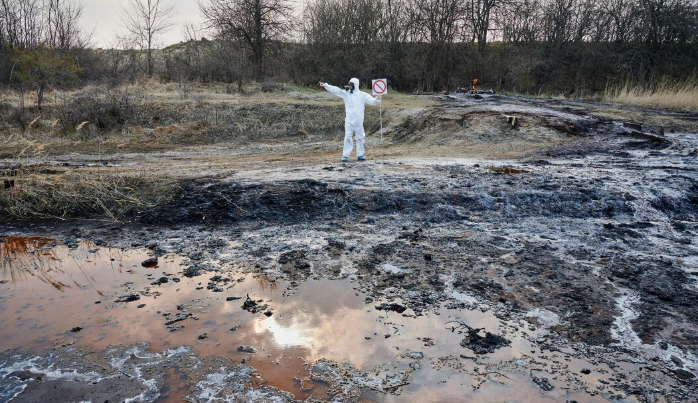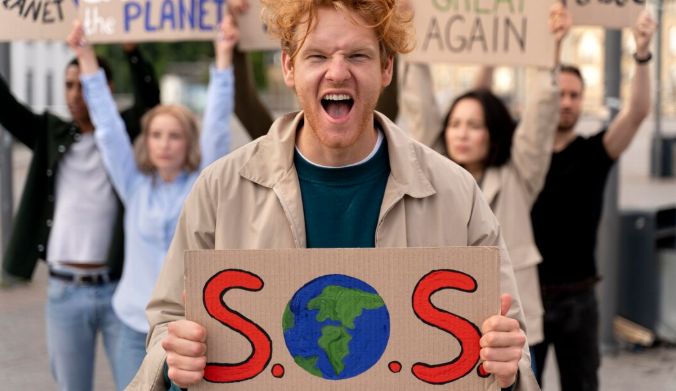

When someone who attended a public meeting regarding a nearby mine is the subject of a criminal investigation, a certain kind of unease descends upon the community. Not a demonstration. Not disobedience to the law. Just a gathering. For the past three years, Michel Forst, the UNECE Special Rapporteur on Environmental Defenders, has been gathering such tales, and the pile is growing.
Forst was chosen in June 2022 to serve as the first-ever Special Rapporteur under the Aarhus Convention, a legally binding international agreement that requires its 48 parties—mostly European states plus the EU—to defend individuals who wish to exercise their environmental rights. He was re-elected for a second four-year term in November 2025. The mandate renewal feels more like a recognition that the issue still exists than a reward. It might never do.
Since the start of the mandate, his office had received 103 complaints by December 2025. In 2025 alone, twenty-eight arrived. Public officials and state agencies were blamed in 72% of those complaints. Businesses made up 28% of the total. Criminal prosecution was the most frequent type of threat, occurring in over half of all complaints. Not street harassment. criminal prosecution, carried out through the official legal system, against individuals who were, for the most part, merely attempting to halt pollution or obstruct a dangerous development.
In light of these figures, it is remarkable how frequently the persecution appears to be lawful. One in five complaints included SLAPPs, or strategic lawsuits against public participation. These aren’t hushed threats at someone’s door. They are filed in courts, argued by attorneys in lawsuits, and they succeed by wearing people out rather than necessarily winning. The legal budget for a small environmental group opposing a mining company is different. The whole point is that asymmetry.
The industries causing the most friction aren’t the ones you would anticipate from the previous industrial pollution era. The energy transition itself, including wind farms, solar power plants, and lithium extraction, has been identified by Forst’s office as a potential source of conflict. In many instances, businesses constructing renewable infrastructure are moving quickly through communities that were not meaningfully heard or consulted. If someone objects, shows up for a hearing, files a legal challenge, or contacts the media, they may be subject to the same kind of retaliation that was previously reserved for people who oppose fossil fuel projects. It might be clean energy. Sometimes the strategies employed against critics aren’t.
Forst visited Sweden and Norway in March and London in April of 2025. He paid a visit to Patrick Hart, a prisoner in the UK who was serving a twelve-month sentence for taking part in a nonviolent environmental demonstration. It’s difficult not to focus on that particular detail. a nonviolent protest. Twelve months. The visit by Forst was not symbolic theater. In order to determine whether the system was responding to specific complaints or if it had turned into a tool for the issue, it was necessary to meet with officials and defenders.
Because it underlies everything else, the stigmatization piece is worthwhile to focus on. Environmental advocates reported being portrayed as radicals, foreign agents, and economic saboteurs by politicians and local media in almost every region Forst’s consultations reached. When prosecutions follow, the public is softened by that framing. It presents the criminal investigation as a legitimate reaction to a dangerous individual instead of what it is, which is frequently retaliation disguised as formalities.
Whether formal international mechanisms like this one can proceed quickly enough to be relevant in specific situations is still up for debate. Because the Aarhus framework is legally binding on its parties, Forst has access to tools that are not available to UN positions that are only advisory. However, enforcement is still inconsistent, and businesses with headquarters in party states that operate overseas—in Africa, Southeast Asia, or Latin America—present a jurisdictional conundrum that no complaint form can completely resolve. There is frequently no protection for the defenders who are taking the chances in those areas.
At the very least, the mandate has created a record. Three years of public declarations, country visits, complaints, and patterns. The picture that emerges is not of isolated bad actors but rather of something more systemic: a global tendency across industries and governments to view those who raise environmental concerns as the issue rather than the warning. Forst is counting. The number continues to rise.