
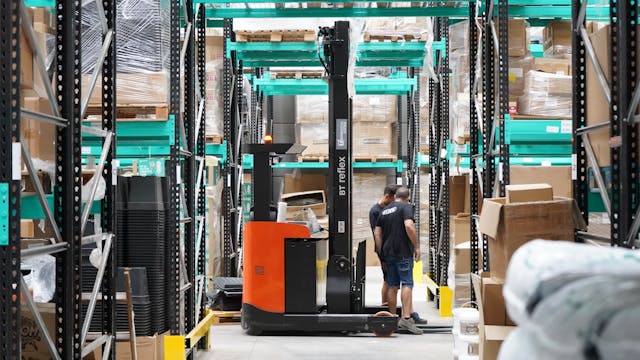

Material handling is key to a cleaner factory or warehouse. By cutting waste, saving energy and keeping workers safe, it makes the whole operation run more smoothly.
Key Points
- The way you move materials around has a big impact on how much energy you use, how much waste you generate and how safe your workers are.
- Without good planning, you end up making extra trips, handling things more times than you need to and, well, more waste is just generated.
- The best way to cut waste is to stop it in its tracks before it’s even a problem.
- Layout, storage and workflow all play a part in how smoothly things run
- You can track progress in the simplest of ways just by keeping an eye on some basic data.
- Smarter handling not only helps the planet but it will also boost your output.
Why Material Handling Matters
Most green talk focuses on solar power or recycling. And don’t get me wrong, those are important. But what happens inside a plant matters too.
In warehouses and factories, materials are always on the move – it’s pallets, scrap, tools and waste all being shifted from one place to another. When that movement is poorly planned, you waste time, fuel and space.
So material handling should be right up there with solar panels and recycling as part of any green plan – it shapes how a facility uses resources every single day.
The EPA says that good materials management looks at the whole life of a product, not just how you get rid of the thing at the end of its life. That means thinking about how materials are moved around and stored, not just how they get chucked away. Sustainability starts long before you even get to disposal.
The Hidden Cost of a Poor Flow
It’s easy to miss at first, but bad material flow is a disaster waiting to happen. A bin is in the wrong place, a forklift is making the same trip over and over, scrap gets moved twice, workers have to pick things up by hand because the right tool is just out of reach.
Each problem seems tiny on its own, but over the course of a shift or a year, they all add up in no time.
Poor flow can lead to:
- your equipment is making extra trips
- workers have to travel further than they need to
- more fuel or battery power is being used
- equipment breaks down more often
- work slows right down
- your place gets cluttered
- waste ends up in the wrong place
One poorly placed scrap bin can cause dozens of extra trips per shift, which means more wear on your tools, more labor hours and more recyclable materials ending up in the bin rather than the recycling.
If you get flow right, you’re much more likely to get your green goals right too
Cut Waste Before It Even Starts
Most people treat sustainability as a problem that only shows up when you’ve thrown something away. But the best approach is to just stop waste from happening in the first place.
The EPA says source reduction – or preventing waste from being generated in the first place – is the #1 waste strategy. That means: stop making a mess, then reuse what you can, then recycle what you can’t, and only then dispose of it.
For material handling, ask these questions:
- are you moving materials around more than you need to?
- are you sorting out reusable items early on?
- are your scrap bins clearly labelled so people know where to put things?
- are your containers in the right place for where waste is being generated?
- are your workers using the right tools for the job?
- are your disposal areas nice and easy to use?
The better you answer these questions, the less waste you’re going to generate without having to do a whole lot of redesign.
How Better Equipment Helps
While smarter handling doesn’t necessarily mean breaking the bank or automating every process, it can still have a real impact. What really makes a difference is using the right tool for the job, in the right place.
The idea is pretty simple, really. Cut out unnecessary movement and simplify all the steps involved. Just keep things flowing.
For example, bottom dump hoppers are a game-changer for collecting and discharging bulk waste. Instead of having to go through all the manual hassle, one well-placed hopper can make light work of it.
Of course, one tool won’t solve every problem. But when the equipment you have fits the task at hand, it really can make life a lot easier and reduce the strain on your workers.
Some other simple improvements to think about include:
- putting bins right where they’re needed near the work zone
- using marked bins for different types of waste so people know where to put them
- cutting down on cross-traffic in those busy aisles
- giving your storage layout a bit of a once-over to see if it can be improved
- using carts, lifts, or hoppers when hand-carrying is just too much to handle
- taking the time to empty bins only when they’re actually full
- keeping your equipment in good working order
Small changes like that can really add up over time.
Worker Safety Is A Key Part Of Going Green
The truth is, a green operation also keeps your workers safe. These two goals really go hand in hand.
Material handling is a leading cause of workplace injuries, simply because of all the lifting, carrying, pushing, and pulling that people do when work areas aren’t set up properly.
OSHA points out that poor handling and storage can lead to some pretty expensive injuries. But good training, safe tools, and sensible workflows really can reduce that risk.
NIOSH also has some great guidance on how to reduce physical strain when you’re working with materials. Often, the safest steps are also the greenest – when materials are stored well and moved fewer times, your workers and the environment both come out on top.
Fewer handling steps mean less risk and less waste – it’s as simple as that.
Metrics To Track
Green goals work a lot better if you can measure them. Now, you don’t need any super complex data to get started. Simple numbers are all you need.
Some useful things to track include:
- how many material moves your workers make per shift
- the distance forklifts and carts are traveling
- how much time your equipment is idle for
- the number of manual handling steps your workers have to take
- how many labor hours are spent on waste movement
- the bin fill rate
- the recycling contamination rate
- how often you have an overflow event
- how often equipment needs to be repaired
- any near-miss reports that are linked to storage or movement
These numbers can show you where things are breaking down, and whether the changes you make are actually working.
For example, if you move a bin closer to the work area, you can track how many fewer trips your workers have to make. That really shows the value of the change.
Environmental Management Systems
If you’re running a larger site, it might be a good idea to link up your better handling with a formal green management plan.
ISO 14001 is a global standard for managing environmental work, and it can really help facilities set goals, track results, and keep improving over time.
Material handling fits well into this kind of system, because it affects your daily operations so much. A site can use it to identify high-impact areas, set targets, assign tasks, and review progress.
In short, ISO thinking turns green goals into a daily habit, not just some one-off project that you forget about after a while.
Most of the green gains in industry come from these small, steady steps – not some single huge change.
Technology’s Bringing About A Change
Places are getting smarter and cutting down on waste by using the right tools.
The current state of affairs is:
- Lots of places are opting for electric forklifts
- They’re also going with self-driving guided vehicles
- They’re sorting out warehouse software too
- They’ve got sensors keeping an eye on bin levels, so they know when they need to restock
- Predictive maintenance means tools can tell when repairs are needed
- More and more recycling centres are using AI to sort out recyclables quickly
- Sites are also figuring out better routes for moving material around
Of course, not every site needs all these fancy tools. A tiny workshop and a massive warehouse have very different needs. But it’s clear now: sites are paying more attention to how they move stuff, conserve energy, and cut down on waste.
What really makes a difference though is when technology solves a real-world problem, not just throws a bunch of new gadgets at a site. Automating a process without sorting out the underlying layout just ends up moving the problems around a lot faster.
Why Behind-the-Scenes Work Really Matters
It’s the green steps that you can’t see that often get overlooked – solar panels, electric trucks and recycled packaging are all fairly obvious. But material handling is a whole lot more important.
Your customers might never see the site’s storage system or how they move pallets around, but those systems affect how much of a resource site uses every single day.
A place with really poor material flow and handling is just working a lot harder to get the same amount of work done as a place that has things sorted. A place that streams everything smoothly, has less waste and fewer delays is definitely going to be more efficient in the long run.
So, the work done behind the scenes really does count when it comes to building a better, more sustainable future. It’s not all just about going public with your green credentials – a lot of the work that happens within the site itself really does matter.
Finding a Balance Between Output and Going Green
Industrial sites can’t just ignore their output – they’ve got to keep filling orders, keep cutting costs, looking after workers and keep moving. That’s why practical green steps that also save time, reduce strain and cut down on waste end up lasting a lot longer than all the public grandstanding.
Making material handling more efficient is a great example of this. It’s a small change that helps sites run more smoothly while still using fewer resources.
For example:
- by having the right bins in the right place you cut down on walking
- by storing stuff neatly you cut down on damage
- by using better tools you cut down on manual strain
- by sorting materials better you cut down on contamination
- by reducing the number of tasks you need to do you cut down on delays
- by being better at maintenance you cut down on wasted fuel
These are all pretty small changes, but in industrial settings it’s these steady, small wins that really add up in the long term.
When to Upgrade Your Equipment
Before you go out and buy a bunch of shiny new tools, take some time to map out how your site actually works.
Ask yourselves some genuinely tough questions like:
- What kinds of materials are moving around the site?
- Where are you making most of the waste you generate?
- How often do you move stuff around?
- What tasks are people spending too much time on?
- Where does the site tend to slow down?
- What parts of the site are hazardous?
- Are you using the right containers for the amount of waste you are generating?
- Are your current machines stuck in the wrong place?
- Are you mixing recyclables in with the regular trash?
Doing this makes sure you’re not wasting money on a load of new kit that you don’t actually need. It also helps you make sure that the new gear you do get makes a real difference.
The right tool should make the work a little bit simpler, a lot safer and a lot easier to keep track of.
The Future of Green Work for Industrial Sites
Green pressure on industrial sites is only going to get stronger. And sites are going to need to show that they are really taking responsibility every single day.
That doesn’t mean you have to go through a total overhaul. A lot of the gains come from making small changes to your layout, improving the flow of materials and getting better at waste management.
The future will likely include:
- better workflow design
- stronger waste prevention
- cleaner equipment choices
- safer manual handling
- better data tracking
- smarter storage and movement
- steady improvement systems
Sites that build these habits waste less, work safer, and manage green goals with ease.
Conclusion
Green industrial work is built through many small choices. Some involve energy or packaging. Others happen quietly inside the facility through better flow, safer handling, and cleaner waste systems.
Smarter material handling helps cut extra movement, improve waste sorting, and use tools more wisely. It also keeps workers safer, which makes green work more complete.
The strongest approach is not just moving waste faster. It is building systems that stop avoidable waste before it starts.
For industrial sites, sustainability often starts behind the scenes. Better material handling is one of the best places to begin.