

The most sustainable way to declutter is to sort before you throw anything out. Keep what you use, donate or sell what still works, recycle what belongs in the right stream, and store items that still have real use but do not need to stay in your main living space every day. The goal is not just a cleaner room. It is less waste, fewer unnecessary replacements, and fewer useful items sent to landfill.
Key Takeaways
- Sustainable decluttering starts with sorting, not trash bags.
- Many items are better donated, sold, repaired, recycled, or stored than thrown away.
- Storage can help reduce waste when it is used for seasonal, occasional-use, or sentimental belongings.
- Storage stops being helpful when it turns into a holding place for low-value clutter.
- Textiles, electronics, documents, and photographs often need more careful handling during a clear-out.
Why Decluttering Does Not Have to Mean Throwing Everything Out
A lot of people treat decluttering like a race. Fill bags, clear surfaces, move on. It feels productive, but it also leads to bad decisions. Usable things get tossed because they are in the way, not because they have no value left.
Most household clutter is not pure waste. It is usually a mix of items you still use sometimes, things that could be donated, belongings worth selling, and keepsakes that matter even if they do not belong in the middle of daily life.
That is why a lower-waste declutter starts with sorting, not dumping. EPA guidance puts waste reduction and reuse ahead of recycling and disposal, for good reason. The less you throw away in the first place, the less ends up in landfill.
A Better Way to Sort Household Clutter
Decluttering gets easier when you sort by next use instead of making every decision emotionally in the moment. In practice, most things fall into a few simple groups:
- items you use often and should keep at home
- items you use sometimes and want to store
- items in good condition that can be donated or sold
- items that can be repaired or recycled
- items that are no longer usable and need disposal
That kind of sorting cuts down on waste, but it also saves money. People often replace things they threw out too quickly.
Why Reuse Matters More Than It Seems
A rushed clear-out creates more waste than most people expect. When a usable item goes in the trash, the waste does not stop there. In many homes, that same kind of item gets bought again later.
Reuse matters because it keeps products in circulation longer. Donation, resale, repair, and hand-me-downs all reduce the need for new materials, new packaging, and new purchases. That is the part many people miss when decluttering feels like a one-day job.
Electronics are a clear example. EPA encourages reuse and proper recycling because these products contain materials worth recovering, and they should not be treated like ordinary household trash.
Where Storage Fits in a Lower-Waste Declutter
Storage is not a cure for clutter. It does have a place, though, when the item still matters and the only real problem is space.
Used well, storage keeps useful belongings out of the trash during a move, renovation, downsize, or life change. It can also help in smaller homes where every item has to compete for the same limited space all year.
Storage usually makes sense for things like:
- holiday decorations
- camping gear
- garden furniture
- sports equipment
- off-season clothing
- baby items kept for future use
- family keepsakes
- books, records, and documents you want to keep but do not use every day
In those cases, storage acts as a buffer against waste. It creates breathing room without treating every extra item as rubbish.
Seasonal Storage Can Prevent Unnecessary Replacement
Some homes do not have too much stuff overall. They just do not have enough room to keep every category of item out at once.
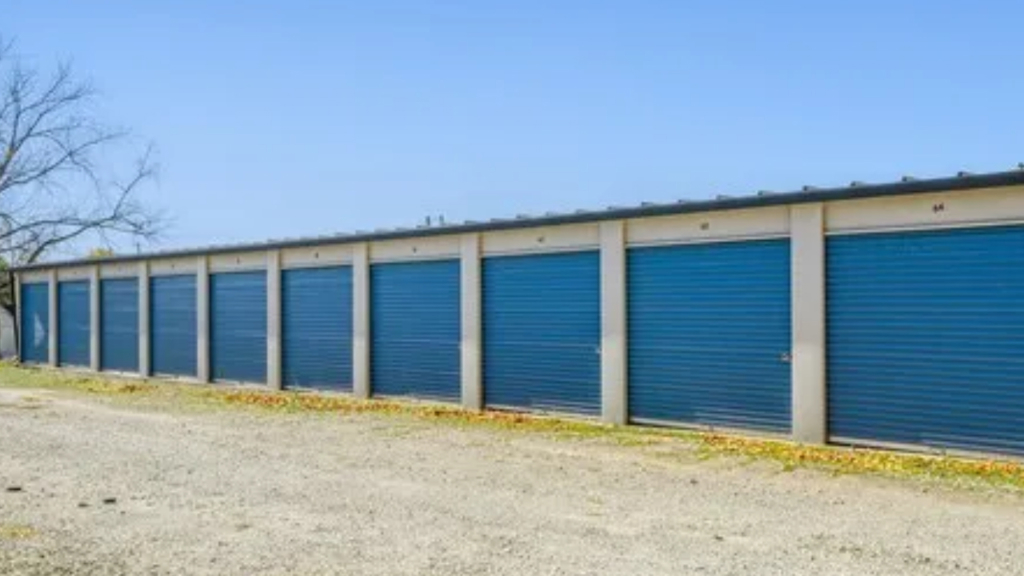
Seasonal belongings are the usual problem. Heavy coats, fans, patio furniture, luggage, holiday decor, and outdoor gear take up space even when they sit unused for months. Throwing them away just to free up a closet usually creates a second problem later, when you need to buy them again. It’s also super easy to get started with self storage units for seasonal items.
Storing durable seasonal items is often the cleaner choice. It reduces clutter without cutting off future use.
Some Items Need Protection, Not Just Extra Space
There is another form of waste people overlook. They keep the right things, then ruin them with bad storage.
Documents, books, photographs, records, clothing, and some electronics break down fast in damp garages, hot attics, and unstable sheds. The item stays in the house, but it is still being lost.
Paper and photographs need the most care. The U.S. National Archives advises keeping storage temperatures below 75°F and relative humidity below 65% to reduce mold, insects, and chemical damage. That does not mean every stored item needs climate control. It does mean valuable or sensitive items should not be shoved anywhere and forgotten.
Storage Should Not Turn Into Delayed Waste
Storage helps only when it protects things with real use, meaning, or value. Once it becomes a place where low-value clutter sits untouched for years, it stops helping.
That is why stored items need review. If something still serves a purpose, keep it. If it has resale, donation, or reuse value, move it along. If it has reached the end of its useful life, dispose of it properly.
The goal is not to keep more. The goal is to avoid throwing away the wrong things too early.
Some Items Should Leave the House, Just Not Through the Trash
Decluttering is not only about what stays. It is also about what leaves, and how.
Some items belong in a donation box. Some should be sold. Some need repair. Some belong at a recycling center. Others need special disposal because they contain hazardous materials. Treating everything as general waste is the fastest option, but it is often the worst one.
This matters most during larger clean-outs, when people uncover batteries, paint, solvents, old cleaners, and similar materials. Those items do not belong in ordinary rubbish. When something cannot stay in use, the next step still matters.
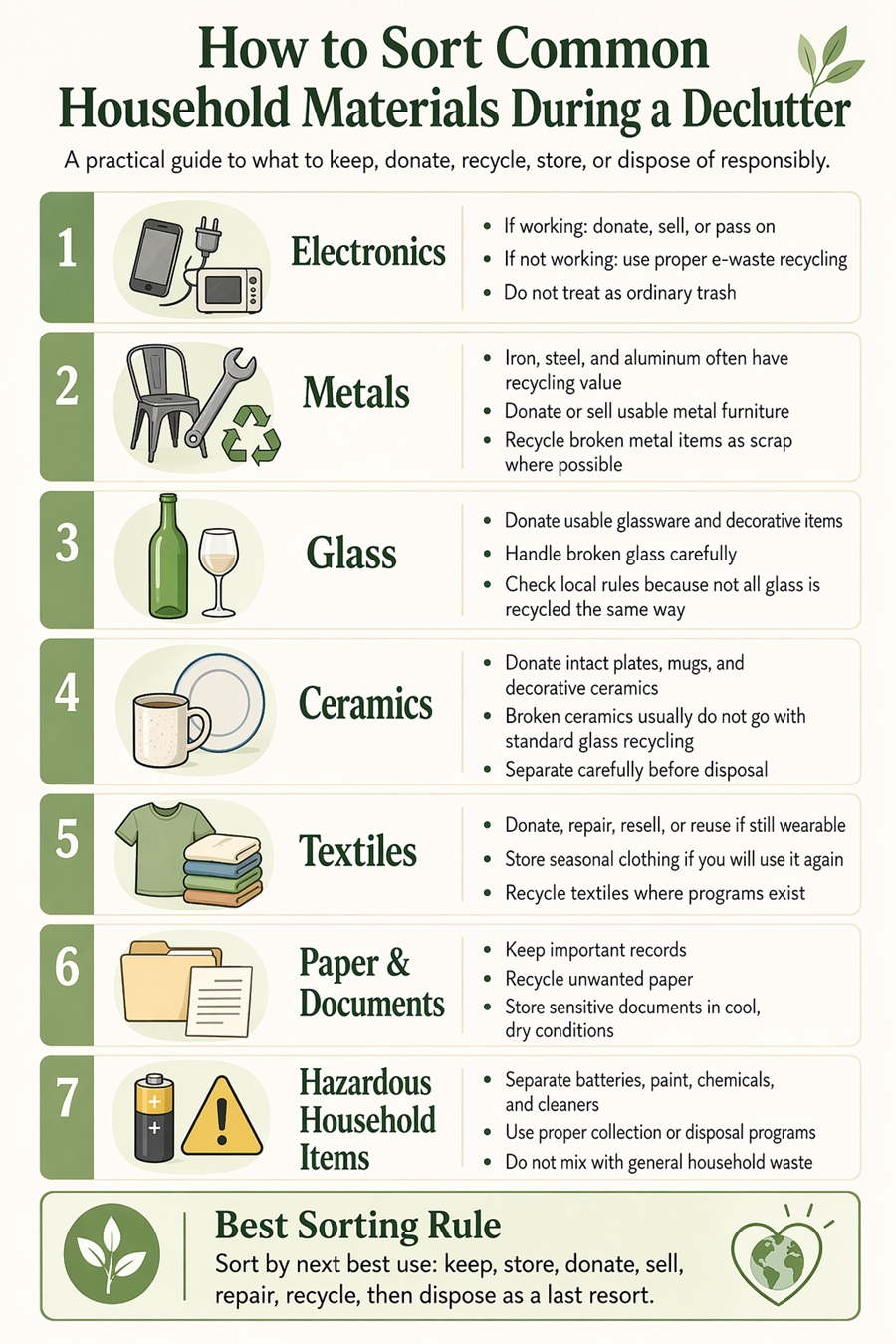
How to Sort Different Materials During a Declutter
Start With Condition First
Ask the simplest question first. Is the item still usable?
If the answer is yes, the next step is usually to keep it, store it, donate it, sell it, or pass it on. If the answer is no, then the material matters more, because different materials need different handling.
Sort Electronics Separately
Electronics should be pulled out early. Phones, cords, speakers, monitors, tablets, and small appliances should not go into the same pile as general household waste.
If they still work, reuse or donation makes more sense. If they do not, they usually belong in an e-waste recycling stream.
Put Metals in Their Own Group
Metal items often still have recycling value even when the full object no longer does. That includes iron, steel, and aluminum items such as shelves, frames, tools, and some furniture.
If the item is still sturdy, donation or resale comes first. If it is broken beyond practical use, the metal parts may still be recyclable.
Handle Glass and Ceramics More Carefully
Glass and ceramics get mis-sorted all the time during fast clean-outs.
Usable glassware, mirrors, and decorative pieces may still be worth donating. Broken glass needs careful handling, and not every type of glass belongs in the same recycling stream. Ceramics are trickier. Plates, mugs, tiles, and similar items are often reusable when intact, but broken ceramics usually cannot go in standard glass recycling.
Use Common Sense With Mixed-Material Items
A lot of household goods are made from more than one material. A lamp may include glass, metal, plastic, and wiring. A chair may contain wood, fabric, foam, and screws.
You do not need to take apart every object in the house. Still, when something can be separated easily into reusable or recyclable parts, that is better than treating the whole thing as trash.
Leave Disposal Until the End
Try not to build one giant throw-away pile from the start. Sort by next best use instead.
Ask these questions in order. Can it still be used? Can it be repaired? Can it be donated or sold? Can it be recycled? Should it be stored? Only after those questions should disposal enter the picture.
That simple shift cuts waste fast.
Clothing and Textiles Deserve More Care
Textiles are one of the biggest loss points in a home clear-out. Clothes, shoes, towels, curtains, and bedding are easy to bag up quickly, especially when people are trying to clear space fast.
That is also why this category needs more thought. EPA estimates that the United States generated 17 million tons of textiles in 2018, or 5.8 percent of total municipal solid waste that year. That is a huge volume of material, much of it thrown away too early.
Not every old textile is worth saving. Still, many can be donated, sold, repaired, reused, stored for seasonal use, or directed to textile recycling instead of landfill.
A Smarter Way to Clear Space
The best decluttering method is usually the one that slows you down just enough to make better choices.
That does not mean keeping everything. It means keeping what you use, storing what still has a place in your life, donating and selling what others can use, recycling what belongs in the right stream, and treating disposal as the last step.
A cleaner home does not need to come with a bigger landfill footprint. In many cases, the better declutter is not the one where you throw out more. It is the one where you waste less.
FAQ
Is self storage a sustainable decluttering option?
Yes, when it keeps useful, seasonal, or meaningful items from being thrown away too soon. No, when it becomes a long-term holding space for things you do not actually want.
What should I do before throwing decluttered items away?
Sort them first. Separate what you use, what you can donate or sell, what can be repaired or recycled, and what truly has no further use.
Is it better to store seasonal items than replace them later?
In many cases, yes. If the item is durable and you know you will use it again, storing it usually makes more sense than discarding it and buying another one later.
Which items are worth storing during a declutter?
Seasonal decorations, luggage, sports gear, camping equipment, off-season clothing, family keepsakes, books, records, and important documents are common examples.
Should old clothes always be thrown out during decluttering?
No. Many clothes and household textiles can be donated, sold, repaired, reused, or stored for future use. This category creates a lot of landfill waste, so it is worth handling more carefully.
Which items need extra care during a clear-out?
Documents, photographs, books, records, and some electronics need more protection from heat, moisture, and unstable storage conditions. Sensitive paper items usually last longer in cooler, drier spaces.