

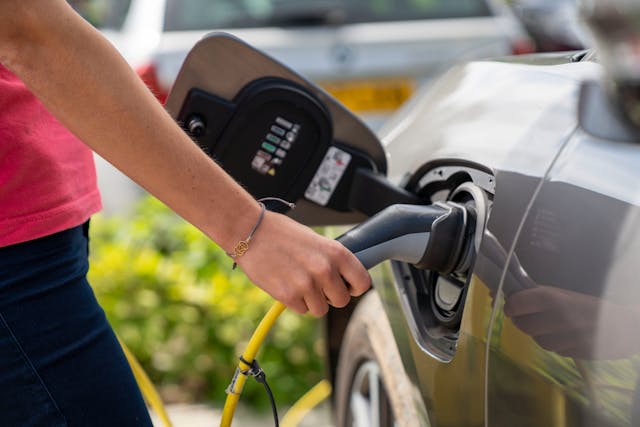

Electrifying a fleet removes tailpipe emissions, but it does not automatically make energy use efficient. Without intelligent management, EV charging increases site energy costs by triggering demand spikes, straining grid connections, and inflating capacity charges. That gap between electrification and genuine efficiency is where eMobility solutions make the real difference. Businesses that deploy the right eMobility solution gain control over when, where, and how energy flows.
Where energy waste hides in emobility solutions
Poor charging habits, stranded infrastructure, and fragmented data each hide cost. Understanding all three is the starting point for any serious efficiency programme.
Inefficient charging patterns and peak‑hour habits
Most energy waste in EV charging operations is not caused by hardware failures. It is caused by timing. When drivers plug in at the end of a shift, dozens of vehicles begin charging simultaneously. That surge hits the grid during the most expensive tariff window, generating demand spikes that trigger capacity charges lasting months.
Common patterns that drive unnecessary cost:
- Uncontrolled overnight bulk charging, with all vehicles drawing at full rate the moment they park
- Ad-hoc daytime top-ups during peak tariff windows, when energy costs two to four times more than off-peak rates
- Simultaneous DC fast charging events that compound demand spikes across a depot
- Failure to use on-site solar or wind generation even when it is available
Under‑utilized chargers, depots, and grid connections
Sites often install more charger capacity than concurrent demand ever requires. Transformers and grid connections sit at a fraction of their rated load while standing charges, maintenance fees, and idle standby power accumulate regardless. Avoiding peak-hour charging and demand spikes is only half the problem when the infrastructure itself is oversized for actual use patterns.
Key symptoms of stranded infrastructure:
- Charger utilisation rates below 30% across the average operating day
- Grid connections sized for theoretical peak demand that never arrives
- Chargers running in active standby continuously, even when no vehicle is present
Lack of visibility into energy flows and costs
Telematics platforms, charger management systems, and BEMS each capture data. In most operations, however, these streams never connect. As a result, there is no clear picture of total energy flows, actual costs, or where waste originates. That is why forecasting EV charging demand and site load is so difficult in practice: it requires all three data sources working together. Unfortunately, most fleet and site operators are missing that foundation entirely.
Without consolidated visibility, operators cannot answer:
- Which routes or vehicles consume disproportionate energy per kilometre?
- How much energy is lost to idle and standby modes at each site?
- Which charging sessions are triggering demand spikes versus drawing on cheap overnight or solar energy?
How eMobility solutions cut energy waste at the charger and site level
Site-level waste is addressed through three tightly linked capabilities: load control, integration with building systems, and continuous cloud monitoring.
Smart charging and dynamic load management
Smart charging orchestration across multiple sites is the foundation of site-level efficiency. A load management system allocates available capacity across active sessions in real time. Total site demand stays within a defined ceiling, and costly peaks stop forming before they hit the meter.
Load management and peak-shaving for EV fleets draws on several techniques:
- Static load limits. Hard caps on total site draw during peak tariff periods.
- Dynamic rebalancing. Power shifts between active sessions as vehicles reach their target state of charge.
- Time-of-use scheduling. Dynamic tariffs and time-of-use EV charging cut costs by moving non-urgent sessions to off-peak windows.
- Peak shaving. Flattened demand curves reduce capacity charges and grid stress.
Operators who implement smart charging typically see demand charge reductions of 20 to 40 percent. That holds even for large depot operations when departure time data feeds the scheduling engine.
Integrating chargers with EMS/BEMS and on‑site generation
Integrating EV chargers with building energy management systems (BEMS/EMS) goes beyond load capping. EV load coordinates dynamically with HVAC, lighting, and industrial processes, so the building never breaches its import limit as charging demand shifts through the day. Behind-the-meter optimization for EV charging adds distributed energy resources on top of that coordination:
- On-site solar is prioritised for EV charging during daylight hours, reducing grid imports in favourable conditions
- Battery storage absorbs surplus solar and discharges during peak demand periods, flattening the site load curve
- Grid export signals or flexibility market triggers can suspend or reduce charging, cutting network stress and generating flexibility revenue
For ESCOs and utilities, this flexibility layer is increasingly where the commercial case for eMobility investment is made.
Cloud‑based monitoring and anomaly detection
Cloud-based eMobility SaaS solutions aggregate charger telemetry, session logs, grid meter data, and tariff signals into a single platform. Energy managers get the visibility to act before costs accumulate. Consequently, reducing idle and standby power at charging sites becomes straightforward: anomaly detection flags chargers drawing outside expected parameters within minutes.
Continuous monitoring enables:
- Detection of faults before they waste energy unnoticed for days
- Session-level cost attribution to identify which vehicles, drivers, or shifts generate disproportionate energy spend
- Automated alerts when site demand approaches tariff thresholds, triggering load-shedding before penalties are incurred
How eMobility solutions optimize fleet‑level energy use
Site-level tools control the cost of charging. Fleet-level tools determine how much charging is actually needed in the first place.
Energy‑aware routing and charging strategies
Energy-aware routing uses telematics, live traffic data, elevation profiles, and charger network data to plan routes and charging stops that minimise total energy consumption and cost. Distance and time are inputs to that calculation, not the objective.
Practical gains come from eliminating:
- Unnecessary detours to chargers when on-route or depot charging is available at a lower cost
- Inefficient top-up charges mid-route, where the vehicle had sufficient range to complete the trip
- High-loss DC fast charging when dwell time would have allowed slower, cheaper AC charging
- Precondition scheduling that draws grid power when the cabin heat from the last trip would suffice
For logistics and last-mile operators, even a 5 to 8 percent reduction in kWh per km across a large fleet translates directly to lower energy procurement costs and fewer grid connection upgrades.
Right‑sizing batteries, chargers, and dwell times
Analytics over a rolling 90-day window reveal whether vehicles carry more battery capacity than routes require, or whether charging frequency reflects habit more than operational necessity.
Right-sizing analysis covers three dimensions:
- Battery capacity. Vehicles whose state of charge never drops below 60% are likely over-specified for the route.
- Charger type and power level. Output should match real dwell times at depots, retail stops, and public locations, not default to the fastest available option.
- Charging frequency. Unnecessary partial charges increase energy loss through battery heat and conversion inefficiency.
Fleet performance dashboards and benchmarking
A well-designed eMobility solution delivers cross-fleet KPI dashboards that make performance gaps visible and actionable across all sites and vehicles.
Core benchmarking metrics in leading automotive solutions eMobility platforms:
- kWh per km. Broken down by vehicle, route, driver, and depot.
- Energy cost per trip. Based on actual tariff rates at the time of each session.
- Energy wasted in idle or preconditioning. Quantified in kWh and currency.
- Demand charge contribution per vehicle or shift. Identifies which patterns generate the most expensive spikes.
Each month’s data drives policy adjustments, and the platform tracks whether those adjustments deliver the expected reductions in energy waste in EV charging operations. For C-level leaders, these dashboards turn energy into a managed cost line, not an unpredictable overhead.
What makes next‑generation eMobility solutions effective
Architecture and intelligence determine how much of the potential efficiency is actually captured. Two factors separate the best platforms from the rest.
Cloud‑based, modular, and data‑rich architectures
Cloud-native next eMobility solutions ingest high-frequency data streams including telematics, charger telemetry, tariff signals, DER output, and grid flexibility requests. They act on that data faster than any manual process allows.
Key architectural advantages:
- API-first design. Enables integration with OEM automotive solutions eMobility stacks, OCPP-compliant chargers, and existing fleet management systems.
- Modular services. Operators adopt smart charging first, then add EMS integration or AI forecasting without replacing the whole platform.
- Multi-site support. A single eMobility SaaS solutions platform manages dozens of depots, charging networks, or customer sites simultaneously.
- Continuous deployment. New optimisation capabilities ship without operator downtime or migration projects.
AI‑driven forecasting and optimization loops
Static rules, such as charging overnight or capping site draw at a fixed threshold, reduce waste relative to unmanaged charging. Even so, they cannot respond to unexpected vehicle returns, solar curtailment events, or sudden tariff changes. AI-driven emobility solutions optimise across two horizons instead:
- Short-term forecasting (minutes to hours). Predicts vehicle return times, forecasts site load from HVAC and production schedules, and pre-positions charging into the cheapest available windows.
- Continuous improvement (days to months). Models analyse outcomes against predictions, identify deviations, and refine dispatch policies over time, removing the inefficiency locked in during initial commissioning.
A system built this way gets measurably better at reducing energy waste in EV charging operations the longer it operates.
Conclusion
Well-designed eMobility solutions close the gap between electrification and real efficiency gains. Load management and peak-shaving for EV fleets, integrating EV chargers with building energy management systems, and AI-driven forecasting each eliminate a specific category of waste. For fleet operators, site energy managers, and platform providers, the question is which emobility solution architecture delivers the fastest and most durable efficiency gains at scale.