

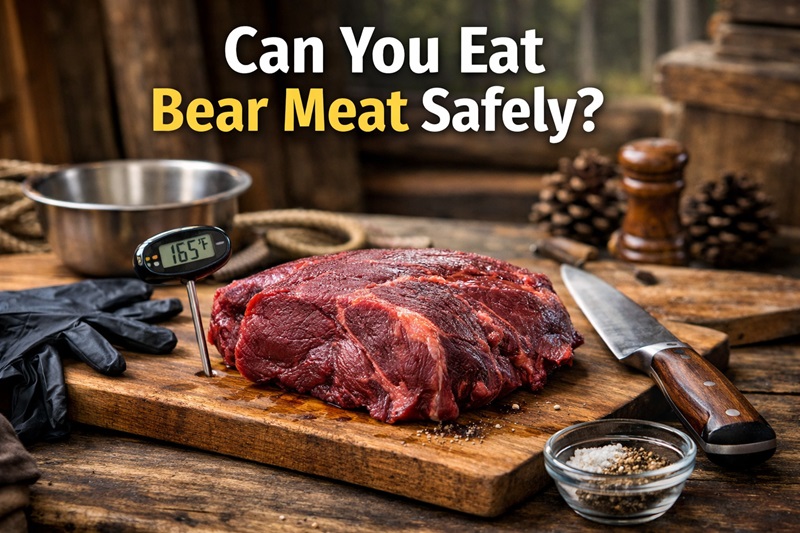

Yes, people have been eating bear meat for ages, but let me make one thing clear – eating bear meat is not without its risks. In the States, it’s mainly reserved for hunters and those living off the land, rather than being a common cut of meat in the supermarket. The key issue isn’t whether bear is edible – it’s whether it’s handled and cooked with the right care.
The difference is significant because when you eat bear meat that’s not cooked to the proper temperature, you can end up with a nasty parasite infection called Trichinella, which is linked to some serious foodborne illnesses. The CDC has issued warnings about eating raw or undercooked meat from animals like bears, and you’d be surprised how often that’s been the source of outbreaks – even when it’s just the side dishes that get contaminated.
This article is here to give you straight answers to the questions you’re probably asking – is bear meat safe to eat? Is it even legal to eat? What does it taste like? Why is it so high risk? And most importantly, how do you cook the thing before you even think about trying it?
The Edibility Question: Can You Eat Bear Meat?
The truth is bear meat gets eaten in certain parts of the world, especially by hunters and those living off the land in remote areas. The main thing to be aware of is not whether it’s safe to eat technically, but how you handle and cook it – because bear meat can be pretty nasty if it’s not done just right.
Is Bear Meat Something People Can Eat?
Yes, bear meat is technically edible, and it’s been a staple in some hunting and subsistence traditions for ages. In fact, if you look at the Alaska wildlife department’s guidelines, they talk about eating bear meat and make it clear that it’s got to be thoroughly cooked if you want to avoid any trouble. So there you have it – on the one hand, it’s a real food source for some folks; on the other, it poses some very real risks. As for whether it’s a mainstream meat in the States? Nope. You probably won’t find it in your local grocery store, but if you do get your hands on some, just remember that most people who eat it do so because they’ve hunted it themselves rather than buying it at the market.
Why Do People Tuck into Bear Meat?
Hunting, Subsistence & a Heritage of Using Every Part
Bear meat is a part of hunting culture in some states and regions, where using up as much of the animal as possible is a key aspect of what many hunters consider an “ethically harvested” animal – not just something that tastes good. Wildlife agencies in some places show just how common bear meat is as a food source – for example, they might spell out what edible meat can be salvaged after a lawful hunt, and how to handle it safely.
Curiosity About Unusual Meats & the Game Cooks
Some people are just plain curious about trying things their parents & grandparents never bothered with. Wild game cooks often compare bear to other strong-flavoured meats like venison or wild boar – it’s not just about discovering a new taste, for most of these folk though its more about finding out if it’s safe to eat.
Is Bear Meat a Safety Risk?
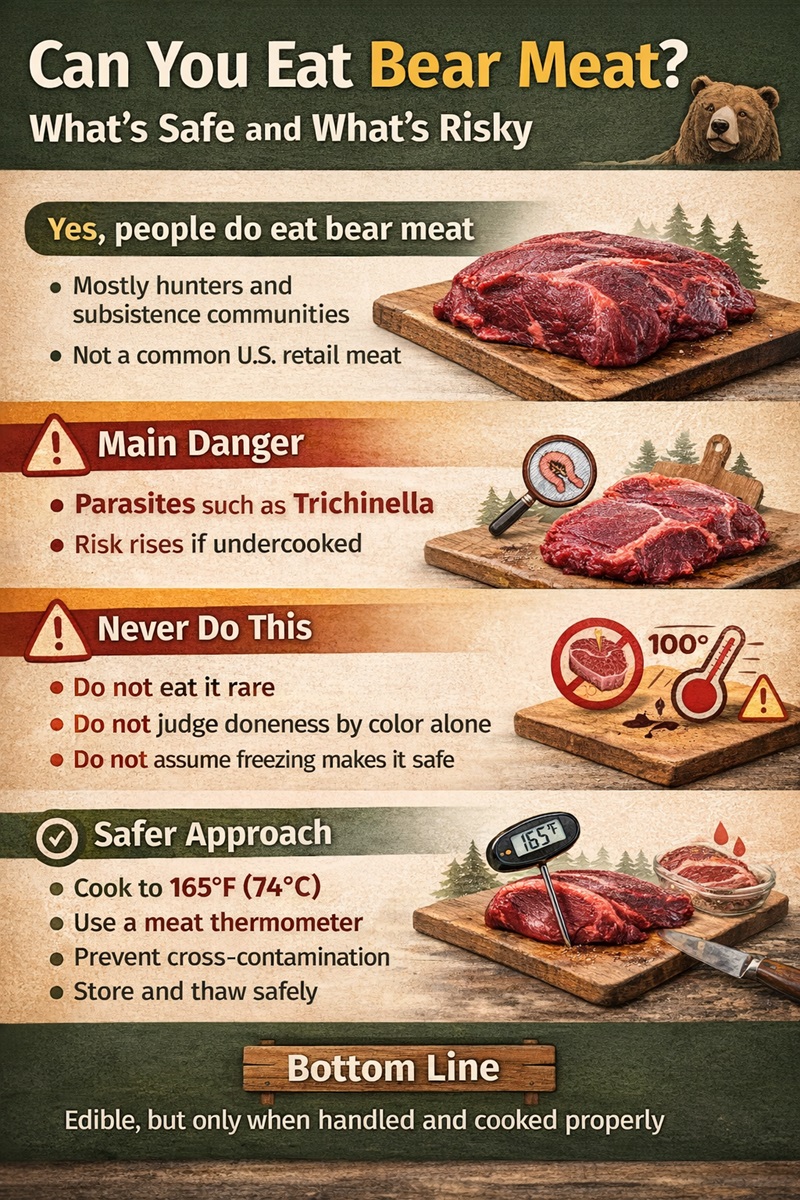
Yes, bear meat can be a major risk if it’s not cooked right, handled badly, or allowed to contaminate other foods. Treat bear meat nothing like a juicy steak from the butcher you know.
The main danger is getting food poisoning from parasites such as Trichinella – the CDC point out that the good folk at the CDC reckon that eating raw or undercooked meat from animals which have the parasite can cause trichinellosis – and bear is one of those animals that gets named in all the public health guidelines I see.
The Parasite Problem
Trichinella is a parasitic worm – so the larvae can be found in muscle tissue, and you get sick when you eat the infected meat without cooking it properly. In fact, bears are quite common hosts for the parasite, and my own research of CDC reports shows that undercooked bear can still be making people sick.
Bacteria & Handling Risks
It’s not just the meat itself you have to worry about, either – the risk of cross-contamination when you’re butchering, storing, thawing and preparing bear meat is real. I came across a CDC report where a bunch of people got sick from eating veggies that had been cooked with bear meat – even though none of those people had eaten the bear at all! So just handling bear meat safely is super important.
Why Very Rare Bear is a Bad Idea
Bear meat cooked rare is a no-go – because looks aren’t everything, and the only way you can be sure its safe to eat is if its cooked until its at a safe temperature, not just until it looks right.
What Diseases Or Health Risks Are Linked To Bear Meat?
The one people tend to worry most about is trichinellosis – and with good reason. This is the health risk that public health officials warn about the most, especially when it comes to bear meat that’s not cooked right. You’ve got nausea, diarrhea, fever, muscle aches, and swelling around your eyes to worry about. The severity can vary, but it’s no joke.
Trichinellosis
This is a parasitic infection that comes from eating raw or undercooked meat with Trichinella larvae in it. There’s a reason why bear meat gets a lot of attention – bears are just one example of the wild animals that can carry this parasite. Yet the CDC still sees cases linked to bear meat to this day – it’s a food safety issue that’s still a major problem.
Getting sick from handling it poorly
And then there’s the risks from messing up the handling process. Poor storage, grimy knives and cutting boards, bad thawing methods and undercooked meat all raise the chances of getting sick. The USDA has some good guidance on how to handle game meat safely – keep it cold, cook it all the way through.
Can You Eat Bear Meat In The USA?
It might be possible to eat bear meat in the US, but the rules are all over the map. Bottom line – that’s the main point.
One thing to keep separate is two different questions. First, is it legal to hunt or possess a bear under the local wildlife laws? Second, is it okay to sell or transfer bear meat? Those aren’t always the same thing, and state rules can differ wildly. Alaska and Nevada both show how different rules can be from one state to the next.
Hunting bears vs selling bear meat
In a lot of places, the key issue is whether you’re allowed to harvest bears for regulated purposes, not whether you can eat the meat. If you do hunt a bear legally, you can eat it – as long as you’re doing it in a household that’s allowed to. But selling it? That’s a whole different story.
Check your state first
State rules on hunting seasons, how you can harvest a bear, what you have to do with it, how to transport it, and what parts of it you can eat – all that stuff can vary. Your safe bet is to check in with the official wildlife agency in the state where the bear was found, caught, or prepared – and find out what the rules are.
What Does Bear Meat Taste Like?
Bear meat is described as being darker, richer and more robust than the stuff you normally find in supermarkets. It’s typically heavier and more intense than beef or pork, and many people find it tastes more like other wild game.
Flavour can be all over the place though. Alaskan wildlife services say that hunters usually think bear meat is pretty good, or even excellent, but that can change if the bear has been chowing down on fish for a while before it gets killed.
Bear Meat Texture
Bear meat is normally quite dense and meaty. But if you cook it badly, especially if you rush it or use high heat, it can get all tough and nasty. That’s one of the many reasons why taking the time to cook it slowly is usually the way to go.
What Affects The Flavour?
The flavour of bear meat is all down to what that bear was eating, when it was killed, what breed of bear it was, how much fat it had on it and how it was looked after from the moment it was taken down. If a bear’s been living on berries and one’s been living on fish then you’d be a fool to expect them to taste the same. And let’s not forget how it’s been handled – a bit of decent processing can make all the difference, but sloppy work and you might as well be serving up rubbish.
Is Bear Meat Healthy?
Bear meat’s got some decent protein and iron going for it, just like a lot of other wild game meat. But that doesn’t mean we should be marketing it as a superfood just yet.
Protein And Iron
Bear meat gives you protein and iron, just like beef, pork or wild boar. That’s part of the appeal for some of the hunters and people who rely on it for their grub.
Fat Content Can Be All Over The Place
The fat content in bear meat can vary quite a bit depending on what bear you’ve got and what season it’s in. Some bits can be pretty fatty, which affects the texture and the calorie count.
It All Depends On How You Prepare It
Preparing bear meat is key. A nice, long-cooked stew isn’t going to be the same as a greasy, deep-fried mess. How you cook it is going to change the final nutrition profile, just like it does with beef, pork or wild boar.
Cooking Bear Meat Safely: What You Need to Know
When it comes to cooking bear meat – and this is the most important part of the article – safety is way more crucial than a fancy cooking technique. That’s why we’re going to hammer home the basics, just like the CDC advises: game meat needs to be cooked to at least 165°F (74°C) to be safe. And let’s be clear – lots of recent outbreaks have been telling us to stick to this rule.
Don’t Even Think About Serving It Rare
Bear meat should never, ever be served rare or medium-rare. No way. We need to cook it all the way through to get rid of those nasty parasites that can make us really sick.
A Meat Thermometer is Your New Best Friend
Colour is not an indicator of whether the meat is cooked or not. In fact, that’s one of the biggest mistakes people make when cooking. A meat thermometer is what really matters. And that’s exactly what USDA and FSIS keep telling us – use the thermometer, not your eyes.
Safe Storage and Thawing – Don’t Screw This Up
Keep the meat cold, thaw it safely, and make sure you don’t cross-contaminate it with anything else. Don’t let those raw juices get anywhere near your veggies or clean surfaces. That’s a recipe for disaster – like the time when a bunch of contaminated side dishes helped spread a nasty illness.
The Best Ways to Cook Bear Meat
Slow cooking, braising, or stewing is usually a better bet for bear meat because it’s really tough and needs a bit more TLC. And grinding is an option, but don’t even think about doing it unless you’re also planning on cooking the meat through, too.
Rare Bear Meat – Just No
No, you can’t eat bear meat rare. It’s a definite no. Parasite risk is way too high, and colour is just not reliable enough to be trusted.
That’s the cold hard truth. Public health advice is all about cooking the meat through, not about whether you like it rare or not.
Bear Meat vs Other Wild Game
This is a good place to compare bear meat to other wild game – especially if you’re already into venison or wild boar.
Bear Meat vs Venison
Bear meat is usually a lot fattier and heavier than venison. Venison’s often leaner and can be cooked in a few different ways. But what really sets them apart is safety. Bear meat is just not as safe as venison, thanks to its link to Trichinella.
Bear Meat vs Wild Boar
Both bear and wild boar have strong flavours, but they’re different in terms of fat and taste. Both can carry parasites, which is just one more reason to make sure you cook it right.
Why Bear Needs More Caution
Bear needs more caution because of the parasite risk. And when it comes to cooking, you just can’t afford to take any chances. That’s the difference between bear and venison or beef – safety rules are non-negotiable.
Who Should Think Twice About Eating Bear Meat
People who just can’t stomach the idea of wild game should probably pass on it. And anyone who gets anxious about eating meat that hasn’t been cooked to a crisp should probably steer clear of it too. Generally, it’s a good idea to be a bit more cautious with wild game in general – if you’re someone who is really worried about food illnesses then it’s a good idea to talk to a doctor about it and see if it’s really worth the risk.
But let’s get down to cases: if you’re the type of person who just wants to have a nice big rare steak or lightly cooked bear meat, then bear meat is probably not for you.
Common Mistakes People Make When Dealing With Bear Meat
A lot of people make the mistake of thinking bear meat is just like beef steak – and trying to cook it to a nice rare or medium rare. Some people rely on the old “if it looks right, it is right” rule – which just isn’t good enough when it comes to bear meat. Others just don’t take the proper precautions with how they handle, store, and clean the meat in the field and kitchen. And then there are the people who think that just because they’ve frozen it, it’s good to go – which just isn’t true.
And of all those mistakes, the last one is probably the most important. As the Alaska wildlife people say, the trichinella parasite that can be in bear meat can survive just fine in the freezer – and the CDC has seen cases where people have gotten sick from eating frozen bear meat.
Frequently Asked Questions
Can I Really Eat Bear Meat?
Yes, technically you can – but only if it’s been properly sourced, handled, and cooked.
Does Bear Meat Taste Ok?
Some people say it’s pretty good – it’s often described as being really rich and dark, but the truth is it can vary a lot depending on what the bear ate, when it was caught, and how well the meat was handled.
Is Bear Meat Legal To Eat?
The answer is yes, but the rules are different in every state – so before you go out and start hunting or selling bear meat, you’d better check with your local wildlife agency to see what’s allowed.
Can Eating Bear Meat Make Me Sick?
Yes, it can – if you eat it raw or undercooked. And it’s not just some minor bug, either – it’s the kind of thing that can cause trichinellosis outbreaks.
Can You Just Freeze Bear Meat To Kill The Parasites?
Unfortunately not – some of the parasites that can be in bear meat are actually pretty good at surviving the freezer.
What Temperature Should I Cook Bear Meat To?
At least 165 degrees Fahrenheit – and you’d better be using a meat thermometer to check.
Is Bear Meat Really Red Meat?
Yeah, from a practical standpoint it is – it’s treated just like other red meat when it comes to cooking and nutrition.
Do Hunters Actually Eat Bear Meat?
Yes – but not as often as you might think. In some places, hunters and people who live off the land will eat bear meat if it’s been properly harvested and handled.
Conclusion
So – yes, bear meat is something that people do eat – but on the other hand, it’s a big risk if you don’t handle it right. And let’s be clear – the risk isn’t just theoretical – it’s a real deal thing that can cause serious illness. So – be careful out there, and don’t go getting all fancy with your bear meat cooking.