

How UK Gardeners Are Building Climate-Smart, Low-Impact Outdoor Spaces
Sustainable gardening in 2026 looks different from past eco advice.
In the UK, it is no longer about adding more things to a garden. It is about needing less over time.
Instead of more compost, more watering, or constant replanting, gardeners are choosing smarter design. These gardens work with the climate, not against it.
As 2026 begins, several pressures are shaping how gardens are planned. Water limits are more common. Weather is less predictable. Gardens are smaller. Materials cost more.
Because of this, many homeowners are changing how they think. They are moving away from high-effort looks. In their place, they want gardens that last, adapt, and take care of themselves.
This is not a short-term trend. It is a practical shift. These gardens are easier to manage and better suited to the future.
Why Sustainable Gardening Is Changing in 2026
For many years, sustainable gardening in the UK felt like a lifestyle choice.
In 2026, it feels more like a necessity.
Weather changes are now hard to ignore. Long dry spells often end with heavy rain. Water limits affect more households each year. Labour costs are higher. Materials cost more.
At the same time, many new homes come with small gardens. There is little room for mistakes or constant replanting.
Because of this, the meaning of sustainability is changing.
Today, it means:
- Using fewer outside inputs
- Choosing plants and materials that last longer
- Designing gardens that handle extremes instead of fighting them
UK gardening advice now reflects this shift. It focuses more on soil health, water control, and low-effort planting. These ideas are no longer extras. They are the base of a resilient garden.
What’s Changing Right Now
How UK Gardening Is Moving from 2025 into 2026
Sustainable gardening did not reset overnight in 2026. Instead, it is evolving.
In 2025, many gardeners focused on better choices. These included peat-free compost, pollinator plants, rainwater butts, and eco-labels. These steps mattered. They helped raise awareness.
But many gardeners still faced problems. Their gardens needed constant fixing. They needed regular watering, feeding, and labour.
As 2026 begins, the goal is changing.
Last year, many people asked:
“What should I add to make my garden more sustainable?”
Now, the question is simpler:
“What can I design so my garden needs less work from the start?”
This new way of thinking is shaping how gardens are planned. It affects layout, planting style, and how success is measured over time.
Climate-Responsive Garden Design: Let Conditions Lead
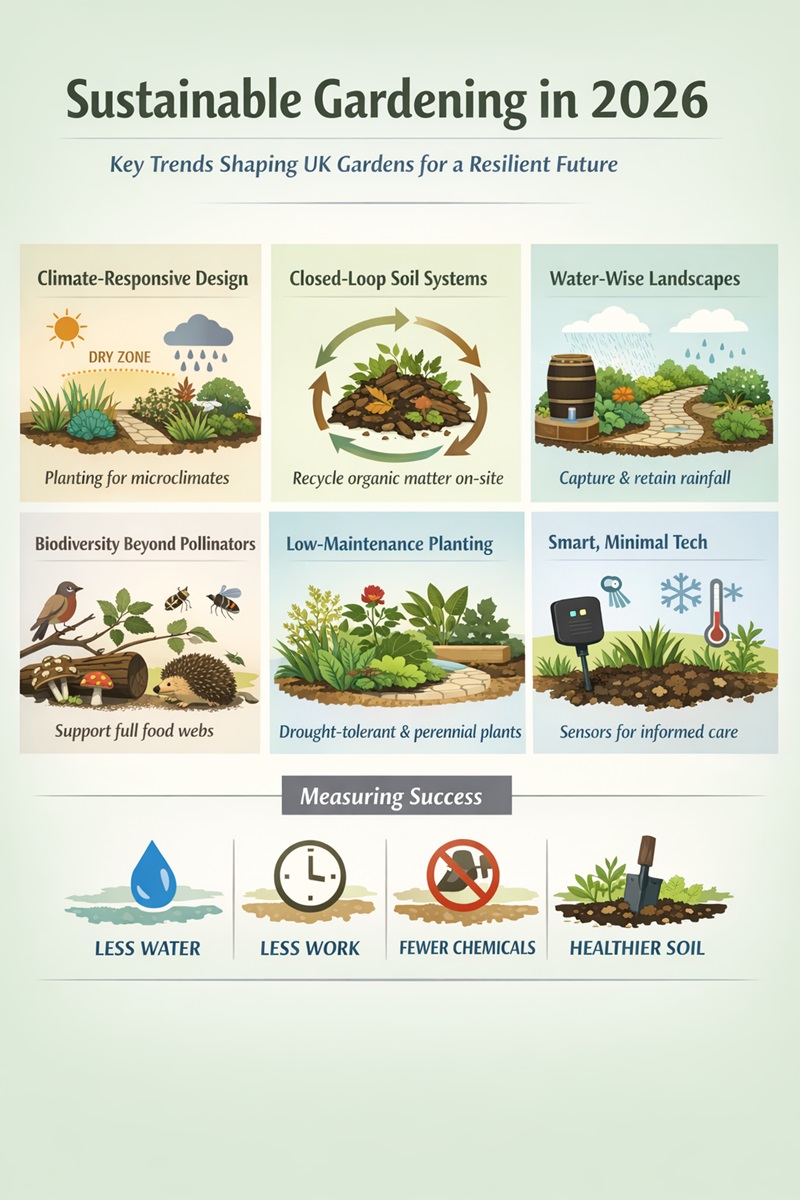
One clear trend in 2026 is climate-responsive garden design. This approach treats the garden as a system, not just decoration.
Instead of planting everything the same way, gardeners now watch how space behaves.
Sunny areas suit drought-tolerant plants. Shady areas stay cooler and hold water longer. Windy spots use layers of plants instead of solid fences. This reduces stress and drying.
Hard surfaces are changing too. Light paths reflect heat away from plants. Permeable surfaces let rain soak in instead of running off. The aim is not full control, but balance. Gardens help manage heat and moisture on their own.
Soil as a Closed-Loop System
In the past, buying compost felt like the right thing to do. In 2026, heavy use of imported soil products feels wasteful.
More gardeners now use what their gardens already make. Fallen leaves become leaf mould. Prunings are chipped or left to break down slowly. Digging is kept to a minimum to protect soil life.
Instead of feeding plants often, gardeners focus on feeding the soil. Over time, soil stays healthier. Plants grow stronger. Less work is needed each year.
Water-Positive Gardening: Using Less While Holding More
In 2026, water is not something to add often. It is something to catch, slow, and keep.
Rainwater tanks still help, but design matters more. Beds are shaped to hold moisture. Mulch slows water loss. Plants with similar needs grow together.
Hard surfaces also help manage water. Permeable paths let rain refill the soil. In wetter areas, gardens are shaped to hold extra rain for short periods. This protects plants and homes.
The rise of tabletop veg and edimentals
Maximising small spaces has become an art form in 2026, leading to the explosion of “edimentals” – plants that offer both visual beauty and a kitchen harvest.
If you lack a full-sized allotment, you can utilise sunny windowsills or balconies to grow dwarf vegetables that pack a punch in flavour. Late February serves as the ideal time for you to sow your tomato plants indoors, as the controlled warmth of your home provides the perfect head start before the final frosts pass.
Using compact containers allows you to move your crops around to follow the sun throughout the day.
Biodiversity Gardening Beyond Pollinators
Earlier efforts focused mainly on bees and butterflies. Now, gardeners think bigger.
Planting supports insects, birds, fungi, and soil life. Dead wood and leaf piles stay where possible. They are useful, not messy. Plants provide food and shelter all year, not just in spring.
This balance helps control pests naturally. Over time, fewer chemicals are needed.
Low-Maintenance, High-Resilience Planting
Plant choices are changing. Fragile plants are used less often. Hardy plants that handle both wet and dry conditions are preferred.
Perennials and shrubs replace many annuals. Edible plants add beauty as well as food. Long life matters more than new looks.
Lawns are smaller, not gone. Slower-growing grass needs less water and cutting. Lawns sit beside planted areas without losing function.
Smart Gardening Technology—Used with Care
Technology plays a smaller, quieter role. Soil sensors replace fixed watering times. Frost alerts prevent losses. Data helps gardeners know when not to act.
If a tool adds work or stress, it is dropped. The goal is simplicity, not control.
Reclaimed and Circular Garden Materials
In 2026, sustainability is judged over many years. Reused stone, brick, and timber are favoured. They age well and can be fixed. Modular designs allow change without waste.
Materials are chosen to last, not impress once.
Sustainable Gardening in Small UK Gardens
Garden size is no longer a barrier. Small gardens, patios, and courtyards now shape much of the UK. Vertical planting, shared wildlife routes, and smart layouts help manage heat and water.
Good design matters more than space.
Turning Principles into Practice
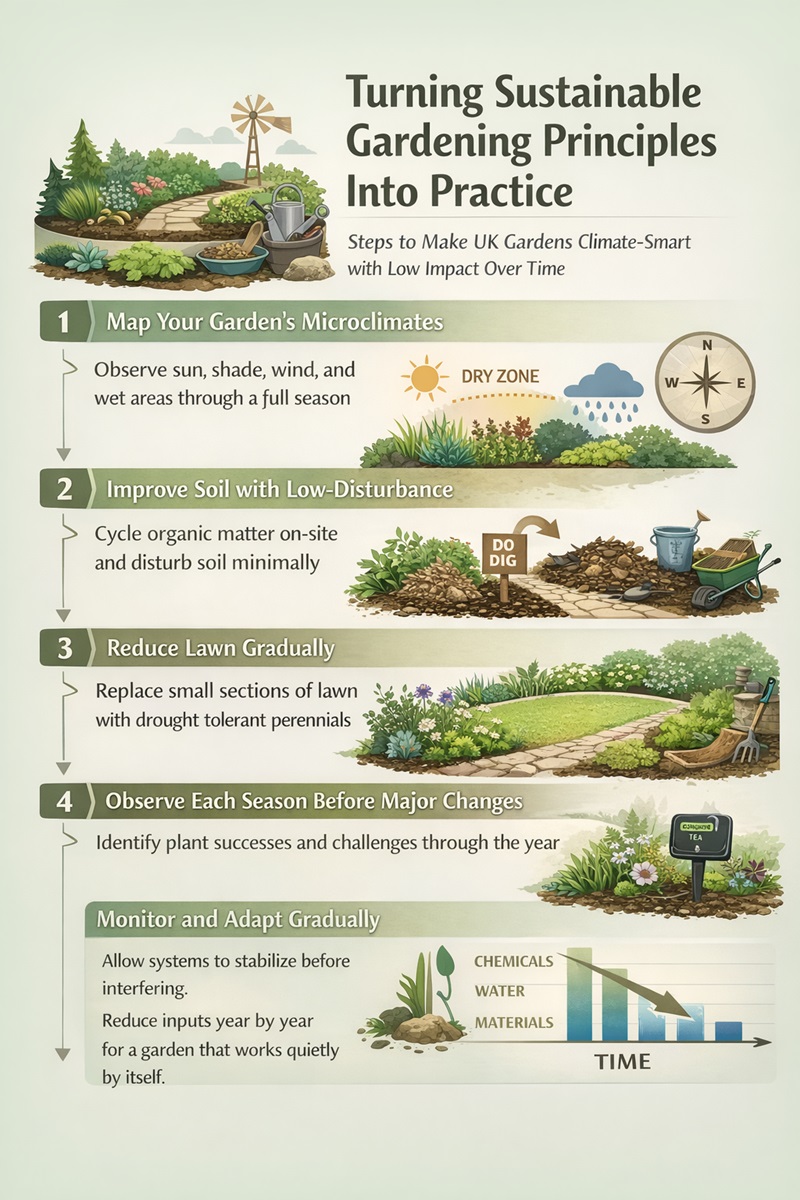
For gardeners starting in 2026, slow change works best:
- Watch how your garden behaves for one full year
- Improve soil before changing plants
- Reduce lawn in stages
- Let systems settle before adjusting
Gardens like this improve with use, not constant fixing.
Measuring What Matters
How sustainability is measured is changing.
Gardeners now ask:
- How much water does this garden use each year?
- How often must materials be replaced?
- How many hours of work does it need?
- Are chemicals used less each season?
- Is soil easier to manage?
Clear answers show what works.
How to Tell If a Garden Is Truly Sustainable
A good garden gets easier with time.
When systems work well:
- Water use drops
- Work becomes seasonal
- Chemicals fade out
- Soil improves
At this point, the garden supports itself.
Looking Ahead
As 2026 moves on, sustainable gardening is becoming normal in the UK. High-input gardens now feel outdated.
Resilient, relaxed, useful spaces are taking their place. The best gardens will not look perfect. They will recover fast, work quietly, and need little effort.
That is where sustainable emerging gardening is heading in 2026.