

Quick Answer: Do Dunkin Refreshers Have Caffeine?
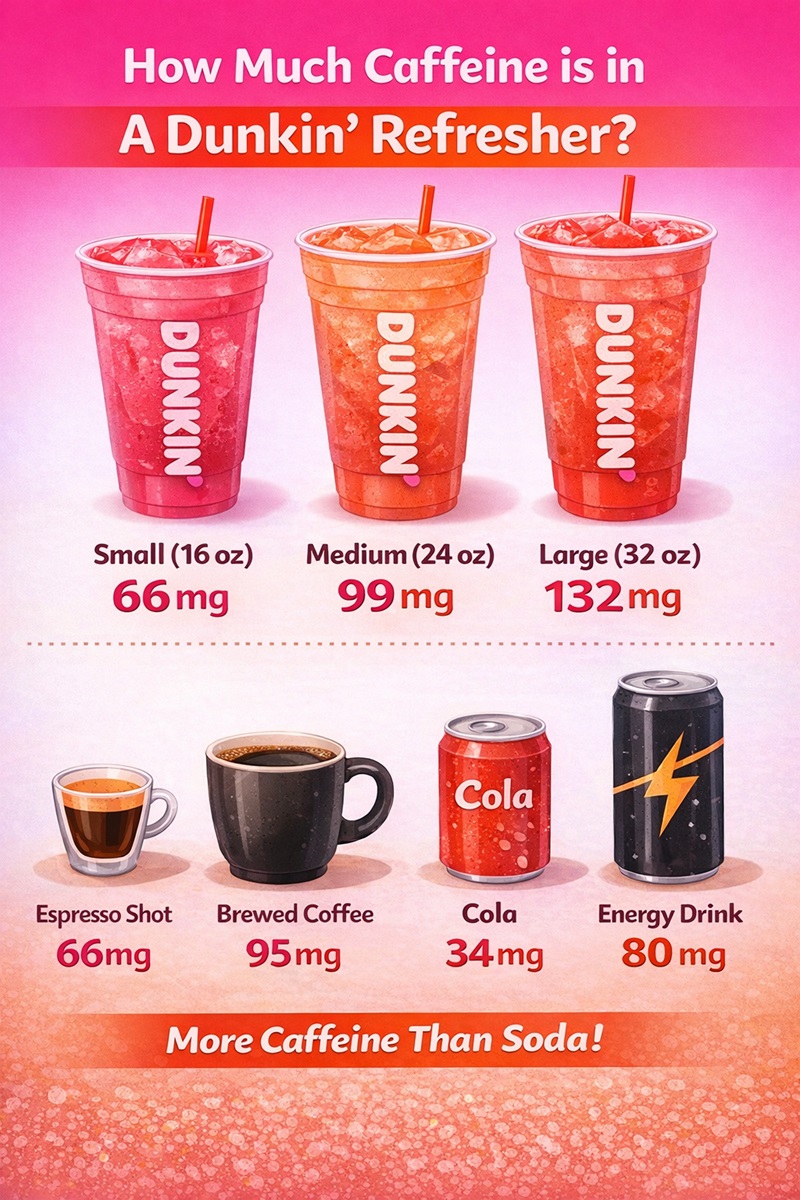
Yes—Dunkin Refreshers contain caffeine. The caffeine is tied to their green tea components (not coffee), and it scales with size. Based on widely cited Dunkin figures, you can expect:
- Small (16 oz): 66 mg
- Medium (24 oz): 99 mg
- Large (32 oz): 132 mg
But it’s not just caffeine that matters—sugar also plays a big role in how that energy feels (and whether you get a crash later).
If you’re caffeine-sensitive, pregnant, a teen, or trying to avoid that mid-afternoon slump, here’s what actually matters.
How we’re sourcing this: We’re using Dunkin’s published nutrition/menu materials and widely cited reporting that explains how Refreshers are built (fruit concentrate + brewed green tea). Caffeine can still vary slightly by location and preparation.
What Goes Into Dunkin Refreshers?
Dunkin Refreshers are cold, fruity drinks made with a few core components:
- Brewed green tea base (a caffeine source)
- Flavored fruit concentrate (also contains green tea extract in the mix, which contributes to caffeine)
- Sugar
- Ice
- Optional bases depending on the build (such as lemonade or coconutmilk-style versions)
Important: Even when you pick lemonade-style or coconutmilk-style versions, the drink is still built from Dunkin’s refresher system—which is why there’s no truly caffeine-free standard Refresher.
You may be interested to read: Does Jones Soda Have Caffeine?
Why Dunkin Refreshers Still Have Caffeine (The Two-Source Mechanic)
One key detail many people miss: Refreshers can contain caffeine from two places:
- The brewed green tea base used to build the drink
- The fruit concentrate, which includes green tea extract as part of the Refresher mix
That’s why you can’t “remove caffeine” the way you might with a coffee drink (like switching to decaf). Even if the drink tastes like fruit punch or lemonade, the caffeine is baked into how the product is formulated.
What’s Green Tea Extract, and Why Is It In Refreshers?
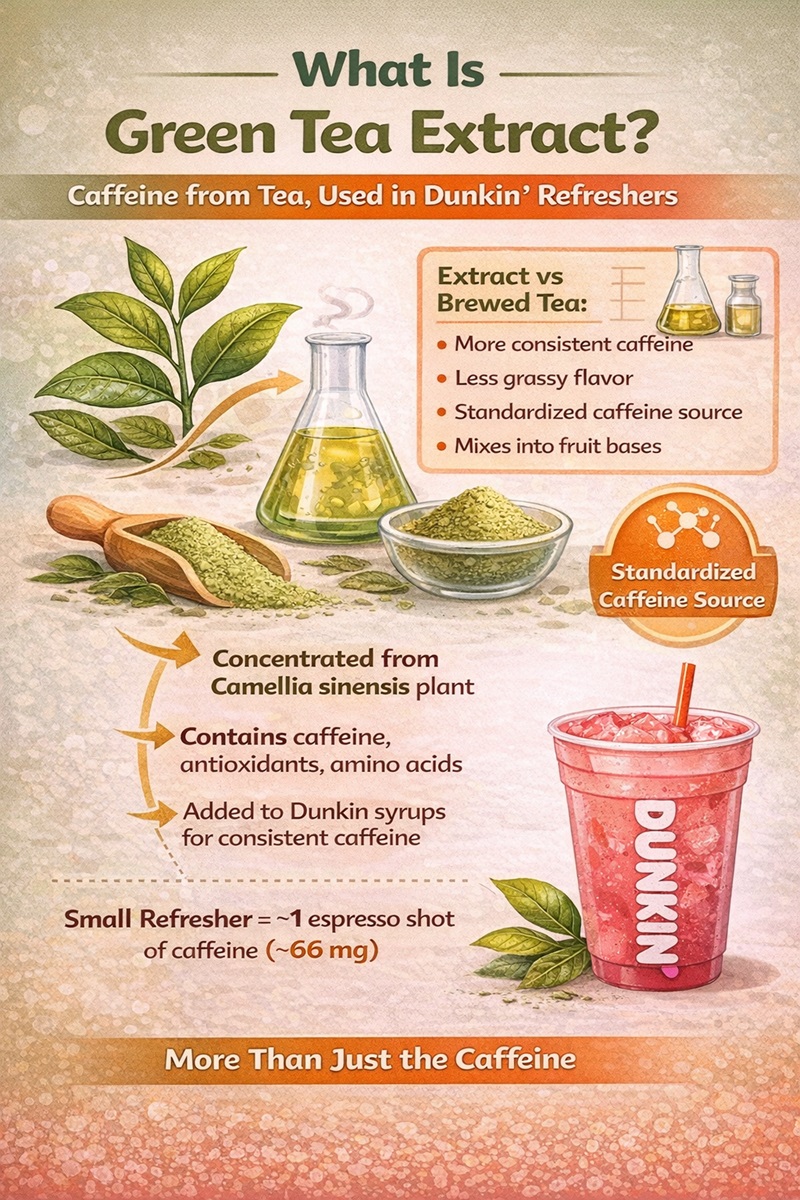
Green tea extract is a concentrated mix of naturally occurring compounds from the leaves of the Camellia sinensis plant (the same plant used to make green and black tea). Instead of brewing tea, manufacturers extract and concentrate components—including caffeine and some plant antioxidants.
Why use green tea extract?
- More consistent caffeine (more predictable across locations and batches)
- Less “grassy” tea taste (fruit flavors stay dominant)
- Easier to store and scale for high-volume drink systems
Does green tea extract behave like brewed tea?
Not exactly. Brewed tea is usually milder, while extract-based formulations can be stronger depending on how much is added.
Is green tea extract “healthier” than coffee?
It depends on the drink. Green tea can contain beneficial compounds, but in a sweetened drink the bigger nutrition story is often added sugar, not antioxidants.
Safety note
For most healthy adults, moderate caffeine intake is generally considered safe. The FDA notes that up to about 400 mg/day is not generally associated with dangerous effects in healthy adults. (If you’re pregnant, a teen, or have a medical condition, your safe range may be lower.)
How Much Caffeine Is In Dunkin Refreshers?
Refreshers vary more by size than by flavor. Here’s the commonly cited Dunkin breakdown:
Caffeine by Size
| Size | Caffeine | Comparable To |
| Small (16 oz) | 66 mg | About 1 espresso shot (roughly) |
| Medium (24 oz) | 99 mg | About an 8 oz brewed coffee (roughly) |
| Large (32 oz) | 132 mg | Moderate coffee-level caffeine |
For context (typical ranges):
- 8 oz brewed coffee: ~95 mg
- 12 oz cola: ~35 mg
- 8 oz energy drink: ~70–100 mg
A large Dunkin Refresher can land in the same caffeine territory as some energy drinks.
You may like to know: Does Olipop Have Caffeine?
Sugar & Calories by Size
Caffeine gets the attention—but sugar often drives the crash.
| Size | Caffeine | Sugar | Calories |
| Small | 66 mg | ~27 g | ~130–150 |
| Medium | 99 mg | ~39 g | ~180–200 |
| Large | 132 mg | ~48 g | ~230–260 |
Values can vary by flavor and base selection.
- 39 g sugar is about 10 teaspoons
- A medium Refresher can be in the same sugar range as a can of soda
How That Caffeine Can Feel in Your Body
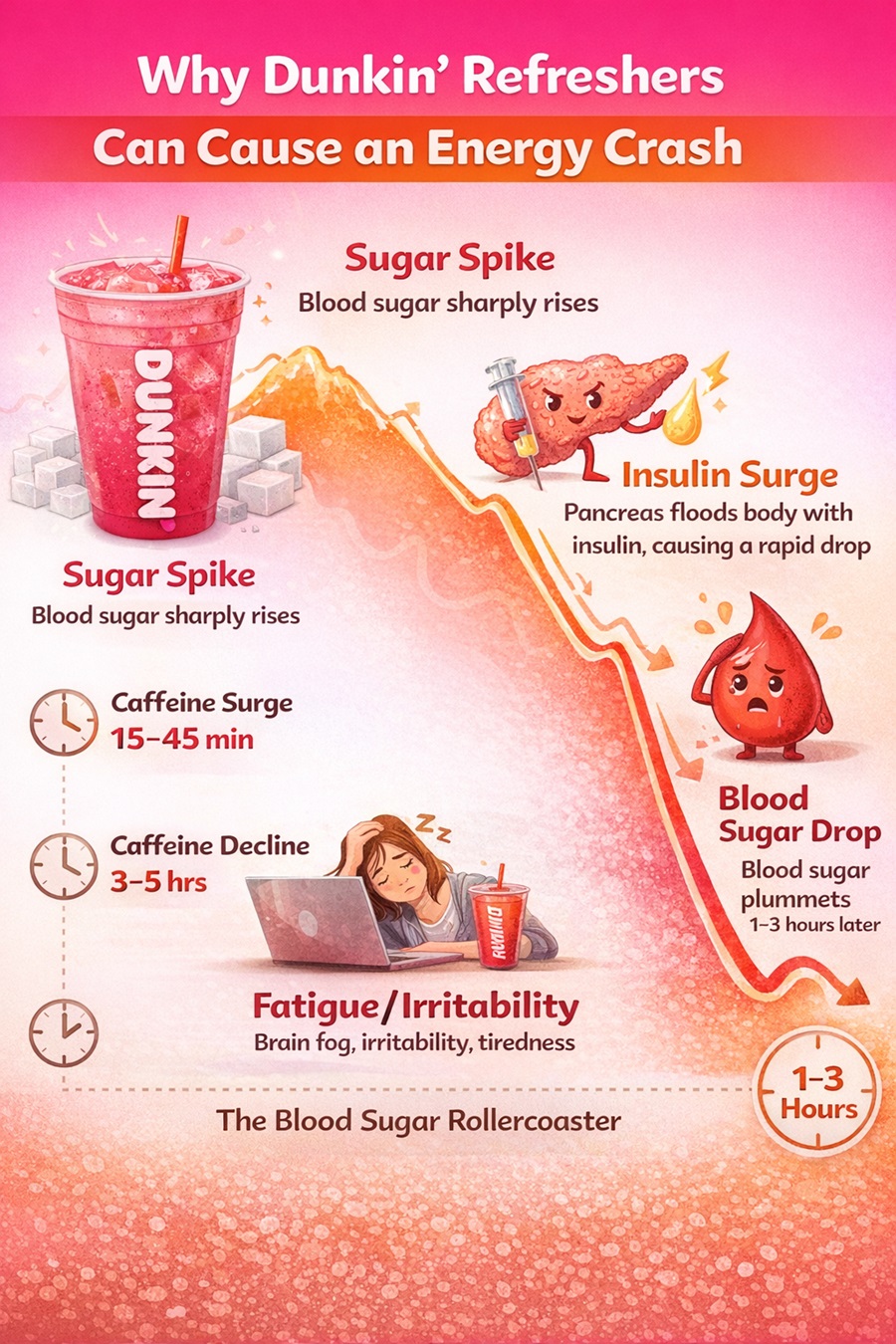
- 15–45 minutes: You may feel more alert
- 1–2 hours: Peak “buzz” for many people
- 3–5 hours: Caffeine starts tapering off (varies by person)
- Later: Some people feel a dip in energy—especially if sugar was high
If you’re sensitive, you may notice jitters, anxiety, faster heartbeat, or sleep disruption—especially if you have one late in the day.
The Sugar + Caffeine Crash: What’s Really Going On
Caffeine stimulates your nervous system. Sugar can spike blood glucose quickly. Together, that can feel like:
- A quick lift
- A bigger insulin response
- Then 1–3 hours later, a drop that feels like fatigue or irritability
Many people blame caffeine for the crash, but the blood sugar swing is often the bigger driver.
Caffeine Limits for Teens & Pregnant Women
Healthy adults: The FDA notes that up to 400 mg/day is generally not associated with dangerous effects in healthy adults.
If you’re pregnant: The American College of Obstetricians and Gynecologists (ACOG) commonly advises keeping caffeine to around 200 mg/day. A large Refresher (132 mg) can take up a big chunk of that.
For teens: Many pediatric guidance sources recommend keeping caffeine lower (often cited around 100 mg/day as a practical ceiling for adolescents). That means:
- A medium (99 mg) is basically right at that level
- A large (132 mg) can exceed it
Dunkin Refreshers vs. Starbucks Refreshers (Caffeine)
| Drink | Small | Medium | Large |
| Dunkin Refresher | 66 mg | 99 mg | 132 mg |
| Starbucks Refresher | ~35–45 mg | ~45–70 mg | ~70–90 mg |
Starbucks Refreshers typically use green coffee extract, while Dunkin’s system centers on green tea components.
In most size comparisons, Dunkin Refreshers come out higher in caffeine.
Do Dunkin Refreshers Cause an Energy Crash?
They can—especially if:
- You drink one on an empty stomach
- You’re sensitive to sugar swings
- You size up
- You have it late in the day
How to Reduce the Crash
- Choose a small instead of sizing up
- Pair it with food (protein/fat/fiber helps slow the sugar spike)
- Drink water alongside it
- Don’t use Refreshers as your “main energy strategy” every day
Who Should Be More Careful?
- Pregnant people (or trying to conceive)
- Teens / younger kids
- People with anxiety or sleep issues
- People with heart rhythm concerns (ask a clinician if unsure)
Frequently Asked Questions
- Do Dunkin Refreshers have more caffeine than soda?
Yes. Even a small (66 mg) is typically much higher than a standard cola (~35 mg per 12 oz). - Can you get a caffeine-free Dunkin Refresher?
Not in the standard Refresher format. The caffeine is part of the system (green tea base + concentrate). - How long does the caffeine last?
Many people feel effects for 3–6 hours, depending on sensitivity, timing, and metabolism. - Does flavor change the caffeine amount?
Usually not much. Size is the main driver. - Are Dunkin Refreshers safe during pregnancy?
They can fit within a 200 mg/day limit, but a large (132 mg) takes up most of that allowance quickly. - Are Refreshers “healthier” than soda?
It depends on what you mean by “healthier.” Many Refreshers are still high in added sugar. - Do Refreshers keep you awake?
They can—especially medium or large sizes, and especially later in the day. - What’s the biggest hidden issue with Refreshers?
Many people underestimate them because they don’t taste like coffee, but the caffeine can still be significant—especially at larger sizes.
The Bottom Line
Yes—Dunkin Refreshers have caffeine (66 mg small, 99 mg medium, 132 mg large). And one reason they’re hard to “hack” into caffeine-free is that the caffeine is tied to both the green tea base and the concentrate system.
If you enjoy them, treat them like what they are: a sugary, caffeinated drink. For steadier energy, most people do better with better timing (earlier in the day), smaller sizes, and less sugar overall—plus real food.