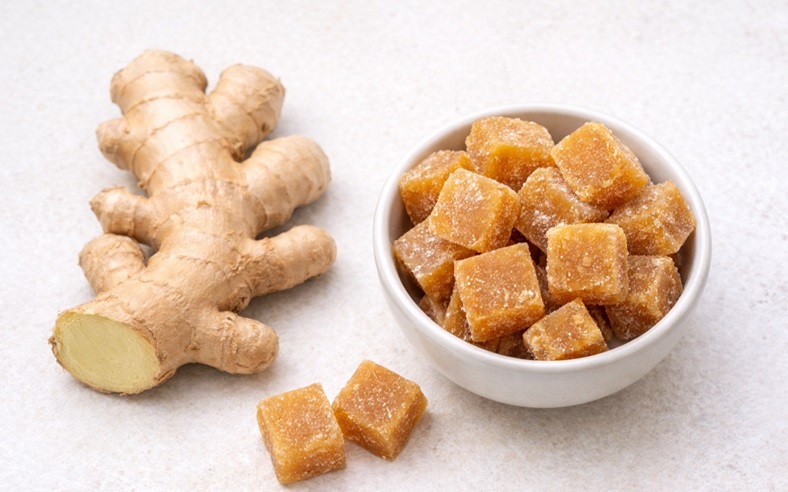

Ginger chews are stuck in a weird in-between place – half snack, half remedy. Some people swear by them to calm their tummies on flights, others use them after meals and plenty just can’t get enough of that spicy-sweet taste.
So – is taking ginger chews actually any good for you?
Well, kind of. It all depends on what’s actually in that chew – especially how much sugar is squeezed in – and why you’re popping them in the first place.
Below you’ll find a super practical, label-focused guide for health-conscious readers in the States who are looking for the benefits of ginger without accidentally getting duped by “healthy candy” marketing.
Quick Answer: Are Ginger Chews Good for You?
Ginger chews can be a good idea when they actually contain some decent ginger and you’re using them for a good reason – namely to calm some mild nausea or stomach cramps. Ginger has actually been shown to help ease nausea in certain situations, and the medical pros even recommend ginger candy for pregnant women who are feeling queasy.
But there is a downside: loads of ginger chews are loaded with way too much added sugar and there are some folks who should be pretty cautious (people on blood thinners, those with reflux, or with certain medical conditions).
What Ginger Chews Are, and What They Are Not
Most ginger chews are basically a soft candy made out of some mix of:
- ginger (powder, extract, or “ginger flavour”)
- sweeteners (sugar, glucose syrup, honey, the works)
- binders (starch, gelatin/pectin)
- acids/flavorings (citric acid, “natural flavours”)
They are most certainly not the same as:
- ginger tea (usually next to no added sugar and variable ginger strength)
- ginger capsules (way more consistent dosing and way more like a supplement)
- crystallised ginger (often a lot of sugar and sticky for your teeth)
you may like to check : What Does Green Tea Taste Like?
What Do Ginger Chews Look Like in the Store?
Commercial ginger chews are usually small, soft little squares or rectangles of candy, typically sold in individual wrappers inside a pouch or bag. They usually show up looking like this:
- The colour’s usually a warm golden to amber hue
- They’ve got a bit of a sticky quality to them (thanks to all the syrups and starches they’re made with)
- And they have a nice chewy texture with a warm, spicy kick when you finish eating them
You’ll probably most often see them on store shelves as 4 to 8 ounce bags, or in variety packs or bigger bulk bags.
How Are Ginger Chews Made ?
Most brands follow a pretty basic process involving candy-making:
- Start with a sweet base
They basically heat up a syrup to make it all thick and gooey – this is usually a mix of sugar and some kind of syrup (like glucose or tapioca). - Add in the ginger & other flavours
They add in ginger in one of three ways: as ginger pieces, ginger powder, or ginger extract, often with a bit of fruit flavour too (mango or lemon or blood orange, or something). It’s not uncommon to see ingredient lists that read something like cane sugar + ginger + tapioca starch + coconut fat (or oil). - Get them into shape
They pour the mixture out, let it cool down, and then cut it all up into bite-sized pieces. - Stop them sticking to each other
A lot of the time they use tapioca starch (or similar stuff) to stop the pieces from sticking together. - Wrap & pack
Most of the time they wrap each one individually to keep them fresh and easy to eat on the go (which is great for travel, or just for snacking).
And why this matters for your health: this method often means they need to add a fair bit of sugar in to make them all chewy – so while ginger chews can be helpful, they are still something you buy in a bag and they’re usually still going to be a bit of a treat.
The Nutrition Reality Check: What the Label Says Matters Way More Than the Headline
A ginger chew can either be:
- a tiny bit of ginger + a whole lot of sugar, or
- a ginger-forward chew with some sugar and fewer additives sprinkled in
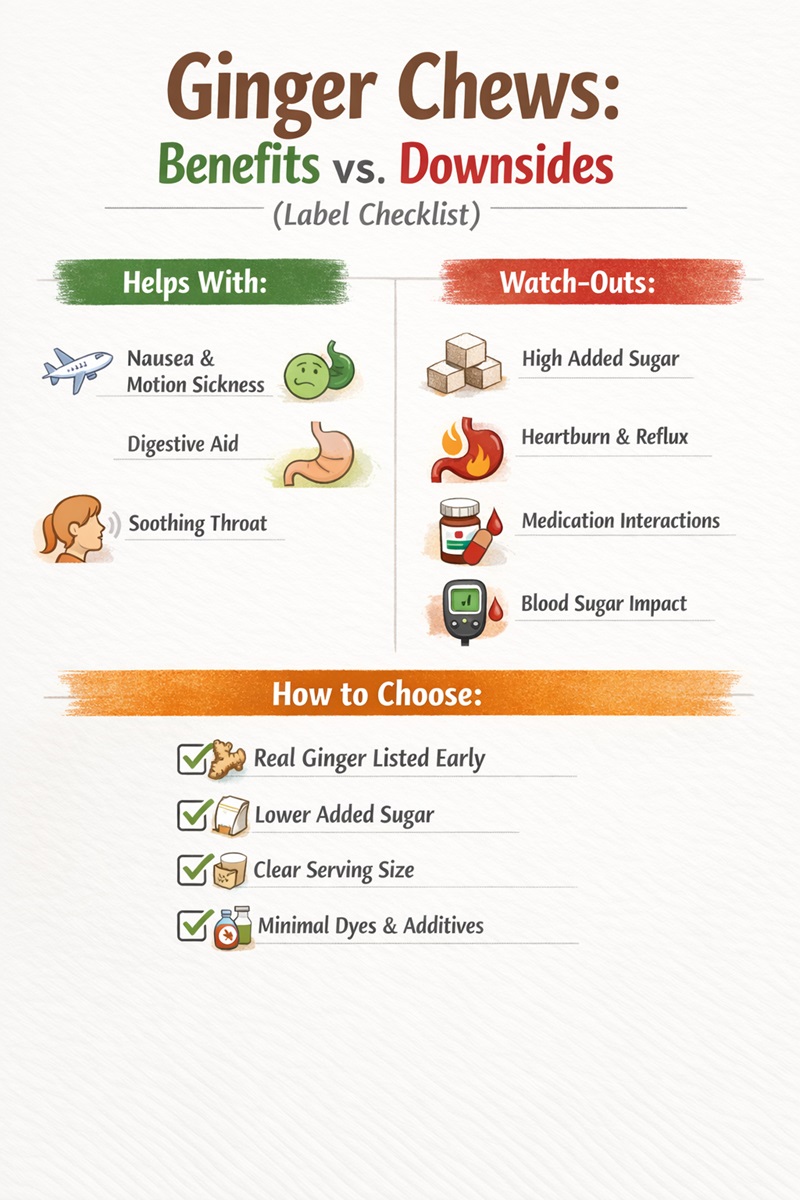
Quick Label Checklist (Save This)
Look for these things
- Ginger (or ginger extract) right at the top of the ingredients list
- Added sugar per serving that sits right with your goals
- A clear serving size – how many chews you’re supposed to eat in one go
Be Cautious of
- ” Natural flavours” being the main ginger source
- ” Ginger flavour” with no actual ginger listed anywhere near the top
- Serving sizes that are trying to hide the sugar content (e.g. “2 chews” but you end up eating 6)
Ingredient clues that matter
| Label term | What it usually means | Better pick |
| Ginger root / ginger powder | Real ginger, amount varies | Listed early in ingredients |
| Ginger extract | Concentrated ginger compounds | Better if ginger amount is disclosed |
| Natural flavors (ginger) | Could be tiny ginger or flavoring | Prefer real ginger + less sugar |
| Glucose syrup / cane sugar | Standard candy sweeteners | Lower added sugar per chew |
You may like to read this one : How to Plant Ginger
Benefits: when ginger chews might actually do some good
1) Nausea (the main place ginger shines)
Ginger is in its element here. Reviews of evidence and clinical advice just about always recommend ginger for nausea, and the American College of Obstetricians and Gynecologists even lists ginger candies as a way to help settle the stomach if you’re experiencing pregnancy-related nausea.
When a chew might be worth trying
- motion sickness (car, boat, plane)
- a mildly queasy stomach
- an occasional queasy feeling after eating
What to look for
A ginger chew might help you feel a bit less nauseated, but it’s no magic bullet – and it won’t fix serious causes of nausea.
2) A bit of digestive comfort (bloating, heavy meals)
Ginger is often used to support digestion, and a few bits of evidence suggest it might help with tummy movement and feeling more comfortable in specific situations. However, for lots of people, the effect is pretty subtle – and is likely to be undone if the chew is just sugar in disguise.
3) Calming the throat or mouth
The spicy warmth of ginger can feel soothing (think of a cough drop), mostly because of the way it tastes and affects your mouth and throat rather than any actual medicinal properties.
Downsides: when ginger chews might do more harm than good
1) Added sugar – it’s the #1 flaw of most ginger chews
Lots of ginger chews are basically just candies. All that added sugar can:
- sabotage your weight or metabolic goals
- lead to energy crashes
- increase the risk of cavities (since sticky chews are hard on your teeth)
If you’re eating ginger chews every day, sugar becomes the real story here, not ginger.
2) Heartburn and other tummy problems
Ginger can give you side effects like heartburn, tummy aches, or diarrhea, or irritation in your throat or mouth – especially if you take a lot or already have acid reflux.
3) Ginger that doesn’t deliver
Unless the package actually says how much ginger is in there, there’s a good chance you’re getting a pretty small dose that’s just enough to give it a bit of flavor, but not actually deliver any “health benefits”.
Who should be careful with ginger chews or talk to a doctor first
If you’re using ginger chews like a daily supplement – or if you’re taking any medications – be extra cautious. The National Center for Complementary and Integrative Health notes that certain herbs, including ginger, can interact with your medications.
You might want to think twice about ginger chews if…
- You take blood thinners or anticoagulants (such as warfarin) or have a bleeding disorder – there’s some evidence of interaction, so be super careful (especially if you’re using supplement doses)
- You have frequent heartburn or GERD – in some people, ginger can actually make things worse.
- You have diabetes or are carefully managing your blood sugar – the added sugar in those chews might be a bigger deal than the ginger. If you also take glucose-lowering meds or supplements, check with your doctor.
- You’re pregnant – ginger is often used to help with pregnancy nausea, but always check with your OB, especially if you have complications or are taking other products.
How many ginger chews per day?
There isn’t a one-size-fits-all answer, and that’s because ginger chews vary a lot in terms of how much sugar and ginger they contain.
A simple way to get started:
- Try one chew at a time & see how your stomach copes.
- If you want more, think about your sugar limits and whether you tend to get heartburn.
- If you need ginger on a daily basis to help with symptoms, look into low-sugar options like tea or fresh ginger, or talk to your doctor about the best supplement for you.
Note: Ginger is considered safe to eat, and some studies have looked at taking up to 4 grams of ginger supplements per day in certain situations – but that’s not the same as recommending how many chews you should have, and it’s a different ball game altogether when it comes to supplements.
How to choose the healthiest ginger chew
When it comes to picking a good one, you might want to look for products that:
- Feature actual ginger right at the top of the list
- Have less added sugar in each chew
- Use minimal dyes and unnecessary fillers
- Come in a serving size that makes sense for how people actually eat them
On the other hand, it’s probably best to avoid:
- Products where flavorings are a bigger part of the ginger content than actual ginger
- Chews that are basically just sugar syrups with a bit of ginger
- “Giant” chews that are more like a snack than a health supplement
Low-sugar alternative idea? Try ginger tea – just grate up some fresh ginger, add some hot water & a squeeze of lemon, and you get the benefit of ginger without turning it into a candy habit.
Ayurvedic perspective (kept in check)
In Ayurvedic terms, ginger is often described as warm and soothing for digestion. But if you’re someone who tends to get heartburn or reflux, that warmth can end up being a bit of a problem – so while you might love ginger for its digestive benefits, you could actually feel worse if you overdo it.
Think of the traditional Ayurvedic wisdom as a personal guideline, not a substitute for medical advice – it can help you get a sense of how to balance your ginger intake, but it’s not a replacement for proper care.
Typical Price Range for Ginger Chews in the U.S.
Ginger chews are sold in some fairly standard pack sizes, and the price will depend on a few key factors – brand, bag size, and where you buy them (whether it’s at a grocery store, online or at one of those big box retailers). Generally, smaller bags work out to be more expensive per ounce while bulk bags bring the cost way down per ounce.
Typical Price Ranges That US Buyers Can Expect:
- Small bags (3–5 oz): usually fall in the $4–$7 ballpark
(As a rough guide – Chimes 5 oz listings are often in this range, Gin Gins 3 oz listings can be too.) - Big bulk bags (1lb/16 oz): usually around $13–$16+
(Like so: Chimes 1lb listings tend to hang out in this range – depending on seller and any discounts they might be offering.)
Remember: Prices can move around a bit with promotions, retailer markups, and all those multi-pack deals happening – so these should be thought of as typical price ranges rather than cast in stone.
Popular Ginger Chew Brands You Can Find in the U.S.
Instead of trying to pinpoint a single “best” ginger chew, it’s probably more helpful to list some popular, widely available options – because the quality of the ginger and added sugar really can vary depending on product and flavor.
Some “Classic Ginger Chews” You Might Know
- Chimes Ginger Chews (Original)
Really widely sold in US stores and online; you can easily find them in 5 oz bags and big bulk sizes. - Prince of Peace Ginger Chews
Another pretty mainstream option with multiple flavors and sizes; you can usually find them stocked in both online retailers and all the major bricks & mortar stores.
A Ginger Candy Alternative You Might Consider
- The Ginger People (Gin Gins)
A well-known ginger candy brand – you can find a good range of pack sizes on their website, from tiny travel packs all the way up to 1lb bags.
Ginger chews vs ginger tea vs capsules
| Option | Best for | Main downside |
| Ginger chews | Convenience, travel nausea | Added sugar + dose uncertainty |
| Ginger tea | Low sugar, daily habit | Dose varies (depends on brew) |
| Ginger capsules | Consistent dosing | More interaction risk; supplement territory |
FAQ
Are ginger chews any good for nausea?
Ginger has actually been shown to work pretty well on nausea in some situations, and the American College of Obstetricians and Gynecologists even suggests ginger candy as a possible option for getting rid of morning sickness.
Can ginger chews give you heartburn?
Yeah, they can. Heartburn is something that can be a problem for some people, especially if they eat too many of them.
Are ginger chews really healthy?
They can be, but a lot of them are basically just candy. Whether or not they’re good for you depends on how much added sugar they’ve got in them, what else is in them, and how many you’re eating.
Do ginger chews interact with medications?
They might. There are a lot of reported interactions out there and some resources even recommend talking to a doctor before taking them if you’re already on any meds – especially if you’re on blood thinners.
Are ginger chews safe in pregnancy?
Ginger is actually pretty commonly used for morning sickness, and the ACOG lists it as an option. Still, you’d do best to talk to your OB about it.
How many ginger chews can I safely eat in a day?
Check the label – be mindful of the added sugar, start with a small amount (like 1 or 2), and stop if you start to get reflux or any irritation.
Are ginger chews good for my stomach?
Some people find them okay for mild tummy troubles, but the effect is pretty modest and a lot of sugar can actually work against what you’re trying to do.
What’s a better option than ginger chews?
For a lot of people, ginger tea (which has way less sugar) or just adding some fresh ginger to their food is the way to go.
Bottom line
Ginger chews can be pretty useful as a tool, especially if you’re using them for occasional nausea or stomach discomfort and you choose a brand that isn’t loaded with sugar. And let’s be real – ginger itself has got some real support behind it when it comes to treating nausea. If you’ve got any health issues that make it a bad idea ( especially blood thinners, acid reflux or being pregnant ) have a chat with your doctor first.
If you want, paste a couple of ingredient labels (or brand names) of chews you’re thinking about and I’ll break them down (ginger strength, sugar load, what’s in ’em, best use) in a quick table.