
When you host a garden party or outdoor bash, you want it to be a time when people come together without creating unnecessary environmental problems. That’s especially true in the UK, where sustainability is becoming a top priority in event planning – from huge festivals to backyard BBQ’s. People are finally waking up to the environmental impacts of waste, energy use, food sourcing, and all that travel.
Hosting a sustainable event is all about reducing your impact on the planet without sacrificing all the things that make an event fun – like comfort, atmosphere and the enjoyment of good company. Whether you’re planning a super-intimate garden gathering or a bigger outdoor bash, making thoughtful decisions about materials, catering, travel and energy use can make a real difference.
This guide will give you some practical ideas on how to host a garden party that’s not only fun but also kind to the planet.
Why Eco-Friendly Events Really Matter
Every single event has some kind of impact on the environment – from the travel people do to get there, to the food that’s produced and the energy that’s used, to the waste that’s generated. And it all adds up. People who’ve studied the UK events sector have found that big festivals and entertainment events can produce thousands of tonnes of waste and loads of greenhouse gas emissions every year.
Even the smallest garden party contributes to these problems – because of all the disposable plates and cups, the food that’s imported from who-knows-where, the single-use decorations that get chucked in the bin, and all the people who have to drive to get there. The good news is that you can make a real difference by planning things a bit more thoughtfully – by choosing low-waste systems, local food, and energy-efficient solutions. And in some cases, making these choices can even save you some cash and make the clean-up afterwards easier.
The Hidden Costs of Food Waste, Disposable Stuff and Using Too Much Energy
Understanding just how much of an impact your party is having on the planet can help you make some really positive changes.
The Cost of Food Waste and the Waste of All Those Resources
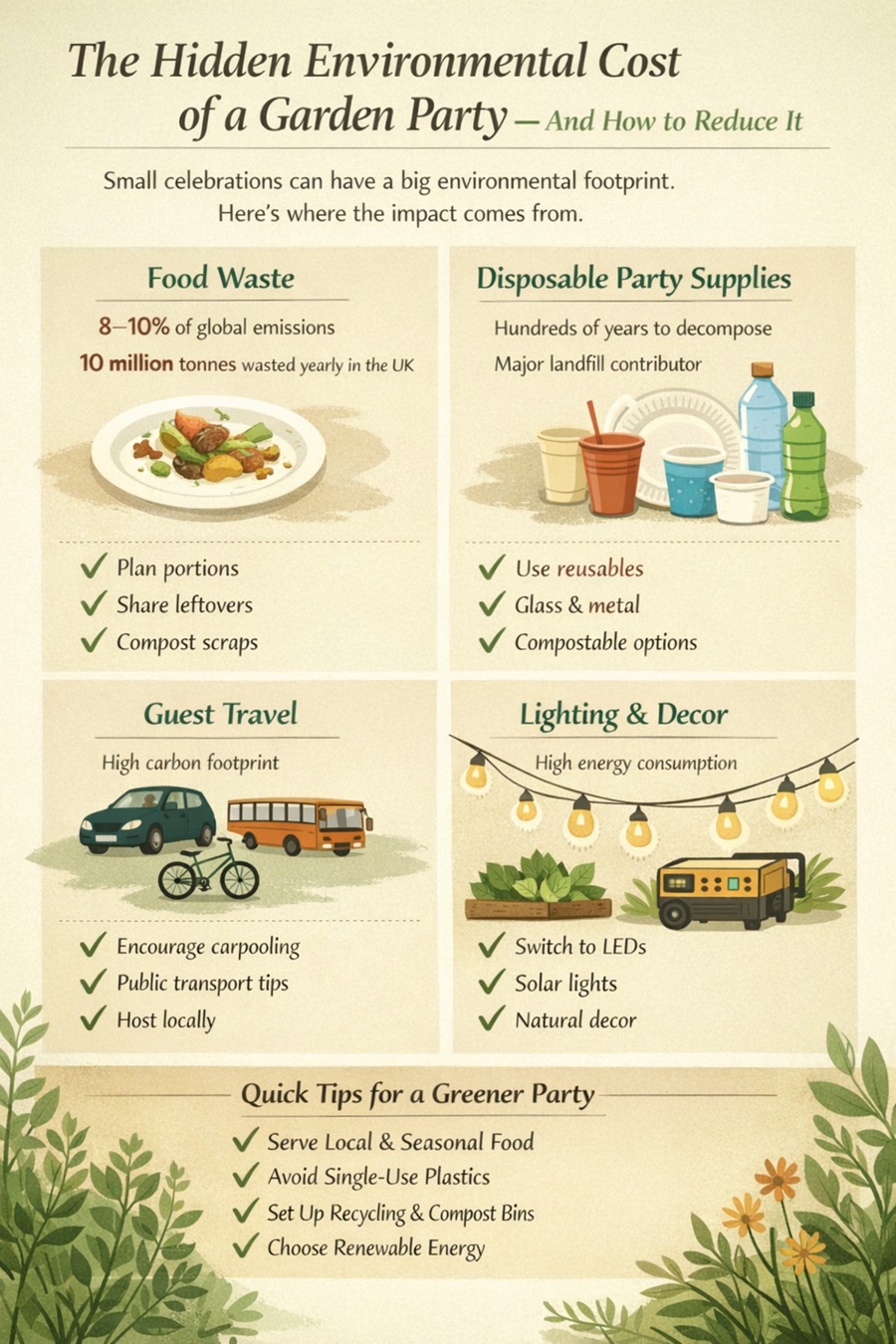
One of the biggest silent killers of the environment is food waste. When you just chuck away food that’s still perfectly edible, you’re also wasting all the water, energy, land and transport that went into growing it in the first place. It’s a staggering fact that food waste is responsible for about 8 or 10 per cent of all the greenhouse gas emissions that are linked to human activity – that’s right, it’s pretty much the same as all the cars on the road. And in the UK alone, people and businesses are chucking away millions of tonnes of perfectly good food every year.
Garden parties are a big offender when it comes to food waste – because often people end up over-catering or serving too big a portion size. But there are some simple things you can do to reduce waste – like making sure you’ve got a good idea of how much food your guests will eat, offering smaller serving sizes and making sure you’ve got a plan for getting rid of any leftovers.
Disposable Products and the Growing Pressure on Landfills
Disposable plastic stuff – like bottles, plates, cups, straws, and all the rest – is still one of the biggest contributors to landfill waste and all sorts of environmental problems. Now, it’s true that some disposable items are technically recyclable – but in reality most of them just end up getting binned because they’re mixed up with other stuff and can’t be recycled properly. And the plastic tableware you use at your party can take centuries to break down and can even leak nasty chemicals into the soil and waterways.
So what can you do instead? Well, for a start, you could stop using all that disposable stuff and switch to reusable plates, glasses, and metal cutlery. That will not only reduce the amount of landfill waste that you’re producing – it will also stop all the energy that goes into making all that new stuff.
Energy use for Lighting and Decorations
When it comes to lighting, sound equipment and decorations, event organisers often end up gobbling up a lot of power. And that can be a real killer for the planet if you’re not careful which options you choose. Traditional incandescent bulbs are a real energy hog : they just guzzle electricity in a way that modern, more efficient lighting options don’t.
For instance, LED lighting uses a whopping 85-90% less power than those old bulbs and it will also keep going for a heck of a lot longer too. And if you can get your hands on some solar-powered lighting – even better. Not only does that cut your power usage down to zilch, but it also adds a pretty atmospheric glow to your outdoor party or bash.
Prioritising sustainability areas for garden parties
When you’re trying to save the planet – or at least not make things worse – you want to make sure you’re focusing on the things that will make the biggest difference.
1. Reducing carbon and climate impact
It’s the travel, the food you serve and the power you use that usually cause most of the damage. Guests coming to your event all over the country in their cars, buffets piled high with meat – it all takes a toll. But there are ways to cut down.
For starters, try encouraging your guests to use public transport, walk, cycle or share a lift. Give them some travel tips in the invite so they know how to make the greenest choice possible. And if you can schedule the event for the daytime, that’s just one less time you need to turn on the lights which will save on power use. When it does get dark though, make sure you’re using solar-powered or LED lights as an alternative.
Menu planning also comes into play here, because what you serve really does matter. Opting for plant-based options is generally the smart choice because they tend to use fewer resources and produce less emissions than all that meat. But don’t be too hard on your guests, offer some nice veggie options alongside the usual fare.
2. Designing a low-waste event
Not just reducing waste, but cutting it out at the start of things is the key here.
Reusable stuff like plates, glasses, cutlery, serving dishes, go a long way to cutting down on single-use waste. And getting your catering equipment rented from a place that specialises in that sort of thing can be another good option for bigger events.
Have clear signs for recycling and composting so everyone knows what to do with their leftovers. And get creative with your invites and menus – go digital and you’ll save on paper. Don’t overdo the portions – and any leftovers? Give it to the guests or compost it.
Selecting the right temporary shelter can make a real difference. Durable, reusable structures are far more sustainable than single use alternatives. Gala Tent offers high-quality marquees and gazebos designed for long-term use, allowing them to support multiple events over many years and making them a smart choice for both your budget and the environment.
3. Supporting local and seasonal food sourcing
When you’re serving food for your party guests, you’ve got a golden opportunity to have a positive impact.
Going local with your food suppliers cuts down on transport emissions and gives you the chance to support local farmers and producers. And the best bit is that seasonal food is generally super fresh and tastes better too. Plus – it makes sense to go with the flow of what’s in season and available locally – less energy needed for storage and production.
4. Conserving energy and water
Let’s face it, your garden party or soiree still needs stuff like lighting and refrigeration and catering equipment – but there are still plenty of ways to be more energy efficient.
Solar lights and LED tech can do the trick while still looking great. And rather than doling out bottled water, why not get some refillable water stations up and running? And as for the equipment and shelters, go for the long-lasting, not disposable stuff.
Sustainable Event Trends in the UK – And How to Make Them Work for You
The UK events scene is increasingly getting on board with sustainability. Big festivals and venues are now looking at all the ways they can cut their carbon footprint – think renewable energy systems, cutting down waste sent to landfill, and more plant-based options on the menu. Some events are swapping out diesel generators for battery-powered ones and others have ditched single-use plastics completely – a trend we can expect to see more of.
These initiatives show just how much of a difference sustainable planning can make to an event’s reputation – not to mention the planet. So, if you’re hosting a party at home, don’t be afraid to apply the same principles on a smaller scale – just think about how you can use renewable energy, buy from local suppliers, and cook up some delicious low-waste grub.
A Practical Guide to Sustainable Garden Party Planning
Before it all kicks off
- Set some clear sustainability goals for your party – maybe that’s cutting down on waste or making sure everyone gets here by public transport
- Choose vendors and caterers who are going to use seasonal ingredients and keep things local
- Get the word out about your sustainability expectations to your guests – that way they’re more likely to come on board
- Sort out some reusable catering gear so you don’t have to waste loads of plastic and paper
- Plan out your recycling and composting systems – you don’t want to be scrambling around on the day
On the day itself…
- Keep an eye on how people are sorting their waste – and make sure there are clear signs telling people how to do it
- Encourage everyone to bring some reusable stuff along – like plates and cups
- Be clever with your lighting and use daylight to your advantage
After the party
- Make sure to compost any food waste and turn it into something useful
- Store your decorations and anything you can reuse for next time
- Have a good hard look at how you did – and use that to make your next party even more eco-friendly
Measuring Up Your Environmental Impact
Tracking how your party impacts the planet is a great way to make sure you’re getting things right – and spotting areas for improvement. It’s all about measuring things like how much waste you’re sending to landfill, how much of your party gear is getting reused, how people are getting to your party, and how much energy and water you’re using.
Sharing that info with your guests can be a great way to get them on board with all the eco-friendly stuff
The Bottom Line
A sustainable garden party doesn’t have to be a random collection of new-agey ideas – it’s about finding ways to have fun and make a positive impact on the planet. By cutting down on waste, using more local food, and being clever with energy, you can have an amazing time while also making a real difference.
As sustainability becomes more and more the norm in British event culture, it’s your chance to lead the way at home – and have a party that truly is worth remembering – for all the right reasons.