
Right, so you know that thing where you are in the tea aisle, staring at a box that looks like it was designed by someone who only drinks rainwater and shops exclusively in Portland farmers’ markets, and you get that weird twist in your stomach? The little “ugh… this looks eco-friendly, but does it actually mean anything?” feeling? That moment, honestly, is where the ethical part starts.
Because anyone can slap a sage-green leaf on kraft paper. Your brain is wired to trust that look. Green + paper = “good human.” But none of that says anything about wages, soil health, overharvesting, irrigation runoff, or how many pesticides someone poured downhill last May.
What actually matters (and what marketers cannot fake unless they have done real work) are things like specific origin info, meaningful farm data, and ingredient transparency. If you see “India,” shrug. But if you see “Assam – Mokalbari East Estate – Second Flush 2024 – Clonal 1260,” yeah, that is traceable. And second flushes really do happen in 60–90-day intervals, and a good estate only produces 3-5 harvest lots per year. If they are pumping out ten? Nope.
Certifications matter too, but only if the brand uses them consistently offline and online. A Fair-Trade badge means something only when the website also talks about farms, wages, school programs, the actual work. And good farms give numbers: shade-tree coverage 30-50 percent, picker ratios around 1 per 500-700 plants, soil pH in the 4.5-6.0 sweet spot, rainfall 1,500-2,500 mm per year (source). Anyone giving you that sort of detail is not pretending.
And if the ingredient list says “natural flavors,” just no. That is usually code for “our tea tastes sad, so we perfumed it.”

Where to Buy Ethical Tea
Supermarkets blend leaf from 5-30 farms, so traceability is fuzzy. Specialty online shops that give moisture levels 2-5 percent and batch sizes under 50 kg are doing real work. Direct farm purchases take 10-25 days shipping and have seasonal windows of 4-8 weeks. When they sell out, good sign. Local refill shops are fine as long as storage humidity is under 60 percent.
The Quick Rules For When You Are Half-Asleep in the Aisle
- Use 2 grams per 250 ml.
- Find harvest season and year.
- One strong certification is all you need.
- Real flavor bits more than 3 mm.
- If the paper tears easily, buy it.
- If the farm is named, trust it.
And honestly, once these become second nature, buying tea goes from “oh god, what if I buy greenwashed nonsense” to “yeah, I have got this.” It feels grounded. It feels aligned. Like your tea ritual actually lines up with the person you want to be.
Rare Tea Co’s Loose Leaf Tea is a good example of a solid, high-quality, ethical tea choice, we highly recommend them.
Loose Leaf vs Tea Bags: Your “I Want to Be Sustainable But Also Not Lose My Mind at 6am” Decision
Loose leaf sounds heroic until it is 6:04 AM and you are standing there, barefoot, trying to remember how water works. But the more you understand the mechanics, the easier the decision gets.
Loose Leaf
It is good for a reason. Whole leaves mean hand-plucking, literally “two leaves and a bud” of 8-12 mm, not machine shearing. Whole leaves unfurl slowly in the water, usually 45-90 seconds, so tannins do not go crashing in all at once. And there are no microplastics. Bags can shed 10-50 microparticles per cup at 85-90C. Painful to know, but here we are.
Paper or tins are predictable to store, no weird, laminated foil layers that confuse recycling.
And you can make it easy on yourself by getting a wide infuser (around 5-7 cm so the leaves can expand 2-3x) and using 1.5-2 grams tea per 250 ml. Temperature ranges matter too: greens at 75-82C for 1.5-2.5 minutes, blacks at 93-100C for 3-5 minutes, oolongs 85-95C for 2-4 minutes, whites 80-90C for 4-6 minutes.
Tiny real-world hack: preheat your mug with a quick swirl of hot water. Shaves off 10-20 seconds of brew time and gives you a smoother extraction.
Tea Bags
They are convenient. No shame. But the tradeoffs matter. Bag tea is tiny particles, 0.2-1.0 mm, which oxidize 5-10x faster than whole leaves. Mechanized harvesting strips 30-50 percent more plant matter than hand-picking. Many bags contain 20-30 percent plastic fibers, sealed at 120-160C, so even the paper-looking ones often are not fully paper.
Experts who travel a lot get those unbleached DIY fillable bags made from 40-60 gsm paper, chuck 2 grams loose leaf inside, fold it, and go.
Once you see how format affects sustainability, you cannot not look at leaf grade next.
Leaf Grade: The Sneaky Shortcut to Knowing If the Farm Treats People and Plants Properly
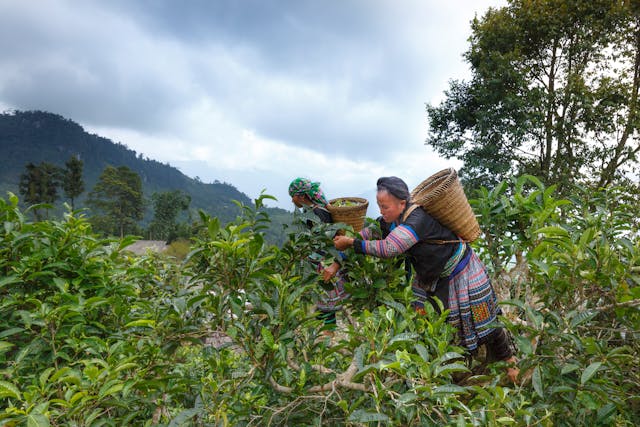
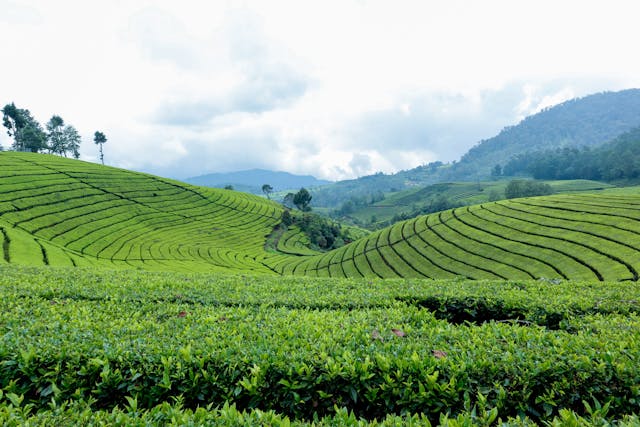
Leaf grade is honestly like a window into the whole system. Good, whole leaves mean slow growth cycles (10-15 cm per month), not chemically forced 20-30 cm. They mean pickers plucking every 7-10 days, hitting 15-25 kg per day, not overharvesting like mad just to hit quotas.
Withering for high-quality tea is 12-18 hours at 60-70 percent humidity, rolling happens at 30-45 rpm, oxidation goes for 90-150 minutes. Tear the leaves and everything collapses. Tea is pastry, timing and technique are everything.
Visual trick: dump 3-5 grams on white paper. If size variation is within plus or minus 15 percent, stems under 10 percent, dust under 3 percent, you are in good territory. If it looks like confetti? Nope.
Then again, once you have clocked leaf grade, you naturally start wondering which countries line up with your ethics, and that is where things get complicated.
Does Origin Matter? Yeah, But Not How Instagram Wellness Makes It Sound
You cannot paint whole countries with a single ethical brush. But the numbers do tell you a lot.
India pays around Rs200-350 per day to workers, and responsible farms cap plucking at 18-22 kg per day. Sri Lankan estates work slopes of 30-45 degrees, so everything is hand-picked, and shade-tree ratios of 1 tree per 12-15 bushes tell you they care about ecology. Chinese artisan farms hand-process batches of 5-30 kg, often at 800-1,200 m altitude. Japanese gyokuro growers shade their fields 70-90 percent for weeks and steam leaves for 20-45 seconds, heavy labor but precise.
It all matters, but origin alone does not close the case. Which means certifications come next.
Certifications: Helpful or Just Nice Stickers? Depends.
Some mean real things, some are decorative like fridge magnets.
Fair Trade premiums run 5-10 percent of sale price. Committees meet monthly. Good estates publish 2-4 reports a year showing where funds go.
Rainforest Alliance needs 40 percent canopy cover. Caps approved pesticides at fewer than 80.
Organic US or EU requires a 3-year soil transition. Copper sprays capped at 3-4 kg per hectare per year.
Direct Trade relationships run 3 plus years, price premiums of 20-30 percent, batch lots under 10-20 kg.
Of course, you can do all this right and still get fooled by the flavouring step, which is basically the Wild West of ethical tea.
Flavored Tea: Danger Zone or Totally Fine? Depends on Particle Size, Seriously
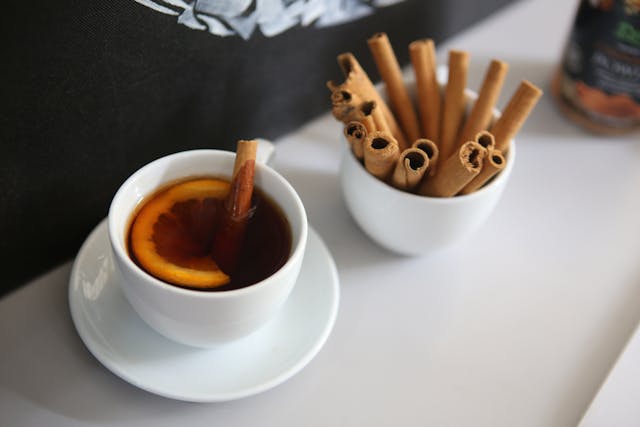
If you can see real ingredients, pieces 3-20 mm, ingredient percentages like cardamom 8 percent and cinnamon 12 percent, and moisture around 6 percent, you are good. It means the base tea actually tastes like something.
If the scent slaps you from 1-2 m away and the whole mix is under 1 mm, that is perfume plus dust.
And the brewing test really works. If the recommended time is 4 minutes, check at 2 minutes. If the tea is already blasting your nostrils, it is artificially boosted.
Then comes packaging, the last trap.
Packaging: The Part Nobody Wants to Think About But You Should
It matters more than you want it to.
Unlined paper tears with resistance under 0.5 kg. Metal tins around 0.25-0.35 mm thick with 3 percent or less air exchange per month are brilliant long-term (source). Glass jars weigh 250-600 g, so great if you are not posting them across a continent. Compostable PLA needs 60C for 10-20 days, meaning your home compost will not touch it.
Single-material packaging recycles at 70-90 percent, laminated stuff at 0-5 percent.