


Quick answer: How Long Do French Bulldogs Live?
French Bulldogs often live 10 to 12 years.
With good genes, a healthy weight, regular vet care, and strong heat safety, some live to 13 or 14. A few live even longer. One French Bulldog named Rocco was born in Brazil in 2006. He later moved to Los Angeles and lived until 2024.
Still, French Bulldogs need more care than many small dogs. Many small dogs live longer than large dogs. Frenchies do not always follow that rule.
The main reason is their flat face. This shape can make it hard for them to breathe. It also makes hot weather more risky. Frenchies can also have back problems, skin problems, and eye problems.
So, their daily care matters a lot.
What Does Research Say About French Bulldog Lifespan?
Most breed guides say French Bulldogs live 10 to 12 years. The American Kennel Club gives this same range. Some vet sources say a healthy Frenchie can live 10 to 14 years.
Recent studies show a more mixed picture.
A 2024 UK study found that French Bulldogs live about 9.8 years on average. In the same study, purebred dogs lived about 12.7 years. Mixed-breed dogs lived about 12 years.
Another UK study from the Royal Veterinary College found a much lower number: 4.53 years from birth. But this number needs care. It was affected by the fast rise in young French Bulldogs in the UK.
Frenchie registrations rose from 2,771 in 2011 to 39,266 in 2020. That means many dogs in the study were still young. So, this number does not mean most Frenchies die before age five.
A Japanese pet cemetery study found that French Bulldogs lived about 10.2 years. This was the lowest number in that study.
The simple answer is this: a French Bulldog from health-tested parents can often live close to 10 years or more. Many reach 11 or 12. Some reach 13 or 14 with strong care.
The biggest risks are breathing trouble, back disease, excess weight, and heatstroke. These risks can make a big difference. They can separate a short life from a much longer one.
Why Do French Bulldogs Live Shorter Lives Than Many Small Dogs?
French Bulldogs have flat faces. This is called brachycephalic, but many owners just call it flat-faced.
Their short skull gives them their cute look. But it also gives their airway less room. This can make breathing harder. It can also make surgery and hot weather more risky.
Frenchies can also have back disease. One common problem is IVDD, or disc disease. This can hurt the spine and cause pain or trouble walking.
Extra weight makes these problems worse. It puts more strain on the back. It also makes breathing harder.
Skin folds can trap sweat and dirt. This can lead to skin infections. Frenchies can also have tooth problems and eye injuries.
This does not mean every French Bulldog will have a short life. It means owners need to act early. Keep them lean. Protect them from heat. Watch their breathing. Get vet care before small problems become big ones.
The #1 Health Issue: BOAS
BOAS is the top health risk for French Bulldogs.
The full name is brachycephalic obstructive airway syndrome. That name is long, but the idea is simple. A Frenchie’s short face can block normal air flow.
Some Frenchies have narrow nose holes. Some have a soft palate that is too long. Some also have a small windpipe. These problems make it harder to breathe.
A dog with BOAS can struggle even while resting. It can also get hot fast. Stress, travel, and surgery can be more risky too.
Common Signs of BOAS
Signs of BOAS include:
- Loud snoring or snorting, even at rest
- Gagging after food or play
- Getting tired on short walks
- Heavy breathing after light activity
- Poor sleep due to breathing trouble
BOAS is not just normal snoring. A dog that fights for air has a higher risk of heatstroke. It also has more risk during surgery.
If your Frenchie has these signs, talk to your vet. Ask for a BOAS check. Try to see a vet who knows flat-faced dogs well.
Surgery can help some dogs with BOAS. A vet can make the nose holes wider. A vet can also shorten a soft palate that is too long. These steps can help air move better. They can also improve comfort and quality of life.
This choice should be made with a skilled vet. Choose one who has worked with flat-faced breeds before.
Spinal and Disc Disease
French Bulldogs also have a higher risk of back disease.
One common problem is IVDD. This means a disc in the spine slips, wears down, or presses on the spinal cord.
IVDD can cause pain and stiff movement. In severe cases, it can lead to weak legs or loss of movement.
Warning Signs of Back Problems
Watch for these signs:
- Not wanting to jump
- Not wanting to climb stairs
- Pain when picked up
- A hunched back
- A tight or tucked belly
- Weak back legs
- Stumbling or dragging the back legs
- Crying when the back is touched
You can lower the risk with simple habits.
Keep your Frenchie at a healthy weight. Use ramps for the couch, bed, and car. Stop high jumps when you can.
Call your vet at the first sign of back pain. Early care gives the best chance of a good result.
Heat Safety
Heat safety is a daily job for French Bulldog owners.
Frenchies cool down by panting. But their short airways make panting less useful.
This means they can get too hot faster than many dogs. Heatstroke can happen even on warm days. It can also happen during play, stress, or short walks.
Warning Signs of Heatstroke
Signs of heatstroke include:
- Heavy drool
- Fast or hard panting
- Weakness
- Vomiting
- Confusion
- Bright red, pale, or blue gums
- Collapse
Heatstroke is an emergency.
Move your dog to a cool place. Put cool water on the paws and groin. Do not use ice-cold water. Call an emergency vet right away.
How to Prevent Heatstroke
To help prevent heatstroke:
- Walk early in the morning or after sunset
- Avoid walks during peak heat
- Keep walks short above 20°C / 68°F
- Never leave your dog in a parked car
- Use air conditioning in warm weather
- Bring water when you go out
- Stop activity if breathing gets loud or hard
This matters most in hot or humid places. This includes Florida, Texas, Georgia, Louisiana, Arizona, Nevada, and California.
Weight Management
Extra weight can shorten a French Bulldog’s life.
It is also one of the easiest risks to control.
Even a little extra weight adds strain. It puts more pressure on the back and joints. It also makes breathing harder. It can raise the risk of heatstroke too.
A healthy Frenchie should feel solid, not round.
You should feel the ribs with light pressure. The ribs should not stick out. From above, your dog should have a waist. A round, barrel shape is not a good sign.
The ideal adult weight for a French Bulldog is usually:
| Sex | Healthy Weight Range |
|---|---|
| Female French Bulldog | 16–24 lb / 7.3–10.9 kg |
| Male French Bulldog | 20–28 lb / 9–12.7 kg |
Good Weight Habits
Good weight habits include:
- Measure each meal
- Do not leave food out all day
- Keep treats under 10% of daily food
- Avoid fatty table scraps
- Weigh your dog at each vet visit
- Track weight over time
- Use food puzzles to slow eating
Nutrition
Most French Bulldogs do well on good dog food.
Choose food made for their age and size. Puppies, adults, and seniors need different food.
The main goal is simple: keep your Frenchie lean.
Some Frenchies have food issues. Signs can include itchy skin, loose stool, or ear infections. If these problems keep coming back, talk to your vet.
Do not guess the cause. Your vet may suggest a food trial. This can help find out if food is part of the problem.
Simple Feeding Rules
Simple feeding rules include:
- Start with the food label guide
- Adjust meals based on body shape
- Change food slowly over 7 to 10 days
- Watch stool, energy, coat, and weight
- Ask your vet before using a special diet
Routine Vet Care
French Bulldogs need close vet care.
Healthy adults should see a vet once a year. Dogs over 7 or 8 should go twice a year.
Older Frenchies need more checks because problems can grow fast.
What Your Vet Should Check
At each visit, your vet can check:
- Weight and body shape
- Breathing noise and effort
- Teeth and gums
- Face folds and tail pocket
- Ears
- Eyes
- Heart rate and rhythm
- Back pain
- Weak back legs
- Bloodwork in senior dogs
Vet care is not just about shots.
Regular checks help your vet see changes early. This can catch breathing decline, tooth pain, skin issues, back pain, and organ problems before they become emergencies.
Skin, Ears, and Eyes
French Bulldogs often have skin, ear, and eye problems.
These issues can start small. But they can get worse fast if you ignore them.
Skin Allergies and Fold Infections
Frenchies have many skin folds. These folds are on the face, tail pocket, and body.
Moisture and dirt can collect there. This can lead to red skin, itch, and bad smell.
Common signs include:
- Scratching
- Red or sore skin
- Bad smell
- Paw licking
- Hair loss
- Brown stains between the toes
Clean skin folds often. Use a vet-approved wipe. This can help stop mild skin problems.
Call your vet if infections keep coming back. True allergies need a wider care plan. Your vet may check fleas, food, the home, and medicine needs.
Ear Infections
Ear problems often come with skin allergies.
A Frenchie with itchy skin often has itchy ears too.
Watch for these signs:
- Head shaking
- Scratching the ears
- Red ears
- Bad smell
- Discharge from the ear
Call your vet if ear infections keep coming back. Cleaning alone often does not fix the real cause.
Eye Injuries
French Bulldogs have large eyes. Their eyes sit out more than many other breeds.
This makes scratches, eye ulcers, and dry eye more likely.
Call your vet fast if you see:
- Squinting
- Red eyes
- Cloudy eyes
- Eye discharge
- One eye held partly closed
Eye problems can get worse in hours. Fast care can help protect your dog’s sight.
Choosing a Responsible Breeder
Genes play a big role in a French Bulldog’s lifespan.
A puppy from health-tested parents has a better chance at a healthy life. It is more likely to have a better airway, strong back, and steady mood.
Avoid puppy mills and careless breeders.
A good breeder should show you:
- BOAS grades for both parents
- Hip, elbow, and heart test results
- Eye test results
- Proof that both parents have moderate face shape
For BOAS, grades 0 or 1 are better. They show a more open airway.
Very flat faces are not a good sign. They can cause health and comfort problems.
If you adopt, ask for vet records. Also get a vet check before adoption. Ask the vet to check breathing and airway risk.
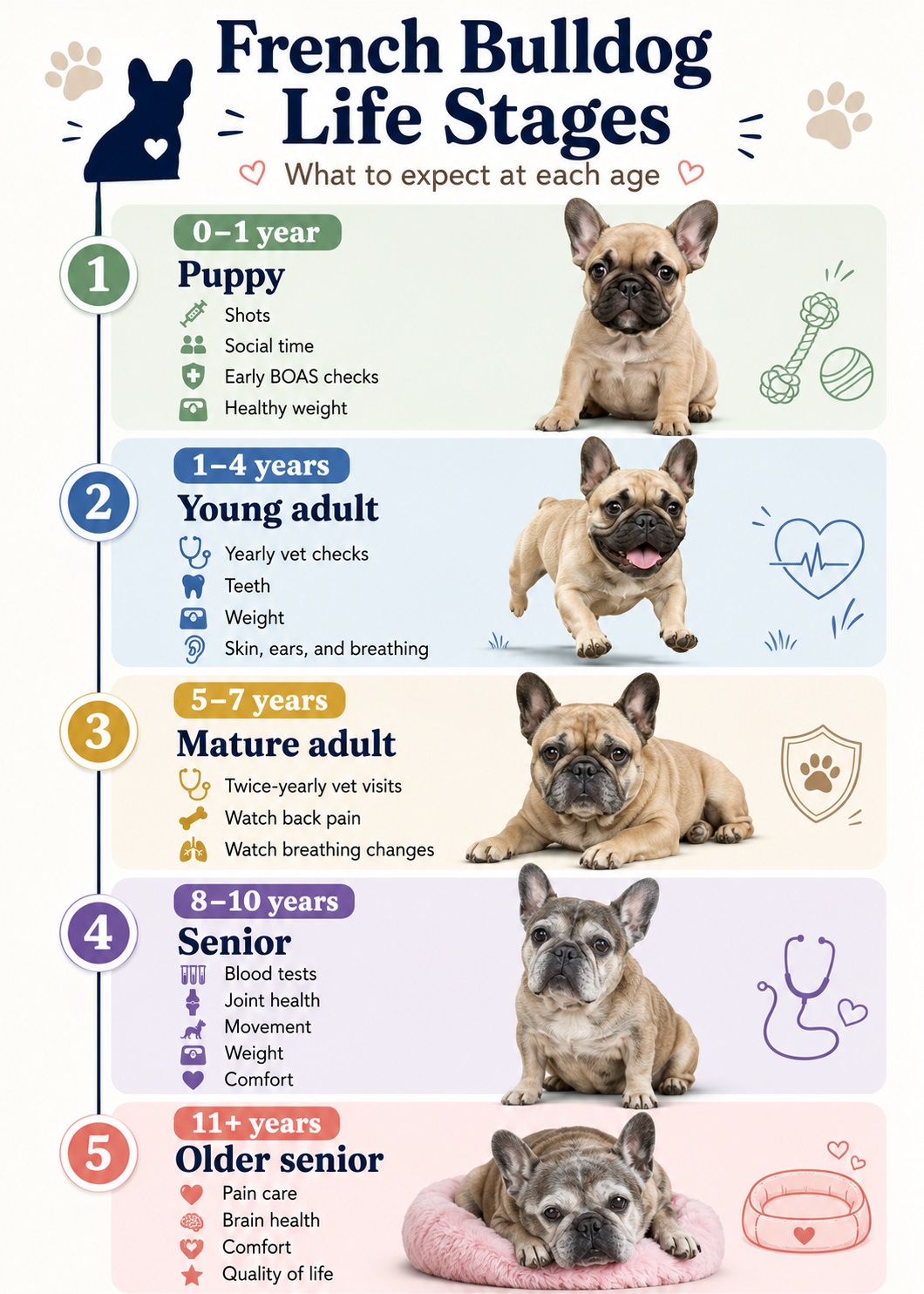
Life Stages: What to Expect at Each Age
| Age | Life Stage | What to Focus On |
| 0 to 1 year | Puppy | Shots, social time, early BOAS checks, and healthy weight |
| 1 to 4 years | Young adult | Yearly vet checks, teeth, weight, skin, ears, and breathing |
| 5 to 7 years | Mature adult | Twice-yearly vet visits, back pain, and breathing changes |
| 8 to 10 years | Senior | Blood tests, joint health, movement, weight, and comfort |
| 11+ years | Older senior | Pain care, brain health, comfort, and quality of life |
Neutering and Spaying
The best time to spay or neuter is not the same for every dog.
Early spay or neuter means before 12 months. Some studies link this timing to joint issues in some breeds.
Talk with your vet before you decide. The right time depends on your dog’s sex, health, size, and daily life.
Pet Insurance
Pet insurance is worth a close look for French Bulldogs.
Frenchies can have costly health needs. BOAS care, back surgery, allergy care, ear care, eye care, teeth cleaning, and heatstroke care can cost a lot.
Some bills can reach hundreds or thousands of dollars. Many Frenchies need more than one type of care in their life.
When you compare plans, check these points:
- Most plans do not cover old health issues. Sign up while your dog is young and well.
- Check wait times for bone, joint, and spine care.
- Read the list of things the plan will not cover.
- Look for rules about flat-faced breed claims.
- Keep an extra fund for deductibles and costs the plan does not pay.
- Ask your vet for a written cost estimate before planned care.
Travel and Flying
Flying can be risky for French Bulldogs.
Flat-faced dogs have a higher risk of heat and breathing trouble during travel. Air travel can make this risk worse.
Cargo holds are the most risky place for a Frenchie. You cannot watch your dog there. The dog may face stress, heat, cold, or poor air flow.
Some flat-faced dogs have died during flights. So plan with great care.
Before flying:
- Ask your vet for a travel check.
- Ask your vet to check your dog’s airway.
- Fly in the cabin only when allowed.
- Avoid flights in hot weather.
- Avoid long layovers.
- Do not sedate your Frenchie unless your vet tells you to.
- Bring water for ground travel.
- Use a cooling mat when needed.
Sedation can slow breathing. This can be unsafe for flat-faced dogs.
Frequently Asked Questions
How long do French Bulldogs usually live?
Most French Bulldogs live 10 to 12 years. A 2024 UK study found an average of 9.8 years.
Dogs with good genes, lean weight, and steady vet care often do better. Many reach the upper end of this range.
Can a French Bulldog live to 15?
Yes, but it is not common.
A Frenchie that reaches 15 often has good genes. It also stays lean and gets regular vet care.
Good teeth care also helps. So does avoiding major health crises.
One known Frenchie named Rocco was born in 2006. He lived to about 18 years old.
Do French Bulldogs live shorter lives than other small dogs?
Yes, in many cases.
Most small breeds live into their mid or late teens. French Bulldogs often average closer to 10 years.
The main reasons are BOAS, back disease, and other health problems linked to their body shape.
What most often shortens a French Bulldog’s life?
The biggest risks are severe BOAS, back disease, excess weight, heatstroke, poor breeding, and late vet care.
Nerve disease and cancer also appear in leading cause-of-death data.
How can I tell if my Frenchie is breathing well?
A Frenchie at rest should breathe with little noise.
Soft snoring is common. Loud snorting, gasping, and hard breathing are not normal.
Also watch for gagging or heavy breathing after light play. These signs need a vet check.
Is 8 years old old for a French Bulldog?
Yes. Age 8 is the start of the senior stage for this breed.
At this age, two vet visits per year are best. Watch breathing, movement, and weight more closely.
Are French Bulldogs healthy dogs overall?
French Bulldogs can be sweet and fun pets. But they are not low-care dogs.
Their body shape can cause real health needs. Owners should expect extra vet care and daily care.
How can I help my French Bulldog live longer?
Keep your Frenchie lean. Protect them from heat. Get vet care early.
Pay close attention to breathing changes, back pain, and skin problems. Stay up to date on health checks.
Choose a breeder who puts health first. Avoid dogs bred for extreme flat faces.
These steps matter more than most supplements or diet trends.