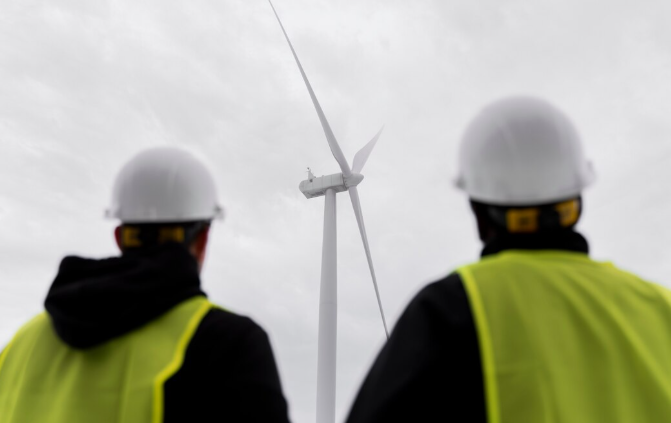

The energy press received the letter by Tuesday morning after it was sent out on a Monday. Golden State Wind was served with an administrative subpoena by California’s Energy Commission and the state’s Department of Justice, which demanded all correspondence between the business and the Department of the Interior. In exchange for a check, the state wants to know how a wind project that was meant to help power its central coast got shelved.
The way this deal was set up has an almost theatrical quality. Golden State Wind, an offshore floating project off the coast of Morro Bay, did more than simply surrender its lease. It agreed to a payout in exchange for walking away, but there was a catch: the funds had to be reinvested in fossil fuels. That still sounds weird after reading it twice. Through a renewable energy lease, taxpayer funds were diverted into oil and gas. In his letter, Drew Bohan, the executive director of the CEC, used the term “premature relinquishment,” which is a type of bureaucratic wording that often obscures genuine rage.
| Project / Key Facts | Details |
|---|---|
| Project Name | Golden State Wind (floating offshore wind) |
| Proposed Location | Off California’s central coast, near Morro Bay |
| Co-Owners | EDP Renewables and Engie (via joint venture Ocean Winds) |
| Lease Year | 2022, under the Biden administration |
| Federal Payout | Approximately $120 million to abandon the lease |
| Total Federal Spending on Wind Buyouts | Nearly $2 billion across three deals |
| Investigating Agency | California Energy Commission (CEC) |
| CEC Chair | David Hochschild |
| Action Taken | Administrative investigative subpoena, May 4, 2026 |
| Other Affected Project | Bluepoint Wind (off New Jersey and New York coasts) |
| Earlier Buyout | TotalEnergies, $1 billion refund for North Carolina and New York leases |
| Condition of Buyouts | Companies must reinvest funds in fossil fuel projects |
The anger is explained by the numbers. Three agreements totaling almost $2 billion were announced in about two months. In essence, TotalEnergies received a refund on its East Coast leases when it received the first billion in March. The announcement about Golden State and Bluepoint Wind, which are both connected to Ocean Winds, a joint venture between Portugal’s EDP and France’s Engie, followed in late April. The sum of those two transactions was slightly less than $900 million. You can’t miss the pattern.
The companies bid on leases in 2022 for a product that only worked with significant subsidies, according to Interior Secretary Doug Burgum, who has presented the entire situation as a correction. On paper, the argument is convincing. It’s also a dramatic change from a federal government that was marketing those same leases as the future of American energy just a few years ago. Even those who closely follow this content find it confusing to watch the messaging change so quickly.
There is a backstory that should be remembered. President Trump attempted to use executive action to stop offshore wind earlier in his second term, but federal courts wouldn’t have it. The buyout approach appears to be a workaround. Pay the developers to halt the projects on their own if you are unable to stop them by decree. It’s cunning in a way that probably unnerves lawyers, which is probably why California is investigating.
Hochschild’s remarks did not soften the wording. It’s reckless, he said. He discussed how backroom agreements could reverse time. In its letter, the CEC indicated that litigation is expected, which is a courteous way of indicating that a lawsuit is being prepared. When asked about possible legal action, Ocean Winds declined to comment. That is typical, but it gives you an idea of the direction this is going.
But it’s not just the money that makes the California investigation significant. It’s the idea that no one publicly expresses. Contracts are federal lease agreements. The ramifications go far beyond wind if the federal government can unwind them by paying counterparties to leave and imposing conditions on what those counterparties have to do with the money. The courts may consider this to be standard deal-making. They might also decide not to. Lawyers are currently reading email threads in a CEC office and waiting to see what comes up.