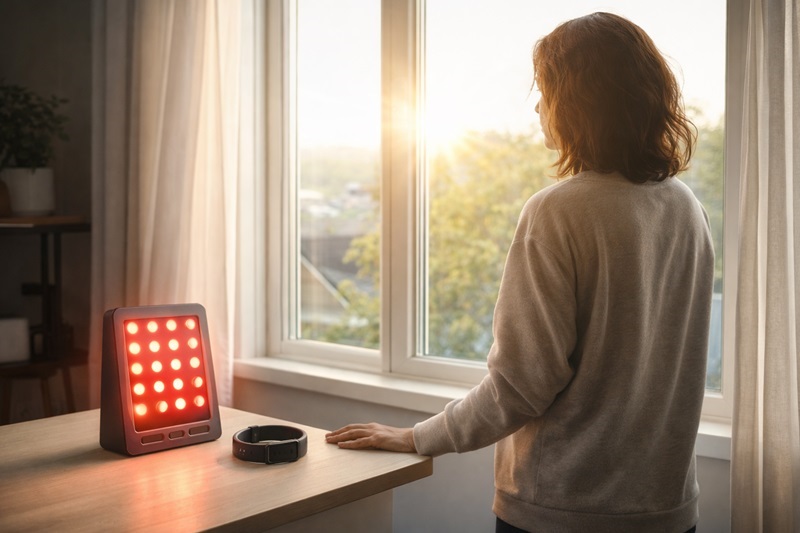

Light has finally made the leap from the fringes of the wellness world and into the mainstream health conversation. And while that shift is real, it’s also a reminder that we need some clear boundaries in place.
Over the last decade or so, researchers have been dug deep into how light affects everything from your circadian rhythms to your sleep patterns, mood, wound healing, pain and even cellular signaling. Meanwhile, home devices have become more and more popular – people are snapping up lamps, masks and red-light panels for everything from better sleep to improved skin to enhanced recovery – the focus can be anything from general wellness. And with that growth, the market is expanding fast. The Global Wellness Institute has been keeping tabs on this, and according to them the global wellness economy has reached a staggering $6.8 trillion and is on track to hit $9.8 trillion by 2029.
What is light-based wellness technology?
Light-based wellness technology is an umbrella term for devices and practices that use light exposure to support goals such as sleep timing, mood, skin health, recovery, and general wellbeing. It includes circadian-light strategies, bright-light therapy, and red or near-infrared photobiomodulation, but the evidence varies widely by use case, device, and protocol.
But here’s the thing – light-based wellness isn’t just one thing — it’s broken down into at least four distinct areas now. There’s the simple stuff: daylight exposure to help regulate your circadian rhythms. Then there are the more intense bright light tools designed to tackle sleep and mood issues. There’s also photobiomodulation, which usually involves using red or near-infrared light in a specific way — and then there’s the wider consumer market where devices often make claims that simply aren’t supported by the evidence.
That divide matters – the future of this space is not going to be decided by the biggest company or the most fancy branding. It’s going to be decided by people who can deliver better dosing, better targeting, cleaner evidence and tighter standards.
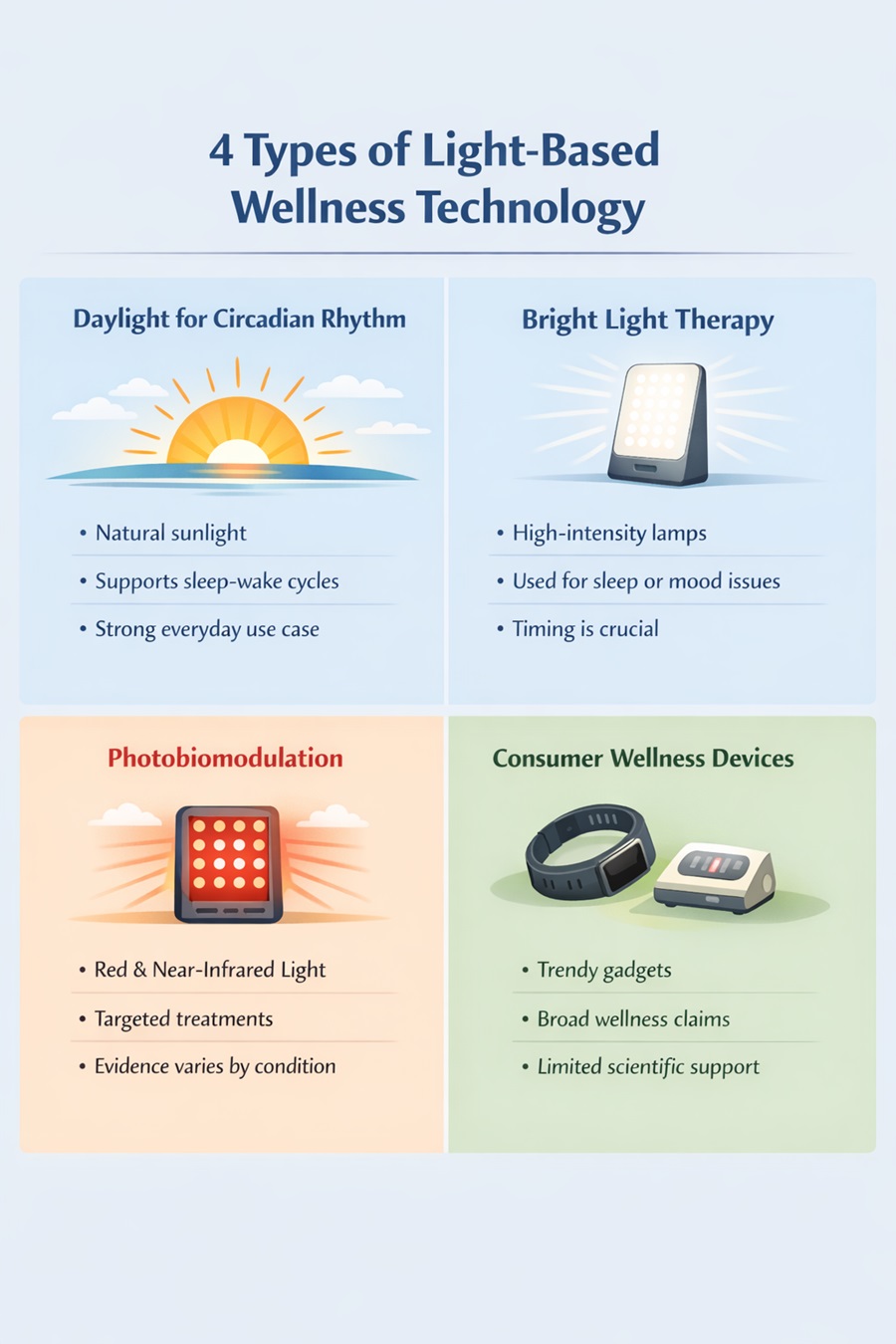
We’re seeing some clear divisions emerging in this field
The part of the story that’s most firmly established is circadian biology — that’s the way our bodies work out our sleep-wake cycles, and light is one of the main signals that helps our internal clock get its act together. Getting some morning light helps our day start off on the right foot. Getting too much bright light at night can just push our sleep back and disrupt all the normal melatonin-related processes that keep us going. Current reviews keep coming back to one key point: light timing matters just as much as light brightness.
Next up is photobiomodulation which, despite the fancy name, usually involves using red or near-infrared light in a set way — and research suggests that this stuff can really have an impact on mitochondrial signaling and cellular energy production. A big umbrella review that came out in 2025 found some benefits across various areas, but it also pointed out a major problem: the studies were all over the place in terms of quality, treatment settings and reporting. That leaves us with a signal – but we can’t use it to just make any old claim we want.
The part of the market that’s the weakest link is the wider wellness category that’s built around vague language — terms like frequency balancing, coherent fields and generalized energy support might sound fancy, but they just don’t have the same scientific heft as the more established areas of circadian-light science or the better-studied photobiomodulation work. Systems such as The Light System sit within this broader emerging category, where interest is growing but the evidence base is still developing. That line needs to stay clear – without it, what might start off as a genuine health report starts to sound an awful lot like a sales pitch.
The next phase isn’t about more gizmos, its about smarter rules
The first consumer phase went all about buying stuff – you know, a lamp here, a mask there, a red light panel to go with it.
But that’s coming to an end.
The harder, more meaty question is this: what, when, for what, in who?
Thats where the science is headed – and its where the regulators are taking a close look too. The FDA just put out some draft guidance for photobiomodulation devices, and its all about non-clinical trials, proper clinical studies and labelling. In plain English, the regulators are saying : give us real device data, not some pretty pictures and buzzwords.
That changes the game entirely. Four things have to fall into place: wavelength, dose, timing and what you’re trying to achieve.
A morning light thing to help your body clock is not the same as a red or near-infrared treatment to help your body recover from a workout. And a fancy LED mask for your skin is totally different to a medical grade PBM device used under a doc’s supervision. Over time, the field will get stronger as people stop lumping all these different things together in the same category.
Personalisation will come from tracking your sleep patterns, not some vague wellness mumbo jumbo
One of the next big steps is going to be personalisation, but not in the hippie biohacking sense of the word.
Wearable tech and remote monitoring are becoming more and more popular – people want to track their sleep, rest patterns, circadian rhythms and so on. That creates a really useful application for light – a smart device can use that info to tell you when to use it, rather than just guessing.
That kind of personalisation is the kind of thing people are already used to seeing in other categories – fitness platforms that give you a recovery score, sleep apps that track your habits and timing, that sort of thing. Light-based tools are moving in the same direction – timed morning light to help with your circadian rhythm, stronger evening light control, and more standardised PBM sessions that are actually linked to a specific goal.
Clinical use will grow where the protocol is crystal clear
But lets not get ahead of ourselves – light-based care is not going to become the standard treatment at every hospital next week.
Still, some areas are already looking pretty solid – like photobiomodulation for oral mucositis in cancer care. The MASCC/ISOO guidance supports using it in specific situations, and that shows what progress looks like when you’ve got a clear idea of what a device is for, how to use it and what its supposed to do.
Thats the real pattern to watch – the companies and clinical teams that move forward will be the ones that can actually show you the plan, not the ones making the most outlandish claims.
Consumers Are Asking Better Questions – And That’s A Good Thing
The first wave of wellness tech would often leap ahead of the evidence , and now light-based products are up against a more discerning buyer. That’s a pressure that can only serve to make things better. These days people want to know the nitty-gritty – what this thing actually does, what kind of results it’s supposed to deliver, how long you’re supposed to use it, and what dose is being delivered. They want to know if it’s a wellness gadget or something that actually has medical backing.
Those aren’t annoying questions – they’re the right ones for a market that’s moving on up.
A 2025 review on PBM found that there was some promise, but also some major inconsistencies with wavelengths, treatment settings and study design. That’s exactly why having dosing standards and clear reporting is so important. The future of this category won’t be won by creating some sort of atmosphere, but by whether brands can explain what they’re doing with some precision.
The Safety of this Category is About to Get a Lot More Serious
Light interventions are often sold as super gentle and noninvasive – which doesn’t mean they’re risk free or suitable for everyone in every situation . The National Centre for Complimentary and Integrative Health notes that in some cases light therapy can cause headaches, blurred vision, and even mania in people with bipolar disorder. Therapeutic use also needs to steer clear of UV exposure unless there’s a good reason for it.
That’s why education is so key. More doesn’t always equal better. Timing , dose and intended use all matter. Some people also need medical guidance before using certain light interventions, especially if you’ve already got mood disorders, eye issues or other health concerns going on.
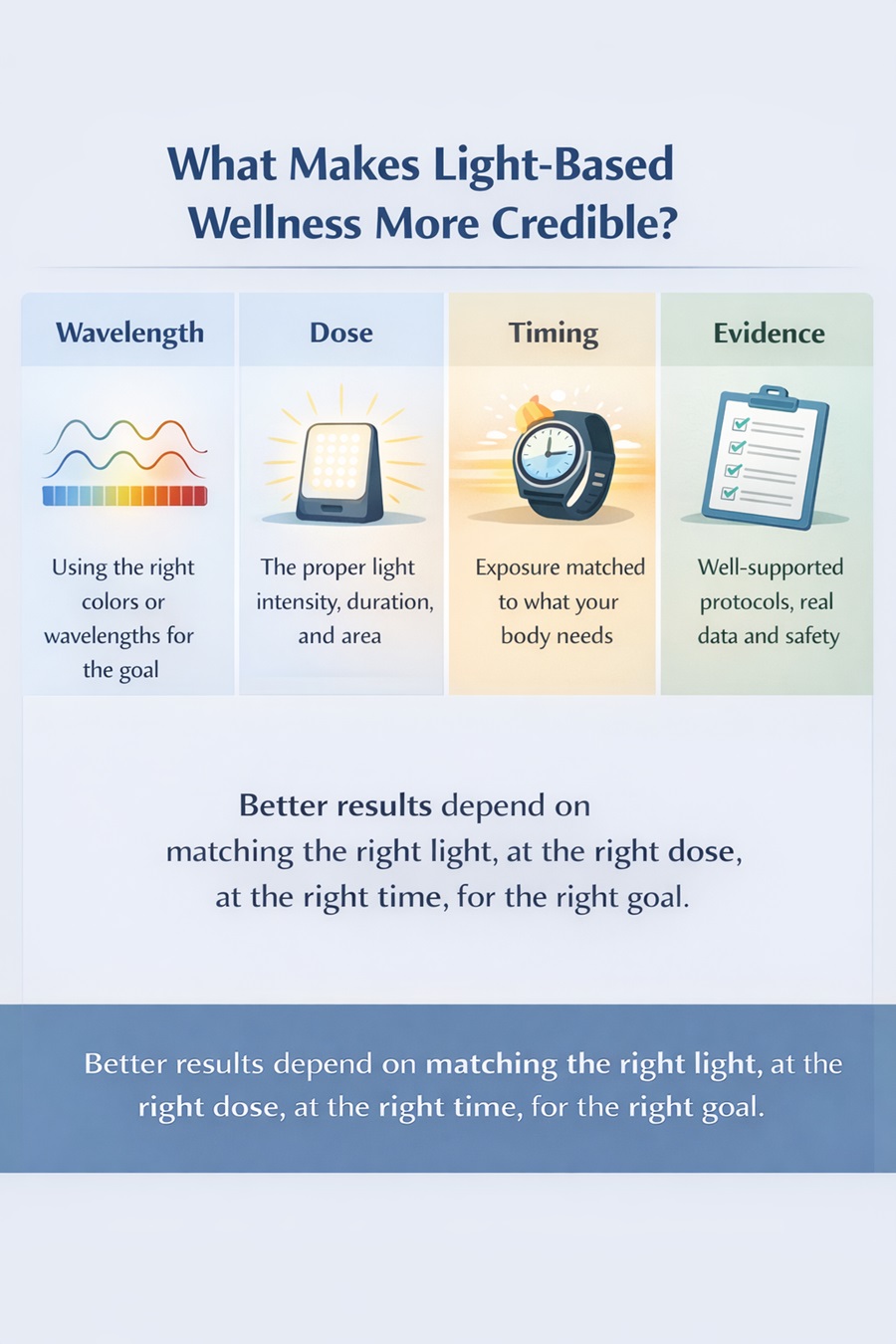
What the next few years will likely bring
The near-future of light-based wellness technology isn’t as flashy as the marketing makes out, but actually holds a lot of practical potential.
We can expect to see better circadian health tools that focus on timing not just brightness, and more products that link up with sleep data from wearables. And we’ll likely see a lot more pressure on PBM devices to clearly state what their wavelength, irradiance, duration, and treatment schedule are, so people can actually start comparing them. Expect labelling and regulations to start really mattering, and to see a stronger divide between evidence-based uses of light therapy and just vague ‘lifestyle branding’.
Don’t expect every red light or frequency-based product to suddenly become a mainstream medical tool. We’re still trying to figure out where the evidence is solid, where it’s promising but still a bit early days, and where people are still just making claims that don’t match up to the data.
What still holds real value right now
People don’t need some fancy wall-mounted panel to use light more intelligently – a really simple and supported step is just to get some sunlight as soon as you wake up, and then reduce how much intense light you’re exposed to late at night. Just track your sleep and energy for a few weeks and see if you can pick up any patterns – and if you do use some sort of light-based device, just think of it as a tool to help with one specific thing, rather than a magic bullet. Also do your research on what that device is actually designed to achieve, and be wary of big claims that don’t mention a specific protocol, trial, or regulatory status.
The bottom line
The future of light-based wellness technology isn’t all about one trendy thing or one big category.
It’s really the place where circadian science, device design, wearable tech, and stricter evidence standards all meet. The most credible part of the field is actually moving in the direction of more precision, better timing, better dosing, clearer outcome tracking, and a clearer divide between real therapy and just marketing noise.
Which, to be honest, is actually good news. It means the most promising future for light-based wellness will be a lot less about hype and a lot more about actually showing proof.