

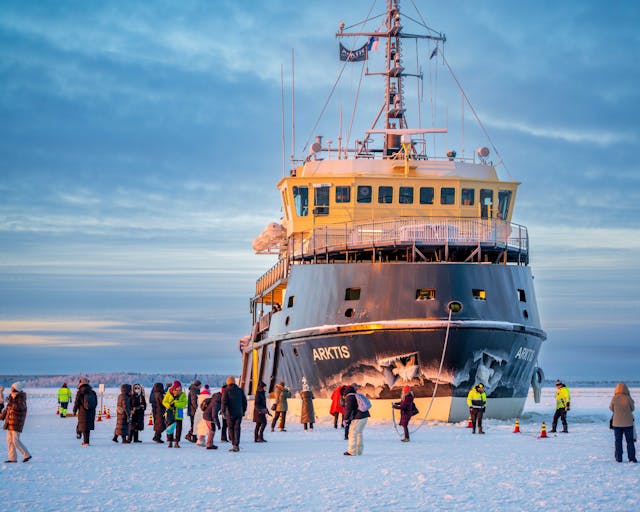

The arctic used to be a dusty relic you’d find on a classroom map. But that’s changed – its warming at a pace that’s actually faster than any other part of the world, with coastlines, ecosystems and communities being rewritten in real-time. At the same time, there’s been a big surge in people wanting to travel the arctic for themselves. What started out as a rare scientific adventure has turned into a hot destination for the adventurous – think polar bears, calving glaciers and complete silence.
That’s the main problem with arctic tourism in 2026 – a huge increase in visitors on top of the massive environmental changes taking place. No, the question isn’t whether people are going to head north. The question is : can they do it in a way that causes as little damage as possible and actually does some good for the planet and the communities that live there?
The Arctic is warming at Twice the Global Rate
So, the polar regions are warming at more than double the pace of the whole rest of the world says data from the Arctic council and the Intergovernmental Panel on Climate Change. Meanwhile sea ice has taken a huge hit over the last few decades, messing with the migration routes for marine mammals and basically taking away the hunting grounds for polar bears.
Sea ice does more than just freeze the polar regions of course. It acts as home and hunting ground for polar bears and a bit of a regulator for the climate. When we sail through those ice free waters, we’re entering an ecosystem that’s already under a whole lot of stress – even if we’re doing our best to manage it all properly.
The Rise of Arctic Expedition Travel
Arctic tourism is still a tiny fraction of the mainstream cruise industry but the number of small ship expedition cruises has really taken off over the last decade. These are seasonal voyages to places like Svalbard, Greenland, Arctic Canada and certain parts of the Russian arctic when its just about safe to go.
A lot of people are finding that the best way to do this is a private cruise to Arctic waters on tiny, specialized boats. Why? Because they’re not just floating hotels. They’re schools on water. By keeping the group small, you aren’t stomping all over the tundra. It allows for those quiet, respectful moments that actually mean something. Sometimes, less really is more, you know?
These expeditions normally carry between 100 and 250 passengers which is – of course – said to be a good thing from an environmental perspective as it means there are fewer people onshore at once, controlled landing sites and then there’s the guided wildlife viewing with proper distance protocols. However, as the numbers are going up, people have started to get a bit worried:
- More boats in the sensitive areas
- Black carbon that just makes the ice melt faster
- All that underwater noise disturbing the whales and seals
- The biosecurity risks from alien species
We can’t just ignore all this. Responsible arctic tourism has to be up for the challenge of dealing with these risks head on, rather than just giving it all a good marketing spin.
Regulation in Polar Waters: The Polar Code & Industry Standards
International maritime activity in the polar regions gets governed by the International Maritime Organization through the Polar Code, a set of rules which lays down mandatory safety & environmental standards for ships going through the Arctic & Antarctic waters. The code looks at:
- ship design, and gets into the specifics of ice classification
- training requirements for the crew
- preventing pollution
- making sure search & rescue teams know what they’re doing
But beyond what the government makes you do, there are also voluntary guidelines set by industry groups like the Association of Arctic Expedition Cruise Operators. AECO members agree to:
- keep a safe distance from wildlife
- make sure landing sites are coordinated so you don’t end up with 20 ships all unloading at the same time
- do your best to reduce waste
- make sure you’re not bringing invasive species to the party
These standards arent meant to eliminate the impact of expedition cruises, but they do provide some rules to follow.
The Ecological Risks of Expedition Cruises
- Black Carbon and Ice Melt
Using heavy fuel for cruising creates black carbon particles that can land on the snow and ice, making them darker and speeding up the melting. Cleaner fuel and better emissions controls are becoming more & more important for doing things in a responsible way.
- Marine Noise Pollution
Whales and other sea creatures rely on being able to hear each other, but the noise from ships can really interfere with their ability to feed, migrate and have babies. Some operators are now changing their speed & route to try and keep the noise down.
- Wildlife Disturbance
Even the most careful & well-meaning expedition cruise can cause a disturbance, especially when it comes to polar bears. You’ll see guides on some ships trained in how to deal with these situations & keep everyone safe
- Biosecurity
When you’re heading to shore, you don’t want to introduce any invasive species by accident – they can come from seeds or microscopic organisms that get stuck on your clothes or equipment. Some of the more responsible operators will make sure you don’t bring any unwanted guests along.
Indigenous Communities: Tourism with Consent & Partnership
Over 4 million people call the Arctic home, and they’re a mix of many different Indigenous groups who’ve been living in these harsh environments for thousands of years. They’ve learned how to live in tune with nature because of their deep understanding of the land and sea.
Tourism in the Arctic is starting to go in a more responsible direction, with a focus on:
- making sure the local communities are on board with what’s going on
- getting local guides involved so they can share their knowledge
- respecting the local culture so you’re not disrespecting their heritage
- keeping the money in the community for a change
Tourism that ignores these local communities & their rules can feel like they’re just treating the place like a commodity. But when they’re in charge of it themselves, it can actually help them build up their economy & keep their knowledge systems alive.
Citizen Science and Expedition Research
Lots of expedition vessels team up with scientific institutions. On board researchers might collect data like:
- Water temps and the salinity of the water
- Microplastic samples (because where else are we going to get those kind of samples?)
- Records of when and where passengers see marine mammals
- Notes on seabird populations
Sometimes passengers get to join in on data collection – like counting the number of seagulls – under the guidance of a real researcher. When done right, these programs can contribute to long-term research projects used in Arctic monitoring.
It’s worth noting that efforts like this don’t offset emissions, they just show that there’s a growing recognition that tourism and science don’t have to be separate things. It used to be that they were kind of at odds, but now we’re starting to see them work together.
How Travelers Can Find a Responsible Arctic Operator
Travelers have a lot of power in shaping the demand for these kinds of trips. Before you book, take a closer look at the operator:
- Are they on the ball with regulations?
Does the operator follow the Polar Code and whatever local rules apply? - Are they part of the community?
Are they a member of a legit organization like AECO? - How transparent are they about their environmental impact?
Do they tell you what kind of fuel they’re using? Do they have a plan to reduce their emissions? - Are they working with the local guides?
Do the guides who show you around the Arctic live there – or are they just imported from somewhere else? - How many people go ashore at once?
Is it a bunch of people or just a few? - Who are they working with?
Are they teaming up with any research institutions?
If they’re transparent about what they’re doing, it’s a good sign. If they’re just making vague claims about being green without actually doing anything, that’s probably just greenwashing.
The Climate Tourism Paradox
Here’s the thing: people want to go to the Arctic to see these incredible landscapes that are being changed by climate change, but getting there is contributing to that climate change. It’s this weird paradox.
There is no easy answer to this one. Some people think that having people go to the Arctic in person will get them all fired up to do something about the environment – but others worry that having all these tourists is basically just accelerating the damage.
There is a new way of thinking about this, though: the idea of “regenerative” tourism – which is more than just “we’re not going to make things worse”. It’s actually being measured in a way that shows you’re actually making a positive impact, like:
- Giving money to conservation research
- Working with people from the Arctic on projects they’ve come up with
- Just being more efficient in terms of how much fuel you’re using
But even with all of this, it’s still unclear whether tourism can actually be regenerative.
Preparing for Low-Impact Polar Travel
So, how can you make your trip to the Arctic as low-impact as possible?
- Maybe choose to go on a longer trip rather than a bunch of short ones
- Just don’t use all those single-use plastics, okay?
- Follow the rules when it comes to wildlife – like don’t go chasing after polar bears
- Support local businesses rather than just big international companies
- Consider offsetting your emissions with a verified carbon program
And, of course, before you even think about going to the Arctic, you’ve got to be prepared for just how unpredictable it can be – the weather, the medical stuff, the fact that the sea ice is melting all the time.
The first step in responsible travel is actually understanding what you’re getting yourself into.
The Future of Arctic Expeditions
The Arctic is not just some kind of theme park – it’s a real place, with real people living there, in the middle of a lot of change. If expedition tourism is done right (i.e. with rules and regulations and not just trying to make a quick buck), it can:
- Actually produce some useful science
- Help the local economy
- Get people all over the world thinking about climate change
But it can also just make things worse if growth goes unchecked. And the future of the Arctic is just going to depend on a few key things:
- Governments, enforcing the rules
- Tour operators being transparent about what they’re doing
- Travelers making informed choices