

The first time I saw stringy bits floating in my apple cider vinegar, I almost threw it away. It looked strange. The bottle had sat in my pantry for over a year. I wondered if it was still safe. I even worried I had been drinking spoiled vinegar.
You’re not alone. Many people buy large bottles of raw apple cider vinegar during a health kick. Months later, they find the bottle again. This time, the vinegar looks cloudy and unfamiliar.
So let’s clear this up. What is really happening inside that cloudy bottle? And when should you actually worry?
What Is “The Mother”?
That cloudy, web-like stuff in raw apple cider vinegar is called “the mother.” The name sounds scary, but it’s harmless.
The mother is made of helpful bacteria, enzymes, and proteins. It forms during fermentation.
Here’s the simple version. Apple juice turns into alcohol. That alcohol then turns into vinegar. The mother is what’s left from this natural process. It’s similar to a sourdough starter.
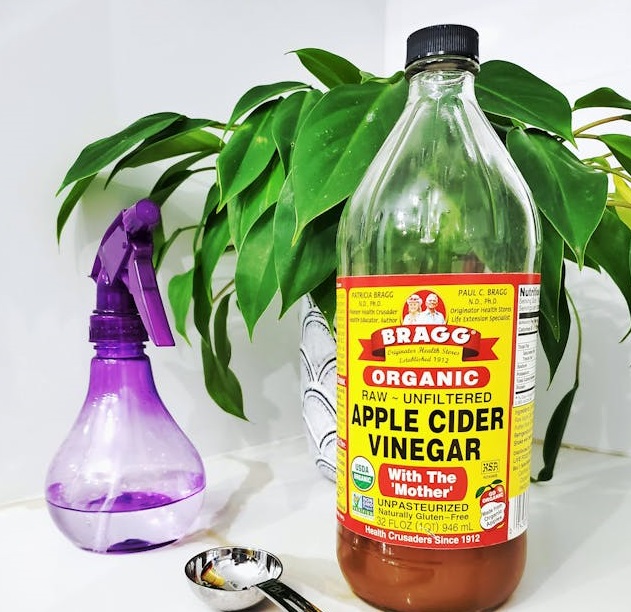
You only see the mother in raw, unfiltered apple cider vinegar. Clear vinegar has been filtered and heated. That process removes the mother. This is why brands like Bragg’s label their bottles “with the mother.” Many people prefer it.
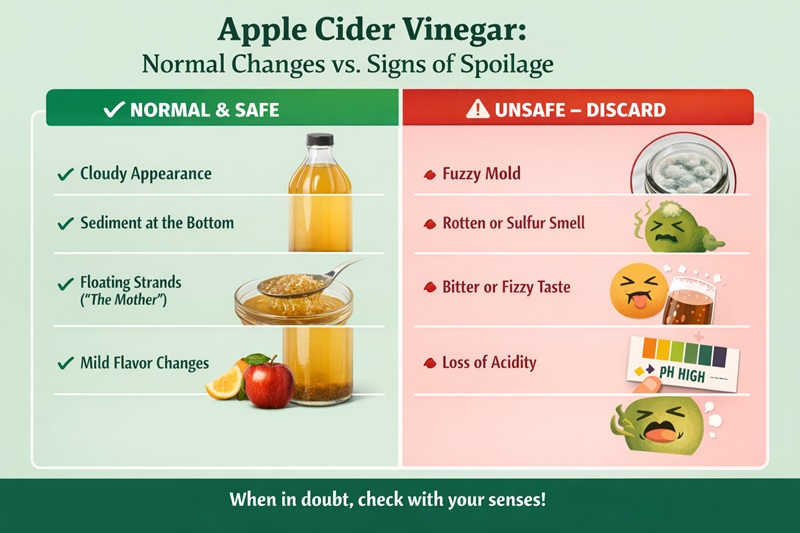
The mother is not mold. It may look odd, but it’s normal. Over time, it can float, clump together, or sink to the bottom. All of this is safe and expected.
Why Does My Vinegar Look So… Weird?
If you’ve got an older bottle, you might notice:
- The whole thing looks cloudy or murky
- Brown or beige gunk has settled at the bottom
- Stringy, jelly-like strands are floating around
- Little particles are suspended throughout
This happens because the mother keeps doing its thing even after bottling. Shake the bottle and everything redistributes—which is why your vinegar might look clear one day and swampy the next.
None of this means your vinegar has gone bad. It’s just alive in the way fermented foods tend to be.
Does Apple Cider Vinegar Actually Expire?
Here’s the good news: not really.
Apple cider vinegar is very acidic. Its pH is about 2 to 3. That level of acid makes it hard for harmful bacteria to survive. In simple terms, most germs can’t grow in it. This makes vinegar one of the most shelf-stable foods in your kitchen.
Over time, vinegar can change. These changes affect quality, not safety.
You may notice:
- The flavor becomes milder or a bit sharper
- The smell changes slightly
- More cloudiness or sediment appears, especially in raw vinegar
These signs do not mean the vinegar is bad. It just means it’s older.
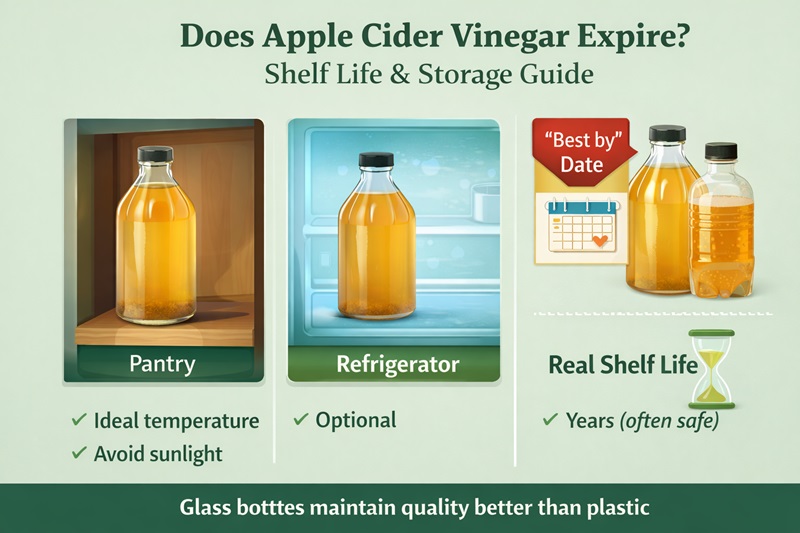
Even bottles far past the “best by” date are usually safe. That date marks peak taste, not expiration.
How to Tell If It’s Actually Bad
True spoilage is rare, but it can happen.
Throw the vinegar away if you see:
- Fuzzy mold on the surface (blue, green, or black)
- A rotten or sulfur smell
- Bubbling or pressure when opening the bottle
- No sharp vinegar smell at all
If it still smells like vinegar, it’s almost always safe to use.
What Should Apple Cider Vinegar Taste Like?
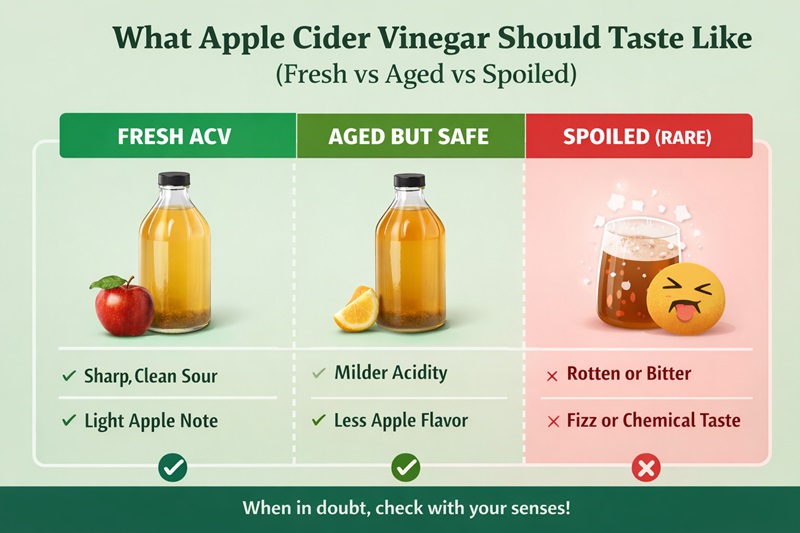
Good apple cider vinegar tastes sharply sour. It may have a light apple note. The sour taste should hit right away.
Raw vinegar can taste more earthy or fermented. That is normal. When mixed with water, it should taste tart but not bitter or flat.
Normal taste changes with age:
- Slightly weaker sour taste
- Less apple flavor
- A smoother finish
- Still clearly acidic
Do not drink it if it tastes:
- Rotten or sulfur-like
- Bitter instead of cleanly sour
- Fizzy
- Flat with no bite
- Metallic or chemical
If the taste seems wrong, trust your instincts.
Important: never taste vinegar that smells bad or shows mold. Throw it out.
Does the Mother Lose Its Benefits Over Time?
The main active part of vinegar is acetic acid. This stays stable for years. It gives vinegar most of its possible health effects.
The bacteria in the mother may change over time. Still, vinegar is not a strong source of probiotics. Foods like yogurt or kimchi offer far more.
An old bottle still works. It may just taste different.
A Note About Drinking Apple Cider Vinegar
If you drink apple cider vinegar daily, always dilute it.
Pure vinegar can damage tooth enamel. It can also irritate your throat and stomach.
Mix one or two tablespoons into a full glass of water. If you have reflux, ulcers, or kidney issues, talk to a doctor first.
Natural does not always mean harmless.
Does the Bottle Type Matter?
Short answer: glass is best, but plastic is usually safe.
Glass does not react with acid. It protects flavor and works well for long storage.
Food-grade plastic is safe, but it can absorb smells over time. Heat makes this worse.
If a large plastic jug sat in a hot place, the taste may suffer. The vinegar is still safe, but it may not taste as good.
How to Store Apple Cider Vinegar Properly
Apple cider vinegar is easy to store. It does not need special care.
To keep the best quality:
- Store it in a cool, dark place
- Keep the lid closed tight
- Keep it away from heat and sunlight
- Use glass bottles when possible
- Food-grade plastic is also fine
You do not need to refrigerate it. Some people do, and that is okay. Cold storage does not make it safer. It may only slow the activity of the mother.
When Should You Throw It Out?
Most people throw away apple cider vinegar too soon. It lasts a very long time.
Replace it if:
- It smells rotten, not just strong
- You see mold growing on the surface
- The taste is unpleasant, not just weaker
- It tastes flat and has no acidity
If none of these signs appear, it is likely still safe.
A cloudy bottle with sediment is normal. Give it a shake and keep using it.
The Bottom Line
If your apple cider vinegar looks strange but smells like vinegar, it is almost always safe. If it still tastes sour, even mildly, it is fine to use.
The mother is meant to look odd. That is the point of unfiltered vinegar.
Many people use bottles years past the best-by date with no problems. The taste may soften, but it still works well for cooking and cleaning.
Trust your senses. If it smells rotten or tastes truly bad, throw it away. If it only looks unusual, it is probably fine.
Fermented foods often look strange. That does not mean they are spoiled.