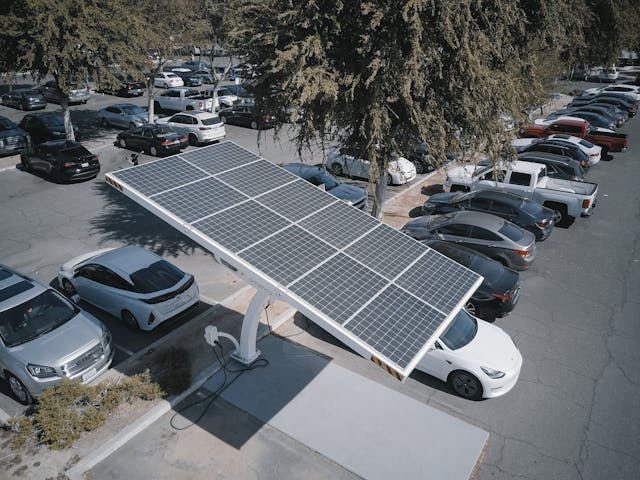

The UK’s commitment to reaching Net Zero carbon emissions has become one of the defining policy ambitions of the decade. It is shaping decisions across government, industry and everyday life, from how energy is generated to how people travel. Transport, in particular, sits firmly in the spotlight. Central to the government’s strategy is a decisive shift away from petrol and diesel vehicles towards electric alternatives.
Electric vehicles (EVs) produce no tailpipe emissions and offer a clear route to cutting carbon from one of the country’s most polluting sectors. But while their importance to the Net Zero agenda is widely accepted, the reality of delivering meaningful change by 2030 is more complex. Progress depends not just on vehicle sales, but on infrastructure, electricity supply and long-term planning that goes well beyond the cars themselves.
Transport’s contribution to UK emissions
Transport remains the single largest source of greenhouse gas emissions in the UK. In 2023, it accounted for around 29% of total emissions, with cars and taxis responsible for more than half of that figure. For any Net Zero pathway to be credible, emissions from personal transport must fall sharply.
Electric vehicles offer a clear break from traditional internal combustion engine vehicles by removing exhaust emissions entirely. Yet cutting emissions at a national level is not as simple as replacing one type of vehicle with another. The impact of EVs is tied to a wider system – how electricity is generated, how vehicles are charged and how well the supporting infrastructure keeps pace with demand.
Policy Framework: Targets and Mandates
To speed up the shift to cleaner transport, the UK government has set clear rules. These rules aim to move the country toward zero-emission vehicles.
By law, 80% of new cars and 70% of new vans sold in Great Britain must be zero-emission by 2030. This rises to 100% by 2035.
These targets give long-term clarity to car makers and investors. They encourage steady progress in electric vehicle technology. For drivers, the message is clear. The future of driving is electric, not optional.
Even so, electric vehicles still make up a small share of cars on UK roads. By mid-2024, only about 3% of cars were fully electric. Hybrid vehicles are more common, but many still use fossil fuels.
This gap between policy goals and real use shows how much change is still needed.
The Environmental Case for Electric Vehicles
From an environmental view, electric vehicles offer clear benefits.
Cars and taxis produce more than half of all transport emissions. This makes them a key target for cutting pollution.
When measured over their full lifespan, electric vehicles create far fewer emissions than petrol or diesel cars. This remains true even after counting emissions from making the car and the battery.
As the UK power grid adds more renewable energy, the impact of charging electric vehicles keeps falling.
This means electric vehicles improve over time. Their environmental benefit grows, helping the UK meet long-term climate goals.
Infrastructure: a critical enabler
One of the most significant challenges facing EV adoption is the availability of reliable, accessible charging infrastructure. Without confidence that charging is convenient and dependable, many drivers are reluctant to move away from conventional vehicles.
This issue is particularly acute for people without access to private driveways or off-street parking. Public charging provision must therefore expand not only in number, but in reliability, speed and geographic coverage. The role of a competent ev charging company becomes increasingly important here, ensuring charging installations are safe, compliant and capable of supporting rising demand.
The growth of EVs also places new demands on the electricity network. Transport electrification is expected to add substantial new electricity demand over the coming decades. While this increase is manageable, it requires forward planning, investment and careful management at both national and local levels.
Smart charging solutions are likely to play a key role. Charging vehicles overnight or during periods of lower demand can reduce pressure on the grid and make better use of low-carbon electricity. Over time, electric vehicles could even support grid stability by responding dynamically to changes in supply and demand.
Barriers to widespread adoption
Despite strong policy support and clear environmental benefits, several barriers continue to slow the uptake of electric vehicles.
Upfront cost remains one of the most visible challenges. Although prices are gradually falling and the second-hand market is developing, many electric vehicles still carry a higher purchase price than petrol or diesel equivalents.
Charging accessibility is another major concern. Drivers in rented accommodation or high-density urban areas often face limited charging options, which can make EV ownership less practical.
There is also an element of consumer scepticism. Concerns around driving range, battery lifespan and long-term reliability persist, even as technology improves and real-world evidence grows. Addressing these perceptions is as important as addressing technical barriers.
Overcoming these challenges will require coordinated action across policy, infrastructure planning and public communication, ensuring that electric vehicles are a realistic option for a broad cross-section of society.
Beyond personal cars: broader applications
While private cars dominate much of the public discussion, electrification is extending well beyond personal transport. Commercial fleets, buses and heavy goods vehicles are increasingly adopting electric powertrains, particularly in urban and regional operations.
These developments are significant. Fleet vehicles tend to cover higher mileages than private cars, meaning electrification can deliver outsized emissions reductions. They also demonstrate that electric vehicle technology is capable of supporting a wide range of transport needs, not just everyday commuting.
The 2030 Net Zero context
Although the UK’s legally binding Net Zero target is set for 2050, the years leading up to 2030 are critical. Decisions made during this period will shape infrastructure investment, consumer behaviour and emissions trajectories for decades to come.
Accelerating the adoption of electric vehicles offers one of the fastest ways to reduce carbon emissions from transport. However, success will depend on more than sales targets alone. Grid capacity, charging reliability, safety and affordability must all develop at pace if EVs are to deliver their full environmental potential.
Conclusion
Electric vehicles are a cornerstone of the UK’s strategy to decarbonise transport and move towards Net Zero. Their ability to eliminate tailpipe emissions, combined with a steadily decarbonising electricity grid, positions them as a key part of the climate transition.
Yet their success is not guaranteed. Delivering meaningful change will require sustained investment in infrastructure, resilient electrical systems and policies that tackle cost and accessibility head-on. The coming decade will be decisive. How effectively the UK builds the foundations for electric transport will determine not only progress towards 2030 goals, but the long-term sustainability of the transport system itself.