

Pizza boxes do far more than hold food. The right box protects heat, prevents toppings from sticking to the lid, keeps crusts intact, and improves delivery efficiency.
Most pizza boxes follow predictable size patterns. For example, an 8-inch personal pizza usually fits inside a 9 × 9-inch box, while a standard 12-inch pizza typically requires a 13 × 13 × 2-inch box. Thick crust or deep-dish pizzas often need deeper boxes — usually 2.5 to 3.5 inches — to prevent damage during transport.
Understanding pizza box sizing helps restaurants reduce packaging waste, control delivery quality, and avoid ordering mistakes. This guide explains standard sizes, measurement methods, real-world industry examples, cost considerations, and practical selection tips.
Quick Answer: Standard Pizza Box Dimensions
Most pizza box sizes range between 8 × 8 inches and 24 × 24 inches, depending on pizza diameter and crust style.
| Pizza Size | Typical Box Size | Standard Depth |
| 8-inch personal | 9 × 9 inches | 1.75 inches |
| 10-inch small | 11 × 11 inches | 1.75 inches |
| 12-inch medium | 13 × 13 inches | 2 inches |
| 14-inch medium-large | 15 × 15 inches | 2 inches |
| 16-inch large | 18 × 18 inches | 2 inches |
| 18-inch extra large | 20 × 20 inches | 2 inches |
| Deep-dish / pan | Match diameter | 2.5–3.5 inches |
Restaurants should always select box sizes based on the fully baked pizza diameter, not the raw dough size.
Why Pizza Box Size Matters
Choosing the wrong box size affects food quality and operational efficiency. A box that is too tight can crush crust edges and smear toppings. Oversized boxes allow pizzas to slide, lose heat faster, and arrive soggy.
Correct sizing helps restaurants:
- Maintain pizza shape and topping placement
- Preserve heat during delivery
- Reduce condensation buildup
- Lower packaging costs
- Improve stacking and storage efficiency
- Enhance customer presentation
For high-volume pizza operations, packaging mistakes can quickly increase waste and delivery complaints.
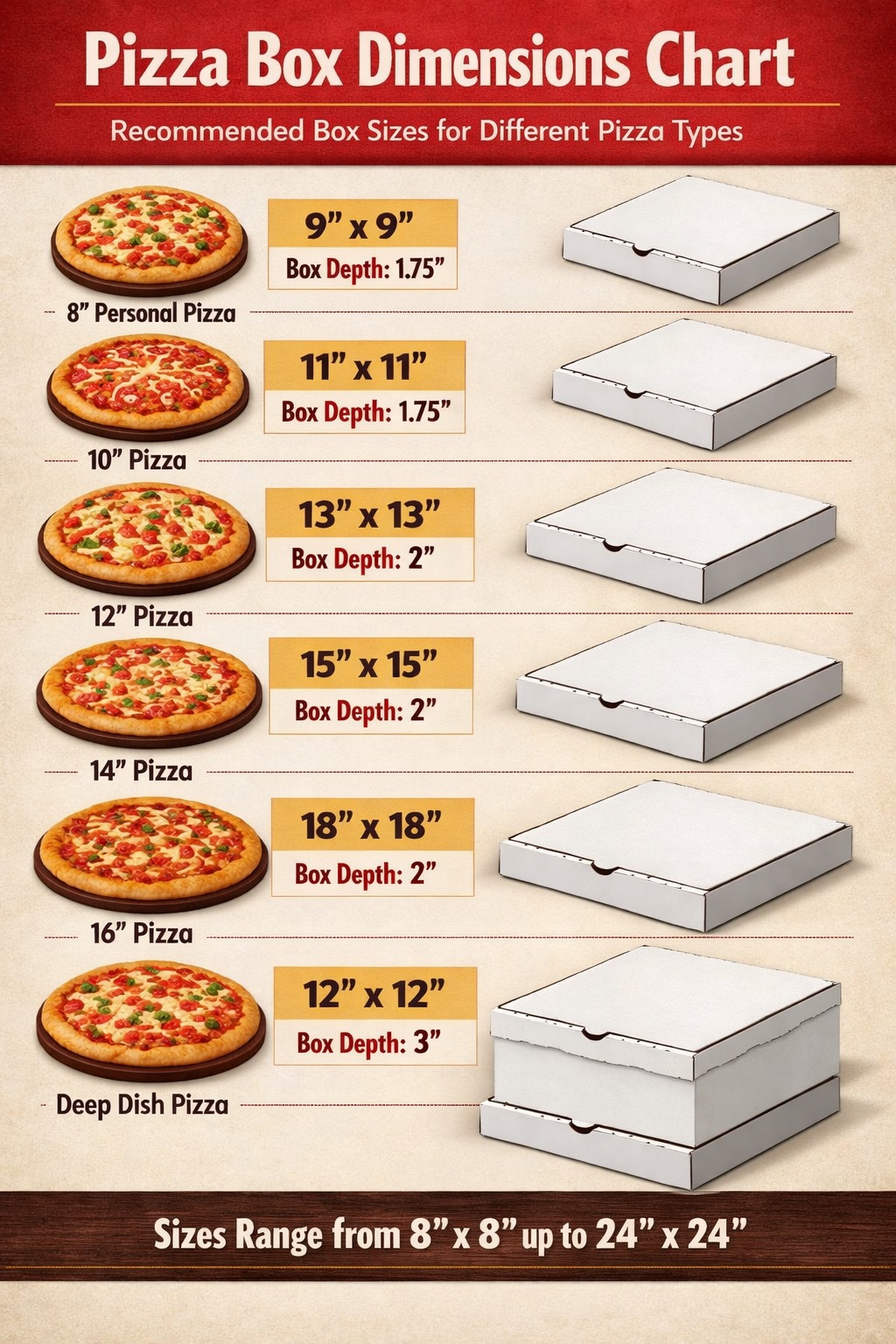
Standard Pizza Size to Box Dimension Chart
Pizza box sizing includes extra clearance for airflow, crust expansion, and safe handling.
Recommended Box Sizes by Pizza Diameter
| Pizza Diameter | Recommended Box | Typical Depth |
| 8″ | 9 × 9 inches | 1.75″ |
| 10″ | 11 × 11 inches | 1.75″ |
| 12″ | 13 × 13 inches | 2″ |
| 14″ | 15 × 15 inches | 2″ |
| 16″ | 18 × 18 inches | 2″ |
| 18″ | 20 × 20 inches | 2″ |
| 10-12″ Deep Dish | 11–13 × 11–13 inches | 3″ |
| 14″ Deep Dish | 15 × 15 inches | 3″ |
Even small clearance gaps — usually about 0.5 to 1 inch larger than pizza diameter — help maintain product quality during transport.
U.S. Pizza Brand Size Examples
While large chains customize packaging, their box sizing patterns follow industry standards.
Domino’s
- 12-inch pizzas commonly ship in 13 × 13 × 2-inch boxes
- 14-inch pizzas typically use 15 × 15 × 2-inch boxes
- Boxes are designed with tight interior fit to reduce movement during delivery
Pizza Hut
- Pan pizzas often use deeper cartons
- 12-inch pan pizzas typically require 13 × 13 × 2.5–3-inch boxes
- Reinforced cartons support thicker crust styles
Papa John’s
- 14-inch pizzas commonly ship in 15 × 15 × 2-inch boxes
- Heavy toppings require additional interior clearance
- Boxes emphasize strong corner stacking strength
These examples highlight why pizza thickness, toppings, and delivery time influence packaging decisions.
Small Pizza Box Dimensions
Small pizza boxes usually serve personal or individual portions.
Common sizes include:
- 8 × 8 × 1.75 inches
- 9 × 9 × 1.75 inches
- 10 × 10 × 1.75 inches
These boxes work best for takeout meals, kids’ menus, and convenience store slices.
Medium Pizza Box Dimensions
Medium sizes are the most widely used across pizza restaurants.
Typical dimensions:
- 12 × 12 × 2 inches
- 13 × 13 × 2 inches
- 14 × 14 × 2 inches
These boxes balance portion size, affordability, and delivery efficiency, making them popular for everyday customer orders.
Large Pizza Box Dimensions
Large pizzas often require stronger structural support.
Common sizes:
- 16 × 16 × 2 inches
- 18 × 18 × 2 inches
Large boxes frequently use thicker corrugated cardboard to prevent bending during stacking and delivery.
The box designs become nonstandard because their design requirements demand special box manufacturing. Businesses looking for pizza boxes for sale in these sizes should confirm availability & strength, as larger pizzas need reinforced materials.
Extra-Large and Jumbo Pizza Box Sizes
Oversized pizzas require specialty packaging.
Standard jumbo dimensions:
- 20 × 20 × 2 inches
- 22 × 22 × 2 inches
- 24 × 24 × 2 inches
These boxes may require custom manufacturing and reinforced corners to handle heavier pizzas.
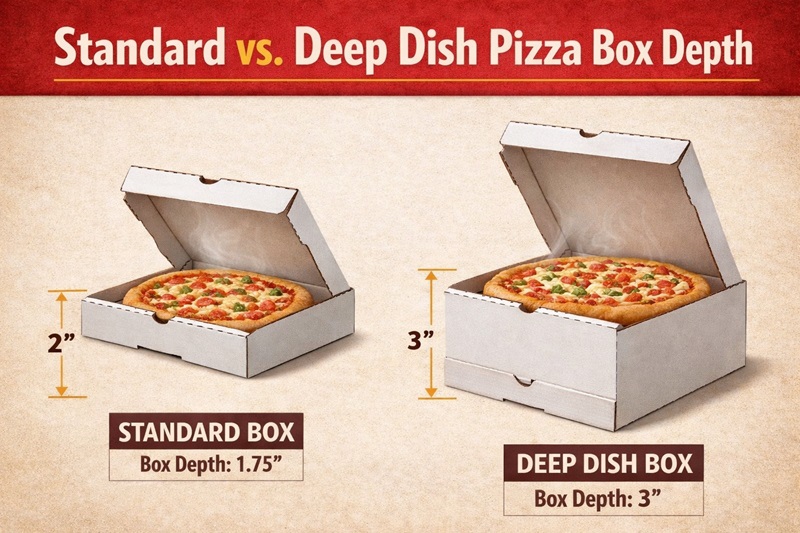
Deep-Dish and Thick Crust Pizza Box Dimensions
Thicker pizzas require additional vertical clearance to avoid lid contact and moisture buildup.
Standard Deep-Dish Box Sizes
- 10 × 10 × 3 inches
- 12 × 12 × 3 inches
- 14 × 14 × 3 inches
Recommended Depth Guidelines
| Pizza Type | Minimum Box Depth |
| Thin crust | 1.75–2 inches |
| Hand-tossed | 2 inches |
| Pan pizza | 2.5 inches |
| Deep dish | 3–3.5 inches |
Deeper boxes allow better airflow, which helps control steam condensation during delivery.
Slice Pizza Box Dimensions
Slice packaging is widely used in convenience stores and food trucks.
Single Slice Boxes
- 5 × 5 × 1.75 inches
- 5 × 7 × 1.75 inches
Multi-Slice Boxes
- 7 × 7 × 2 inches
- 9 × 9 × 2 inches
These smaller cartons help maintain slice structure while preventing folding or grease leakage.
Square vs Rectangular Pizza Boxes
Square boxes dominate the industry because they maximize stacking stability and material efficiency.
Rectangular boxes are typically used for:
- Party-style pizzas
- Detroit-style rectangular pizzas
- Specialty menu items
These shapes improve storage efficiency when pizzas do not fit square cartons.
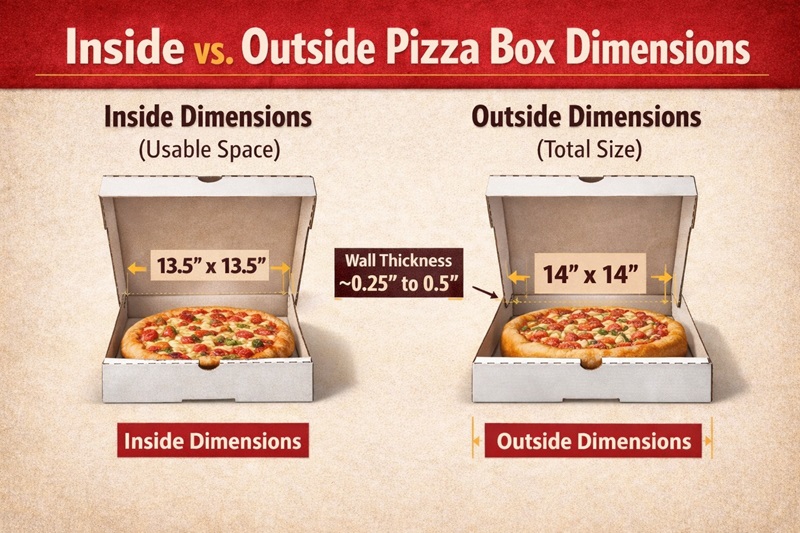
Inside vs Outside Pizza Box Measurements
Manufacturers typically list outside box dimensions, but the interior space is slightly smaller due to cardboard thickness.
Key Differences
- Outside measurements include wall thickness
- Inside space determines usable pizza clearance
- Corrugated cardboard reduces interior space by about 0.25–0.5 inches per side
For example, a 14 × 14-inch box may provide roughly 13.5 × 13.5 inches of internal space.
How to Measure a Pizza for Box Selection (Step-by-Step)
Correct measurement prevents packaging errors.
Step 1: Measure Diameter After Baking
Use a ruler or measuring tape across the widest part of the pizza.
Step 2: Measure Height
Include crust rise and topping thickness.
Step 3: Add Clearance Space
Add 0.5 to 1 inch of horizontal clearance and select proper depth.
Step 4: Test With Real Orders
Always test packaging with finished pizzas before bulk ordering.
Common Pizza Packaging Fit Problems (And Solutions)
Problem: Pizza Slides Inside Box
Solution: Choose a box with tighter internal clearance.
Problem: Toppings Stick to Lid
Solution: Use deeper boxes or install pizza savers.
Problem: Pizza Becomes Soggy
Solution: Select boxes with ventilation holes.
Problem: Crust Edges Get Crushed
Solution: Increase box diameter clearance.
Material Thickness and Its Impact on Box Dimensions
Corrugated cardboard thickness influences both durability and internal clearance.
Common Materials
- Single-wall corrugated cardboard
- Double-wall corrugated cardboard
- Recycled kraft cardboard
Thicker materials improve insulation and stacking strength but slightly reduce internal usable space.
Eco-Friendly Pizza Box Options
Sustainable packaging is becoming a major purchasing factor.
Environmentally friendly options include:
- Recyclable corrugated cardboard
- Compostable fiber packaging
- Low-ink or soy-ink printing
Many restaurants now prioritize recyclable boxes to meet customer sustainability expectations.
Pizza Box Cost Comparison by Size
Pricing varies based on material thickness and order volume.
| Box Size | Average Bulk Cost Per Box |
| 10″ | $0.30 – $0.45 |
| 12″ | $0.40 – $0.60 |
| 14″ | $0.55 – $0.80 |
| 16″ | $0.70 – $1.00 |
| 18″ | $0.90 – $1.30 |
| Jumbo | $1.30 – $2.00 |
Bulk orders typically reduce pricing by 20-40%.
Bulk Storage Tips for Pizza Boxes
Proper storage protects box strength and hygiene.
- Store boxes flat before assembly
- Keep packaging dry and humidity-controlled
- Label box sizes for quick kitchen access
- Rotate inventory to avoid moisture damage
When Custom Pizza Box Sizes Make Sense
Custom packaging helps restaurants:
- Package specialty pizza shapes
- Improve brand visibility
- Reduce product movement during delivery
- Support oversized menu items
However, custom manufacturing usually requires higher minimum order quantities.
Common Mistakes When Choosing Pizza Boxes
Restaurants frequently encounter avoidable packaging errors.
- Selecting boxes that match dough size instead of baked size
- Ignoring box depth for thick toppings
- Ordering rare sizes that increase storage waste
- Skipping product testing before bulk purchase
Testing sample packaging with real pizzas prevents most sizing problems.
Final Thoughts
Pizza box sizing directly affects product quality, customer satisfaction, and delivery efficiency. Standard box dimensions meet most restaurant needs, but specialty pizzas often require deeper or custom packaging.
By selecting boxes based on pizza diameter, crust thickness, delivery time, and material strength, restaurants can reduce waste, improve food presentation, and maintain consistent delivery quality.