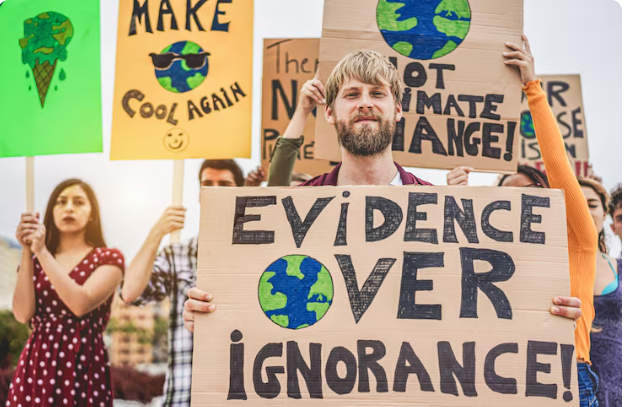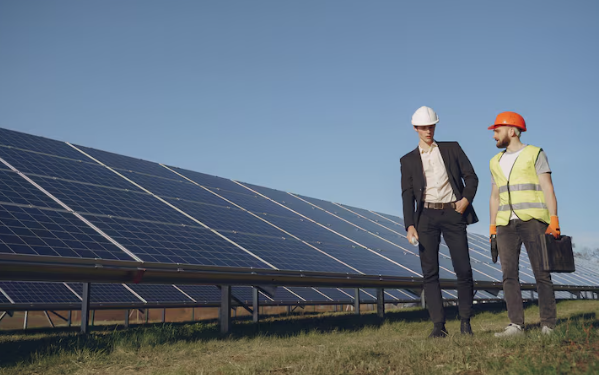

In small Pennsylvanian towns, there’s a specific type of gathering that takes place when individuals begin to feel like they’ve been left out of something significant. You can tell this within the first few minutes of entering the room. The folding chairs are ready. The coffee is extremely potent. Because they don’t trust their phone to record what they learned, someone in the back is taking notes by hand. That’s just what the PA Solar Center’s Westmoreland County Solar Advocacy Workshop attracted. local entrepreneurs. employees of the municipality. Some homeowners are wondering if they are eligible for the federal incentives that everyone is talking about. The workshop proved to be one of the more intriguing recent examples of what energy independence may look like when communities take the time to comprehend the resources at their disposal.
What makes the math so unique is Westmoreland County’s official designation as a “Energy Community” by the U.S. Department of Energy. In addition to the regular renewable energy incentives, the classification opens the door to additional federal tax credits for regions with historical economic linkages to fossil fuel businesses that have lost jobs during the energy transition. Through a combination of investment tax credits, energy community benefits, and direct pay alternatives for tax-exempt corporations, the cumulative benefit for commercial solar installations can reach approximately 40% of total project expenditures. It is not a marginal subsidy. This type of incentive structure significantly alters the financial analysis for any company, educational institution, or government building contemplating solar installation.
| Topic Snapshot | Details |
|---|---|
| Subject | Solar Advocacy Workshop hosted in Westmoreland County, Pennsylvania |
| Lead Organizer | PA Solar Center |
| Federal Designation | “Energy Community” status under U.S. Department of Energy |
| Maximum Tax Benefit | Up to 40% cost reduction on commercial solar projects |
| Justice40 Communities | Greensburg, New Kensington, Jeannette |
| Key Federal Law Referenced | Inflation Reduction Act |
| Local Financing Tool | C-PACE program for commercial property assessed clean energy |
| Notable Local Project | Municipal Authority of Westmoreland County 3 MW wastewater treatment plant solar |
| Highlighted Case Study | Levin Furniture 1 MW commercial system |
| State Legislation Tracked | Pennsylvania House Bill 504 on community solar |
| Advocacy Partner | Solar United Neighbors |
The session took a long time to discuss the additional depth that the Justice40 dimension adds. A number of Westmoreland County census tracts, like as portions of Greensburg, New Kensington, and Jeannette, are eligible to receive benefits from sustainable energy investments in historically underprivileged areas under the federal framework known as Justice40 communities. Deeper benefits, such as extra tax credit bonuses and priority access to specific grant programs, are available to projects located in these tracts. Speaking with local advocates, it seems that many community organizations were unaware that their location qualified them for these improved benefits. Perhaps the greatest tangible benefit of the class was just making this material available in a way that people could truly use.
When you carefully examine the financial dynamics, you come to unexpected conclusions. With the correct mix of federal subsidies, energy community bonuses, and Pennsylvania’s C-PACE financing program, a modest commercial property in downtown Greensburg contemplating a 100-kilowatt rooftop solar system can achieve payback periods of five to seven years. After that, the system locks in fixed energy costs against future utility rate hikes by continuing to produce basically free electricity for at least another 20 years. The workshop went over these figures with the kind of patience that viewers frequently require when financial computations become challenging. No one who is unaware of how to claim federal incentives can benefit from them.
Throughout the program, the Municipal Authority of Westmoreland County’s 3-megawatt solar project at its wastewater treatment plant served as a practical illustration of what is feasible at scale. When the project is completely operational, it will save operating costs, provide resilience against grid outages, and offset a sizable percentage of the facility’s electricity usage. One of the biggest users of power in the majority of local government operations is wastewater treatment, which frequently contributes significantly to municipal energy costs. For municipal governments seeking to show climate leadership without engaging in politically challenging discussions about home energy consumption, solar installations at these buildings have emerged as one of the more realistic entry points.
The Levin Furniture case study demonstrated how the same reasoning holds true for mid-sized companies using a 1-megawatt commercial system. In addition to producing quantifiable energy savings, the retailer’s installation serves as an outward sign of the company’s dedication to sustainability—a marketing advantage that is frequently overlooked in purely financial calculations. Speaking with business owners who attended the program, it seems that the case stories were more convincing than any abstract policy argument could have been. People want to examine the actual expenses and results of what their rivals and neighbors have done.
Perhaps the most undervalued aspect of the workshop’s curriculum is the local zoning discussion. Although solar projects may be financially appealing due to federal subsidies, local zoning boards still have the last say over whether installations take place on the majority of properties. The program covered particular tactics for addressing frequent issues brought up in zoning hearings, advocating with municipal planning commissions, and showcasing community support to local politicians. One of the partner organizations mentioned during the workshop, Solar United Neighbors, has created advocacy templates, siting guides, and example letters to assist locals in effectively participating in local decision-making processes.
The legislative aspect at the state level is also important. Currently in the legislative process, Pennsylvania House Bill 504 would create a community solar scheme that would enable homeowners and renters without adequate rooftops to sign up for shared solar systems. Attendees were urged to follow the bill’s development and discuss its significance with their state representatives throughout the workshop. About half of the states in the United States have implemented community solar, which has been shown to improve customer choice and energy access. Solar activists have been frustrated by Pennsylvania’s relatively late entry into this market, as they observe other states implementing programs that Commonwealth citizens are unable to access.
This session fits into a larger pattern that is difficult to ignore. The most comprehensive renewable energy incentive program in American history was established by the federal Inflation Reduction Act, which was enacted into law in 2022. However, the majority of Americans are only dimly aware of what is truly accessible to them. In many respects, the main obstacle to the U.S. energy transformation is the gap between policy and practice. Workshops like the one in Westmoreland County don’t make headlines. They are the laborious, unglamorous process of converting federal policies into local initiatives. Speaking with attendees after the program gives the impression that they gained more than just knowledge—rather, they gained a sense of confidence. There are the tools. The math is correct. The way forward is now more obvious than it was when they entered.
How many people really transition from learning to acting will determine what occurs next. Some people will. Most won’t, at least not right away. These workshops always operate in this manner. However, the initiatives that result from the connections formed in that room have the potential to significantly alter Westmoreland County’s energy profile over the course of the next two to three years. At the local level, true energy independence is more than just a catchphrase. It is the culmination of numerous choices taken by companies, local governments, and citizens who at last realized what was feasible. The workshop demonstrated the real-world application of the procedure. The remainder is up to the attendees.