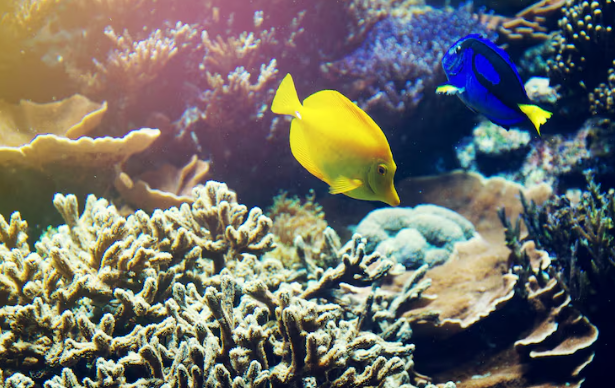

When you visit a bleached coral reef, you experience a certain kind of silence that divers who have witnessed it never fully forget. The water continues to flow. There is still some light coming through. However, the hue has vanished. The reef appears to be a black-and-white snapshot of itself, with its structure intact but its vitality slowly ebbing away. The National Coral Reef Resilience Strategy was created by NOAA scientists who have spent enough time in those areas to understand the risks. Within the agency, the recently revealed strategy, which spans the years 2025 through 2040, is being referred to as the “last best chance.” No one wants to thoroughly read the timeframe that is included in the text.
By itself, the economic argument for safeguarding American coral reefs is strong enough that you would anticipate a political agreement. The annual economic impact of American coral reefs is almost $3.4 billion. More than 70,000 jobs in tourism and recreation are supported by Southeast Florida’s reefs alone. This type of regional employment base would draw instant political attention in any other situation. By absorbing wave energy before it reaches populated shorelines, these reefs offer flood prevention benefits worth $2.6 billion a year nationwide. As you go through Key Largo, Lahaina, or San Juan, you can see the homes, businesses, and daily lives that rely on these underwater ecosystems.
| Topic Snapshot | Details |
|---|---|
| Subject | NOAA National Coral Reef Resilience Strategy 2025-2040 |
| Lead Agency | National Oceanic and Atmospheric Administration |
| Geographic Scope | U.S. reefs in Florida, Caribbean, Hawaii, western Pacific atolls |
| Annual Economic Contribution | Over $3.4 billion to the U.S. economy |
| Florida Tourism Jobs Supported | More than 70,000 in southeast Florida alone |
| Annual Flood Protection Value | $2.6 billion across the United States |
| Decline Period | Coral reefs in measurable decline for at least 50 years |
| Critical Warming Threshold | 1.5°C global warming could cost up to 90% of tropical reefs |
| Strategy Framework | Six focus areas including monitoring, restoration, social science |
| Conservation Partner | Coral Reef Conservation Program |
| International Coordination Body | International Coral Reef Initiative (ICRI) |
For decades, it has been evident how much is being lost. For fifty years, national and international research has shown that coral reefs are declining; in recent decades, this decrease has accelerated due to rising ocean temperatures, changing water chemistry, and compounding stresses. The fourth global bleaching event on record, which occurred in 2023–2024, caused obvious damage in U.S. seas from the Florida Keys to American Samoa and impacted a concerning percentage of the world’s reefs. Speaking with coral biologists who have spent years studying these systems gives the impression that the field has come to a really depressing conclusion. The next ten years will determine how much of America’s coral legacy endures into the second half of this century since the reefs are running out of time.
For good reason, the most frequently cited portion of the timetable is the 1.5°C warming barrier. Up to 90% of the world’s tropical coral reefs may disappear if global warming reaches that level, according to projections from top coral research programs. 1.5°C was the aim set by the Paris Agreement. Even if all of the current commitments are fulfilled, the current warming trajectory points toward 2.1°C to 2.9°C. Simply put, the reefs are not favored by the math. The approach taken by NOAA does not pretend otherwise. It presents the upcoming tasks as triage. What can be rescued should be saved. Make the reefs that have a chance more resilient. When losses are unavoidable, record them.
The strategy itself adopts a multidisciplinary approach that extends beyond the activity that most people associate with coral protection—that is, underwater conservation. expanding capacity. Do some research. observing. mapping. social science. Interaction. The organization is aware that marine biology cannot save coral reefs on its own. They rely on various land use decisions made by coastal communities, agricultural practices upstream that impact runoff into waters adjacent to reefs, fisheries regulations that safeguard the species that sustain reef ecosystems, and global emissions reductions that the United States cannot achieve on its own but must significantly contribute to.
Although each of the six focal areas that make up the strategy has a unique technological complexity, the underlying rationale is the same. Passive protection is no longer adequate, necessitating active action. The days of drawing a line around a reef, designating it as a marine protected area, and assuming that protection would take care of the majority of the job are long gone. Coral nurseries, facilitated gene flow, selective breeding for heat tolerance, and direct reef chemistry intervention are all part of modern coral conservation. A generation ago, coral experts would have found these instruments nearly unimaginable. They are currently being used throughout the U.S. reef system, frequently as the only way to prevent the reefs from collapsing.
The aspect of the plan that might be most important in the long run is the community cooperation component. American coral reefs cannot be saved by NOAA alone. Partnerships with state agencies, tribal nations, university research programs, conservation charities, the dive industry, fishing communities, and the millions of Americans whose daily choices impact ocean health are essential to the mission. Speaking with community organizers in locations like Key Largo and Hilo, it seems that during the past few years, public involvement in coral protection has become more sophisticated. People now have a better understanding of the stakes than they did ten years ago. It’s unclear if this comprehension will result in the political pressure required to encourage significant action.
It is hard to overlook the global aspect. American coral reefs are part of an international system. Ocean conditions throughout the Caribbean basin have an impact on reefs in the Florida Keys. Hawaii’s reefs are a part of a Pacific system that extends to Indonesia, Australia, and the small central Pacific island states. For years, the International Coral Reef Initiative has attempted, with varying degrees of success, to coordinate international responses. NOAA’s approach clearly recognizes that without concurrent international action on emissions and ocean health, domestic action—no matter how well-funded—cannot completely safeguard U.S. reefs.
The cultural shift surrounding coral protection is difficult to ignore. Ten years ago, preserving reefs was frequently discussed as a moral and aesthetic imperative. The contemporary discourse is more realistic, more concerned with the protective and economic benefits that reefs offer, and more open to the idea that some reefs may simply go in spite of everyone’s best efforts. This change reflects the field’s growth as well as a tacit admission that the timetable is shorter than anyone would have liked to acknowledge.
The NOAA strategy serves as a warning and a roadmap for the time being. The science is obvious. There is a compelling economic argument. These undersea ecosystems have immense cultural importance. The window of opportunity for significant action is closing. Whether America’s coral reefs survive in any significant shape into the second half of the century will depend on the strategy’s planning horizon, which spans the next fifteen years. The nation now has a framework thanks to the scientists who produced the text. Decisions made today, in locations distant from the reefs themselves, will determine whether that framework translates into the necessary action. The water continues to warm. The hues continue to fade. The clock continues to run.