

Most of us don’t think much about the environmental footprint of doing the washing. But laundry is one of the more resource-intensive routines in the average Australian household. Between the hot water, the electricity, the chemicals going down the drain and the microfibres entering waterways, it adds up. The good news is that a greener laundry routine is mostly a matter of small adjustments rather than a full overhaul. And if you are considering new appliances, there are some genuinely worthwhile options you can browse deals on washing machines to get a sense of what’s on the market before you decide whether upgrading even makes sense for your situation. This guide walks through the practical steps, from quick daily habits to the bigger question of whether a new machine will actually pay off.
The Easiest Changes to Make Right Now
Before spending a cent, there are a handful of adjustments that will immediately reduce your laundry’s environmental footprint and lower your bills.
Wash in cold water
Heating water accounts for the largest share of energy in a typical wash cycle. Switching from hot to cold can cut that energy use by sixty to ninety per cent, depending on your machine and how high your previous temperature setting was. Modern front-loaders and high-efficiency top-loaders are designed to clean effectively in cold water, and most detergents sold today are formulated to work at lower temperatures. It’s the single most impactful change most households can make, and it costs nothing.
Run full loads
A half-full machine uses almost as much water and energy as a full one. Waiting until you have a proper load is one of the easiest ways to halve the number of cycles you run each week. If you genuinely need to wash a smaller load, use the eco or half-load setting rather than a standard cycle.
Line dry when you can
Australia’s climate is one of the great untapped laundry assets. In most parts of the country for most of the year, a line or drying rack will do the job without any electricity at all. In apartments, a collapsible indoor rack near a window or on a balcony works well. When you do need the dryer, wool dryer balls reduce drying time and static without the chemicals in dryer sheets, and emptying the lint trap before every cycle keeps the machine running efficiently.
Don’t overdo the detergent
More detergent does not mean cleaner clothes. Overdosing creates excess suds that make machines work harder, increase the water needed for rinsing, and send more chemicals into the water system. For high-efficiency machines, especially, less is usually the right answer. Stick to the manufacturer’s recommended dose and measure it properly rather than pouring by eye.
Should You Actually Replace Your Machine?
This is the question worth sitting with before you do anything else. A new washing machine or dryer has its own environmental cost, including the energy and materials used to make it. If your current machine runs reliably, the most sustainable decision is often to keep using it and change how you use it rather than replace it.
As a rough guide: if repairs would cost more than forty to fifty per cent of what a new machine would cost, replacement is worth considering. If your current machine is an older agitator-style top-loader that uses 150 litres or more per cycle, a modern front-loader using 50 to 60 litres per cycle will pay for itself in water bills over time. But if your machine is reasonably efficient and still working well, the greener choice is almost always to keep it.
The same logic applies to dryers. Replacing a working condenser dryer with a heat-pump model makes financial and environmental sense if you run many cycles, and the upfront premium can be recouped within a few years. For households that dry most of the year outdoors and only use the dryer occasionally, the payback period stretches out considerably, and the upgrade may never justify itself.
CHOICE Australia’s washing machine reviews and buying guide include real-world energy and water consumption data, tested independently across dozens of models, making it a genuinely useful resource when you’re comparing machines and trying to cut through the marketing claims on energy labels.
What to Look For in a New Washing Machine
If you have decided a new machine is warranted, a few features make a meaningful difference to long-term running costs and environmental impact.
The ENERGY RATING label and the Water Efficiency Labelling and Standards (WELS) rating are the starting points. Both are mandatory in Australia and allow direct comparisons between models. A two-star difference in water efficiency can translate to tens of thousands of litres saved over the life of a machine. Check the litres-per-cycle figure rather than just the star rating, since the stars represent relative efficiency within a category rather than an absolute measure.
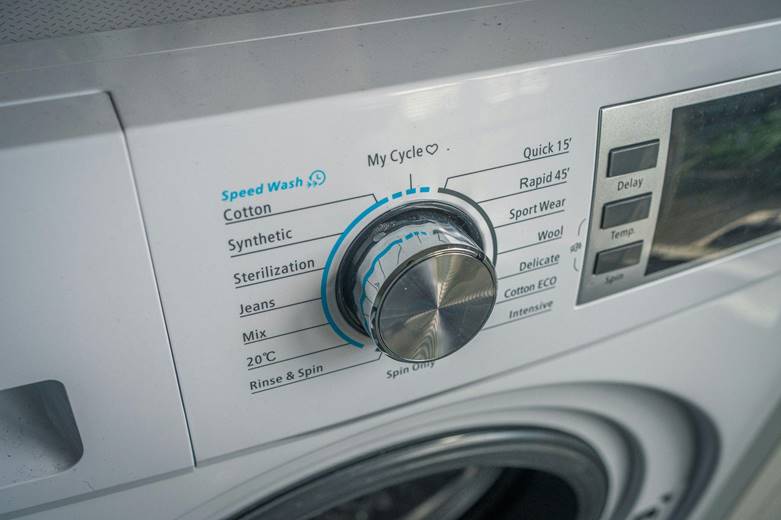
Front-loaders use significantly less water than traditional top-loaders and tend to reach higher spin speeds, which means clothes come out drier and spend less time in the dryer. High spin speed is one of the most practically useful features; the difference between 1,000 and 1,400 rpm at the end of a cycle is noticeable in drying time. An eco or temperature-variable cycle and a half-load sensor are also worth having, giving you flexibility on smaller washes without defaulting to a full-cycle water use.
When you’re in the shop or speaking to a retailer, it’s worth asking about parts availability and repairability. A machine that can be serviced locally and has accessible replacement parts will last longer than one that’s effectively disposable when something minor goes wrong.
Choosing a Dryer: Why the Technology Matters
Not all dryers are created equal, and the differences in running costs are larger than most people expect.
Vented and condenser dryers
A standard vented dryer pushes warm, moist air out through a duct and typically uses between 2.5 and 4 kilowatt-hours per cycle. A condenser dryer collects moisture into a tank instead of venting it outside, useful in apartments or rooms without external access but uses a similar amount of energy. At thirty-five cents per kilowatt-hour, a typical vented dryer cycle costs around $1.00 to $1.05.
Heat-pump dryers
A heat-pump dryer recirculates warm air through a refrigerant loop rather than generating fresh heat for every cycle. This makes them significantly more efficient – typically 1.0 to 1.8 kilowatt-hours per cycle, or around forty cents at average Australian electricity rates. The upside is real: for a household running five or six dryer cycles a week, the energy savings over a year are meaningful. The trade-offs are a longer cycle time and a higher purchase price. Households that use the dryer heavily will generally recover the price premium within three to six years in energy savings alone.
If you’re replacing a dryer and use it regularly, a heat-pump model is the environmentally and financially sensible choice for most Australian households.
Choosing a Better Detergent
The detergent you use matters not just for wash performance, but for what goes down the drain and into waterways. A few things are worth paying attention to.
What to look for on the label
Certified eco labels are the most reliable signal of a genuinely lower-impact product. The EU Ecolabel, EPA Safer Choice and Australian ecolabels verified by independent bodies indicate that a product has been assessed against meaningful environmental criteria not just marketed as “natural” or “plant-based.” Avoid optical brighteners (which do nothing for cleanliness and accumulate in waterways), synthetic fragrances where possible, and any product that lists phosphates, though these are already largely banned in Australian laundry detergents.
Formats: liquid, powder, pods and sheets
Liquids and powders in concentrated form give you control over dosing and generally perform consistently across temperatures. Pods are convenient but tend to encourage a one-size-fits-all approach to dosing, which can lead to overuse. Detergent sheets are genuinely interesting from a packaging standpoint, minimal waste, lightweight, easy to store – but independent testing has found variable performance on greasy or heavily soiled loads. If you want to try sheets, they work well for everyday lightly soiled washing, with a concentrated liquid kept on hand for anything tougher.
DIY options
White vinegar in the fabric softener compartment works well as a rinse aid and mild water softener without leaving residue or fragrance. Baking soda can boost odour control in a wash. Neither replaces a proper detergent for removing grease or stains, but both are useful additions to a lower-chemical routine.
Microfibres: A Smaller Problem With a Practical Solution
Every time you wash synthetic fabrics, polyester, nylon, and acrylic, tiny plastic fibres are released into the wastewater. These microplastics pass through most treatment processes and end up in rivers, on beaches, and in marine life. It’s a genuine environmental problem, but it’s also one where individual households can make a meaningful difference with relatively simple interventions.
The most accessible starting point is a Guppyfriend wash bag, which costs around $30-$40 and captures a significant proportion of fibres released during washing. Put your synthetic garments in the bag before putting them in the machine, and empty the collected fibres into the general waste after washing. A Cora Ball, a plastic ball you place loosely in the drum, takes a similar approach at a similar price point. Neither solution is perfect, but both are easy to use and make a noticeable difference.
For households wanting a more comprehensive solution, inline retrofit filters that install on the machine’s drain hose capture a higher proportion of fibres but require some plumbing work and cost between $150 and $400. These are increasingly worth considering as awareness of microplastic pollution grows and regulations around washing machine filtration are expected to tighten in the coming years.
Minderoo Foundation’s research on microplastic pollution in Australian waterways provides a useful context on the scale of the problem domestically and the types of interventions being studied at a policy level helpful background if you want to understand where household action fits in the broader picture.
A Few Specific Situations Worth Knowing About
Septic systems
If your household is on a septic system, detergent choice matters more than usual. High-enzyme and bleach-heavy products can disrupt the bacterial balance that makes a septic system function properly. Look for products specifically labelled as septic-safe, keep doses conservative, and reduce wash water volume where possible.
Wool, delicates and technical fabrics
Cold, short cycles with a gentle detergent are the right approach for wool and delicates. Air-dry wherever possible, tumble heat damages wool fibres and degrades the waterproof membranes in technical outdoor fabrics like Gore-Tex over time. It also considerably extends the life of elastic in sportswear.
Renters
Most of what’s in this guide is fully available to renters without having to touch the appliances. Cold washes, full loads, air drying, better detergents, and a Guppyfriend bag require no permission or installation. If the machine is old and inefficient, that’s a conversation worth having with the landlord, as lower running costs benefit both parties.
A Word on Greenwashing
“Eco”, “natural”, “plant-based”, “biodegradable” these words appear on many laundry products that haven’t been independently assessed against any meaningful standard. They’re marketing descriptions, not certifications. The shortcut to avoiding greenwashing is to look for third-party certified labels (EU Ecolabel, EPA Safer Choice) rather than taking a brand’s self-description at face value. If a product claims environmental credentials but can’t point to an independent certification, treat the claim with scepticism.
The same applies to appliance marketing. “Energy efficient” has a specific meaning when it appears on an ENERGY RATING label supported by government testing. It means much less when it’s a line in a product description without a star rating attached.
Where to Start
The most useful thing you can do today is switch to cold washes and start running full loads. These two changes alone will reduce the energy and water footprint of your laundry significantly and cost nothing. After that, look at your drying habits more. Line drying, a dryer bag for synthetics, and a little attention to detergent dosing will take you most of the way to a genuinely greener laundry routine without replacing a single appliance.
If an upgrade does make sense, focus on the ENERGY RATING and WELS labels, prioritise spin speed and eco cycles in a washer, and take heat-pump dryers seriously if you run cycles regularly. Buy quality, buy for longevity, and ask the retailer about repairability before you commit.