
Custom eco-friendly packaging is not only about swapping cardboard for something labeled green. In practice, the bigger gains often come from design choices that cut waste across the full shipping cycle. That means using packaging more than once, reducing petroleum-based cushioning, and building packs that fit the product instead of the pallet. Packaging remains one of the biggest waste problems in the materials economy, and regulators are putting more pressure on businesses to reduce it. OECD reports that packaging accounts for about 40 percent of global plastic waste, while EPA says containers and packaging made up 82.2 million tons of U.S. municipal solid waste generation in 2018, or 28.1 percent of the total. The EU’s new Packaging and Packaging Waste Regulation also entered into force in February 2025 and starts applying broadly from August 2026.
For B2B manufacturers, the issue is bigger than image. Packaging affects freight cost, compliance, product protection, and how buyers judge the value of what arrives. The companies getting this right are not treating packaging as a disposable afterthought. They are treating it as part of product engineering.
Use reusable custom soft cases instead of one-trip packaging
The most obvious waste in industrial shipping is also the easiest to miss because it feels normal. A corrugated box, plastic wrap, foam insert, and tape job does its work once, then it is trash. That model still dominates B2B shipping, even for high-value tools, medical devices, and precision instruments that move through repeat delivery cycles.
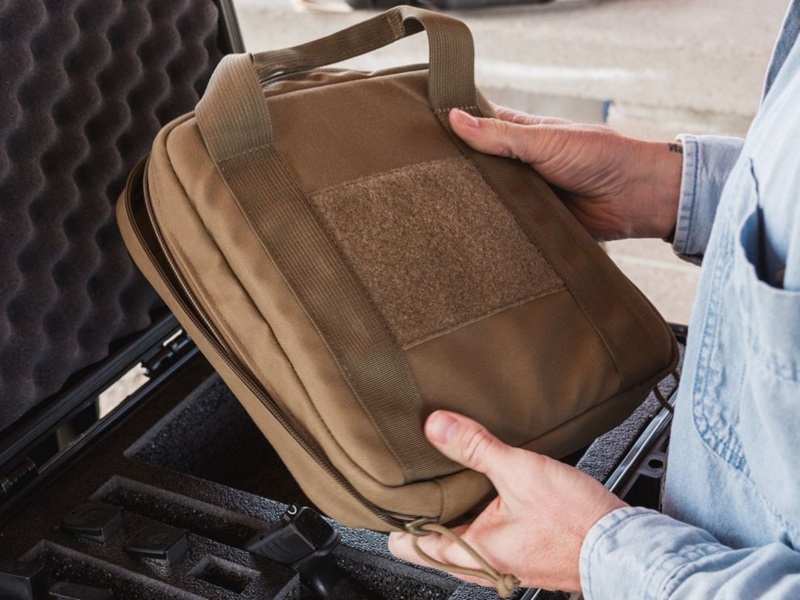
A reusable custom soft case changes the math. Instead of building a one-time package, the company builds a durable enclosure that protects the product through repeated use. Over time, that cuts down the steady stream of boxes, wraps, and disposable inserts that pile up across shipments.
This matters most when the product already has a service life beyond delivery day. A durable custom soft case solutions sized to the product can travel with it into the field, protect it during storage, and return for redeployment. That reduces waste, but it also improves presentation. In B2B settings, packaging shapes how the buyer reads the product. A durable branded case feels like part of the equipment, not a throwaway shell around it.
There is a cost benefit too. Single-use packaging looks cheap on the first invoice, but the spend repeats with every shipment. A reusable enclosure spreads that cost over many cycles. For businesses shipping the same class of products again and again, that changes packaging from a recurring materials expense into a long-life asset.
Replace petroleum-heavy interior padding with bio-based cushioning
Outer packaging gets most of the attention, but interior protection is often where waste becomes hardest to deal with. Foam liners, polystyrene, and synthetic void-fill are still common because they are familiar, light, and easy to source. They are also tied to low recycling rates and end-of-life problems. EPA data shows plastic containers and packaging had a recycling rate of 13.6 percent in 2018, which helps explain why businesses are looking harder at material choice inside the pack, not just outside it.
That is where bio-based cushioning earns serious attention. Mycelium-based inserts, molded fiber, seaweed composites, and plant-fiber padding give packaging teams more options than they had a few years ago. Not every material fits every product, and no one should pretend they all perform the same way. But for many shipments, especially in healthcare, electronics, and specialty manufacturing, these materials can replace a good share of petroleum-based interior packaging without lowering protection standards.
The best use case is pairing a durable outer shell with a product-specific interior made from lower-impact cushioning. The shell handles repeat use. The insert handles fit, shock control, and product stability. That split works well because it keeps the long-life part of the packaging in circulation while allowing the product-contact layer to be tailored more closely to what the item needs.
This also helps on the compliance side. Buyers in regulated sectors now ask harder questions about material composition, restricted substances, and documentation. Cleaner interior materials do not remove those requirements, but they make the packaging profile easier to defend in audits and procurement reviews.
Right-size and standardize packaging to cut freight waste
Some packaging waste is not about the material itself. It starts with bad geometry. When the package is much larger than the product, companies pay for empty space more than they admit. That extra volume drives up dimensional weight charges, increases void fill, and pushes more air through the shipping network than necessary.
Right-sized packaging fixes that by designing around the product from the start. Not after the product is finished, and not by dropping it into the closest stock carton. The package should match the shape, weight, fragility, and shipping pattern of the item it protects.
This is where modular design becomes useful. A single adaptable case format that handles multiple product variants can cut the number of packaging SKUs a company has to source and store. That lowers complexity in the warehouse and reduces the habit of overpacking because the right size is not available on the shelf.
The environmental benefit is straightforward. Less empty volume means less material use and lower freight emissions per shipment. OECD has linked plastics to a large and growing emissions burden, estimating that plastics generated 1.8 billion metric tons of greenhouse gas emissions in 2019, or 3.4 percent of the global total. Packaging design does not solve that on its own, but reducing needless packaging volume is one of the clearest places to start.
What this looks like in the real world
Take a mid-sized electronics manufacturer shipping diagnostic instruments to healthcare clients. The old system uses corrugated cartons, synthetic foam, and oversized box formats chosen for convenience. It protects the product, but it creates repeat waste, higher freight cost, and a poor fit with client sustainability requirements.
A better model replaces that setup with a reusable branded soft case, bio-based interior cushioning, and dimensions matched to the device. The case protects the instrument during shipment and storage. The insert reduces reliance on hard-to-handle petroleum-based foam. The tighter format cuts dimensional weight and reduces the amount of filler needed inside the pack.
The result is not cosmetic. Waste falls, freight spend drops, and the packaging starts working as part of the product system instead of as a disposable layer around it.
Why this matters more now
Packaging rules are tightening, not loosening. In Europe, the new packaging regulation is already in force and begins applying broadly from August 12, 2026. That pushes more companies to think beyond simple recyclability claims and toward reuse, waste prevention, and measurable packaging performance.
That shift is healthy. For years, sustainable packaging talk stayed too close to surface-level material swaps. In practice, the stronger moves are often less flashy. Reuse beats one-trip disposal. Better fit beats excess volume. Cleaner cushioning beats hidden plastic buried inside a box.
FAQ
What is eco-friendly packaging?
Eco-friendly packaging is packaging designed to reduce environmental harm across its full life cycle. In B2B shipping, that usually means less single-use waste, fewer petroleum-based materials, longer service life, and better shipping efficiency.
How can B2B companies reduce packaging waste?
The fastest place to start is with repeat shipments. Replace one-trip packaging where possible, reduce oversized pack formats, and review whether interior cushioning can shift to lower-impact materials. Those three moves usually cut waste faster than a broad packaging rebrand.
Are custom soft cases really sustainable?
They are when they replace repeated single-use packaging over a long service life. A reusable case has a higher upfront footprint than a disposable box, but over multiple shipping cycles it can reduce total material use, waste generation, and recurring packaging spend.
Why does right-sizing matter so much?
Because shipping empty space costs money and creates waste at the same time. Oversized packs use more material, need more void fill, and increase dimensional weight charges. Right-sizing fixes all three.
The bottom line
The strongest eco-friendly packaging programs do not start with trend language. They start with waste, cost, protection, and repeat use. Reusable custom cases, bio-based interior cushioning, and right-sized modular formats are practical changes that improve all four.
That is the real shift. Sustainable packaging is no longer just about choosing a greener-looking material. It is about building packaging that works harder, lasts longer, and wastes less.