
In hospitality design, sustainability often gets reduced to what guests can see. Reclaimed wood, natural textures, and low-impact finishes photograph well and fit the story many brands want to tell. In actual commercial use, the greener choice often comes down to less visible things, how long a product stays in service, how often it needs repair or replacement, and whether its materials can be recovered when it is finally retired.
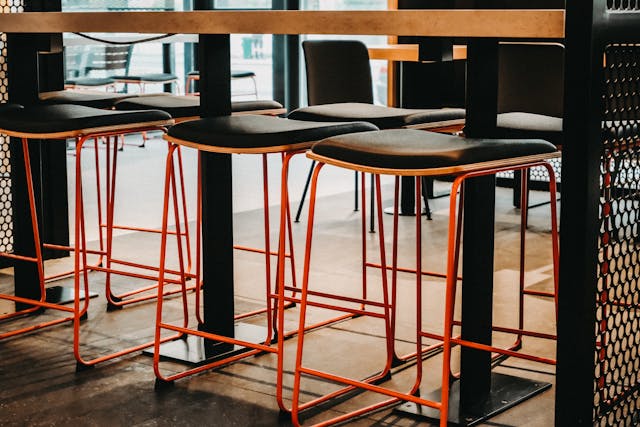
That is where metal bar stools deserve a closer look. In restaurants, bars, hotels, and food halls, they often make environmental sense for a simple reason. They are usually built to handle constant use, they are easier to clean and maintain than many upholstered or mixed-material options, and their core materials are widely recyclable. That does not make every metal stool a good environmental choice by default. Build quality still matters. So do finish durability, repairability, and clear material disclosure. But once buyers stop judging sustainability by surface cues alone, well-made metal seating often looks stronger over the full life of the product than cheaper stools that wear out early.
Why durability matters more than eco-labeling in hospitality
Commercial furniture does not age gently. In a busy venue, stools are dragged across floors, leaned back on, stacked, wiped down, hit with spills, and used by hundreds of people every week. Under those conditions, service life becomes one of the clearest environmental measures. A stool that remains structurally sound and presentable for years cuts replacement demand, which means less manufacturing, less freight, less packaging, and less waste.
That is the core point. A product is not environmentally better just because it looks natural or carries a soft green message. In high-traffic settings, longevity matters more. If a metal stool lasts far longer than a lower-cost alternative with weak joints, chipped surfaces, or parts that are hard to repair, the environmental gain is real. It shows up in slower material turnover and fewer discarded units over time.
That line of thinking fits the way commercial furniture sustainability is now being measured. ANSI/BIFMA e3-2024, the current furniture sustainability standard, uses a broader and more structured framework for environmental, health, and social performance instead of relying on vague green claims. Products can also be assessed through BIFMA’s LEVEL certification program against that standard. In practice, that puts more weight on measurable product performance, and long-life seating benefits from that shift.
Metal’s end-of-life advantage is more practical than many buyers realize
Another reason metal stools deserve attention is what happens after years of use. Many commercial stools combine wood, foam, fabric, laminates, adhesives, and coatings in ways that make recovery harder once the product is damaged or outdated. Metal frames are not perfect, but they are often easier to separate, scrap, and recycle, especially when the design avoids unnecessary mixed materials.
That matters because metal recycling already has mature recovery markets. EPA procurement guidance notes that steel products can contain high recovered-material content, especially when made through electric arc furnace production. Aluminum also stands out in circular use. The Aluminum Association says recycled aluminum uses about 95 percent less energy than primary production, and more than 80 percent of U.S. aluminum production now comes from recycled material. When a stool is built around metals with established recycling value, end-of-life recovery becomes more realistic, not just theoretical.
Maintenance is part of the environmental math
The sustainability conversation often skips routine upkeep, even though maintenance shapes real product life. Upholstered seats stain. Wood surfaces dent, absorb moisture, or need refinishing. Composite pieces often fail at the joints or edges first. Metal stools are not maintenance-free, but many powder-coated, galvanized, or properly finished models are easier to wipe down, less vulnerable to daily spills, and better suited to repeated cleaning cycles.
That matters in hospitality because maintenance affects replacement timing. A stool that still works structurally but looks worn after a short period often gets removed anyway. Buyers do not replace furniture only when it breaks. They replace it when it stops looking acceptable in front-of-house spaces. Metal seating often performs well on that front, especially in venues where speed of cleaning and visual consistency matter every day.
The better sustainability question is not “what looks green?”
The better question is this: what stays useful longest with the least waste along the way? In many commercial interiors, that question leads back to durability, repair potential, and material recovery. Metal bar stools do not always win, and they should not be treated as a blanket answer. Poor finishes, low-grade welds, and disposable construction still undercut the case. But when the product is well specified, metal seating often aligns with the kind of sustainability that matters most in hospitality, lower turnover, lower maintenance burden, and a better chance of material recovery at the end of service.
That is less romantic than reclaimed textures or eco-branded storytelling. It is also closer to how waste is actually reduced in busy commercial spaces.
Why embodied carbon and product transparency matter more now
Recyclability still matters, but it is no longer enough on its own. The stronger sustainability question now starts earlier, at the product stage, with embodied carbon and clear disclosure. Buyers want to know what a stool is made from, how that material profile affects emissions, and whether the manufacturer can back up claims with product-level documents instead of broad marketing language. In commercial furniture, that usually means Environmental Product Declarations [EPDs], product category rules, and third-party programs tied to measurable criteria. BIFMA’s LEVEL framework and the current BIFMA product category rules for office furniture reflect that shift toward documented environmental data, not just good intentions.
That matters because a metal bar stool can still be the right long-life purchase while carrying a higher upfront material footprint than buyers assume. Steel and aluminum are durable and widely recyclable, but they also come with real manufacturing emissions. The better argument is not that metal is automatically low carbon. It is that a well-made metal stool can make sense when long service life, repair potential, and end-of-life recovery are weighed against replacement frequency. In practice, the stronger procurement decision comes from looking at both sides together, durability and disclosure, instead of treating either one as the full story. Recent embodied-carbon work in commercial furniture has moved in that direction by using larger sets of EPD data and category baselines to compare furniture types with more discipline than older, assumption-based claims.
That makes this a better article for 2026 as well as a better argument. Readers trust content more when it admits the tradeoff clearly. A stool that lasts for years helps reduce turnover and waste, but responsible selection also depends on whether the supplier offers usable documentation, such as an EPD, recycled-content information, and material-health details where available. That is where the furniture conversation has moved, from simple recyclability claims to life-cycle thinking backed by product data.
A quieter indoor-environment benefit
There is also an indoor-air angle that deserves a brief mention. Health Canada says formaldehyde can off-gas from some furniture, cabinets, and building materials, and it links higher indoor exposure to eye, nose, and throat irritation, with asthma symptoms worsening in some cases. That does not turn metal furniture into a clean-air guarantee. Finishes, seat pads, glues, and composite inserts still matter. But a stool design that relies less on particleboard, foam, and adhesive-heavy assemblies can reduce one common source of concern in commercial interiors.
This is not the main sustainability case for metal bar stools, and it should not be oversold. The main case is still durability. Still, buyers now look at furniture through a wider lens than they did a few years ago. They care about service life, carbon, disclosure, and indoor material health at the same time. A current article should reflect that broader procurement reality instead of stopping at the recycling symbol.
How to choose a metal bar stool with a real environmental advantage
The most sustainable commercial stool is rarely the one with the best green story on paper. It is usually the one that survives heavy use, keeps its finish with normal cleaning, and avoids the replacement cycle for as long as possible. In practice, that means looking for commercial-grade construction, durable coatings, replaceable wear parts, and environmental documents that say something useful about the product rather than the brand as a whole.
A stool that performs well on the floor for years is usually the better environmental choice than one that looks good on install day but ages out quickly. That is the real advantage metal bar stools can offer in hospitality settings. When they are specified carefully, they reduce replacement frequency, simplify upkeep, and fit more naturally into a procurement process that now expects better carbon data and better material transparency.
Final takeaway
Metal bar stools are not automatically the greenest choice in every project. Still, in restaurants, bars, hotels, and other high-traffic spaces, they often make a strong environmental case because they pair long service life with straightforward maintenance and a more established recovery pathway than many mixed-material seating options. As embodied-carbon reporting, product disclosures, and healthier-material expectations become more common in commercial furniture buying, that long-term performance case only gets harder to ignore.