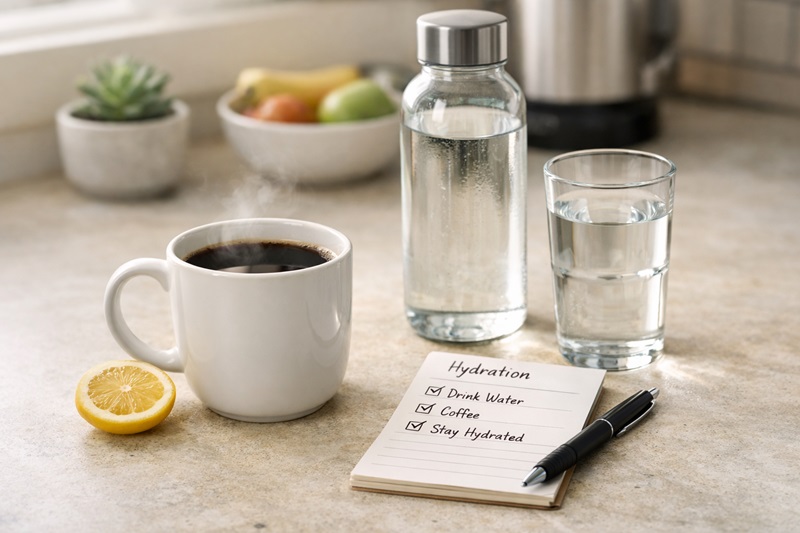

If you drink coffee every day, you’ve probably had this moment: you’re trying to “drink more water,” you’re tracking bottles, and then you wonder whether your morning coffee helps your hydration goal—or quietly works against it.
Here’s the science-backed bottom line: for most adults, coffee does count toward daily fluid intake. Coffee is mostly water, and in typical amounts, the fluid you drink generally offsets caffeine’s mild diuretic effect—especially if you’re a regular coffee drinker.
That said, there are times when it’s smart to lean harder on plain water (hot weather, intense workouts, pregnancy, high caffeine sensitivity, or certain medical conditions). This guide breaks down what “water intake” really means, what “counts,” and a simple rule you can use without overthinking it.
Quick Answer: Does Coffee Count as Water Intake?
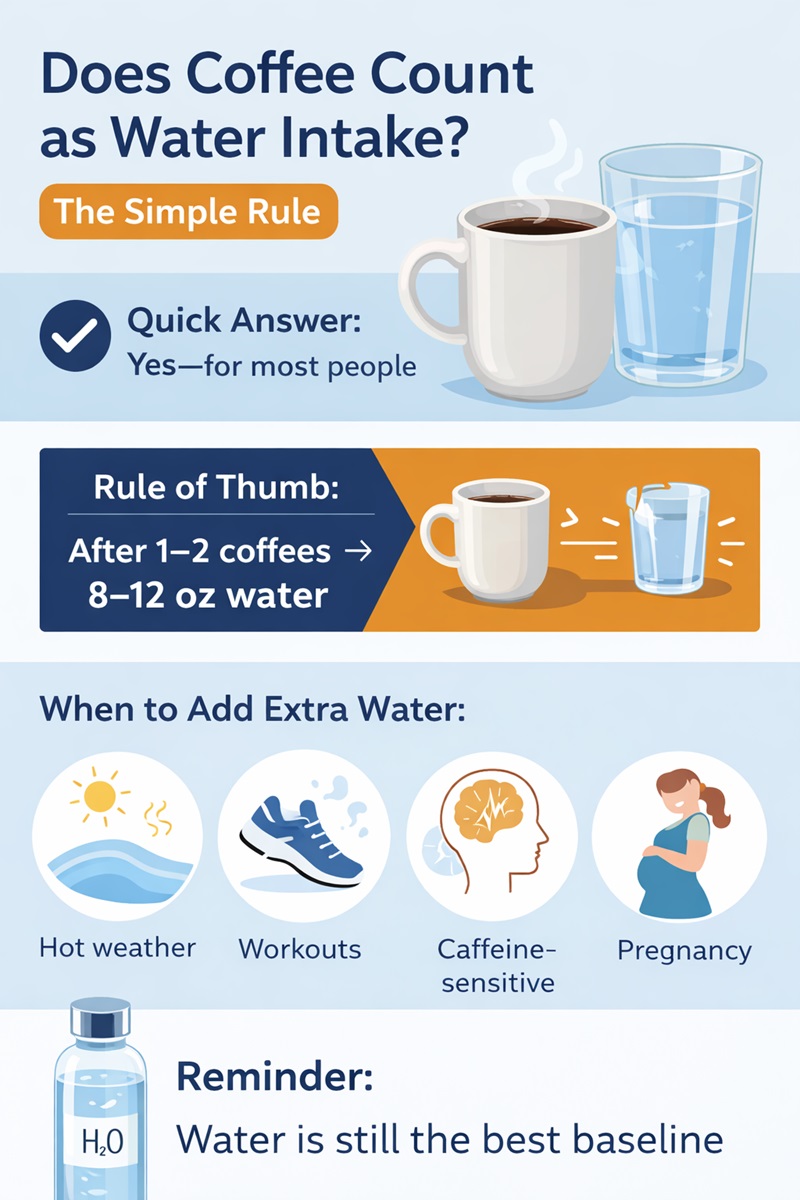
Yes—coffee can count as water intake for most adults. Coffee is mostly water, and in typical amounts, the fluid you consume generally offsets caffeine’s mild diuretic effect.
Simple rule of thumb
Count your coffee toward fluids—then “pair” it with water.
A practical version most people can stick with:
- After your first 1–2 cups of coffee, drink one glass of water (8–12 oz).
- If you’re sweating a lot (heat, workouts), add another glass of water.
This keeps your hydration on track without treating coffee like a villain.
Sources (quick verification)
We based this on widely used clinical/public-health guidance:
- Mayo Clinic: daily fluids include coffee/tea
- NASEM (U.S.): total water “adequate intake” (drinks + food)
- ACOG: pregnancy caffeine limit guidance
- FDA: general adult caffeine guidance (sensitivity varies)
- Sports nutrition (e.g., ACSM): when electrolytes matter (heat/high sweat)
Note: Needs vary by body size, diet, climate, activity, and medical conditions—these are reference points, not medical advice.
What “Water Intake” Really Means (Most People Get This Wrong)
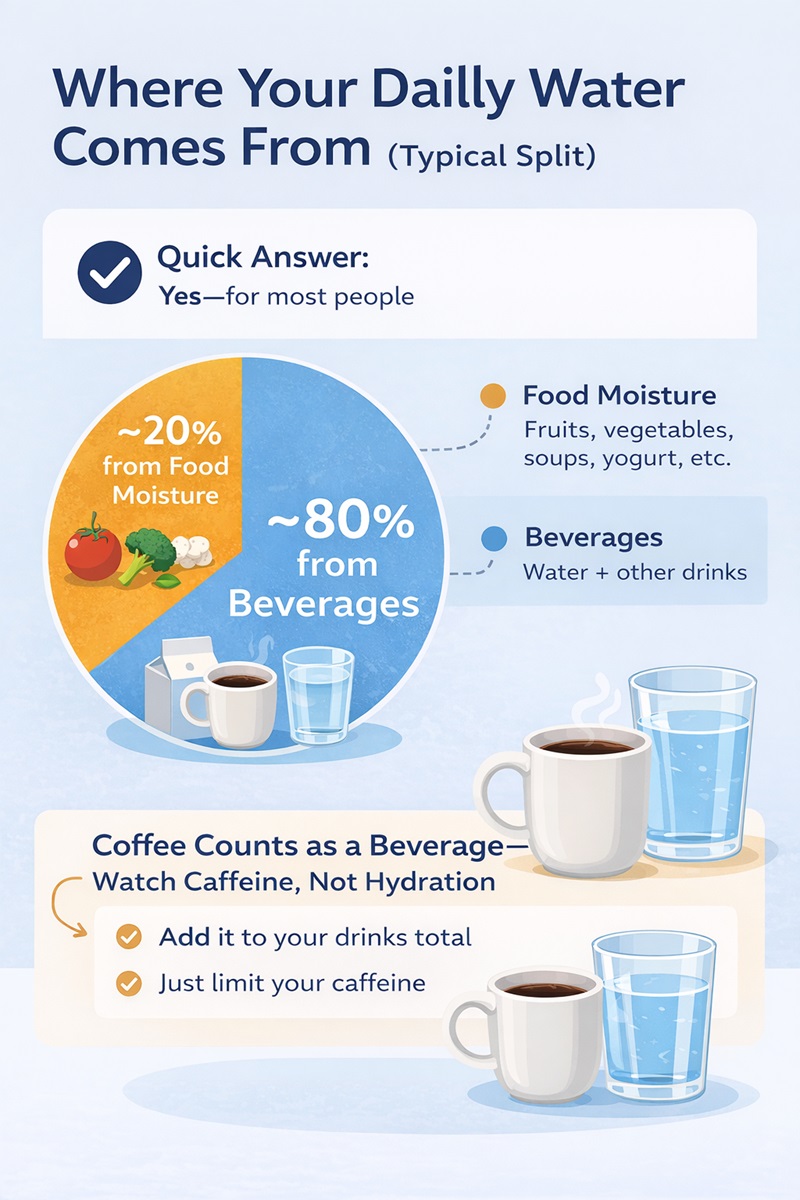
When health guidelines talk about “water intake,” they usually mean total water from:
- plain drinking water
- other beverages (including coffee and tea)
- water in food (fruits, vegetables, soups, yogurt, etc.)
So if your goal is “more water,” it’s helpful to remember: hydration isn’t only about plain water. Even Mayo Clinic’s general guidance notes that beverages like coffee and tea count toward daily fluid.
10-Second Hydration Tracker (Total Water, Not Just Plain Water)
Daily “water intake” usually means total fluids + food moisture (not only plain water).
General reference totals (all sources):
- Women: ~7 L/day (≈ 11.5 cups)
- Men: ~7 L/day (≈ 15.5 cups)
Easy conversions:
- 1 cup = 8 oz ≈ 240 mL
- 4 cups = 32 oz ≈ 1 liter
- 8 cups = 64 oz ≈ 2 liters
- 12 cups = 96 oz ≈ 3 liters
How most people “fill” that total:
- ~20% from food (fruit, vegetables, soups, yogurt)
- ~80% from beverages (plain water + other drinks)
Coffee counting rule (1 line):
✅ Count coffee toward fluids—then drink one 8–12 oz glass of water after your first 1–2 cups.
On hot days or workout days, add another glass of water.
Does Coffee Dehydrate You? The “Diuretic” Myth, Explained
Why people think coffee “doesn’t count”
Caffeine can increase urine output—so people assume coffee causes dehydration. Caffeine is technically a mild diuretic.
What actually happens in real life
Most people don’t drink caffeine in massive doses all at once. And many coffee drinkers have some caffeine tolerance.
Mayo Clinic summarizes it simply: for typical caffeine levels, the fluid in caffeinated drinks generally balances the diuretic effect (so you don’t end up “net dehydrated”).
What the research says (coffee vs water)
A frequently cited controlled study comparing moderate coffee intake to water found no meaningful differences across many hydration markers in caffeine-habituated men—suggesting moderate coffee can have similar hydrating qualities to water in that context.
Important nuance: That doesn’t mean coffee is “better than water.” It means coffee isn’t automatically disqualifying for hydration.
When Coffee Counts Less (or You Need More Water Alongside It)
Coffee can still count toward fluids, but there are cases where you should be more intentional about water:
1) You’re not used to caffeine
If you rarely drink caffeine, the diuretic effect may feel stronger—especially if you have a large coffee quickly.
2) You’re drinking “high doses,” especially all at once
Large caffeine doses are more likely to increase urine output noticeably.
3) You’re sweating more than usual
Heat, long workdays outdoors, high-intensity workouts, and sauna time change the math. In these cases, water (and sometimes electrolytes) matters more than whether coffee “counts.”
4) Your coffee is basically dessert
A sweet blended coffee still provides fluid, but it can also come with high sugar/calories—relevant if your goal is weight management, blood sugar stability, or avoiding energy crashes (more on that below).
A Practical Way to “Count” Coffee Without Overthinking It
If you want a simple tracking approach that works for most adults:
The Coffee-to-Water Pairing Method
- 1–2 coffees/day: Count it normally. Add one 8–12 oz water “pair” sometime before lunch.
- 3–4 coffees/day: Still counts toward fluids, but add two water pairs—one late morning, one mid-afternoon.
- 5+ coffees/day: Hydration may not be your main issue—caffeine load and sleep disruption often become the bigger concern. (More on safe limits below.)
If you prefer a “percentage” approach
A lot of people do well with this mental model:
- Aim for most of your daily fluids from water and unsweetened drinks
- Let coffee be a supporting player, not the whole plan
Signs You Need More Water (Not Just More Coffee)
Coffee can mask fatigue temporarily, so it’s easy to confuse “low energy” with “need caffeine.”
Hydration is individual, but these are common signals you may need more fluids:
- thirst you keep noticing
- dry mouth
- headaches that improve after drinking water
- darker urine than usual (first-morning urine is often darker—look at patterns across the day)
- feeling unusually wiped during workouts or hot weather
If you have kidney disease, heart failure, or take medications that affect fluid balance, hydration targets should be personalized with a clinician.
Coffee, Caffeine, and Health: A Few Smart Guardrails
Caffeine “upper limits” (general)
For many healthy adults, up to 400 mg of caffeine/day is often cited as a safe upper range (roughly around ~4 cups of brewed coffee, depending on strength).
If you’re getting jitters, anxiety, reflux, palpitations, or sleep problems, your personal limit may be much lower—and hydration won’t fix caffeine side effects.
Pregnancy
ACOG suggests that moderate caffeine (commonly described as under 200 mg/day) does not appear to be a major contributor to miscarriage or preterm birth, but staying within that limit is a common recommendation.
Teens
Medical organizations often advise avoiding energy drinks for kids and teens, and some pediatric guidance commonly referenced in clinical resources suggests limiting caffeine in adolescents (and prioritizing sleep and hydration habits).
Does Decaf Coffee Count as Water Intake?
Yes. Decaf is still mostly water and contributes to fluid intake. It also tends to avoid many caffeine-related side effects, so it can be a great option if you love the routine of coffee but don’t want the stimulant.
(Decaf isn’t always zero-caffeine, but it’s usually much lower than regular coffee.)
Does Coffee Count if You Add Milk, Cream, or Protein?
Yes—those drinks still contain water and count toward fluid intake.
But here’s what changes:
- Milk-based coffees can be more filling (good for appetite control for some people)
- Sugar-heavy add-ins can increase total calories fast (and may lead to an energy crash later)
- Protein add-ins can be useful if you routinely skip breakfast—but watch total calories if fat loss is the goal
Hydration-wise, they still “count.” For nutrition goals, the ingredient list matters more.
Coffee vs Water: What’s Best for Hydration?
If you’re choosing the best hydration tool, it’s still water:
- calorie-free
- caffeine-free
- easy to scale up when you’re behind
But if you’re asking, “Do I need to pretend coffee doesn’t exist?” the answer is no.
A good stance for most people:
- Use water as your baseline
- Let coffee count, but don’t let it replace water entirely
Quick Reference Table: Does It “Count”?
| Drink | Counts toward fluid intake? | What to watch for |
| Black coffee | Yes | Caffeine sensitivity, sleep timing |
| Iced coffee (unsweetened) | Yes | Bigger cups can mean more caffeine |
| Latte/cappuccino | Yes | Calories add up depending on milk |
| Sweetened bottled coffee | Yes | High sugar/calories possible |
| Energy drinks | Fluid, but not ideal | High caffeine + sugar; not recommended for kids/teens |
| Decaf coffee | Yes | Small amount of caffeine possible |
FAQ: Does Coffee Count as Water Intake?
Does coffee count as water intake for hydration goals?
For most adults, yes—coffee contributes to daily fluid intake, and typical caffeine levels don’t cancel out the fluid you drink.
Why do I pee more after coffee?
Caffeine can increase urine output (especially if you’re not used to it), but in typical amounts the fluid you drink generally offsets that effect.
Does coffee dehydrate you in the morning?
Usually no—morning coffee still contributes fluid. If you wake up dehydrated, the fix is often simple: drink water early, then have coffee.
Does iced coffee count differently than hot coffee?
Not really. The main difference is portion size (many iced coffees are larger), which can increase caffeine.
Does espresso count as water intake?
Yes. Espresso is fluid too—just in smaller volume.
Does decaf count as water intake?
Yes. Decaf still contributes to total fluid intake.
Should I drink water with coffee?
It’s a smart habit—especially if you drink multiple cups or you’re active. That’s why the “pair with water” rule works so well.
How much coffee is too much?
Many sources cite up to ~400 mg caffeine/day as a general upper limit for healthy adults, but your tolerance may be lower.
What about pregnancy?
A common recommendation is to stay under 200 mg caffeine/day during pregnancy.
Can coffee replace water entirely?
It can contribute meaningfully, but replacing all water with coffee usually backfires—sleep, anxiety, reflux, and overall caffeine load become the bigger problems.
Key Takeaway
Coffee counts toward water intake for most people. The best move isn’t to “cancel out” coffee—it’s to build a simple hydration base (water first), then let coffee be part of your total fluids.