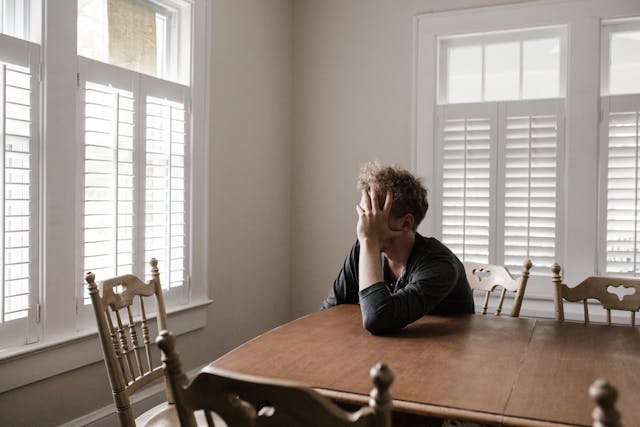

you’re not really sick or injured. You’re just feeling… off. like you should be doing something about it, but can’t quite put your finger on what’s going on.
Your shoulders are always tight. You snap at people in a split second – its a bad habit that’s developed over time. You lie in bed feeling exhausted but can’t wind down, then wake up the next morning feeling like you never actually got any rest. At some point, that can just start to become normal, and thats not normal at all.
Stress isnt all about feeling anxious or worried. It can show up in a whole lot of different ways, from tension in your muscles to a nagging tummy ache to your sleep patterns, your mood, your concentration – and if you’re not careful, it can start to take a serious toll on your health.
Most of us miss the signs because theyre not dramatic at first. Theyre just ordinary, unnoticeable things that we write off as a bad week, a bit of a temper, a stiff neck or a few sleepless nights. And over time, those little signs can start to become your default setting.
When Stress Starts Showing Up in Your Body
One of the most obvious signs is muscle tension. You feel it in your shoulders, your neck, your jaw, scalp, or lower back. You stretch it out, roll your shoulders, even book a massage (you’ve been meaning to for ages) but the ache just comes right back – and that’s not just a coincidence. Stress gets your body’s threat response going, and your muscles end up staying on high alert for far longer than they should.
Tension headaches are another classic sign – theyre often linked to tight muscles in your shoulders, neck, scalp and jaw – and the link is pretty clear: a lot of people get them when they’re stressed, depressed or anxious.
Jaw clenching and teeth grinding are another pair of signs you might not notice till they’ve caused some serious problems. Some people get jaw pain in the morning, others just get these gnawing headaches and facial soreness. A survey by the American Dental Association found that over 70 percent of dentists they spoke to had seen an increase in people grinding and clashing their teeth, and over 60 percent saw more chipped or cracked teeth and symptoms related to the TMJ.
Digestive trouble is another one people often write off as a separate issue – even when the signs are staring them right in the face. Stress can get your gut moving too fast, or make it more sensitive, or just make it react to totally normal sensations in a more extreme way. The National Institute of Mental Health says stress can do all sorts of weird and wonderful things to your digestive system. In fact, for people with Irritable Bowel Syndrome – which is a pretty common condition, affecting around 5 to 10 percent of the population and sometimes linked to anxiety and depression – treatment for the gut and the mind is often done together. A study in the medical journal Nature Reviews Gastroenterology & Hepatology points out that up to a third of people with IBS have anxiety or depression too.
Headaches can be pretty easily dismissed because they’re so darn common. People can start popping pills to get rid of them without ever wondering why they’re happening in the first place. However, if your headaches feel like a tight band around your forehead, or a heavy weight at the base of your skull, stress is a pretty good bet as to what’s going on.
the sleep signs you tend to brush off
Stress often rears its head before you’re even aware it’s there.
You crawl into bed exhausted, feeling like all you need to do is crash, but instead, your mind starts racing through all the things that are on your mind – those emails you still need to get to, deadlines looming, a conversation that went wrong, bills to pay, health worries… even things that didn’t even bother you during the day. That’s called hyperarousal. Your body is beat, but your nervous system is still wide awake.
Sleep troubles are an all-too-common problem in the US. Back in 2020, the CDC found that 14.5 percent of adults struggled to fall asleep and 17.8 percent had trouble staying asleep – and that’s most days or every single day in the past 30 days. And it’s a vicious cycle – the more you struggle with sleep, the more stressed you get. And the more stressed you get, the harder it is to get any shut-eye.
Waking up in the middle of the night and not being able to get back to sleep can be part of that same cycle. So can what looks like a full night’s sleep on paper, but waking up feeling drained. Just being in bed doesn’t mean you’re getting the rest you need. Chronic stress tends to do more than just mess up sleep quantity – it messes up the quality of your sleep too. The Mayo Clinic lists sleep problems right along with other effects of stress, and the NIMH says that ongoing stress can mess with your sleep, raise your anxiety levels and your risk of depression.
The emotional and mental signs that tend to get mislabeled
Stress isn’t always going to look like full-on panic.
Sometimes it just looks like you’ve got an itchy trigger finger – small stuff gets to you and you blow up a whole lot bigger than it deserves. Noise is a lot noisier, you lose your patience with the people you love, and you can’t seem to get past the noise to the people inside. The NIMH lists irritability, restlessness, sleep troubles, trouble focusing, and physical complaints like headaches and digestive problems as some of the first signs of strain that’s building.
Sometimes it just looks like a brain that’s gone foggy – you read the same paragraph over and over again, simple tasks take longer than they used to, and you keep switching tabs on your phone without being able to remember what you were doing. The Mayo Clinic lists lack of focus and memory troubles as common stress side effects, and chronic stress has been linked to problems with concentration and making decisions.
Sometimes it just looks like you’ve lost interest in things that used to bring you joy – and that’s actually a big deal. it’s not just that you’re burned out or your personality is shifting. The NIMH lists losing interest in things you used to enjoy as one of the core symptoms of major depression when that lasts most of the day, pretty much every day, for at least two weeks, and starts to get in the way of your daily life.
Which doesn’t mean that every time you hit a rough patch you’re depressed. But what it does mean is that stress and depression can overlap – and that overlap is worth paying attention to.
Why These Signs are So Easy to Ignore
Part of the reason we tend to overlook signs is that our culture actually rewards us for ignoring them. We’ve all been told to just push through and powered our way through exhaustion, over-scheduling, and discomfort – and all too often we’re praised for it. And let’s be honest, it’s often easier to blame a tight neck on bad posture rather than admit the real culprit: months of living in a state of stress.
But there’s another factor here that’s just as important: our own personal blindness to change. When you’ve been feeling tense, tired, and reactive for a good long while, that can start to feel like who you are, not just a condition you’re suffering through.
Stress Isn’t Always the Whole Story
Most articles seem to stop right here and call it a day – and that’s where readers need a healthy dose of reality.
Now, it’s true that stress can explain a lot of things. But it’s not an excuse to dismiss every other possible cause. You still need to see a doctor if you’re experiencing chest pain, passing out, blood in your stool, severe headaches that are new or getting worse, major weight loss, persistent vomiting or digestive issues that just won’t quit, or ongoing sleep problems that are driving you crazy. And let’s not forget jaw pain – sure, it might be stress related, but it’s also possible you need to see a dentist. Same goes for headaches – they can be tension headaches, but if the pattern is new, severe, or getting worse, you still need to get it checked out. And if sleep troubles are sticking around for weeks, that’s not just something to shrug off either.
In reality, the safest bet is to just focus on the fact that stress is one of the possible causes, and not assume it’s the only one.
Acute Stress and Chronic Stress Are NOT the Same Thing
We all experience a short burst of stress from time to time – an exam, a move, a looming deadline or a difficult conversation – and that’s just normal. Our bodies are built to handle that kind of thing. But chronic stress is something different altogether. It’s the kind that just keeps going, wears you down and never lets up.
And here’s the thing: that kind of long-term activation of the stress response is a big deal. Too much exposure to stress hormones over time can wreak havoc on lots of different bodily processes – and even raise your risk for anxiety, depression, digestive problems, headaches, muscle pain, heart disease, sleep issues, weight gain, and all sorts of problems with memory and focus, according to the Mayo Clinic.
When you catch a glimpse of yourself in this
First off, stop downplaying it. ‘Just stress’ isn’t some harmless label when the symptoms start messing with your sleep, your mood, your work, and your relationships – it’s a warning sign.
Next, get a handle on the patterns. Pay attention to when your jaw starts clenching, your stomach gives you grief, or your temper gets shorter. And take a close look at what happens before those awful nights of sleep. Keeping track of this stuff helps because until you put all the pieces together, stress can feel like just a vague feeling.
Then you need to tackle both sides of the problem. There’s the stress response itself, and then there’s the actual cause of your stress.
On the body side, what the science shows time and again is that really simple repeated habits work – things like relaxing techniques, meditation, yoga, tai chi, and guided imagery. Not only can these help manage stress and anxiety, but they can also give some relief for tension headaches when combined with cognitive behavioural strategies.
But it’s the life side that’s a bit more complicated – and way more important. If your workload is just too much, you’re getting no sleep, you’re drinking too much or your relationships are constantly on your nerves, then just having some stress tools isn’t going to cut it. You need to actually do something about the stress that’s coming from your life.
A word about mental health apps and AI
Mental health apps can be helpful for folks with check-ins, structured exercises, breathing sessions and journaling – but some are definitely better than others. A 2025 review said that when AI therapy Apps are used to support what your doctor is doing for you, then they can actually do some good – especially when used in conjunction with standard treatment.
But – and this is a big but – app quality is all over the map. And with some, the company doesn’t even tell you about their privacy practices. Research has raised some serious questions about mental health apps and recent reporting has highlighted some security flaws and some really bad AI-generated health advice in some corners of the mental health tech scene. If you do use an app, you need to be checking who made it, whether they’ve told you clearly about their privacy stuff, whether they’re using established clinical methods and whether they say what they can and can’t do. An app should never be the only source of help if you’re in a mental health crisis.
When you really need some help
Get professional help when the stress is just getting worse & worse, or when it starts to seriously impact how you live day-to-day.
We’re talking about: sleep problems that drag on for ages, headaches that become a regular thing, digestive issues that keep coming back around – the sorts that start to get in the way of your life. Then there’s irritability that starts to chip away at your relationships, rising anxiety, losing interest in things that normally bring you pleasure, or struggling to focus enough to do your job or even just get through the day. And don’t forget if you’re experiencing symptoms of depression – low mood most of the day for 2 weeks or more is a good sign you should get checked out.
Start by going to the right place – if you’ve got a medical problem they’re gonna want a primary care clinician to rule out any underlying causes. If it’s your jaw and teeth that are the problem, a dentist might be the better bet. If on the other hand it’s your mental health thats the main issue, a licensed therapist can help with chronic stress, anxiety, sleep troubles, depression… the list goes on. The thing to remember is you don’t have to get it right first time out.
The point is, you’ve got to start taking these warning signs seriously – not just treating them as background noise.
The big picture
Stress doesn’t usually come along and slap you in the face saying “Hello – I’m stress!” No, it tends to sneak up on you. It starts with a tight jaw, some poor sleep, headaches that come back, digestive issues, irritability… and then your brain just doesn’t seem to be working as well as it used to. And most of the time it doesn’t get much better until the stress gets too much for you to handle.
Those tight jaws, sleepless nights, headaches, digestive problems, irritability and brain fog aren’t all just random – they are your body saying “I’m struggling to cope”. So you don’t have to wait for something to come crashing down around your ears before you take notice. If you spot the pattern early you can take action.