
Most sustainability conversations focus on renewable energy, electric vehicles, and plastics. Far less attention goes to what happens inside homes when water is used inefficiently. That blind spot is costly—because household water waste is not just a water issue. It is also an energy and emissions issue.
Every gallon that reaches your tap has already moved through a resource-intensive chain: withdrawal from a source, treatment to drinking-water standards, pressurization and distribution through miles of pipe, and—after use—collection and treatment again. When water is wasted at home, you’re not only paying a higher bill. You’re increasing demand on water infrastructure and the energy that powers it.
Water Waste Is a Resource Issue, Even Where Water Feels “Abundant”
Freshwater is finite, and supply is shaped by infrastructure capacity, climate variability, and population growth—not just rainfall. Household waste adds avoidable pressure to that system, especially when it’s continuous.
The most underestimated driver is leakage. EPA WaterSense estimates that the average household’s leaks can waste more than 10,000 gallons of water per year, and that household leaks waste more than 1 trillion gallons annually nationwide.
That’s the real point: a single slow leak feels trivial. Multiplied across millions of homes, it becomes system-scale demand.
The Energy Footprint of Water: The Part Homeowners Rarely See
Water doesn’t “arrive” in your home—it’s pumped, treated, and transported. Wastewater is then collected and treated before it reenters waterways. Those steps require electricity and equipment that must run reliably every day.
When households use more water than necessary, utilities must:
- pump and move more volume,
- treat more water to drinking standards,
- and process more wastewater on the back end.
In many regions, that electricity is still partially fossil-fueled—so water waste can translate into higher emissions even if nothing about your home’s direct energy use changes.
Hot Water Waste Is a Double Penalty
Cold water waste is costly. Hot water waste is worse, because you’re wasting both water and the energy used to heat it.
The U.S. Department of Energy estimates water heating accounts for about 18% of a home’s energy use, typically the second-largest energy expense in a home.
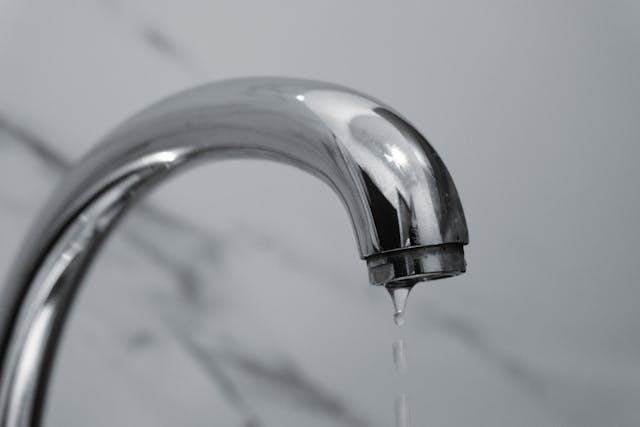
That makes small failures—like a leaking hot-water line, a dripping faucet on the hot side, or a continuously running hot-water recirculation loop—environmentally heavier than they look. They’re not just “a little water.” They’re recurring energy demand.
The Leak Problem: Why Gradual Loss Adds Up
Not all plumbing problems announce themselves with flooding. Many develop quietly:
- worn toilet flappers,
- degrading seals,
- corroded fittings,
- small supply-line leaks,
- slow toilet runs.
EPA specifically flags toilet flappers as a common culprit that can cause a toilet to “flush on its own” or silently leak thousands of gallons per year.
Consulting a local plumbing team when irregularities first appear can prevent prolonged waste and reduce environmental harm.
The sustainability lesson is straightforward: small, continuous losses are often more significant than occasional, visible events because they persist undetected.
Wastewater Has Its Own Environmental Burden
Every gallon leaving a home becomes someone else’s treatment job. Wastewater facilities rely on mechanical aeration, pumping, and treatment processes that consume energy and require ongoing maintenance.
When residential water use increases unnecessarily, the system must scale to handle it—either through more operational intensity today or larger infrastructure investments tomorrow. And during heavy rain events, overloaded or older systems can face greater risk of overflow incidents, which can degrade water quality downstream.
Reducing household waste supports both:
- freshwater conservation upstream, and
- reduced treatment burden downstream.
Efficiency Fixtures Help—But Only If the System Isn’t Leaking
Upgrading fixtures can cut daily demand without sacrificing comfort. But there’s a catch that many homeowners miss:
Efficiency gains are reduced or erased when the underlying system leaks.
A high-efficiency toilet connected to a slow supply leak still wastes water. A low-flow showerhead doesn’t help if a hot-water line is dripping behind a wall. In practice, the most effective “efficiency upgrade” is often basic maintenance—because it prevents continuous loss.
A Practical, Systems Approach for Homeowners
If you want a sustainability framing that’s actually operational, treat household water like a managed system:
- Stop continuous losses first (leaks and runs).
These are the highest-leverage fixes because they operate 24/7. - Target hot water next.
Given water heating’s share of household energy use, hot-side leaks punch above their weight. - Then modernize fixtures and habits.
Fixtures and daily behaviors matter most after the system is tight.
This order matters because it turns conservation into impact per dollar and impact per hour, not just good intentions.
Prevention Is Environmental Responsibility (and Usually the Cheapest Form)
Preventive maintenance is not glamorous, but it is one of the simplest ways to reduce household footprint:
- check toilets for silent runs,
- replace worn seals and supply lines proactively,
- fix drips early,
- watch for unexplained bill increases.
EPA’s leak estimates make the case for urgency: when the “average home” can lose 10,000+ gallons annually to leaks, prevention is not marginal—it’s meaningful.
The Bottom Line
Water conservation is often reduced to shorter showers and turning off the tap while brushing teeth. Those behaviors help—but they miss the bigger issue: system inefficiency inside the home, especially leaks and hot-water losses.
Household water waste quietly drives upstream extraction and treatment demand, and downstream wastewater treatment burden—often with a parallel energy and emissions impact. If sustainability is about reducing avoidable resource throughput, then fixing small plumbing problems isn’t “home maintenance.” It’s a practical form of environmental action—steady, measurable, and scalable.