
The Quick Answer:
Dentists haven’t given up on nitrous oxide (also known as “laughing gas”) – but its use has actually taken a bit of a tumble in the States over the past decade. Mainly because of all the extra regulations, staff exposure worries, higher overhead, insurance that doesn’t cover it, and newfangled alternatives that are just better all around. When used right, nitrous oxide is still comparatively safe, but these days it’s not the go-to for most dental patients.
What is Nitrous Oxide (Laughing Gas)? – The Basics
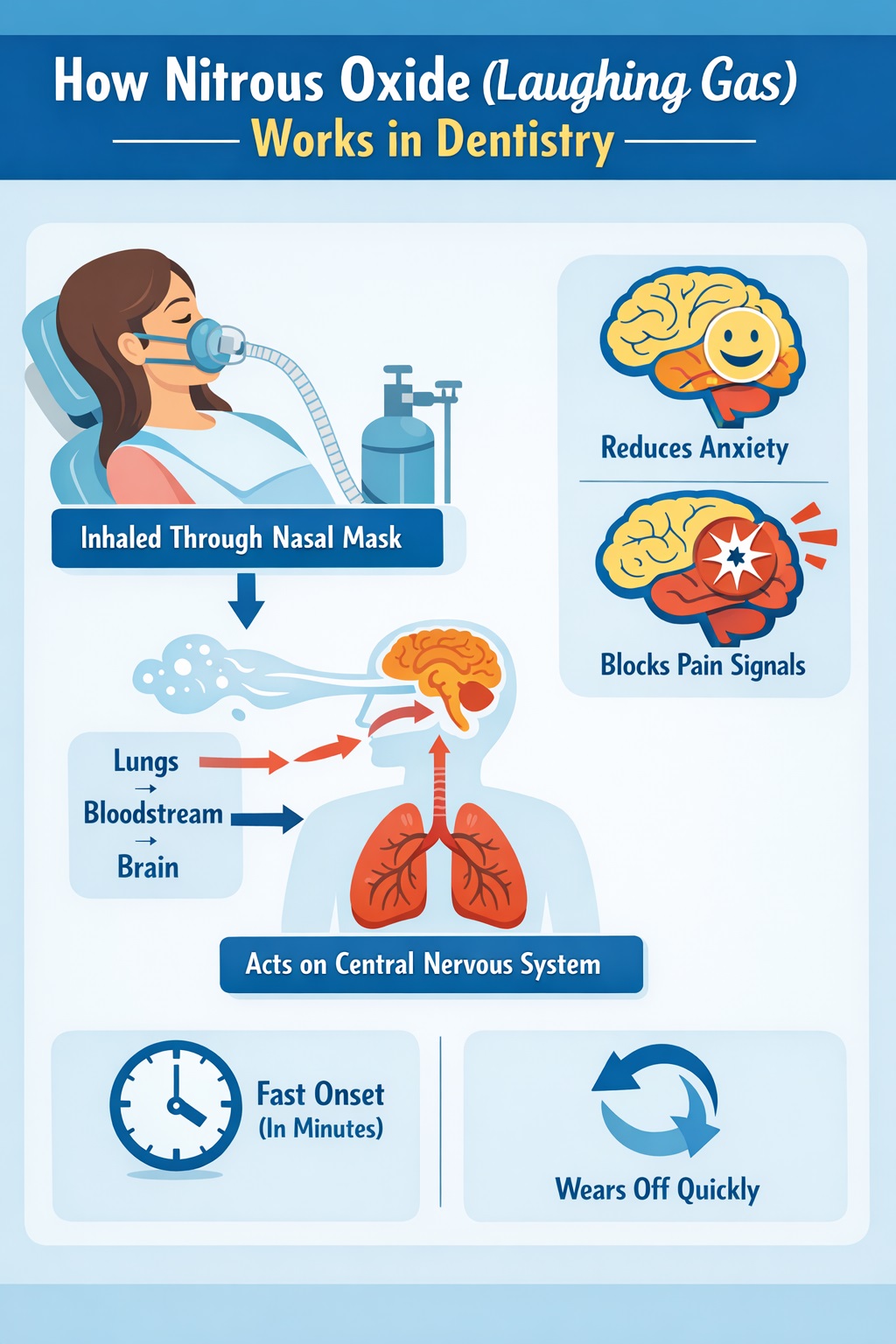
Nitrous oxide is a clear gas that’s got a slightly sweet smell and you breathe it in through a small mask that they put over the end of your nose. In dentistry it’s used to really take the edge off when you’re getting some work done.
From a medical view-point and also a chemistry point-of-view, nitrous oxide works by:
- Calming down the central nervous system a bit
- Changing how you feel pain
- Making you feel all relaxed and easy-going within minutes
It was really popular because it gets out of your system super quick, so you can drive home and just get back to your normal life pretty much right away.
Do Dentists Still Use Nitrous Oxide?
Yeah, they do – but a whole lot less than they used to.
Nitrous oxide is still used a fair amount in:
- Pediatric dentistry – for kids who are likely to freak out a bit
- Low-risk procedures – where a small amount of sedation can really help
- Some private practices that have got their ventilation systems sorted out
But – a lot of larger dental clinics and corporate chains have pretty much stopped using it because of all the logistical, financial, and safety considerations.
Why Don’t Dentists Use Nitrous Oxide Anymore?
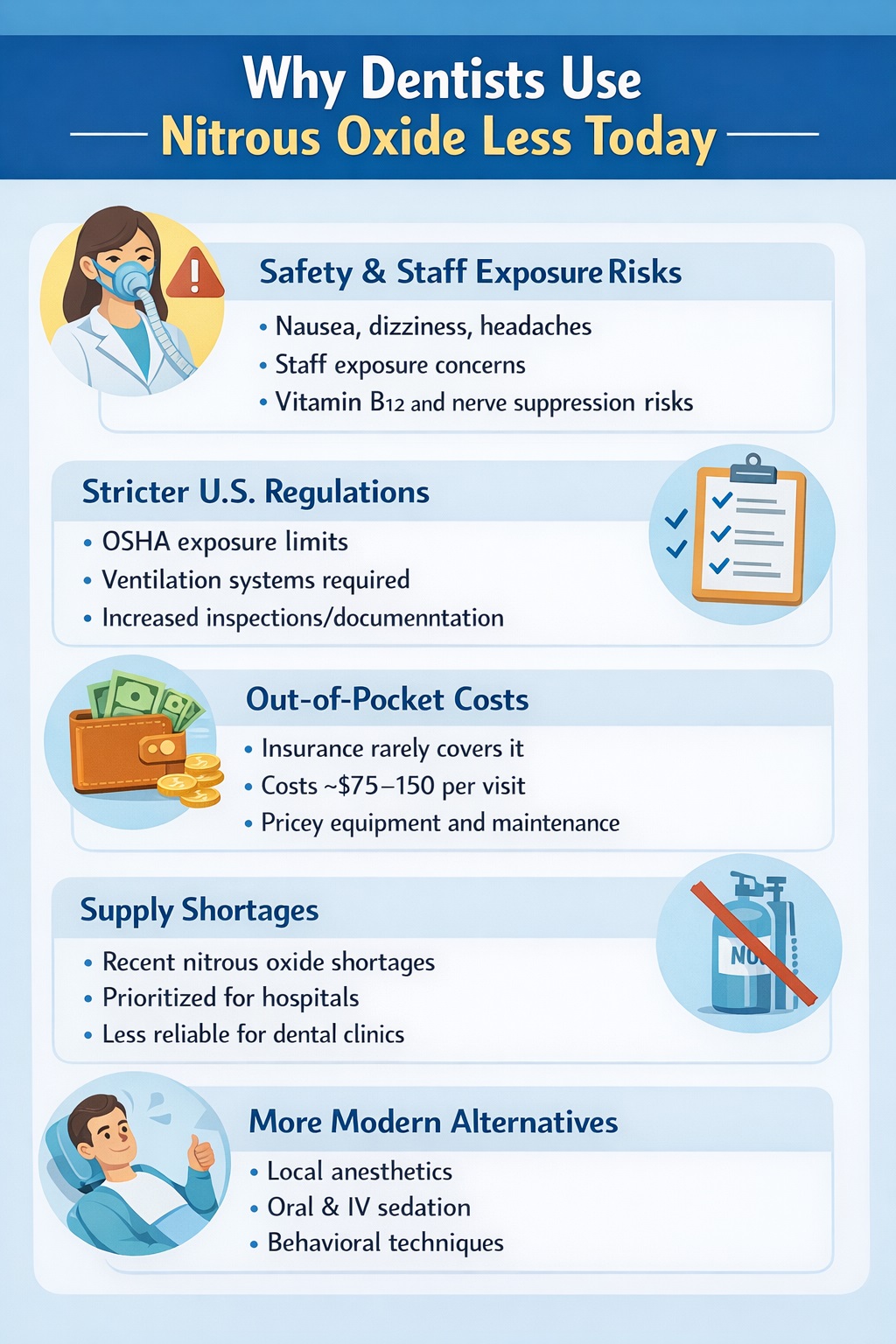
1. Safety Concerns for Patients and Staff
Nitrous oxide isn’t really a problem for most healthy patients – but short-term side effects can include:
- Feeling queasy or wanting to vomit
- Dizziness or a headache
- Getting a bit disoriented when you’re coming out of it
But the bigger concern is for the staff. Long-term exposure – working with nitrous oxide all the time – has been linked to:
- Vitamin B12 deficiency
- Some neurological problems
- Reproductive health issues
So, clinics have got to spend a fair bit to sort out all the ventilation and safety systems – which is a hassle.
2. Health Complications Down the Line
Nitrous oxide can mess with your body’s ability to get vitamin B12. For people who are already running low on B12, repeated or prolonged exposure can up the risk of:
- Nerve damage
- Blood disorders
- Worsening conditions if you’ve already got something
Because of this, dentists have to screen patients who might be at risk – people with:
- Low B12 levels
- Certain breathing issues
- Pregnancy
- Genetic or metabolic issues
3. Safety Rules Got a Lot Tighter
In the US, workplace safety regulations have really clamped down on the use of nitrous oxide. You’ve got to have:
- Monitoring systems to keep an eye on air quality
- Proper gas scavenging systems to deal with any leaks
- Staff to keep track of exposure levels
For smaller clinics, it can be a major pain – time-consuming, costly… all of that.
4. Cost and Insurance Issues
Nitrous oxide is pretty much considered a nice-to-have rather than a must-have – so:
- Most insurance doesn’t cover it at all
- People have got to pay out of pocket – which can be $75 to $150 per visit
- Clinics have got to cover the extra costs themselves
All of this makes it a lot less appealing for dentists.
5. Shortages and Industry Shakes-Up
There have been some pretty big shortages of nitrous oxide in the last few years – especially for hospitals and emergency rooms. Medical suppliers have been prioritizing the really critical uses, which has made it harder for dentists to get their hands on it. This accelerated the shift away from routine dental use.
Is Laughing Gas Still Safe in 2026?
The Verdict: Nitrous Oxide is Still Okay When Used with Care
The medical consensus hasn’t changed: nitrous oxide is safe for short term dental use in perfectly healthy patients, if dentists follow the proper procedures.
There’s one catch: what has changed is the “what’s it worth?” question compared to newer options on the table.
What Do Dentists Use Instead of Nitrous Oxide?
Local Anesthetics – The Most Popular Option
New painkillers are really good at numbing pain in the treatment area without messing with your brain. For a lot of procedures, that’s all the patient needs.
Oral Sedation
Dentists might prescribe some anti-anxiety medication for patients to pop before the appointment. This takes the edge off, without needing special gear.
IV Sedation
It’s used for really complicated cases, or for patients that are super anxious about the dentist chair. It’s a bit more invasive, but it gets the job done under medical supervision.
Non-Drug Anxiety Management
More and more practices are moving to:
- Being super clear about what’s going to happen
- Keeping visits super short
- Using noise-cancelling headphones to block out any scary sounds
- Scheduling appointments with the patient’s comfort in mind
These approaches are a lot better for anxiety than drugging the patient.
Why Some Patients Are Still Hooked on Laughing Gas
A lot of people have a positive association with nitrous oxide from when they were kids – it makes them feel:
- Less scared
- Fewer injections – or at least, it feels that way
- More in control
But the thing is, modern dentistry has moved on, and sometimes alternative methods are just as good – if not better.
Nitrous Oxide and Children: Because It’s Not As Simple As It Used to Be
In pediatric dentistry, nitrous oxide is sometimes used, but with a lot more caution now. The dentist has to weigh up:
- The patient’s medical history
- Can they breathe through their nose okay?
- How well will they cope with the whole experience
For a lot of pediatric procedures, they don’t need to use nitrous oxide at all, and just use other techniques that are really gentle.
Should You Ask Your Dentist About Nitrous Oxide?
Ask about it if:
- You’re totally terrified of the dentist
- The procedure is a quick one
- You’re in good health and don’t have any underlying medical issues
Some good questions to ask might be:
- Am I a good candidate for nitrous oxide?
- What other options do you think might work better for me?
- How much is the treatment going to cost, and how long will I need to recover?
Common Myths About Laughing Gas
“Dentists stopped using it because it’s super bad for you.”
Not true – it’s still safe, but not as practical as it used to be
“Nitrous oxide is banned in the US”
Just plain wrong – it’s still legal to use it
“It works the same for everyone.”
Nope – how well someone will respond to it really depends on their health status and what they’re used to.
Final Takeaway
Dentists haven’t ditched nitrous oxide entirely, but they are a lot more picky about when to use it. The cost, the risks for the dentist and the staff, and the fact that there are now some really good alternatives have all made it less common.