

A practical, future-ready guide for lower bills and a smaller footprint
Rising energy prices and growing climate pressure are reshaping how we live at home. In 2026, energy efficiency is no longer just an eco-friendly upgrade—it’s a financial safeguard.
The good news? Making your home more energy-efficient does not require a full renovation or luxury technology. Many of the most effective improvements are practical, affordable, and scalable over time.
This guide focuses on the upgrades that deliver the highest real-world impact in 2026, based on how homes actually use energy—not theory.
Start Where Energy Loss Is Highest: Heating and Temperature Control
Heating is the biggest energy cost in most homes, especially in cold areas. Improving how heat is made, moved, and controlled can lower bills fast.
Upgrade Old Heating Systems
If your heating system is more than 10–15 years old, it is likely wasting energy.
New heating systems and modern radiators:
- Heat rooms faster
- Keep temperatures steady
- Reduce energy lost from overheating
Many new systems work well at lower water temperatures. This cuts fuel use while keeping rooms comfortable.
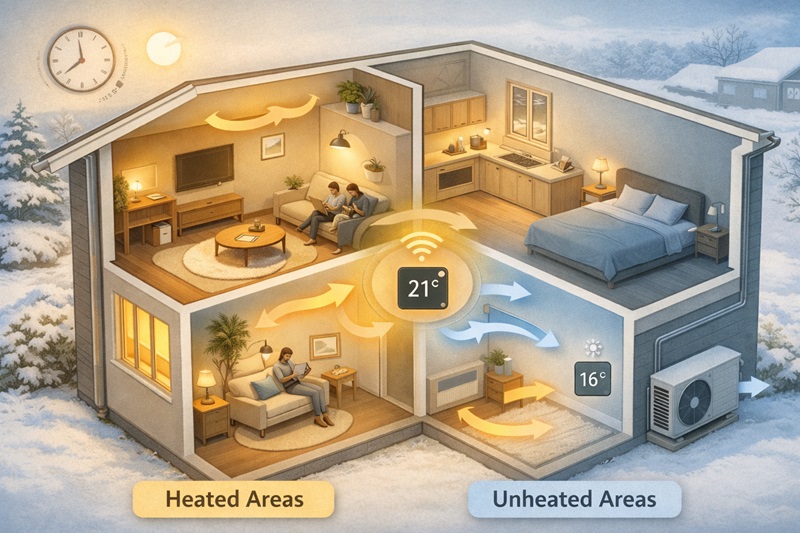
Use Smart Zoning Instead of Heating the Whole House
Heating empty rooms is one of the most common ways people waste energy.
Smart zoning systems let you:
- Heat only the rooms you use
- Set different temperatures for each area
- Reduce heating time on its own
Most zoning systems work with existing thermostats and do not need a full upgrade. For homes with busy or changing schedules, zoning can cut heating energy use by 15–30%.
Insulation and Air Sealing: The Best Long-Term Savings
The best way to save energy is to keep heat inside your home.
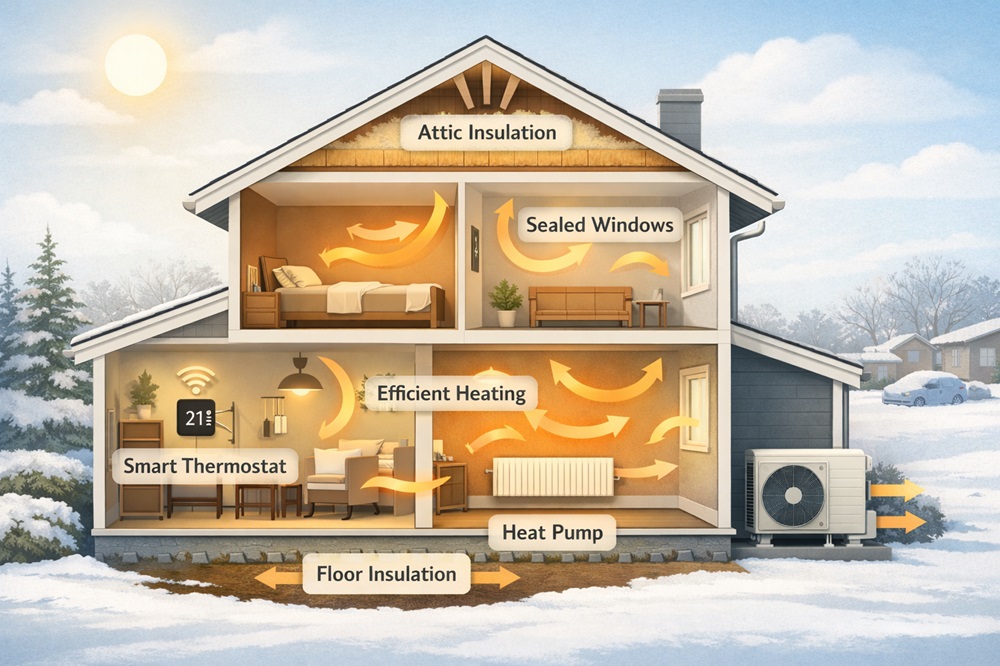
Insulation Upgrades That Still Matter in 2026
Even newer homes may not have enough insulation.
High-impact areas to check first:
- Loft or attic insulation
A depth of 300–350 mm works best in 2026 - Cavity wall insulation
Very important for homes built before the 1980s - Floor insulation
Often missed, but critical for timber floors
Good insulation can cut heating needs by up to 40%. It also makes every other upgrade work better.
Seal the Gaps You Can’t See
Small gaps let warm air escape all day and night.
Focus on sealing:
- Door edges and thresholds
- Window gaps
- Pipe and cable holes
- Loft hatches and access panels
Air sealing costs little, installs fast, and often improves comfort within days.
Heat Pumps: The 2026 Heating Shift You Can’t Ignore
Heat pumps are no longer future tech. In many places, they are now a common heating choice.
Why Heat Pumps Matter Now
Modern air-source heat pumps are very efficient.
They:
- Produce 3–4 units of heat for every unit of electricity
- Work well with renewable power
- Reduce the need for gas or oil
Heat pumps work best in:
- Well-insulated homes
- Homes with modern radiators or underfloor heating
Even without solar panels, heat pumps can lower running costs compared to old gas or electric heaters.
Smarter Energy Use: Habits That Still Save Money
Technology helps, but daily habits still matter a lot.
Low-Effort Changes With Real Impact
Simple habits can cut home energy use by 10–20%:
- Wash clothes at 30°C
- Air-dry laundry instead of using a dryer
- Run dishwashers and washing machines only when full
- Unplug devices that use power when not in use
These changes cost nothing. Over time, the savings add up.
Efficient Appliances and Lighting Still Pay Off
Upgrading small things can still make a big difference.
LED Lighting Is Still One of the Best Upgrades
LED bulbs are very efficient:
- They use up to 90% less energy
- They last much longer
- They give off less heat
By 2026, most energy-efficient homes should use LED lights in every room.
Choose Appliances That Use Energy Better
New appliances waste less power while running and when idle.
Good examples include:
- Induction cooktops
- Modern refrigerators
- High-efficiency washing machines
Each upgrade may seem small, but together they reduce daily energy use.
Solar Panels and Home Batteries: Optional, but Powerful
Solar panels are no longer just for early adopters. They are becoming a practical part of how many homes use energy.
That said, solar panels are not required for an efficient home in 2026. A well-insulated house with smart heating can perform very well without them. But when solar does make sense, it can change energy costs in a meaningful way.
For homeowners with enough roof space and good sunlight, solar panels offer something rare: predictable energy costs. By making power at home, households rely less on the grid and avoid sudden price changes. This control becomes even more valuable when solar is paired with heat pumps or electric vehicle chargers, which work best with local power.
Home batteries can extend these benefits, but timing matters. A battery does not make energy. It stores energy for later use. Homes that use more power during the day often see the best results, because extra solar energy can be saved and used in the evening.
In areas with power cuts, batteries also add peace of mind. They keep key systems running when the grid goes down.
Solar panels and batteries are not right for every home. But in the right setting, they shift efficiency from saving money to gaining energy independence.
The Big Picture: Why Energy Efficiency Works Best as a System
Many homeowners treat efficiency upgrades as single fixes. In reality, efficiency works best as a connected system.
Insulation comes first. It reduces how much heat escapes from the home. With lower heat loss, heating systems work less and cost less to run. Smart controls then make sure energy is only used when needed. This stops small losses from turning into high bills.
Daily habits matter too. How you wash clothes, use appliances, and set temperatures helps protect these gains over time.
No single upgrade does all the work. But together, they add up. Each step makes the next one more effective. Over time, the home becomes easier to heat, easier to manage, and cheaper to run.
The most efficient homes do not rely on one standout feature.
They rely on balance.
Conclusion: Your Most Efficient Year Starts With Small Steps
Improving home energy use in 2026 does not require a full remodel or a perfect plan.
It starts with focus.
By paying attention to what matters most—how your home keeps heat, how energy is delivered, and how it is used each day—you can make steady progress without disruption. Updating heating where it counts, improving insulation and air sealing, and building better habits all deliver lasting results.
When the time is right, efficient technologies can be added to strengthen what already works.
Energy efficiency is not about reaching an end point.
It is about moving in the right direction, one smart choice at a time.
The most efficient homes are not built overnight.
They are built step by step—starting now.