
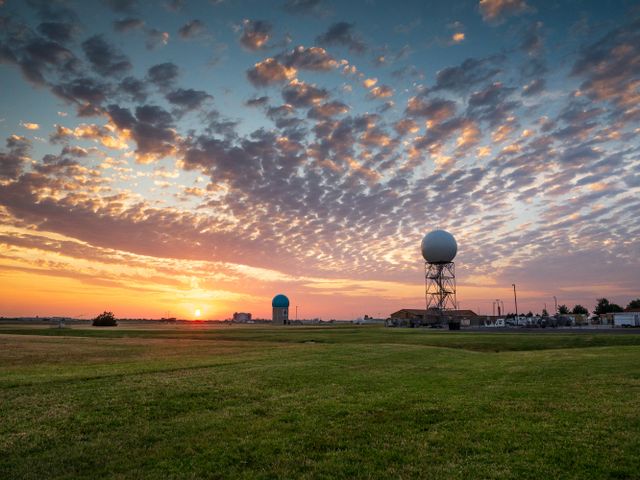

Weather radar is often judged by how far it can see, but greater distance isn’t always the most important advantage. Sometimes the bigger need is seeing what’s happening within a smaller area in greater detail. Localized precipitation and storm features can change quickly, making closer observation particularly useful when conditions develop over a specific community or facility.
Different radar technologies are built around different priorities. Some provide broad regional coverage, while others can focus more closely on weather activity within a targeted geographic area. Neither approach automatically replaces the other because they answer different monitoring needs.
For organizations that need a closer look at local conditions, technologies such as x-band weather radars can provide high-resolution observations across targeted areas. That localized perspective can complement broader weather information by revealing details that larger-scale monitoring may not capture as clearly.
Why Radar Frequency Makes a Difference
Weather radar works by transmitting radio waves and analyzing signals that return after interacting with precipitation and other targets. The characteristics of those waves influence what the system can detect and how the resulting information can be used.
Shorter wavelengths can provide detailed observations of precipitation across relatively localized areas. That makes them useful when the goal is examining weather activity more closely rather than simply extending coverage across the greatest possible distance.
There are tradeoffs, however. Heavy precipitation can weaken radar signals as they travel, which may limit what the system can observe farther away. Frequency therefore becomes one factor in balancing detail, coverage, operating environment, and the specific information users need.
Seeing Weather at a More Local Scale
Broad regional radar provides valuable information about storms moving across large areas. Local monitoring can add another perspective by showing smaller variations in precipitation that may matter significantly within individual communities or operational environments.
Higher-resolution observations can help reveal differences in rainfall intensity and storm structure across relatively short distances. Instead of treating a large area as though it’s experiencing identical conditions, users can gain a more detailed picture of what’s happening at specific locations.
That information can be particularly useful when weather varies sharply across a metropolitan area or other concentrated region. Local detail provides another layer of information for people making decisions based on conditions happening close to them.
Where Local Radar Systems Can Be Useful
The value of detailed weather information depends heavily on who’s using it. Researchers may need localized observations for atmospheric studies, while municipalities can benefit from closer monitoring of precipitation that may contribute to flooding or other weather-related concerns.
Airports and emergency management organizations also operate in environments where rapidly changing local conditions can matter. Additional weather observations can support situational awareness alongside forecasts, regional radar, ground measurements, and other available information.
Specialized systems can also support locations where existing radar coverage has limitations because of distance, terrain, or other factors. The objective isn’t necessarily replacing broader networks but adding information where more localized observations provide practical value.
Smaller Range Does Not Mean Less Valuable Data
It can be tempting to assume that radar covering a larger area is automatically more capable. In practice, radar selection involves tradeoffs, and the best technology depends on what information someone is trying to collect.
Broad coverage is valuable for tracking large weather systems and observing how storms move across regions. More localized systems can provide detailed observations within smaller areas where decision-makers may need a closer picture of precipitation and rapidly changing conditions.
These capabilities can complement one another. Weather monitoring becomes stronger when information from different technologies is considered together, allowing broad regional awareness to be supported by additional detail in locations where closer observation matters most.
Conclusion
No single radar technology is ideal for every weather monitoring challenge. Different frequencies and system designs offer different balances between coverage, resolution, operating requirements, and the types of conditions they can observe effectively.
For some applications, seeing hundreds of miles away is the priority. For others, knowing more about precipitation developing within a city, around an airport, or across another targeted area may provide information that’s particularly useful for local decisions.
The value of weather radar therefore isn’t determined by range alone. Choosing technology around the information actually needed can reveal details that broader systems may not show as clearly, adding another useful perspective to the larger picture of changing weather.