

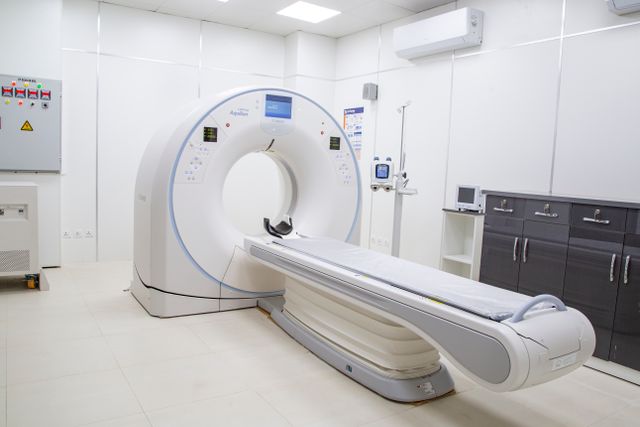

Hidden flaws can sit inside castings, welds, batteries, or printed parts long before a surface mark appears. Traditional checks may miss buried changes or require sectioning that ruins the sample. Industrial computed tomography gives engineers a non-destructive path to internal evidence. One scan can reveal geometry, material loss, voids, and wall variation while keeping the component available for further testing, review, or service use.
A View Inside
Manufacturers often require clear proof before a part enters service, especially when fracture risk, leakage, or poor fit could harm performance. Industrial CT supports this need by capturing many X-ray views during rotation, then rebuilding them into a three-dimensional volume. The result shows pores, cracks, trapped matter, and hidden channels without cutting, grinding, or disassembling the item.
How Reconstruction Works
Each scan produces a long series of radiographic images from changing angles. Reconstruction software combines those views into a digital volume built from tiny elements called voxels. Every voxel stores position and density data, which creates a measurable internal map. Engineers can section that map in any plane, inspect concealed passages, and compare intended geometry with the actual material condition from one preserved sample.
Defects Before Failure
Subsurface defects often begin small, then grow under heat, pressure, vibration, or cyclic load. Computed tomography helps teams locate pores in cast metal, lack of fusion in additively made parts, and inclusions inside dense stock. Size matters, yet placement matters just as much. A minor void far from stress may be harmless, while clustered porosity near a load path can shorten service life.
Measuring Assemblies
Joined parts present a different inspection problem because disassembly can change fit, crush seals, or hide the original contact pattern. Computed tomography maintains the assembly’s integrity during review. That allows engineers to inspect alignment, clearance, overlap, and internal seating under realistic conditions. Virtual sectioning offers another advantage, as analysts can create many cross-sections later without touching the physical unit again.
Density Adds Evidence
Dimensions tell part of the story, but density contrast often provides the first warning sign. X-rays pass through air, polymer, aluminum, and steel at different rates, which makes internal material changes visible. Analysts can separate foreign matter from base stock and distinguish solid regions from space. During failure review, density maps may reveal crushed zones, fluid paths, or trapped gas pockets.
Where It Helps Most
Use spans many industries because hidden defects appear in products of every size. Aerospace teams inspect dense components where internal soundness affects safety margins. Automotive suppliers review castings for porosity, shrinkage, and uneven wall thickness. Electronics groups examine solder joints, layered boards, and enclosed features. Medical manufacturers verify narrow passages and assembled devices where internal blockage or poor fit could alter function.
Limits and Good Practice
No inspection method answers every question. Very thick, high-density material can reduce image clarity, and oversized parts may exceed system capacity. Setup matters as well, because power, filtration, detector choice, and orientation affect contrast and detail. Good practice begins with a defined objective. Engineers should decide whether the scan is meant for defect detection, dimensional verification, wall analysis, or assembly review.
What Buyers Should Check
Service quality depends on more than just machine power. Buyers should ask about measurement traceability, operator training, repeatability, and reporting depth. Accreditation can strengthen confidence in dimensional results. System range matters too, since delicate electronics and dense metal demand different energy levels. Turnaround time is also important when production is waiting. Strong providers pair hardware capability with disciplined analysis and plain, useful reporting.
Conclusion
Industrial computed tomography gives engineering teams a practical way to inspect hidden structure without harming the part itself. It combines X-ray imaging, digital reconstruction, and measurable internal review within one workflow. That approach supports earlier defect detection, clearer assembly assessment, and firmer evidence for production decisions. As materials grow more complex and tolerances tighten, this method helps teams preserve the sample while gaining a truthful internal picture.