

Sustainable landscape design helps fix common yard problems. These include standing water, muddy grass, soil loss, patio runoff, and plants that keep dying.
It is not just about a yard that looks natural. It is about a yard that works better. A good design helps rain soak in, keeps soil in place, and helps plants grow in the right spots. It also helps the yard hold up during heavy rain.
This matters for many U.S. homes. Heavy rain and runoff now cause more stress in many towns and cities. The EPA points to green tools like rain gardens, porous paths, and planted stormwater areas as ways to slow and clean rainwater where it falls.
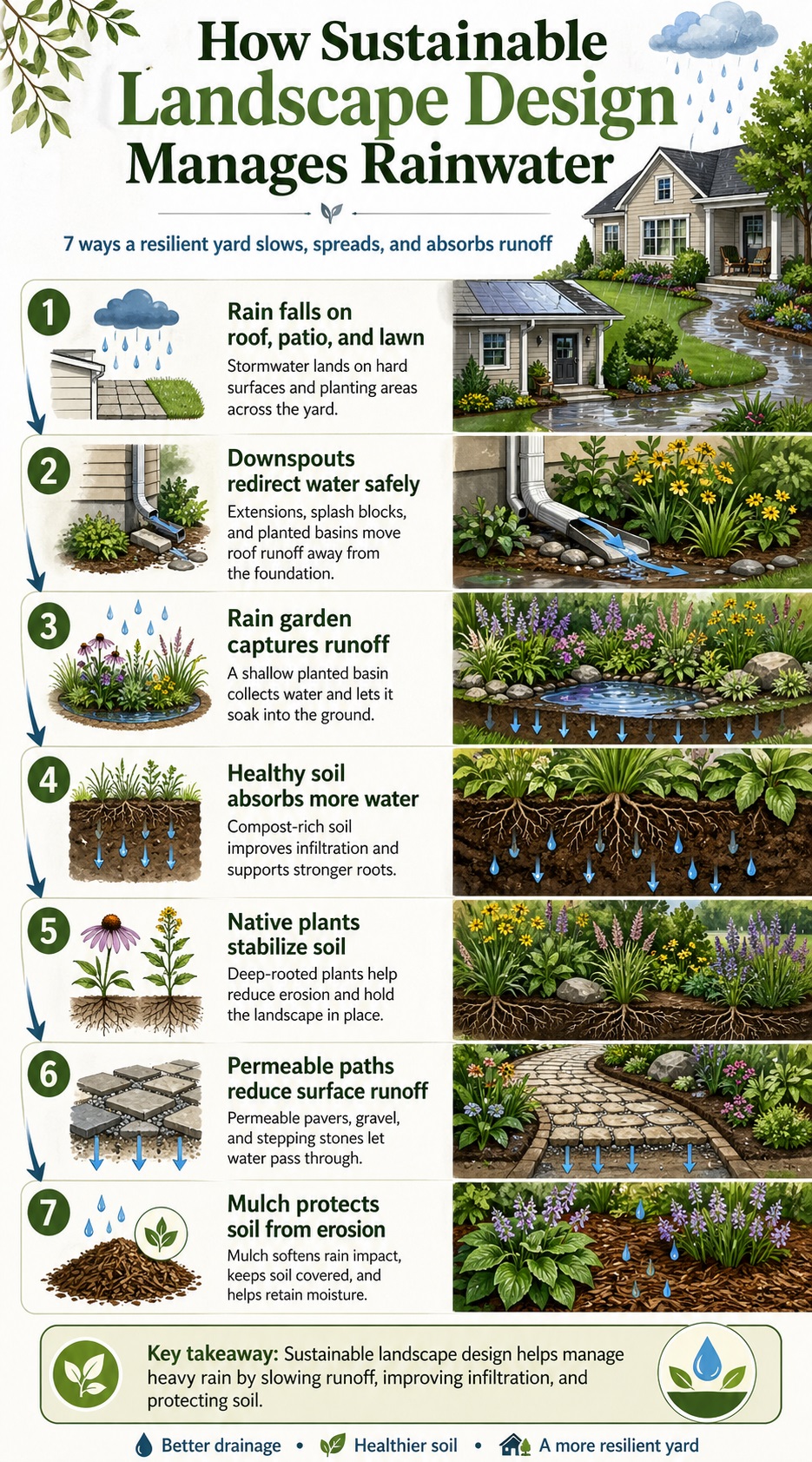
Sustainable landscape design helps water slow down, spread out, and soak into the ground. It uses healthy soil, smart slopes, mulch, rain gardens, native plants, and porous surfaces. These features cut runoff, protect soil, and make the yard stronger.
Why Yard Drainage Matters
Poor drainage is more than a wet lawn. It can wash mulch out of beds. It can leave bare soil. It can expose tree roots. It can also send dirty water toward drains, patios, basements, or the home’s base.
Old-style yard design often tries to move water away fast. That can help one area but hurt another. Fast runoff can cut into soil. It can flood low spots. It can carry lawn chemicals into drains. It can also push water toward streets or nearby yards.
A better design works with the land. It looks at where water comes from and where it goes. Then it slows the flow. It helps more rain sink into the soil. It also protects the top layer of soil.
This is why drainage, soil care, and yard strength go together.
What Is Sustainable Landscape Design?
Sustainable landscape design means planning a yard so it uses less water, protects soil, and needs less upkeep. It also helps birds, bees, and other life.
It is about more than native plants. It includes soil care, plant choice, runoff control, slopes, paths, patios, mulch, and long-term care.
A sustainable yard works like a living system. Each part has a job. The soil holds water. Plants slow rain. Mulch shields the ground. Porous paths let water pass through. Together, they make the yard easier to care for and better able to handle storms.
You may like this : Top 6 Best Landscape Places In the World
Sustainable Landscape Design vs. Conventional Landscaping
| Conventional Landscaping | Sustainable Landscape Design |
| Moves water away quickly | Manages water closer to where it falls |
| Relies heavily on turf and hard surfaces | Uses diverse planting, soil care, and permeable areas |
| Can increase runoff | Reduces runoff and erosion |
| Often treats soil as a background material | Treats soil as the foundation of the landscape |
| Focuses mainly on appearance | Balances beauty, function, ecology, and resilience |
| May require more irrigation and fertilizer | Builds lower-input, site-adapted systems |
Why Poor Drainage Hurts More Than Your Lawn
A wet, muddy yard may look like a small problem. But the real cause often starts under the soil.
Packed soil makes it hard for water to sink in. Rain then flows over the ground. This can wash away topsoil. It can uncover roots. It can carry dirt into drains. It can also cut small paths through garden beds.
The USDA Natural Resources Conservation Service says soil damage can hurt soil structure. It can also slow water movement, raise runoff, and make soil easier to wash away. Healthy soil works the other way. It helps water move down, feeds soil life, and helps roots grow strong.
Common signs of poor drainage include:
- Water sits for more than one day after rain
- Lawn paths stay muddy where people or pets walk
- Mulch washes out of garden beds
- Soil piles up at the bottom of a slope
- Bare spots form where grass will not grow
- Downspouts cut lines into the soil
- Plants turn yellow, rot, or fail again and again
- Water moves toward the house instead of away from it
A smart yard plan starts by reading these signs.
Start With the Site: Where Does Water Go?
Before you add plants, stone, drains, or patios, watch the water.
The best time to check is during rain or just after a storm. Look for where water pools. Watch how fast it moves. Notice which spots stay wet the longest.
Do not see the yard as flat space. See it as a small water map.
What to Check After Rain
Look for:
- Low spots where water sits
- Bare soil where water moves fast
- Downspouts that drain onto packed grass or hard ground
- Slopes that send water toward the home
- Soil that stays wet for days
- Mulch or gravel that has moved downhill
- Paths or patios that send water into garden beds
- Lawn spots that stay thin, muddy, or mossy
These clues show what your yard needs. Some areas need to slow water. Some need to move it. Some need to soak it in. Others need soil cover.
Check Soil Type and Packed Soil
Soil type guides each drainage choice.
Clay soil drains slowly. Its tiny parts hold water for a long time. Sandy soil drains fast, but it can dry out and lose nutrients. Loam is often best. It holds some water and still lets extra water pass through.
But even good soil can fail when it gets packed down.
Try a simple test after rain. Push a garden trowel or screwdriver into the soil. If it is hard to push in, the soil may be packed. If water sits on top for hours, water is not sinking in well. If water drains fast but plants still fail, the soil may need more compost or mulch.
Build Healthy Soil First
Soil is the base of a strong yard. If the soil is weak, plants struggle. Drainage tools also work less well.
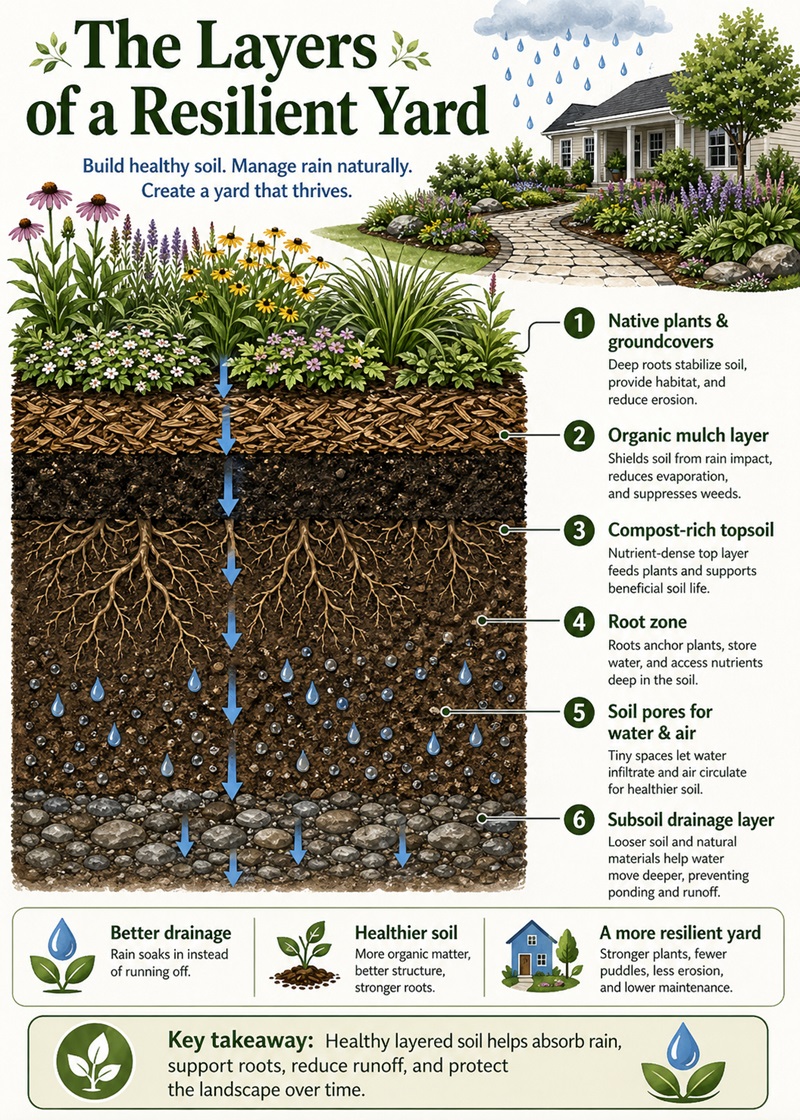
Healthy soil has small open spaces. These spaces let air, water, roots, and soil life move through it. They also help rain soak down instead of running across the yard.
Add Compost and Other Natural Matter
Compost is one of the best ways to help soil. It improves soil shape, feeds soil life, and helps manage water.
In clay soil, compost helps loosen tight soil. This makes it easier for water to move through. In sandy soil, compost helps hold water and nutrients. In garden beds, it helps roots grow well.
Good choices include:
- Finished compost
- Leaf mold
- Composted bark
- Aged mulch
- Thin layers of grass clippings
- Shredded leaves
Do not treat soil care as a one-time job. Build soil slowly. Add compost. Use mulch. Let roots grow. Avoid digging too much. Over time, the soil gets stronger.
Reduce Packed Soil
Packed soil acts almost like hard pavement. Water runs off it. Roots have a hard time growing. Plants become weak.
To reduce packed soil:
- Do not walk on garden beds
- Do not dig wet soil too much
- Use stepping stones or clear paths
- Aerate packed lawn areas when needed
- Keep cars and heavy tools off soft soil
- Add mulch to protect soil from feet and rain
Badly packed soil may need expert help. A landscaper can loosen the soil, add the right material, and plan better paths.
Keep Soil Covered
Bare soil is easy to damage. Rain hits it hard. It breaks the surface and washes fine soil away.
Mulch, ground covers, thick plants, and fallen leaves help shield the soil. They also keep soil cooler, hold water, and feed soil life.
A strong yard should have very little bare soil once plants grow in.
Use the Right Plants to Manage Water
Plants do more than make a yard look good. In a smart yard, they help control water.
Roots hold soil in place. They also make small paths for water. Deep roots from grasses, shrubs, trees, and long-lived flowers can help stop soil loss. They also help the yard handle rain better.
Native plants can be a good choice. They often fit local weather and help birds, bees, and other wildlife.
Still, the plant must fit the exact spot. A plant that likes dry sand will not do well in wet clay. Match each plant to the soil, sun, water, and space it needs.
Best Planting Strategies by Yard Area
| Yard Area | Sustainable Planting Strategy |
| Wet low spot | Rain garden plants or moisture-tolerant natives |
| Sunny slope | Deep-rooted grasses, shrubs, and erosion-control groundcovers |
| Dry strip near sidewalk | Drought-tolerant native perennials or low-water groundcovers |
| Shady side yard | Shade-tolerant groundcovers, mulch, and woodland-style planting |
| Downspout area | Rain garden, dry creek bed, or planted infiltration basin |
| Bare slope | Dense planting, coir matting, terracing, or deep-rooted shrubs |
| Lawn edge near pavement | Permeable border, planting strip, or gravel infiltration area |
Add Rain Gardens Where Water Collects
A rain garden is a shallow planted dip in the yard. It catches runoff and lets the water soak into the soil. It can collect water from a roof, lawn, driveway, or patio, based on how the yard drains.
The EPA describes rain gardens as shallow planted areas that collect stormwater and filter it through soil, sand, or gravel. For homeowners, this makes them useful in wet parts of a yard. They help manage water and turn a problem spot into a planted feature.
A rain garden can help:
- Reduce standing water
- Slow runoff after rain
- Trap dirt and other small pollutants
- Support bees, butterflies, and other pollinators
- Turn a soggy low spot into a planned garden bed
- Reduce soil washout from roof or lawn runoff
Where Rain Gardens Work Best
Rain gardens work best where water already moves or gathers. Placement still matters. University of Minnesota Extension recommends placing rain gardens at least 10 feet from buildings. This helps keep extra water away from foundations and basements. It also says rain gardens should not sit over septic drain fields.
Good locations include:
- A low spot downhill from a downspout
- A lawn edge where runoff gathers
- A spot near driveway or patio runoff
- A sunny or partly sunny area with room for plants
- A yard area where water can soak in safely
Avoid placing a rain garden:
- Right against the home’s foundation
- Over a septic drain field
- Where water already stands for several days
- On a steep slope without expert help
- Over buried utility lines
- Where overflow can harm a neighbor’s property
Replace Hard Surfaces With Permeable Materials
Hard surfaces create a lot of home runoff. Concrete patios, asphalt drives, packed paths, and solid walkways block water from soaking into the ground. The water then runs across the surface and collects somewhere else.
Permeable materials let more water pass through or around them. They work well in places where people need to walk, park, sit, or move through the yard without adding more runoff.
Good options include:
- Permeable pavers
- Gravel paths with a solid base
- Stepping stones with plants between the joints
- Mulched garden paths
- Open-grid driveway systems
- Porous patio materials
- Gravel strips along pavement edges
The EPA includes permeable pavement in its green stormwater tools. These surfaces help reduce runoff and treat stormwater closer to where rain falls.
Where Permeable Surfaces Help Most
Permeable surfaces work best in places where water collects, mud forms, or runoff moves too fast.
They are useful in:
- Side yards with packed soil
- Walkways that stay muddy
- Patio edges where water runs into beds
- Driveway edges
- Garden paths
- Spots near downspouts
- Seating areas that do not need a full concrete slab
Good installation matters. Permeable surfaces still need the right base, slope, edge support, and upkeep. A gravel path can wash out without a firm base. A permeable patio can sink or clog when the base is poorly built.
Redirect Roof Runoff With Care
Roof runoff causes many home drainage problems. One downspout can send a lot of water into one small spot during heavy rain.
That water can damage soil fast when it lands on bare ground, packed grass, or a sloped bed.
Better options include:
- Downspout extensions
- Splash blocks
- Rain barrels
- Dry creek beds
- Rain gardens
- Planted soak-in basins
- Gravel or stone-lined water paths
- Drainage that sends water away from foundations
What Not to Do With Downspout Water
Do not send roof runoff:
- Toward the foundation
- Onto bare soil
- Across a neighbor’s yard
- Onto a steep, bare slope
- Into a walkway that freezes in winter
- Straight into a garden bed with no erosion control
- Into a storm drain without checking local rules
A good design does more than move water away from the house. It moves water slowly, safely, and within local rules.
Use Swales, Berms, and Curves to Slow Water
Sloped yards often lose soil because water speeds up as it moves downhill. Faster water carries more soil with it.
Swales, berms, and curved planting lines help slow the flow.
A swale is a shallow channel that guides water. A berm is a raised strip of soil that helps shape where water goes. Contour planting follows the natural curve of a slope instead of running straight downhill.
These features can help:
- Slow runoff
- Reduce soil loss
- Move water away from weak spots
- Spread water across planted areas
- Make slope changes look more natural
On small, gentle slopes, planted beds, mulch, and shallow shaping often work well. Steep slopes need more care. For major grading, walls, or deep drainage work, get expert help.
When to Hire a Professional
Hire a trained landscape designer, drainage contractor, civil engineer, landscaping services or local stormwater expert when:
- Water flows toward the foundation
- Soil loss is severe
- A slope feels unstable
- A retaining wall is failing
- The project changes the yard’s main grade
- Drainage affects a neighbor’s property
- Water enters the basement, crawl space, or garage
- The yard floods again and again after storms
Sustainable design should not cover up safety or structural problems. Those issues need the right fix before planting and surface upgrades.
Choose Mulch and Groundcovers to Protect Soil
Mulch is one of the easiest ways to protect soil. It softens the hit from rain, slows water loss, limits weeds, and adds organic matter as it breaks down.
Organic mulches work especially well in planting beds. Good choices include shredded bark, arborist wood chips, leaves, and composted mulch. Over time, they protect the surface and feed the soil.
Groundcovers add living erosion control. Their roots help hold soil in place, and their leaves soften the force of rain.
Best Options by Area
| Area | Best Option |
| Planting beds | Shredded bark, leaf mulch, composted mulch, or arborist chips |
| Slopes | Groundcovers, deep-rooted perennials, coir matting, or shrubs |
| Around trees | Wide mulch ring kept away from the trunk |
| Path edges | Mulch plus edging, stepping stones, or permeable path material |
| Bare patches | Native groundcovers, reseeding, or converted planting beds |
| Downspout zones | Stone-lined flow path, splash block, or planted basin |
Avoid piling mulch against tree trunks, siding, or foundations. Mulch should protect soil, not trap moisture against vulnerable materials.
Reduce Lawn Where It Causes Drainage Problems
A sustainable yard does not need to lose every patch of grass. Lawn still works well for play, pets, family use, and open space. The issue is lawn in spots where grass keeps failing.
Grass often struggles in:
- Wet low spots
- Deep shade
- Steep slopes
- Packed paths
- Narrow strips beside pavement
- Areas with heavy foot traffic
- Places where downspouts release water
In these areas, replacing turf can cut yard work and improve drainage.
Better choices include:
- Rain gardens
- Native plant beds
- Meadow-style strips
- Shade groundcovers
- Mulched paths
- Permeable walkways
- Shrub borders
- Dry creek beds
The point is not to remove all lawn. Keep grass where it serves a clear use. Replace it where it turns into mud, weeds, runoff, or constant repair.
Avoid Common Sustainable Drainage Mistakes
Good intent does not always lead to good drainage. Many yard problems start when homeowners add plants, gravel, mulch, or drains before they understand how water moves.
Common mistakes to avoid include:
- Sending downspouts toward the foundation
- Adding gravel over packed soil without fixing the base
- Planting water-loving plants in dry spots
- Planting dry-site plants in wet clay
- Building rain gardens too close to the house
- Leaving bare soil on slopes
- Using too much mulch against plant stems or tree trunks
- Installing paths or patios that drain into planting beds
- Ignoring water that flows onto a neighbor’s property
- Treating repeated basement or crawl space water as a planting issue
In practice, the best drainage work starts with the site. Watch where water collects, where it speeds up, and where soil washes away. Then choose the right fix for that exact place.
| Mistake | Why It Causes Problems |
| Adding plants before studying water flow | Plants may fail if the drainage issue remains |
| Using gravel alone to fix soggy soil | Gravel can compact, migrate, or fail without proper design |
| Building a rain garden too close to the house | It can increase moisture risk near the foundation |
| Ignoring compacted soil | Water still cannot infiltrate properly |
| Sending runoff to a neighbor’s yard | This can create legal and property problems |
| Overusing landscape fabric | It can clog, restrict soil-building, and complicate planting beds |
| Choosing plants only by appearance | Plants fail when moisture, sun, and soil needs do not match |
| Leaving soil bare on slopes | Rain can quickly wash topsoil away |
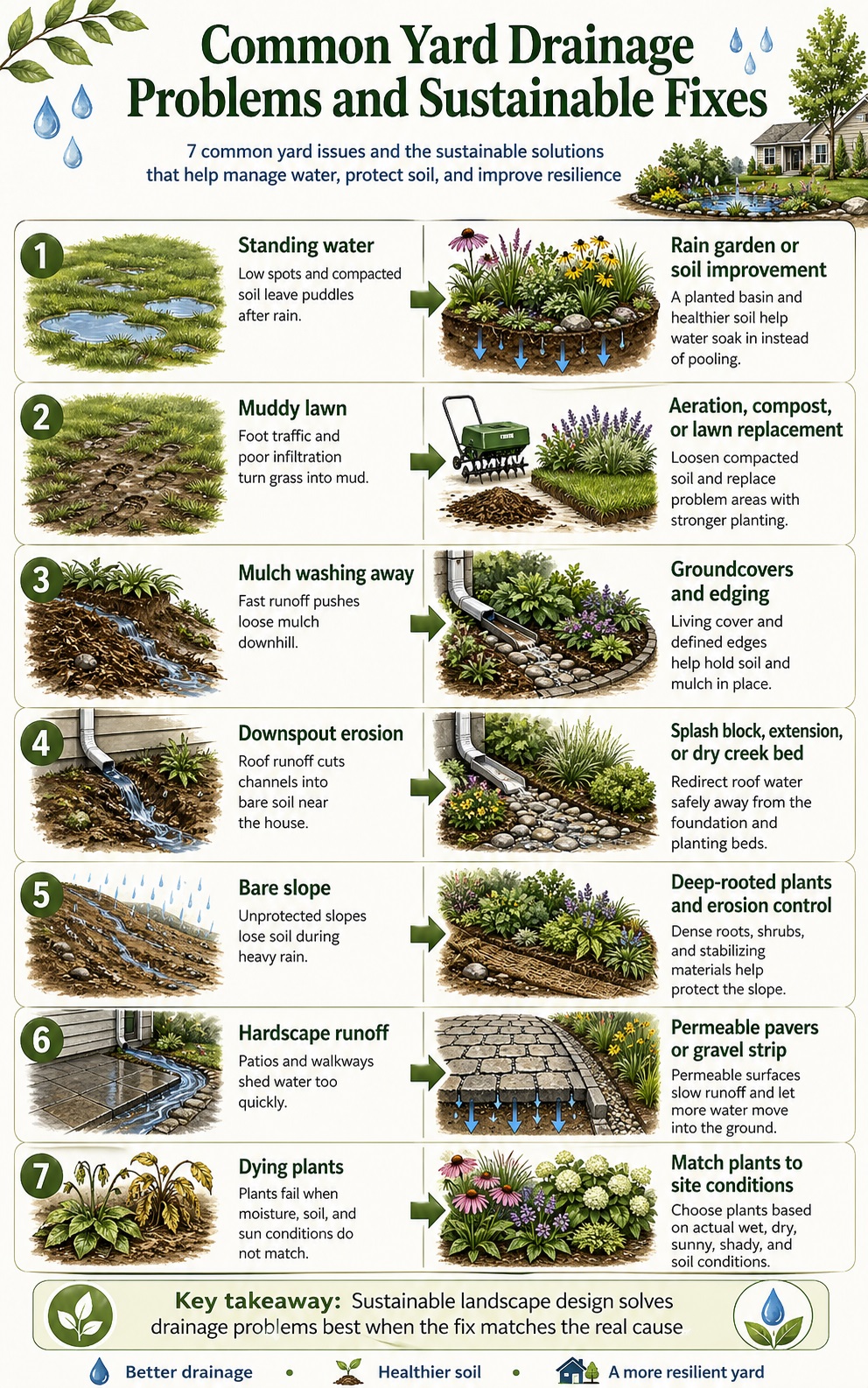
Sustainable Landscape Design Ideas by Yard Problem
| Yard Problem | Sustainable Design Solution |
| Water pools after rain | Rain garden, compost-amended soil, aeration, or regrading if needed |
| Mulch washes away | Groundcovers, edging, contour planting, or swales |
| Bare slope erodes | Deep-rooted plants, coir matting, terracing, or shrubs |
| Downspout cuts channels in soil | Downspout extension, splash block, dry creek bed, or planted basin |
| Lawn stays muddy | Aeration, compost topdressing, reduced foot traffic, or lawn replacement |
| Patio sends water into beds | Permeable border, gravel infiltration strip, or redirected flow |
| Plants keep dying | Match plants to actual moisture, sun, shade, and soil conditions |
| Soil cracks in dry weather | Add organic matter, mulch, and drought-tolerant planting |
| Side yard stays wet | Permeable path, shade-tolerant plants, or professional drainage assessment |
| Driveway runoff causes erosion | Permeable edge, rain garden, or stabilized swale |
Maintenance: Keep the Yard Working
A sustainable yard needs less input, but it still needs care. Drainage features work best when they stay clear, covered, and well planted.
Key tasks include:
- Clear leaves and debris from swales and dry creek beds
- Add fresh mulch as old mulch breaks down
- Keep soil covered with plants, mulch, or leaves
- Pull invasive plants before they spread
- Water new native and climate-fit plants until roots settle in
- Avoid heavy fertilizer use before rain
- Check downspout extensions after storms
- Look for small erosion channels on slopes
- Keep permeable paths and patios clear of dirt buildup
- Replace failed plants with better plants for that exact spot
The best time to check the yard is right after a heavy storm. Water shows the truth. It reveals where flow is safe, where soil is moving, and where the design needs a small fix.
Cost Considerations: What to Do First on a Budget
Sustainable yard work does not need to start with a full redesign. Many soil and drainage fixes cost little and can happen in stages.
Low-Cost Improvements
Start with simple fixes:
- Redirect downspouts away from the house
- Add mulch over bare soil
- Use splash blocks where roof water hits the ground
- Plant groundcovers on small erosion-prone spots
- Add compost to planting beds
- Keep feet, pets, and wheelbarrows off wet soil
- Replace small muddy paths with stepping stones
- Seed or plant bare patches before they wash out
These steps reduce visible damage while you plan larger work.
Mid-Range Improvements
Next, focus on areas that cause repeat problems.
Useful projects include:
- Install a rain garden
- Replace problem lawn with native plant beds
- Add permeable garden paths
- Build a dry creek bed
- Plant shrubs or deep-rooted perennials on slopes
- Create a gravel strip near patios, paths, or driveways
- Improve soil across large planting beds
These projects can make a clear difference without rebuilding the whole yard.
Larger Investments
Some drainage problems need bigger work and skilled help.
Professional projects can include:
- Regrade problem areas
- Replace concrete with permeable hardscape
- Install engineered drainage
- Build terraces or retaining walls
- Stabilize steep slopes
- Redesign large runoff paths
- Fix drainage near the foundation
These projects cost more upfront. In practice, they can prevent repeat repairs, plant loss, soil washout, and water damage.
When Sustainable Drainage Needs More Than DIY
DIY work fits many simple jobs. Mulch, planting, downspout extensions, small rain gardens, and basic erosion control are good starting points.
Some problems need a trained eye.
Call a professional when:
- Water enters the home
- Soil washes away near the foundation
- A slope moves, cracks, or collapses
- Drainage changes affect another property
- Water collects near basement walls
- Large grading changes are needed
- Retaining walls crack, lean, or fail
- Permits or local stormwater approval are required
Sustainability should support safety. It should not hide structural problems or delay needed repairs.
Final Thoughts: A Strong Yard Starts With Water and Soil
Sustainable landscape design starts with a simple idea. A yard works better when water and soil are treated as connected parts of the same system.
Better drainage does not always mean moving water away faster. Often, it means slowing water down, spreading it out, helping it soak in, and protecting the soil underneath.
For U.S. homeowners dealing with standing water, erosion, muddy grass, and stressed plants, the best path starts with the site. Watch where water moves. Build healthier soil. Choose plants that match real conditions. Replace hard surfaces where they cause runoff. Use rain gardens, mulch, swales, and permeable materials where they fit.
A sustainable yard is not just greener. It is easier to care for, stronger in storms, and better matched to the land it sits on.
FAQs About Sustainable Landscape Design
What is sustainable landscape design?
Sustainable landscape design creates outdoor spaces that use less water, protect soil, reduce runoff, support wildlife, reduce waste, and need fewer chemicals, less irrigation, and less long-term upkeep.
How does sustainable landscape design improve drainage?
It improves drainage by helping more water soak into the soil. It also reduces packed soil, slows runoff, redirects roof water, uses deep-rooted plants, and adds features such as rain gardens, swales, mulch, and permeable surfaces.
Are rain gardens good for home yards?
Yes. Rain gardens work well in many home yards when placed in the right spot. They collect runoff from roofs, lawns, driveways, or patios and let water soak into the soil. They also support plants and pollinators.
How far should a rain garden be from a house?
A common guideline is to place a rain garden at least 10 feet from buildings. This helps keep extra water away from foundations and basements. Rain gardens should also stay away from septic drain fields.
Do native plants help with drainage?
Native plants can help with drainage and soil control. Many have roots that hold soil, slow runoff, and improve soil structure. The right plant still depends on the site’s sun, soil, water, space, and region.
What is the cheapest way to improve yard drainage?
Start with downspouts, bare soil, and packed paths. Redirect roof water, add mulch, use compost in beds, reduce soil compaction, plant bare spots, and add stepping stones where foot traffic creates mud.
Is sustainable landscaping more expensive?
Sustainable landscaping can cost more upfront when it includes grading, permeable patios, or engineered drainage. Over time, it can cut costs by reducing watering, fertilizer use, erosion repair, plant loss, and storm cleanup.
Can sustainable landscape design help with clay soil?
Yes. Clay soil drains slowly, but compost, mulch, deep-rooted plants, less compaction, and better surface drainage can improve it over time. Severe clay drainage problems need grading or professional drainage work.
Does a sustainable yard mean removing all grass?
No. A sustainable yard can still include lawn where grass works well. Keep lawn for play, pets, and open space. Replace it in wet, shady, steep, packed, or hard-to-maintain areas.
When should I hire a professional for drainage problems?
Hire a professional when water moves toward the foundation, enters the home, causes serious erosion, affects a neighbor’s property, weakens a slope, or requires major grading, retaining walls, or engineered drainage.