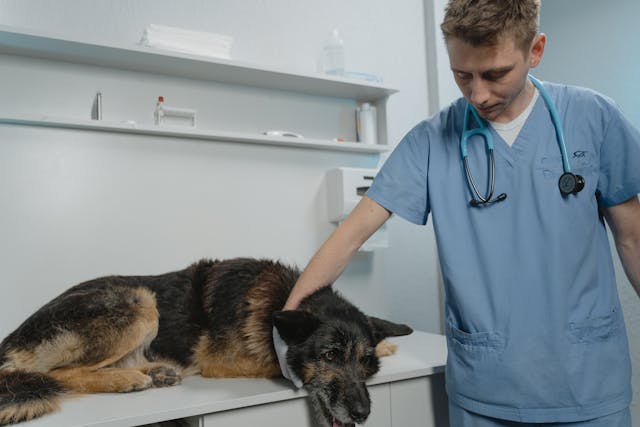

Pet urgent care is for problems that need prompt attention but are not immediately life-threatening. That includes minor wounds, vomiting, diarrhea, limping, ear irritation, eye irritation, skin problems, or sudden discomfort in a pet that is still stable.
Emergency veterinary hospitals are for serious, fast-moving, or life-threatening problems. Trouble breathing, collapse, seizures, severe bleeding, major trauma, heatstroke, suspected poisoning, and inability to urinate need emergency care right away.
The safest rule is simple: if your pet’s symptoms are severe, sudden, or getting worse, contact a veterinarian, urgent care clinic, emergency hospital, or animal poison-control service immediately.
Why After-Hours Veterinary Care Matters
Pet health problems do not wait for office hours. A dog can eat something toxic on a holiday weekend. A cat can start breathing strangely late at night. A pet recovering from another illness can suddenly decline after the regular clinic has closed.
After-hours veterinary care gives pet owners a place to turn when waiting until morning is unsafe. It also helps sort cases into the right level of care. Some pets need same-day treatment but not a full emergency hospital. Others need oxygen, surgery, intensive monitoring, or overnight care.
That distinction matters more now because emergency veterinary access is strained in some communities. AAHA reported in December 2024 that shortages of veterinary professionals have left some areas with limited emergency-care options, leading practices to look for care models that sit between primary care and full 24/7 emergency hospitals.
For pet owners in the Naperville area, an after-hours Naperville urgent vet clinic can help with stable pets that need care outside regular office hours. Clinics such as UrgentVet serve this middle ground with evening, weekend, and holiday care for many non-life-threatening problems. Severe or unstable cases still need a 24/7 emergency veterinary hospital.
Urgent Vet Care vs. Emergency Vet Care
Urgent veterinary care is for pets that are sick, painful, or uncomfortable but still stable. Emergency veterinary care is for pets that are unstable, badly injured, poisoned, or declining fast.
| Situation | Best Care Option | Why It Matters |
| Mild vomiting or diarrhea in an alert pet | Urgent care or regular vet | Needs timely care, but not always ER-level treatment |
| Minor wound, torn nail, small cut, or skin irritation | Urgent care | Often needs pain relief, cleaning, or infection prevention |
| Sudden limping without collapse or major trauma | Urgent care | Needs an exam, and sometimes imaging or medication |
| Ear infection, eye irritation, coughing, or urinary discomfort | Urgent care | Should not always wait, but not always life-threatening |
| Trouble breathing, blue or pale gums, choking, or collapse | Emergency hospital | These signs need immediate stabilization |
| Seizures, severe bleeding, major trauma, or heatstroke | Emergency hospital | These conditions can become fatal fast |
| Suspected poisoning or toxin ingestion | Call a vet, ER hospital, ASPCA Poison Control, or Pet Poison Helpline | Some toxins cause damage before symptoms appear |
The American Veterinary Medical Association lists severe bleeding, choking, breathing difficulty, seizures, heat stress, severe vomiting or diarrhea, suspected poisoning, and inability to urinate or defecate among the situations that need immediate veterinary consultation or care.
Symptoms That Should Never Wait
Some signs should be treated as emergencies, even if you do not know the cause.
Seek immediate veterinary help if your pet has:
- Rapid, labored, noisy, or open-mouth breathing
- Collapse, extreme weakness, or inability to stand
- Seizures or repeated seizure-like episodes
- Severe bleeding or bleeding that does not stop
- Choking, nonstop gagging, or signs of airway blockage
- Pale, blue, gray, or very bright red gums
- Major trauma, such as being hit by a car or falling from a height
- Signs of heatstroke, including heavy panting, weakness, vomiting, or collapse
- Suspected poisoning from medication, chemicals, toxic foods, plants, or unknown substances
- Inability to urinate, repeated straining, or obvious pain while trying to urinate
- A swollen painful abdomen, repeated retching, or sudden distress
- Symptoms that get worse quickly
Do not spend time trying to diagnose these signs at home. Call the nearest emergency veterinary hospital or go there directly if your pet is clearly in danger.
When Urgent Veterinary Care Is Usually the Right Fit
Urgent care works best when your pet is uncomfortable or sick but still stable. These cases deserve prompt attention because pets often hide pain, and mild-looking symptoms can worsen over time.
Urgent care is often appropriate for:
- Vomiting or diarrhea without collapse
- Minor wounds or bite marks
- Sudden limping or suspected sprain
- Ear pain, head shaking, or discharge
- Eye redness, squinting, or irritation
- Skin rashes, itching, hot spots, or swelling
- Coughing, sneezing, or mild respiratory signs without breathing distress
- Urinary discomfort in a pet that can still pass urine
- Mild allergic reactions without breathing trouble or major facial swelling
- Pain, restlessness, or behavior changes that concern you but do not look life-threatening
The key word is stable. A pet that is struggling to breathe, collapsing, bleeding heavily, having seizures, or getting worse quickly needs emergency care, not urgent care.
Call First When It Is Safe
Calling ahead helps the clinic guide you to the right place. Give clear details: your pet’s species, age, symptoms, timeline, medications, and any known exposure to toxins or trauma.
Ask these questions:
- Can you treat this type of case?
- Do you accept walk-ins, or do we need online check-in?
- Should we go directly to an emergency hospital instead?
- Should we bring packaging, medication bottles, photos, or medical records?
- Is there anything we should avoid doing before arrival?
Calling first matters for poisoning, breathing problems, severe injuries, or cases that need surgery or hospitalization. An urgent care clinic can redirect you to a 24/7 emergency hospital if your pet needs oxygen support, advanced imaging, intensive monitoring, surgery, or overnight care.
What to Do If Your Pet Ate Something Toxic
Toxin exposure is one of the most time-sensitive pet emergencies. Do not wait for symptoms if your pet ate something dangerous. Some toxins cause delayed signs, and early treatment changes the outcome.
Common pet hazards include human medications, chocolate, xylitol, grapes, raisins, certain plants, rodenticides, cleaning products, pesticides, cannabis products, and some essential oils.
If you suspect poisoning:
- Move your pet away from the substance.
- Save the packaging, label, plant sample, pill bottle, or a photo of the item.
- Estimate how much your pet ate and when.
- Call your veterinarian, an emergency hospital, ASPCA Animal Poison Control, or Pet Poison Helpline.
- Do not induce vomiting unless a veterinarian or poison-control expert tells you to.
ASPCA Animal Poison Control operates 24 hours a day, 365 days a year for animal poison-related emergencies. Pet Poison Helpline also provides 24/7 poison-control support for pet owners and veterinary professionals.
Dogs and Cats Do Not Always Show Emergencies the Same Way
Dogs often show distress in ways owners notice quickly. They whine, pace, limp, vomit, pant heavily, retch, collapse, or act suddenly restless. Bloat, a serious emergency in dogs, can involve repeated retching, abdominal swelling, distress, and weakness.
Cats often hide pain and illness. A cat that hides, breathes with an open mouth, refuses to move, cries in an unusual way, strains in the litter box, or becomes suddenly quiet needs attention. Open-mouth breathing in cats is especially serious and should be treated as an emergency.
Trust sudden changes. If your pet’s behavior looks very different from normal, especially with weakness, breathing changes, pain, or collapse, contact a veterinary professional right away.
How Teletriage Helps When You Are Unsure
Teletriage can help when symptoms are unclear, mild, or just starting. A veterinary professional can ask about your pet’s symptoms, timing, appetite, breathing, medications, toxin exposure, photos, or videos. That information helps decide whether your pet needs urgent care, emergency care, or a regular appointment.
The AVMA defines teletriage as the safe, timely assessment of animal patients through electronic consultation, including whether immediate referral to a veterinarian is needed.
Teletriage does not replace hands-on emergency treatment. If your pet is struggling to breathe, collapsing, bleeding heavily, seizing, unable to urinate, showing signs of poisoning, or getting worse quickly, go to emergency care.
How to Prepare Before a Pet Emergency Happens
Preparation saves time when stress is high. Keep this information saved on your phone and posted somewhere easy to find at home:
- Your regular veterinarian’s name, phone number, and address
- Nearest urgent vet clinic
- Nearest 24/7 emergency veterinary hospital
- ASPCA Animal Poison Control and Pet Poison Helpline contact information
- Your pet’s current medications and dosages
- Vaccine history
- Known allergies or chronic conditions
- Pet insurance details
- Recent lab results or medical summaries for pets with ongoing illness
Plan safe transport too. Keep a leash, carrier, towel, and clean blanket where you can grab them quickly. Cats need secure carriers. Dogs need a leash and a safe way to limit movement. If a pet is in severe pain, keep your hands and face away from the mouth. Even gentle pets can bite when they are scared or injured.
What to Bring to an Urgent or Emergency Vet Visit
Bring anything that helps the veterinary team understand the case quickly.
Useful items include:
- Medical records, if available
- List of current medications and supplements
- Vaccine records
- Photos or videos of symptoms that come and go
- Packaging or labels from anything your pet ate
- Fresh stool or urine sample, if relevant and easy to collect
- Your regular vet’s contact details
- Pet insurance information
- Payment method
- Carrier, leash, towel, or blanket
Do not delay emergency care to gather every item. If your pet is unstable, leave immediately and call the clinic while you are on the way, as long as it is safe.
Why Urgent Care Costs Less Than Many ER Visits
Urgent vet clinics often cost less than emergency hospitals because they are built for stable, same-day cases. They do not carry the same staffing and equipment burden as a 24/7 hospital with intensive care, surgery, advanced imaging, oxygen cages, blood products, and overnight monitoring.
Cost should not decide care when symptoms are severe. A pet with breathing trouble, collapse, severe bleeding, major trauma, seizures, heatstroke, suspected poisoning, or inability to urinate needs the fastest proper care, even when that means an emergency hospital.
A practical way to think about the care pathway:
| Care Type | Best For |
| Primary care | Wellness exams, vaccines, stable chronic issues, dental care, planned follow-up |
| Urgent care | Stable pets with same-day problems that should not wait |
| Emergency care | Life-threatening, unstable, or fast-worsening conditions |
Each type of care has a role. The right choice depends on how sick your pet looks in that moment.
What Happens After the Visit
The visit does not end when your pet leaves the clinic. Recovery often depends on follow-up care at home.
After treatment:
- Read the discharge instructions carefully.
- Give medications exactly as prescribed.
- Watch for symptoms that return or worsen.
- Schedule the recommended recheck.
- Send records to your regular veterinarian.
- Ask when your pet can resume normal food, activity, and routines.
- Call the clinic if you are unsure about a medication, side effect, or new symptom.
Your regular veterinarian remains important after urgent or emergency care. They know your pet’s history and can manage recovery, chronic illness, medication changes, and prevention.
How to Choose the Right Care Quickly
Choose emergency care now if your pet has breathing trouble, collapse, seizures, severe bleeding, major trauma, suspected poisoning, heatstroke, inability to urinate, or symptoms that are getting worse fast.
Choose urgent care if your pet is stable but uncomfortable, injured, vomiting, limping, coughing, itching, showing eye or ear problems, or has symptoms that should not wait for a regular appointment.
Choose your regular veterinarian for wellness exams, vaccines, stable chronic problems, planned follow-ups, dental care, and non-urgent concerns.
When in doubt, call. A veterinary team can help you decide whether urgent care is enough or whether your pet needs a full emergency hospital.
The Bottom Line
After-hours veterinary care gives pet owners a safety net when dogs and cats become sick or injured outside regular clinic hours. Urgent care clinics help stable pets that need prompt treatment. Emergency hospitals remain essential for life-threatening cases.
The best time to prepare is before a crisis happens. Save local clinic numbers, learn the symptoms that should never wait, know where the nearest emergency hospital is, and keep your pet’s medical information easy to access.
When your pet’s condition is severe, sudden, or getting worse, act quickly. Fast care can reduce pain, prevent complications, and give your pet the best chance of recovery.
FAQs
Is urgent vet care the same as an emergency vet?
No. Urgent vet care is for stable pets that need prompt treatment but not intensive emergency intervention. Emergency hospitals handle life-threatening cases, severe trauma, surgery, oxygen support, advanced diagnostics, and overnight monitoring.
Should I call before going to an emergency vet?
Yes, when it is safe. Calling ahead helps the clinic prepare, confirm whether it can handle the case, and direct you to a full emergency hospital if your pet needs advanced care. If your pet is clearly unstable, leave immediately and call on the way.
What symptoms mean my pet needs emergency care now?
Breathing trouble, collapse, seizures, severe bleeding, choking, suspected poisoning, heatstroke, major trauma, inability to urinate, and sudden extreme weakness all need emergency care.
What should I do if my pet ate something toxic?
Call a veterinarian, emergency hospital, ASPCA Animal Poison Control, or Pet Poison Helpline right away. Do not induce vomiting unless a veterinary professional or poison-control expert tells you to.
Can teletriage replace an emergency vet visit?
No. Teletriage helps decide what level of care your pet needs. It cannot replace hands-on treatment when a pet is unstable, injured, poisoned, struggling to breathe, or getting worse quickly.
What should I bring to an urgent vet visit?
Bring medical records, a medication list, vaccine history, photos or videos of symptoms, toxin packaging if relevant, your regular vet’s contact details, pet insurance information, and a secure carrier or leash.
When is urgent care better than waiting for my regular vet?
Urgent care is useful when your pet is stable but has symptoms that should not wait, such as vomiting, diarrhea, minor wounds, limping, ear pain, eye irritation, skin problems, or sudden discomfort.